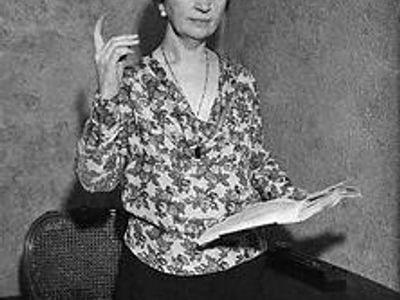
Mr. Chairman, Ladies and Gentlemen: My subject is "The Children's Era." The Children's Era! This makes me think of Ellen Key's book -- The Century of the Child. Ellen Key hoped that this twentieth century was to be the century of the child. The twentieth century, she said, would see this old world of ours converted into a beautiful garden of children. Well, we have already lived through a quarter of this twentieth century. What steps have we taken toward making it the century of the child? So far, very, very few.
Why does the Children's Era still remain a dream of the dim and the distant future? Why has so little been accomplished? -- in spite of all our acknowledged love of children, all our generosity, all our good-will, all the enormous spending of millions on philanthropy and charities, all our warm-hearted sentiment, all our incessant activity and social consciousness? Why?
Before you can cultivate a garden, you must know something about gardening. You have got to give your seeds a proper soil in which to grow. You have got to give them sunlight and fresh air. You have got to give them space and the opportunity (if they are to lift their flowers to the sun), to strike their roots deep into that soil. And always -- do not forget this -- you have got to fight weeds. You cannot have a garden, if you let weeds overrun it. So, if we want to make this world a garden for children, we must first of all learn the lesson of the gardener.
So far we have not been gardeners. We have only been a sort of silly reception committee, a reception committee at the Grand Central Station of life. Trainload after trainload of children are coming in, day and night -- nameless refugees arriving out of the Nowhere into the Here.
Trainload after trainload -- many unwelcome, unwanted, unprepared for, unknown, without baggage, without passports, most of them without pedigrees.
These unlimited hordes of refugees arrive in such numbers that the reception committee is thrown into a panic -- a panic of activity. The reception committee arouses itself heroically, establishes emergency measures: milk stations, maternity centers, settlement houses, playgrounds, orphanages, welfare leagues, and every conceivable kind of charitable effort.
But still trainloads of children keep on coming -- human weed crop up that spread so fast in this sinister struggle for existence, that the overworked committee becomes exhausted, inefficient, and can think of no way out.
When we protest against this immeasurable, meaningless waste of motherhood and child-life; when we protest against the ever-mounting cost to the world of asylums, prisons, homes for the feeble-minded, and such institutions for the unfit, when we protest against the disorder and chaos and tragedy of modern life, when we point out the biological corruption that is destroying the very heart of American life, we are told that we are making merely an "emotional" appeal.
When we point the one immediate practical way toward order and beauty in society, the only way to lay the foundations of a society composed of happy children, happy women, and happy men, they call this idea indecent and immoral.
It is not enough to clean up the filth and disorder of our overcrowded cities. It is not enough to stop the evil of Child Labor -- even if we could! It is not enough to decrease the rate of infantile mortality. It is not enough to open playgrounds, and build more public schools in which we can standardize the mind of the young. It is not enough to throw millions upon millions of dollars into charities and philanthropies. Don't deceive ourselves that by so doing we are making the world "Safe for Children."
Those of you who have followed the sessions of this Conference must, I am sure, agree with me that the first real stop toward the creation of a Children's Era must lie in providing the conditions of healthy life for children not only before birth but even more imperatively before conception. Human society must protect its children -- yes, but prenatal care is most essential! The child-to-be, as yet not called into being, has rights no less imperative.
We have learned in the preceding sessions of this Conference that, if we wish to produce strong and sturdy children, the embryo must grow in a chemically healthy medium. The blood stream of the mother must be chemically normal. Worry, strain, shock, unhappiness, enforced maternity, may all poison the blood of the enslaved mother. This chemically poisoned blood may produce a defective baby -- a child foredoomed to idiocy, or feeble-mindedness, crime, or failure.
Do I exaggerate? Am I taking a rare exception and making it a general rule? Our opponents declare that children are conceived in love, and that every new-born baby converts its parents to love and unselfishness.
My answer is to point to the asylums, the hospitals, the ever-growing institutions for the unfit. Look into the family history of those who are feeble-minded; or behind the bars of jails and prisons. Trace the family histories; find out the conditions under which they were conceived and born, before you attempt to persuade us that reckless breeding has nothing to do with these grave questions.
There is only one way out. We have got to fight for the health and happiness of the Unborn Child. And to do that in a practical, tangible way, we have got to free women from enforced, enslaved maternity.
There can be no hope for the future of civilization, no certainty of racial salvation, until every woman can decide for herself whether she will or will not become a mother, and when and how many children she cares to bring into the world. That is the first step.
I would like to suggest Civil Service examinations for parenthood! Prospective parents after such an examination would be given a parenthood license, proving that they are physically and mentally fit to be the fathers and mothers of the next generation.
This is an interesting idea -- but then arises the questions "Who is to decide?" "Would there be a jury, like a play jury?" Would a Republican administration give parenthood permits only to Republicans -- or perhaps only to Democrats? The more you think of governmental interference, the less it works out. Take this plan of civil service examination for parenthood. It suggests Prohibition: there might even be bootlegging in babies!
No, I doubt the advisability of governmental sanction. The problem of bringing children into the world ought to be decided by those most seriously involved -- those who run the greatest risks; in the last analysis -- by the mother and the child. If there is going to be any Civil Service examination, let it be conducted by the Unborn Child, the Child-to-be.
Just try for a moment to picture the possibilities of such an examination. When you want a cook or housemaid, you go to an employment bureau. You have to answer questions. You have to exchange references. You have to persuade the talented cook that you conduct a proper well-run household. Children ought to have at least the same privilege as cooks.
Sometimes in idle moments I like to think it would be a very good scheme to have a bureau of the Child-to-be. At such a bureau of the unborn, the wise child might be able to find out a few things about its father -- and its mother. Just think for a moment of this bureau where prospective parents might apply for a baby. Think of the questions they would be asked by the agent of the unborn or by the baby itself.
"Mr. Father, a baby is an expensive luxury. Can you really afford one?" "Have you paid for your last baby yet?" "How many children have you already? Six? You must have your hands full. Can you take care of so many?" "Do you look upon children as a reward -- or a penalty?" "How are you ductless glands -- well balanced?" "Can you provide a happy home for one! A sunny nursery? Proper food?" "What's that you say? Ten children already? Two dark rooms in the slums?" "No, thank you! I don't care to be born at all if I cannot be well-born. Good-bye!"
And if we could organize a society for the prevention of cruelty to unborn children, we would make it a law that children should be brought into the world only when they were welcome, invited, and wanted; that they would arrive with a clean bill of health and heritage; that they would possess healthy, happy, well-mated, and mature parents.
And there would be certain conditions of circumstances which would preclude parenthood. These conditions, the presence of which would make parenthood a crime, are the following: 1. Transmissible disease; 2. Temporary disease; 3. Subnormal children already in the family; 4. Space out between births; 5. Twenty-three years as a minimum age for parents; 6. Economic circumstances adequate; 7. Spiritual harmony between parents.
In conclusion, let me repeat: We are not trying to establish a dictatorship over parents. We want to free women from enslavery and unwilling motherhood. We are fighting for the emancipation for the mothers of the world, of the children of the world, and the children to be.
We want to create a real Century of the Child -- usher in a Children's Era. We can do this by handling the terrific gift of life in bodies fit and perfect as can be fashioned. Help us to make this Conference, which as aroused so much interest, the turning point toward this era. Only so can you help in the creation of the future.