James Baldwin once wrote, For while the tale of how we suffer, and how we are delighted, and how we may triumph is never new, it always must be heard." For while the tale of how we suffer, and how we are delighted, and how we may triumph is never new, it always must be heard. 詹姆斯·鲍德温曾写道:"因为关于我们如何受苦、如何欢欣、如何取胜的故事永远不会陈旧,但它永远需要被倾听。"关于我们如何受苦、如何欢欣、如何取胜的故事永远不会陈旧,但它永远需要被倾听。
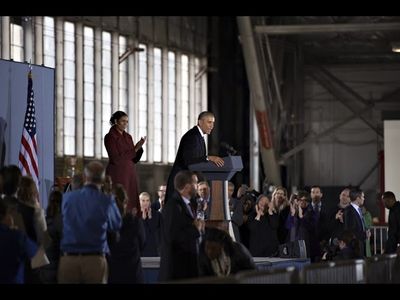
Today, as so many generations have before, we gather on our National Mall to tell an essential part of our American story -- one that has at times been overlooked -- we come not just for today, but for all time. 今天,正如无数先辈一样,我们聚集在国家广场上,讲述我们美国故事中不可或缺的一部分——一段有时被忽视的故事——我们不仅是为了今天而来,更是为了永恒。
President and Mrs. Bush; President Clinton; Vice President and Dr. Biden; Chief Justice Roberts; Secretary Skorton; Reverend Butts; distinguished guests: Thank you. Thank you for your leadership in making sure this tale is told. We're here in part because of you and because of all those Americans -- the Civil War vets, the Civil Rights foot soldiers, the champions of this effort on Capitol Hill -- who, for more than a century, kept the dream of this museum alive. 布什总统及夫人;克林顿总统;拜登副总统及夫人;罗伯茨首席大法官;斯科顿部长;巴茨牧师;各位尊贵的来宾:谢谢你们。感谢你们的领导,确保这个故事得以传颂。我们今天能在这里,部分归功于你们,也归功于所有那些美国人——内战老兵、民权运动的普通战士、国会山推动这项事业的斗士们——一个多世纪以来,是他们让这座博物馆的梦想生生不息。
That includes our leaders in Congress -- Paul Ryan and Nancy Pelosi. It includes one of my heroes, John Lewis, who, as he has so often, took the torch from those who came before him and brought us past the finish line. It includes the philanthropists and benefactors and advisory members who have so generously given not only their money but their time. It includes the Americans who offered up all the family keepsakes tucked away in Grandma's attic. And of course, it includes a man without whose vision and passion and persistence we would not be here today -- Mr. Lonnie Bunch. 这包括我们的国会领导人——保罗·瑞安和南希·佩洛西。这包括我心目中的英雄之一约翰·刘易斯,他一如既往地从前人手中接过火炬,带领我们冲过了终点线。这包括慈善家、捐助者和顾问委员会成员,他们不仅慷慨解囊,还奉献了宝贵的时间。这包括那些把藏在祖母阁楼里的家族纪念品捐献出来的美国人。当然,这还包括一个人——没有他的远见、热情和坚持,我们今天就不会站在这里——朗尼·邦奇先生。
What we can see of this building -- the towering glass, the artistry of the metalwork -- is surely a sight to behold. But beyond the majesty of the building, what makes this occasion so special is the larger story it contains. Below us, this building reaches down 70 feet, its roots spreading far wider and deeper than any tree on this Mall. 我们眼前这座建筑——高耸的玻璃、精湛的金属工艺——无疑是一道壮丽的景观。但除了建筑本身的宏伟之外,让今天这个场合如此特别的是它所承载的更宏大的故事。在我们脚下,这座建筑向下延伸了七十英尺,它的根基比国家广场上任何一棵树都铺展得更宽、更深。
And on its lowest level, after you walk past remnants of a slave ship, after you reflect on the immortal declaration that "all men are created equal," you can see a block of stone. On top of this stone sits a historical marker, weathered by the ages. That marker reads: "General Andrew Jackson and Henry Clay spoke from this slave block...during the year 1830." 在它的最底层,走过一艘奴隶船的残骸,回想"人人生而平等"这一不朽宣言之后,你会看到一块石头。石头上面立着一块历史悠久的纪念碑,历经岁月风霜。碑上写着:"安德鲁·杰克逊将军和亨利·克莱曾于一八三零年在这个奴隶拍卖台上发表演说。"
I want you to think about this. Consider what this artifact tells us about history, about how it's told, and about what can be cast aside. On a stone where day after day, for years, men and women were torn from their spouse or their child, shackled and bound, and bought and sold, and bid like cattle; on a stone worn down by the tragedy of over a thousand bare feet -- for a long time, the only thing we considered important, the singular thing we once chose to commemorate as "history" with a plaque were the unmemorable speeches of two powerful men. 我希望大家思考一下这个问题。想想这件文物告诉了我们什么是历史,历史是如何被讲述的,又有什么可以被抛弃。在这块石头上,年复一年,日复一日,男男女女被从配偶或孩子身边夺走,戴上镣铐,被买卖,像牲畜一样被出价;在这块被上千只赤脚的悲剧磨平的石头上——在很长一段时间里,我们唯一认为重要的东西,我们唯一选择用一块牌匾作为"历史"来纪念的东西,却是两个有权势的人那些不值一提的演讲。
And that block I think explains why this museum is so necessary. Because that same object, reframed, put in context, tells us so much more. As Americans, we rightfully passed on the tales of the giants who built this country; who led armies into battle and waged seminal debates in the halls of Congress and the corridors of power. But too often, we ignored or forgot the stories of millions upon millions of others, who built this nation just as surely, whose humble eloquence, whose calloused hands, whose steady drive helped to create cities, erect industries, build the arsenals of democracy. 我认为,那块石头解释了为什么这座博物馆如此必要。因为同一个物品,经过重新诠释、置于恰当的背景中,能告诉我们的东西要多得多。作为美国人,我们理所当然地传颂着那些建造这个国家的伟人的故事;他们率军征战,在国会大厅和权力走廊中掀起影响深远的辩论。但太多时候,我们忽视或遗忘了千百万其他人的故事,他们同样缔造了这个国家,他们质朴的口才、布满老茧的双手、坚韧不拔的干劲帮助建起了城市,催生了工业,打造了民主的兵工厂。
And so this national museum helps to tell a richer and fuller story of who we are. It helps us better understand the lives, yes, of the President, but also the slave; the industrialist, but also the porter; the keeper of the status quo, but also of the activist seeking to overthrow that status quo; the teacher or the cook, alongside the statesman. 因此,这座国家博物馆帮助我们讲述一个更丰富、更完整的关于我们是谁的故事。它帮助我们更好地理解形形色色的人生——是的,有总统,也有奴隶;有实业家,也有搬运工;有现状的维护者,也有试图推翻现状的活动家;教师或厨师,与政治家比肩而立。
And by knowing this other story, we better understand ourselves and each other. It binds us together. It reaffirms that all of us are America -- that African-American history is not somehow separate from our larger American story, it's not the underside of the American story, it is central to the American story. That our glory derives not just from our most obvious triumphs, but how we've wrested triumph from tragedy, and how we've been able to remake ourselves, again and again and again, in accordance with our highest ideals. 而通过了解另一面的故事,我们能更好地理解自己和彼此。它将我们凝聚在一起。它重申了我们所有人都是美国——非裔美国人的历史并非游离于我们宏大的美国故事之外,也不是美国故事的阴暗面,它是美国故事的核心。我们的荣耀不仅来自我们最瞩目的胜利,更来自我们如何从悲剧中夺取胜利,如何按照我们最高的理想,一次又一次地重塑自己。
I, too, am America. 我,也是美国。
The great historian John Hope Franklin, who helped to get this museum started, once said, "Good history is a good foundation for a better present and future." He understood the best history doesn't just sit behind a glass case; it helps us to understand what's outside the case. 帮助发起这座博物馆的伟大历史学家约翰·霍普·富兰克林曾说过:"好的历史是更好的现在和未来的良好基础。"他明白,最好的历史不只是静静地躺在玻璃展柜后面;它帮助我们理解展柜之外的世界。
The best history helps us recognize the mistakes that we've made and the dark corners of the human spirit that we need to guard against. And, yes, a clear-eyed view of history can make us uncomfortable, and shake us out of familiar narratives. But it is precisely because of that discomfort that we learn and grow and harness our collective power to make this nation more perfect. 最好的历史帮助我们认清我们犯下的错误,以及我们需要警惕的人类精神中的黑暗角落。是的,以清醒的眼光看待历史可能会让我们感到不安,动摇我们熟悉的叙事。但正因为这种不安,我们才能学习、成长,才能凝聚我们的集体力量,让这个国家更加完善。
That's the American story that this museum tells -- one of suffering and delight; one of fear but also of hope; of wandering in the wilderness and then seeing out on the horizon a glimmer of the Promised Land. 这就是这座博物馆讲述的美国故事——一个苦难与欢乐交织的故事;一个充满恐惧但更充满希望的故事;一个在旷野中徘徊,然后在地平线上看到应许之地微光的故事。
It is in this embrace of truth, as best as we can know it, in the celebration of the entire American experience, where real patriotism lies. As President Bush just said, a great nation doesn't shy from the truth. It strengthens us. It emboldens us. It should fortify us. It is an act of patriotism to understand where we've been. And this museum tells the story of so many patriots. 真正的爱国主义,就在于我们尽己所能拥抱真相,赞颂完整的美国经历。正如布什总统刚才所说,一个伟大的国家不会回避真相。真相使我们更强大。真相给我们勇气。真相应该让我们更坚定。了解我们走过的路,是一种爱国主义行为。而这座博物馆讲述了无数爱国者的故事。
Yes, African Americans have felt the cold weight of shackles and the stinging lash of the field whip. But we've also dared to run north, and sing songs from Harriet Tubman's hymnal. We've buttoned up our Union Blues to join the fight for our freedom. We've railed against injustice for decade upon decade -- a lifetime of struggle, and progress, and enlightenment that we see etched in Frederick Douglass's mighty, leonine gaze. 是的,非裔美国人感受过枷锁的冰冷重量,感受过田间皮鞭的刺痛。但我们也敢于向北奔跑,唱着哈丽特·塔布曼圣歌集中的歌曲。我们扣上联邦军的军装,加入了为自由而战的行列。我们数十年来不断抗议不公——在弗雷德里克·道格拉斯那威严如狮的目光中,我们看到了一生的奋斗、进步与启迪。
Yes, this museum tells a story of people who felt the indignity, the small and large humiliations of a "whites only" sign, or wept at the side of Emmett Till's coffin, or fell to their knees on shards of stained glass outside a church where four little girls died. 是的,这座博物馆讲述了这样一群人的故事——他们感受过"白人专用"标志带来的种种或大或小的屈辱,在埃米特·蒂尔的棺木旁哭泣,在一座四个小女孩遇害的教堂外,跪在彩色玻璃的碎片上。
But it also tells the story of the black youth and white youth sitting alongside each other, straight-backed, so full of dignity on those lunch counter stools; the story of a six-year-old Ruby Bridges, pigtails, fresh-pressed dress, walking that gauntlet to get to school; Tuskegee airmen soaring the skies not just to beat a dictator, but to reaffirm the promise of our democracy -- but remind us that all of us are created equal. 但它也讲述了这样的故事——黑人和白人青年并肩坐在午餐柜台前,腰板挺直,充满尊严;六岁的鲁比·布里奇斯,扎着小辫子,穿着笔挺的新衣服,走过重重阻挠去上学;塔斯基吉飞行员翱翔天际,不仅是为了打败独裁者,更是为了重申我们民主的承诺——并提醒我们,人人生而平等。
This is the place to understand how protest and love of country don't merely coexist but inform each other; how men can proudly win the gold for their country but still insist on raising a black-gloved fist; how we can wear "I Can't Breathe" T-shirt and still grieve for fallen police officers. Here's the America where the razor-sharp uniform of the Chairman of the Joint Chiefs of Staff belongs alongside the cape of the Godfather of Soul. 在这里,你会理解抗议与爱国情怀如何并非只是共存,而是相互滋养;人们如何既能为国家赢得金牌,又坚持举起戴着黑手套的拳头;我们如何能穿着"我无法呼吸"的T恤,同时又为殉职的警察感到悲痛。在美国,参谋长联席会议主席笔挺的军装,与灵魂乐教父的斗篷交相辉映。
We have shown the world that we can float like butterflies and sting like bees; that we can rocket into space like Mae Jemison, steal home like Jackie, rock like Jimi, stir the pot like Richard Pryor; or we can be sick and tired of being sick and tired, like Fannie Lou Hamer, and still Rock Steady like Aretha Franklin. 我们向世界展示了我们能像蝴蝶一样飞舞、像蜜蜂一样蜇刺;我们能像梅·杰米森一样冲向太空,像杰基一样盗垒,像吉米一样摇滚,像理查德·普赖尔一样搅动风云;或者我们可以像范妮·卢·哈默一样,对厌倦感到厌倦,同时像艾瑞莎·弗兰克林一样稳稳屹立。
We are large, Walt Whitman told us, containing multitudes. We are large, containing multitudes. Full of contradictions. That's America. That's what makes us grow. That's what makes us extraordinary. And as is true for America, so is true for African American experience. We're not a burden on America, or a stain on America, or an object of pity or charity for America. We're America. 沃尔特·惠特曼告诉我们,我们辽阔,我们包容万物。我们辽阔,包容万物。充满矛盾。这就是美国。这就是我们成长的动力。这就是我们与众不同的原因。对于美国是如此,对于非裔美国人的经历也是如此。我们不是美国的负担,不是美国的污点,也不是美国怜悯或施舍的对象。我们就是美国。
And that's what this museum explains -- the fact that our stories have shaped every corner of our culture. The struggles for freedom that took place made our Constitution a real and living document, tested and shaped and deepened and made more profound its meaning for all people. The story told here doesn't just belong to black Americans; it belongs to all Americans -- for the African-American experience has been shaped just as much by Europeans and Asians and Native Americans and Latinos. We have informed each other. We are polyglot, a stew. 这就是这座博物馆所诠释的——我们的故事塑造了我们文化的每一个角落。为自由而进行的斗争让我们的宪法成为一份真实而鲜活的文献,经过检验、塑造、深化,使其对所有人的意义更加深远。这里讲述的故事不只属于黑人美国人;它属于所有美国人——因为非裔美国人的经历同样受到欧洲人、亚洲人、原住民和拉丁裔的深刻影响。我们相互塑造。我们多种语言交融,我们是一锅大杂烩。
Scripture promised that if we lift up the oppressed, then our light will rise in the darkness, and our night will become like the noonday. And the story contained in this museum makes those words prophecy. And that's what this day is about. That's what this museum is about. I, too, am America. It is a glorious story, the one that's told here. It is complicated and it is messy and it is full of contradictions, as all great stories are, as Shakespeare is, as Scripture is. And it's a story that perhaps needs to be told now more than ever. 圣经应许说,如果我们扶起受压迫者,我们的光必在黑暗中升起,我们的黑夜必如正午。而这座博物馆中所承载的故事,让那些话语成了预言。这就是今天的意义所在。这就是这座博物馆的意义所在。我,也是美国。这里讲述的是一个辉煌的故事。它复杂、混乱、充满矛盾,正如所有伟大的故事一样,正如莎士比亚的作品,正如圣经。也许这个故事比以往任何时候都更需要被讲述。
A museum alone will not alleviate poverty in every inner city or every rural hamlet. It won't eliminate gun violence from all our neighborhoods, or immediately ensure that justice is always colorblind. It won't wipe away every instance of discrimination in a job interview or a sentencing hearing or folks trying to rent an apartment. Those things are up to us, the decisions and choices we make. It requires speaking out, and organizing, and voting, until our values are fully reflected in our laws and our policies and our communities. 单靠一座博物馆无法消除每个内陆城市或每个乡村的贫困。它无法从我们所有社区中消除枪支暴力,也无法立即确保正义永远不受肤色影响。它无法抹去求职面试、量刑听证或人们租房时遇到的每一次歧视。这些事情取决于我们,取决于我们做出的决定和选择。它需要我们发声、组织、投票,直到我们的价值观充分体现在我们的法律、政策和社区中。
But what this museum does show us is that in even the face of oppression, even in the face of unimaginable difficulty, America has moved forward. And so this museum provides context for the debates of our times. It illuminates them and gives us some sense of how they evolved, and perhaps keeps them in proportion. 但这座博物馆确实向我们展示了,即使面对压迫,即使面对难以想象的困难,美国依然在前进。因此,这座博物馆为我们时代的辩论提供了背景。它照亮了这些辩论,让我们了解它们是如何演变的,或许也让我们保持分寸。
Perhaps it can help a white visitor understand the pain and anger of demonstrators in places like Tulsa and Charlotte. But it can also help black visitors appreciate the fact that not only is this younger generation carrying on traditions of the past but, within the white communities across this nation we see the sincerity of law enforcement officers and officials who, in fits and starts, are struggling to understand, and are trying to do the right thing. 也许它能帮助一位白人参观者理解塔尔萨和夏洛特等地示威者的痛苦与愤怒。但它也能帮助黑人参观者认识到,不仅年轻一代在传承过去的传统,而且在全国各地的白人社区中,我们看到了执法人员和官员的诚意——他们磕磕绊绊地努力去理解,努力做正确的事。
It reminds us that routine discrimination and Jim Crow aren't ancient history, it's just a blink in the eye of history. It was just yesterday. And so we should not be surprised that not all the healing is done. We shouldn't despair that it's not all solved. And knowing the larger story should instead remind us of just how remarkable the changes that have taken place truly are -- just in my lifetime -- and thereby inspire us to further progress. 它提醒我们,日常歧视和吉姆·克劳法不是什么远古历史,它们在历史的长河中只是一眨眼的功夫。就在昨天。所以我们不应该惊讶于伤痛尚未完全愈合。我们不应该因为问题没有全部解决就感到绝望。了解这个更宏大的故事,反而应该提醒我们,已经发生的变化是多么非凡——就在我有生之年——从而激励我们取得更大的进步。
And so hopefully this museum can help us talk to each other. And more importantly, listen to each other. And most importantly, see each other. Black and white and Latino and Native American and Asian American -- see how our stories are bound together. And bound together with women in America, and workers in America, and entrepreneurs in America, and LGBT Americans. 因此,希望这座博物馆能帮助我们彼此对话。更重要的是,彼此倾听。最重要的是,看见彼此。黑人和白人、拉丁裔、原住民和亚裔美国人——看见我们的故事是如何交织在一起的。与美国的女性、美国的工人、美国的企业家、美国的LGBT群体,紧紧相连。
And for young people who didn't live through the struggles represented here, I hope you draw strength from the changes that have taken place. Come here and see the power of your own agency. See how young John Lewis was. These were children who transformed a nation in a blink of an eye. Young people, come here and see your ability to make your mark. 对于没有亲身经历过这里所呈现的斗争的年轻人,我希望你们从已发生的变化中汲取力量。来这里,看看你们自身行动力的力量。看看年轻时的约翰·刘易斯是什么样子。那些都是孩子,却在眨眼间改变了一个国家。年轻人,来这里看看你们创造历史的能力。
The very fact of this day does not prove that America is perfect, but it does validate the ideas of our founding, that this country born of change, this country born of revolution, this country of we, the people, this country can get better. 今天这个日子本身并不能证明美国是完美的,但它确实印证了我们建国的理念——这个诞生于变革的国家,这个诞生于革命的国家,这个"我们人民"的国家,能够变得更好。
And that's why we celebrate, mindful that our work is not yet done; mindful that we are but on a waystation on this common journey towards freedom. And how glorious it is that we enshrine it here, on some of our nation's most hallowed ground -- the same place where lives were once traded but also where hundreds of thousands of Americans, of all colors and creeds, once marched. 这就是我们庆祝的原因,深知我们的工作尚未完成;深知我们只是在通往自由的共同旅程中停留在一个中转站。多么光荣啊,我们把它珍藏在这里,在我们国家最神圣的土地上——就在这里,曾经有生命被买卖,但也有成千上万不同肤色、不同信仰的美国人曾在这里游行。
How joyful it is that this story take its rightful place -- alongside Jefferson who declared our independence, and Washington who made it real, and alongside Lincoln who saved our union, and the GIs who defended it; alongside a new monument to a King, gazing outward, summoning us toward that mountaintop. How righteous it is that we tell this story here. 多么令人欣喜啊,这个故事终于找到了它应有的位置——与宣布我们独立的杰斐逊并肩,与让独立成为现实的华盛顿并肩,与拯救我们联邦的林肯并肩,与保卫联邦的大兵们并肩;与一座新的金博士纪念碑并肩,他望向远方,召唤我们走向那座山顶。我们在这里讲述这个故事,是多么正义。
For almost eight years, I have been blessed with the extraordinary honor of serving you in this office. Time and again, I've flown low over this mall on Marine One, often with Michelle and our daughters. And President Clinton, President Bush, they'll tell you it is incredible sight. We pass right across the Washington Monument -- it feels like you can reach out and touch it. And at night, if you turn the other way, you don't just see the Lincoln Memorial, Old Abe is lit up and you can see him, his spirit glowing from that building. 近八年来,我有幸在这个职位上为你们服务,这是我莫大的荣耀。我一次又一次地乘坐海军一号低空飞过国家广场,常常和米歇尔以及我们的女儿们一起。克林顿总统、布什总统,他们会告诉你,那景象令人难以置信。我们正好从华盛顿纪念碑上方飞过——感觉伸手就能摸到。到了晚上,如果你转过头,你不仅能看到林肯纪念堂,老亚伯被照亮了,你能看到他,他的精神从那座建筑中闪耀出来。
And we don't have many trips left. But over the years, I've always been comforted as I've watched this museum rise from this earth into this remarkable tribute. Because I know that years from now, like all of you, Michelle and I will be able to come here to this museum, and not just bring our kids but hopefully our grandkids. I imagine holding a little hand of somebody and tell them the stories that are enshrined here. 我们剩下的旅程不多了。但这些年来,看着这座博物馆从这片土地上拔地而起,成为一座非凡的丰碑,我一直感到欣慰。因为我知道,多年以后,和你们所有人一样,米歇尔和我将能来到这座博物馆,不仅带着我们的孩子,希望还能带着我们的孙辈。我想象着牵着某只小小的手,给他们讲述珍藏在这里的故事。
And in the years that follow, they'll be able to do the same. And then we'll go to the Lincoln Memorial and we'll take in the view atop the Washington Monument. And together, we'll learn about ourselves, as Americans -- our sufferings, our delights, and our triumphs. And we'll walk away better for it, better because the better grasp of history. We'll walk away that much more in love with this country, the only place on Earth where this story could have unfolded. 在接下来的岁月里,他们也能做同样的事。然后我们会去林肯纪念堂,在华盛顿纪念碑顶端俯瞰景色。我们将一起了解作为美国人的自己——我们的苦难、我们的欢乐、我们的胜利。我们会因此变得更好,因为对历史有了更深的理解。我们会更加热爱这个国家,这是地球上唯一能让这个故事发生的地方。
It is a monument, no less than the others on this Mall, to the deep and abiding love for this country, and the ideals upon which it is founded. For we, too, are America. 这座纪念碑,与国家广场上的其他纪念碑一样,是对这个国家以及它所建立的理想的深厚而持久的爱。因为我们,也是美国。
So enough talk. President Bush is timing me. He had the over/under at 25. Let us now open this museum to the world. Today, we have with us a family that reflects the arc of our progress: the Bonner family -- four generations in all, starting with gorgeous seven-year-old Christine and going up to gorgeous 99-year-old Ruth. 好了,说够了。布什总统在给我掐表呢。他打赌我超不过二十五分钟。现在,让我们向世界开放这座博物馆。今天,我们邀请了一个家庭与我们同在,他们反映了我们进步的轨迹:邦纳一家——整整四代人,从美丽的七岁女孩克里斯汀,到美丽的九十九岁老人露丝。
Now, Ruth's father, Elijah Odom, was born into servitude in Mississippi. He was born a slave. As a young boy, he ran, though, to his freedom. He lived through Reconstruction and he lived through Jim Crow. But he went on to farm, and graduate from medical school, and gave life to the beautiful family that we see today -- with a spirit reflected in beautiful Christine, free and equal in the laws of her country and in the eyes of God. 露丝的父亲伊莱贾·奥多姆出生在密西西比州的奴役之中。他生来就是奴隶。然而,在他还是个小男孩的时候,他就奔向了自由。他经历了重建时期,经历了吉姆·克劳时代。但他后来务农,从医学院毕业,并孕育了我们今天看到的这个美好家庭——这种精神映照着美丽的克里斯汀,在她国家的法律中、在上帝的眼中,她都是自由而平等的。
So in a brief moment, their family will join us in ringing a bell from the First Baptist Church in Virginia -- one of the oldest black churches in America, founded under a grove of trees in 1776. And the sound of this bell will be echoed by others in houses of worship and town squares all across this country -- an echo of the ringing bells that signaled Emancipation more than a century and a half ago; the sound, and the anthem, of American freedom. 再过一会儿,他们一家将和我们一起敲响来自弗吉尼亚州第一浸信会教堂的钟——这是美国最古老的黑人教堂之一,于一七七六年在一片树林下创立。这钟声将在全国各地的礼拜堂和城镇广场上被其他钟声呼应——这是一个半世纪前宣告解放的钟声的回响;这是美国自由的声音,是美国自由的赞歌。
God bless you all. God bless the United States of America. 上帝保佑你们。上帝保佑美利坚合众国。