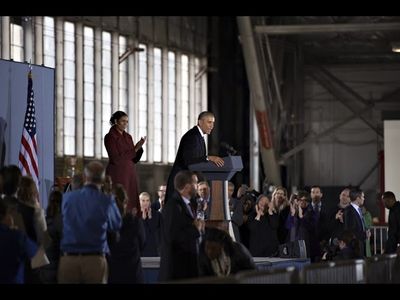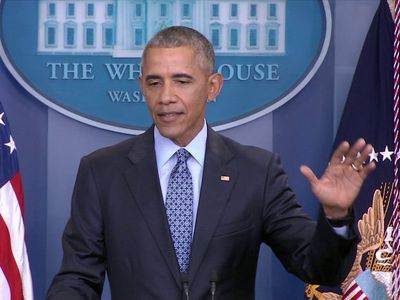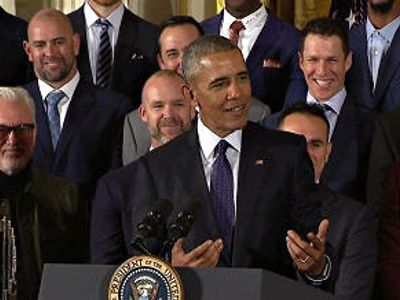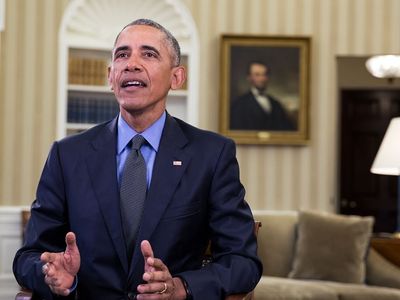
President Obama: Well, hello everybody. Jambo. It's good to see you. The -- Well, this is a very good-looking group. So it's wonderful to be with all of you. My name is Barack Obama. In case you didn’t know. I want to, first of all, begin by thanking Kenyatta University for hosting us here today. We are very grateful. And the Vice Chancellor is here -- Madam Vice Chancellor, thank you. 奥巴马总统:大家好。你们好。很高兴见到你们。这个——嗯,你们这群人真精神。能和你们所有人在一起真是太棒了。我叫巴拉克·奥巴马。以防你们不知道。首先,我要感谢肯雅塔大学今天在这里接待我们。我们非常感激。副校长也在这里——副校长女士,谢谢您。
And before we get started, I want to point out that this is one of our first regional centers for the Young African Leaders program -- the Young African Leaders Initiative -- or YALI -- that we're doing. As many of you know, this is one of my labors of love here in Africa, an outgrowth of some of the work that we had been doing. 在我们开始之前,我想指出,这是我们青年非洲领导人项目——即青年非洲领导人倡议,简称YALI——的首批区域中心之一。正如你们许多人所知,这是我在非洲最上心的工作之一,是我们之前一些工作的延伸。
Seeing the incredible contributions that young leaders were making in so many countries, we thought let’s bring them together and give them opportunities to learn from each other, and network and access resources, so that they can, then, in their home countries, be able to accomplish remarkable things. And so we're really excited about that. So we thank the university for allowing us to use these facilities for these outstanding people. 看到年轻领导人在如此多的国家做出的非凡贡献,我们想,让我们把他们聚集在一起,给他们机会相互学习、建立人脉、获取资源,这样他们就能在自己的国家成就非凡的事业。所以我们对此感到非常兴奋。我们感谢这所大学允许我们使用这些设施来接待这些优秀的人才。
I just gave a very long speech. 我刚刚发表了一个很长的演讲。
Audience Comment: We saw it. 观众:我们看到了。
President Obama: You're saying it was also too long? Is that what you're saying? She nodded. She was all like, yes, it was very long. 奥巴马总统:你是说演讲也太长了?你是这个意思吗?她点头了。她好像在说,对,确实很长。
So because you just saw my speech, it doesn’t make sense for me to give a whole ‘nother speech. I'm really here more to listen and to learn. But I do want to just make a couple of brief remarks at the top. And then what I'm going to do is I'm going to call on a number of you. I've got a few names already to get us started, and then depending on how much time we have, then I'll try to see if I can call on some additional persons. 既然你们刚听完我的演讲,我就没必要再做一整场演讲了。我来这里更多是为了倾听和学习。但我确实想先做几点简短的发言。然后我会请你们中的一些人发言。我手里已经有几个名字来开场,然后根据我们的时间,我会尽量再请一些人发言。
America has historically been a country of people who participate in the lives of their communities and their societies. And it's one of the things that make us, I believe, a great nation. 美国历史上就是一个人民积极参与社区和社会生活的国家。我相信,这是使我们成为一个伟大国家的因素之一。
There’s a famous French writer named Alec de Tocqueville, who traveled to the United States, and wrote a very famous book called “Democracy in America.” And the point that he made in this book during the course of his travels was that what made America a democracy was not just that it had elections, but that it was a society of joiners and volunteers, and people who wanted constantly to be involved in making their communities better. 有一位著名的法国作家叫亚历克西·德·托克维尔,他曾游历美国,写了一本非常著名的书叫《论美国的民主》。他在游历过程中在书中提出的观点是,美国之所以成为民主国家,不仅仅是因为它有选举,而是因为它是一个由参与者和志愿者组成的社会,人们总想不断参与,让自己的社区变得更好。
And if there was an injustice, they wanted to do something about it. And they would form organizations and they would form town halls, and disseminate information -- so that what the government did was obviously important, but what was just as important was what individual citizens were able to do to create a fabric of mutual concern and regard and advocacy that would shape government policy and would shape how societies were organized. 如果有不公,他们就想做些什么来改变。他们会成立组织,召开市政厅会议,传播信息——所以政府的作为固然重要,但同样重要的是公民个人能够做些什么,来建立一种相互关怀、尊重和倡导的纽带,从而影响政府政策,塑造社会的组织方式。
And almost all the progress that America has made in expanding freedom and opportunity has grown as a result of that bottom-up civic participation. 美国在扩大自由和机会方面取得的几乎所有进步,都是这种自下而上的公民参与的结果。
The civil rights movement, the women’s rights movement, the movement most recently to make sure that our gay and lesbian brothers and sisters have equal rights, the movement to end wars, in some cases, the movement to provide better resources for poor children. And there’s the halfway house movement, and the movement to -- the settlement house movement, rather, and to make sure that children and orphans were properly cared for. The movement to public education and public universities. The environmental movement. 民权运动、妇女权利运动、最近确保我们男女同性恋兄弟姐妹享有平等权利的运动、结束战争的运动——在某些情况下,还有为贫困儿童提供更好资源的运动。还有中途之家运动,以及——应该说是安置之家运动,确保儿童和孤儿得到适当照顾。公共教育和公立大学运动。环保运动。
So many of these things arose because ordinary citizens started to get together and speak out and press their demands on their government. And eventually, politicians responded. 这么多成就之所以出现,是因为普通公民开始走到一起,发出声音,向政府提出他们的诉求。最终,政治家们做出了回应。
And I got my start in public life not as an elected official but as a community organizer in a poor neighborhood in Chicago. And I would work with churches and community groups to try to improve the school system, or bring affordable housing. And we weren't always completely successful, but it taught me the importance of the voices of ordinary people when they come together to create a better vision for the future. 我进入公共生活的起点不是作为民选官员,而是作为芝加哥一个贫困社区的社区组织者。我会与教会和社区团体合作,努力改善学校系统,或者带来经济适用房。我们并不总是完全成功,但这教会了我,当普通人走到一起为更美好的未来愿景而努力时,他们的声音是多么重要。
And that's why I think civil society is so important. And that's why I emphasized it in the speech that I made today. And this is something that I emphasize wherever I go -- democracy does not stop on Election Day. For a real democracy to work, and for a society to thrive and continually improve, it requires that people continue to participate. And there have to be laws in place to protect that space and facilitate people’s ability to participate. 这就是为什么我认为公民社会如此重要。这也是为什么我在今天的演讲中强调了这一点。无论我走到哪里,我都强调这一点——民主不会在选举日停止。一个真正的民主要运转,一个社会要繁荣并不断进步,就需要人民持续参与。而且必须有法律来保护这个空间,促进人民参与的能力。
Now, the good news is, here in Kenya, you now have a constitution that creates the space for such participation. Alongside freedom of the press, and freedom of assembly, and the ability to organize politically, these are precious freedoms that have to be protected. 好消息是,在肯尼亚,你们现在有了一部宪法,为这种参与创造了空间。除了新闻自由、集会自由和政治组织的能力,这些都是必须保护的宝贵自由。
Because Kenya is a young democracy there’s always a concern that it might slip back and that space might narrow, despite what the constitution says. And I just want to say part of the reason why it's important for me to be here today is to send a message that we in the United States at least believe that civil society is important and we want to continue to affirm it, and we want to listen and hear what it is that ordinary citizens, working together, have to say about their communities and about their lives. 由于肯尼亚是一个年轻的民主国家,人们总是担心它可能倒退,空间可能缩小,尽管宪法有规定。我只想说,我今天来到这里的部分原因,是为了传递一个信息:至少我们美国认为公民社会很重要,我们希望继续肯定它的价值,我们希望倾听普通公民共同努力时,对他们的社区和生活有什么话要说。
And if Kenya can continue to cultivate those habits of participation and citizenship and freedom, then the country is going to be better off, and it's going to continue to make progress for all people and not just some. 如果肯尼亚能够继续培养参与、公民意识和自由的习惯,那么这个国家将会更加美好,它将继续为所有人而不仅仅是部分人取得进步。
So with those opening remarks, what I want to do now is just open it up for conversation. And I have in my hand some names to call on. I may not get through all of them. 说了这些开场白,我现在想开始对话。我手里有一些要请的人的名字。我可能没法全部请到。
I think you’ve been instructed to try to be relatively brief. In some cases, what I'll do is I'll respond right away to the comments. In some cases, I may wait and respond at the end. But this is designed not so much as a town hall, to ask me questions, it's more designed for you to give me a sense of the things that are important to you, so that I can learn -- and because I think this is going to be televised -- so that the Kenya people as a whole can hear as well. 我想你们已经被指示尽量简短。在某些情况下,我会立即回应这些评论。在某些情况下,我可能会等到最后再回应。但这次活动与其说是让你们问我问题的市政厅会议,不如说是让你们告诉我对你们重要的事情,这样我可以学习——而且因为我认为这次活动会被电视转播——这样肯尼亚人民也能听到。
And the only thing I would ask is that everybody be respectful. And one of the rules of good civil society I believe is that you’re respectful of the people who disagree with you. And that's part of what makes civil society work. If you can have civil disagreements, and you can listen to each other and not just shout, that's what creates an environment that leads to progress over the long term. 我唯一的要求是每个人都要有礼貌。我认为良好公民社会的规则之一是,你要尊重与你意见不同的人。这是公民社会运转的部分原因。如果你能进行文明的分歧,你能互相倾听而不只是喊叫,这才能创造长期带来进步的环境。
And the only other thing I'm going to do is, because it's warm, I'm going to take off my jacket. You're free to do so as well. This is pretty relaxed. 我要做的另一件事是,因为天气热,我要脱掉外套。你们也可以脱。这里相当放松。
Okay, so -- and we've got a few topics where we've got some civil society organizations that are already working on some of these issues. And one of the topics that hasn’t gotten a lot of attention during my trip but I consider very important because it's part of Kenya’s heritage, but it's also part of global heritage -- and that is the issue of wildlife trafficking, where active citizens are really making a difference. 好的,那么——我们有几个议题,已经有一些公民社会组织在研究这些问题。其中一个议题在我的行程中没有得到太多关注,但我认为非常重要,因为它是肯尼亚遗产的一部分,也是全球遗产的一部分——那就是野生动物贩运问题,在这个问题上,积极的公民真的在发挥作用。
And I'm going to call on Tom Lalampaa of the Northern Rangelands Trust, to tell us about what he’s doing. 我要请北部牧场信托基金的汤姆·拉兰帕,告诉我们他在做什么。
Mr. Lalampaa: Thank you very much, Mr. President. I work for Northern Rangelands Trust Entity, an umbrella community organization currently supporting over 30 community-based conservancies. 拉兰帕先生:非常感谢您,总统先生。我在北部牧场信托机构工作,这是一个伞式社区组织,目前支持30多个社区保护地。
We've had a lot of successes on the trafficking as well. But I just want to mention two high-level impacts. One is that we've been able to develop a model of a community conservancy that is unique, that has proven very successful, now widely accepted by the national government and the county governments. 我们在打击贩运方面也取得了很多成功。但我只想提两个高层影响。一是我们能够发展出一种独特的社区保护地模式,已被证明非常成功,现在已被国家政府和郡政府广泛接受。
And all the model has is that, first and foremost, is that it is grassroots-rooted. It's formed by the local communities -- by the elders, the women and the youth in the villages. And so these institutions help to anchor good governance, gender matters, awareness, micro-finance for our youth and our women, s well, and many, many more programs, including the -- getting water. It's become an entry point for the national government and the county governments to deliver services to the local communities. 这个模式的核心是,首先且最重要的是,它扎根于基层。它由当地社区组成——由村庄里的长者、妇女和青年组成。这些机构帮助锚定善治、性别事务、意识提升、为青年和妇女提供小额信贷等等,还有很多很多项目,包括——获取水资源。它已成为国家政府和郡政府向当地社区提供服务的切入点。
It's also structured in such a way that the political leaders take part in those institutions. So they are local community institutions that are registered with the government. And it's just amazing, because they are creating a platform for dialogue -- a platform for communities to decide where they want water, where they want help, where they want -- what they want to do in matters. 它的结构还使政治领导人能够参与这些机构。所以它们是在政府注册的地方社区机构。这真是太棒了,因为它们正在创造一个对话平台——一个让社区决定他们在哪里需要水、在哪里需要帮助、在哪里需要——他们想在哪些事务上有所作为的平台。
The second high-level impact, Mr. President, is getting conservation to drive peace and conflict resolution in northern Kenya. In northern Kenya, peace and security is quite elusive for many reasons. One is because of illegal firearms. Secondly, it's just because of the nature of the mistrust among our ethic communities. And thirdly, also because of the natural resources -- pasture, water for our cattle. And so we've managed to get the conservation to drive peace and conflict resolution in northern Kenya. 总统先生,第二个高层影响是让保护工作推动肯尼亚北部的和平与冲突解决。在肯尼亚北部,由于多种原因,和平与安全非常难以实现。一是因为非法枪支。二是因为我们族群之间的不信任性质。第三,也是因为自然资源——牧场、牲畜的水源。所以我们成功地让保护工作推动了肯尼亚北部的和平与冲突解决。
I was telling my friend, Paula, here that when communities, local communities -- they want peace. There’s no way the elephants live in peace. So that's what I'm saying, Mr. President, that all that has been made possible through the support of the U.S. government, and in particular, through the USAID Kenya. 我刚才还在跟我的朋友葆拉说,当社区——当地社区——想要和平的时候。大象是不可能和平生活的。总统先生,我要说的是,所有这一切之所以成为可能,是因为美国政府的支持,特别是通过美国国际开发署肯尼亚办事处。
Mr. President, we have a number of challenges, but I'll put them in terms of a kind request to you. One, we’d appreciate the U.S. government support to protect and conserve the remaining African elephants. I'm saying the remaining because we have lost many. You can help us in three ways. First and foremost is to crush demand and market, Mr. President. Not even reducing it. if we can, let’s crush it once and for all. 总统先生,我们面临一些挑战,但我会以向您提出恳切请求的方式来表达。第一,我们感谢美国政府支持保护和养护剩余的非洲大象。我说是"剩余的",因为我们已经失去了很多。您可以在三个方面帮助我们。首先且最重要的是粉碎需求和市场,总统先生。不只是减少它。如果可以的话,让我们一劳永逸地粉碎它。
The Kenya government -- the civil society, ourselves, and the local communities can only prevent poaching from the source, from being poached. But the markets and the demand, Mr. President, are far outside our borders. We are helpless. Please help us. 肯尼亚政府——公民社会、我们自己以及当地社区——只能从源头防止偷猎,防止大象被偷猎。但是市场和需求,总统先生,远在我们的国界之外。我们无能为力。请帮助我们。
The other way you can help us protect and conserve the remaining African elephants, Mr. President, is to get the U.S. government be a member of the African-led elephants protection initiative. Currently, nine African states have signed to it. So it would just bring enormous support and recognition if your government can join it and also be a part of it. 总统先生,您可以帮助我们保护和养护剩余非洲大象的另一种方式,是让美国政府成为非洲主导的大象保护倡议的成员。目前,已有九个非洲国家签署了该倡议。因此,如果贵国政府能够加入并成为其中一员,那将带来巨大的支持和认可。
Thirdly, in terms of helping us conserve and protect our elephants, the remaining, is to help us deal with the ivory. 第三,在帮助我们养护和保护剩余大象方面,是帮助我们处理象牙问题。
The second request that I think would benefit all of us here, Mr. President, my request also is that if possible -- we notice this is discussed all the time, but our humble request of the U.S. government is to increase the international support for the international programs. And I have in mind, I talk about the U.S. aid that's involved, and any other U.S. government-related development agencies -- because it's from that pot that we are going to support conservation, that we can improve livelihoods, that we can support governance. 我认为第二个对我们所有人都有利的请求,总统先生,我的请求还有,如果可能的话——我们注意到这个问题一直在被讨论,但我们对美国政府的卑微请求是增加对国际项目的国际支持。我想到的是,我所说的涉及美国国际开发署,以及任何其他美国政府相关的发展机构——因为正是从这笔资金中,我们将支持保护工作,我们可以改善生计,我们可以支持治理。
I always have a feeling that the USAID office, wherever they are in Africa, and in the world, they get massive applications, and they can only deal with so much. Lastly, Mr. President, I must admit the fact that the embassy’s office -- the USAID offices have been very good with us and extremely supportive. 我总有一种感觉,美国国际开发署办事处,无论在非洲还是在世界任何地方,都会收到大量申请,他们只能处理这么多。最后,总统先生,我必须承认,大使馆的办公室——美国国际开发署办事处一直对我们非常好,给予了极大的支持。
Thank you so much, Mr. President. 非常感谢您,总统先生。
President Obama: Let me just say, first of all, Tom, you’re an eloquent spokesman for your cause and that was an excellent presentation. The second thing I have to say is that everybody is going to have to be briefer than Tom. Just because I want to make sure that I get as many comments as possible. 奥巴马总统:首先,汤姆,我想说,你是你事业的雄辩代言人,你的发言非常精彩。我要说的第二件事是,每个人都必须比汤姆更简短。只是因为我想确保能听到尽可能多的意见。
The third point is, with respect to conservation, you said the elephants that have been lost -- 20,000 elephants have been lost in recent years. And part of the reason why civil society has to be mobilized around conservation is that if people have a choice -- if they see a false choice between their own livelihoods and conserving animals then the animals will lose. If they’re organized so that they see that preservation and conservation enhances their lives, then we win, because they feel ownership and they will participate. 第三点是,关于保护,你说大象已经消失了——近年来已有2万头大象消失。公民社会必须围绕保护动员起来的部分原因是,如果人们有选择——如果他们在自己的生计和保护动物之间看到一个虚假的选择,那么动物会输。如果他们被组织起来,看到保护和养护能够改善他们的生活,那么我们就赢了,因为他们有了主人翁意识,他们会参与进来。
And that's why the organizations that you're putting together are so important. 这就是你们正在组建的组织如此重要的原因。
Now, we've got another person just on this issue before we move to another issue -- Paula Kahumbu, right here. I could tell because she’s got an arm band that says, “Hands Off Our Elephants.” With the Wildlife Trust. 现在,在我们转到另一个议题之前,还有一位人士就在这个问题上发言——葆拉·卡胡姆布,就在这里。我能看出来,因为她戴着一个臂章,上面写着"别碰我们的大象"。她在野生动物信托基金会工作。
Ms. Kahumbu: Thank you, Mr. President. First, on behalf of all the conservation community -- and there are several people in the room -- thank you so much for your initiatives on the African elephant in particular. 卡胡姆布女士:谢谢您,总统先生。首先,我代表整个保护界——房间里有好几个人——非常感谢您特别是在非洲大象问题上采取的举措。
More than 30,000 elephants -- 超过3万头大象——
President Obama: 30,000. 奥巴马总统:3万头。
Ms. Kahumbu: -- are being killed every year in Africa. That's one every 15 minutes. Your grandchildren elephants. I love elephants. I want the whole world to fall in love with elephants. And I started this campaign, “Hands Off Our Elephants,” under the organization, Wildlife Direct, with the First Lady Margaret Kenyatta, to empower and mobilize Kenyans, Africans across the entire continent to save elephants. They are our heritage. They are our identity. And it's our duty. And it's not just Africans who benefit from this. The whole world benefits. 卡胡姆布女士:——每年在非洲被杀害。每15分钟就有一头。您孙辈那一代的大象。我爱大象。我希望全世界都爱上大象。我发起了这项"别碰我们的大象"运动,隶属于"野生动物直接"组织,与第一夫人玛格丽特·肯雅塔一起,旨在赋权和动员肯尼亚人、整个非洲大陆的非洲人来拯救大象。它们是我们的遗产。它们是我们的身份。这是我们的责任。而且不只是非洲人从中受益。全世界都受益。
It's not been easy, but our work has really led to a change in the hearts and minds of Kenyans, and also the laws. We've been at the center of judicial reforms in this country. Our work has led to the arrest of one of the most -- what do I say --notorious suspected ivory kingpins, Feisal Mohamed Ali. For the first time in Kenya, an ivory trafficker is behind bars. And that's thanks to support from your embassy, through Ambassador Godec, and many other organizations. 这并不容易,但我们的工作确实改变了肯尼亚人的思想和观念,也改变了法律。我们一直处于这个国家司法改革的中心。我们的工作导致了最——怎么说呢——臭名昭著的象牙走私嫌疑人之一费萨尔·穆罕默德·阿里被捕。在肯尼亚,一名象牙走私者第一次被关进了监狱。这要感谢贵国大使馆通过戈德克大使以及许多其他组织提供的支持。
And while we're succeeding locally in Kenya, poaching is down, the problem across Africa is escalating, and the demand for ivory is actually exploding. We're dealing with a wildlife crisis alone. We're dealing with international wildlife crime. And that's why my organization goes after traffickers. We're dealing with people who are funding terrorism, and we're dealing with a crime that is fueled by corruption. 虽然我们在肯尼亚本地取得了成功,偷猎行为有所减少,但整个非洲的问题正在升级,对象牙的需求实际上在爆炸式增长。我们独自应对一场野生动物危机。我们应对的是国际野生动物犯罪。这就是为什么我的组织要追捕走私者。我们在对付资助恐怖主义的人,我们在对付一种由腐败助长的犯罪。
So we have two requests. The first is that you take this message back to the American people. We're often asked, how can we help. It's very simple: Tell the American people, don't buy ivory. It's the simplest way to help. Secondly, we request that the USA takes a lead in pursuing international wildlife traffickers with the same vigor and rigor that you apply to money laundering and drug crimes. And we believe that this can be done through strengthening your legal assistance role not just in the demand countries, but source countries and transit countries. 所以我们有两个请求。第一,请您把这个信息带回给美国人民。我们经常被问到,我们能帮上什么忙。很简单:告诉美国人民,不要购买象牙。这是最简单的帮助方式。第二,我们请求美国带头追捕国际野生动物走私者,力度和严格程度要与你们打击洗钱和毒品犯罪一样。我们相信,可以通过加强你们的法律援助作用来做到这一点,不仅在需求国,而且在来源国和过境国。
Because we know that the number of people involved in this crime is actually relatively small compared to those other crimes. And so we can crush this very quickly and end the war and save elephants for all of humanity. 因为我们知道,与其他那些犯罪相比,参与这种犯罪的人数实际上相对较少。所以我们可以很快粉碎这个问题,结束这场战争,为全人类拯救大象。
Thank you. 谢谢您。
President Obama: Thank you. Well, as you may have noted, yesterday one of our announcements was to be even stricter with respect to any ivory sales inside the United States. I mean, we really are cracking down on that. 奥巴马总统:谢谢你。嗯,正如你可能注意到的,昨天我们宣布的一项措施就是对美国境内的任何象牙销售采取更严格的规定。我的意思是,我们真的在严厉打击。
And with respect to the international networks, you're absolutely right that there’s a connection between corrupt officials getting paid, criminals being armed, and the ivory trade. You have this linkage that should be of concern to all of us. And it's international in scope. 关于国际网络,你说得完全正确,腐败官员收受贿赂、犯罪分子获得武器与象牙贸易之间存在联系。这种联系应该引起我们所有人的关注。而且它是国际性的。
Most recently, the United States is involved in negotiations with the Asian countries, the Asia Pacific region -- something called the Trans-Pacific Partnership. One of the things we're trying to accomplish in the trade agreement is for many of these countries with still strong demand for ivory to start getting much more serious about the enforcement of their laws, and have it embedded in the trade agreements that we initiate. 最近,美国正在与亚洲国家、亚太地区进行谈判——即跨太平洋伙伴关系协定。我们试图在这项贸易协定中实现的目标之一,就是让许多对象牙仍有强劲需求的国家开始更加认真地执法,并将其纳入我们发起的贸易协定中。
So, hopefully, we'll be able to influence not just what happens in the United States, but also in some of the areas where the demand is heaviest. 所以,希望我们不仅能够影响美国国内的情况,也能影响一些需求最旺盛地区的情况。
Another topic where we've seen some progress, and this is something that's close to my heart because I've got two daughters, and close to Michelle’s heart -- she’s been involved internationally, trying to highlight the issue of girls’ education with what we're calling the Let Girls Learn initiative that involves many of our international agencies -- is the issue of girls’ education. Obviously I've made it a big emphasis in my speech here today. 另一个我们看到一些进展的议题,这也是我非常关心的问题,因为我有两个女儿,也是米歇尔非常关心的问题——她在国际上参与了相关工作,试图通过我们称之为"让女孩学习"的倡议来突出女孩教育问题,该倡议涉及我们的许多国际机构——那就是女孩教育问题。显然,我在今天的演讲中对此做了很大的强调。
So we've got a couple of people to talk about some of the work that's being done through civil society on this issue. And I'm going to start with Kennedy Odede of Shining Hope for Communities. 所以我们有几个人来谈谈公民社会在这个问题上正在开展的一些工作。我先从"社区闪耀希望"组织的肯尼迪·奥德德开始。
Mr. Odede: Mr. President, it's my pleasure and privilege to meet someone like you who believes in grassroots change. You and I, we share one background that you did social work in Chicago and I'm doing it in Kibera where I grew up. I grew us whereby it's really hard to make it. There’s no hope, no dream. Many young men end up being -- go to crime. It's easy for them -- if they’re not able to enjoy even tourism because they don't have a dream. There’s no hope in them. 奥德德先生:总统先生,很荣幸也很高兴能见到您这样相信基层变革的人。您和我有一个共同的背景,您在芝加哥做过社会工作,而我在我长大的基贝拉做社会工作。我成长的地方真的很难成功。没有希望,没有梦想。许多年轻人最终——走向犯罪。对他们来说很容易——如果他们连旅游业都享受不到,因为他们没有梦想。他们心中没有希望。
Mr. President, I was really having a hard time in my community, but we said, enough is enough -- and, yes, we can! We came together with a soccer ball and that became a movement that really circled around girls’ education. We built the first school in Kibera called Kibera School for Girls and then started providing social services to men, too. And that became world-changing. 总统先生,我在社区里真的很艰难,但我们说,受够了——是的,我们能行!我们带着一个足球聚在一起,这成为了一场真正围绕女孩教育的运动。我们在基贝拉建了第一所学校,叫基贝拉女子学校,然后也开始为男性提供社会服务。这改变了世界。
But my challenge is that how do you take a grassroots thing like this across Africa, and by having more partners joining that? Thank you so much. 但我的挑战是,如何把这样的基层事业推广到整个非洲,让更多的合作伙伴加入进来?非常感谢您。
President Obama: You know, organizations like yours, if you show that it works and you're creating a model of success, then it's more likely that it gets adopted in other places. People learn from seeing something succeed that people might not have believed before could happen. And if they see that a school for girls in Kibera, with all the poverty there, is successful, that means it can succeed anywhere. 奥巴马总统:你知道,像你们这样的组织,如果你们能证明它有效,你们正在创造一个成功的模式,那么它更有可能在其他地方被采纳。人们从看到某件事成功中学到东西,而人们之前可能不相信这件事能成功。如果他们看到基贝拉一所女子学校,尽管那里到处都是贫困,却能取得成功,那就意味着它在任何地方都能成功。
So we're very encouraged by the good work that you're doing. Now, we also have with us Linet Momposhi. Linet is right there. Now, Linet is a student and she’s here from Pangani Girls Form Two. Linet. 所以我们对你所做的出色工作感到非常鼓舞。现在,我们还有莉内特·蒙波希和我们在一起。莉内特就在那边。莉内特是一名学生,她来自潘加尼女子中学二年级。莉内特。
Ms. Momposhi: Thank you, Mr. President, for giving me this chance. Let me speak with you actually of a friend of mine. At the age of 12, this friend -- she dropped out of school and underwent genital mutilation. In my community, after undergoing such this, the [inaudible] said, she is ready for marriage. She was married to a man older than her, twice her age. And now at the age of 15, she has three children. She’s not able to care for them, for their education. She milks the cows in the morning and sells the milk so that she can have something to give to her children. 蒙波希女士:谢谢您,总统先生,给我这个机会。让我跟您说说我的一个朋友。12岁时,这个朋友——她辍学了,还接受了生殖器切割。在我的社区,经历了这种事情之后,[听不清]说,她可以结婚了。她嫁给了一个比她大两倍的男人。现在15岁的她,已经有了三个孩子。她无法照顾他们,无法供他们上学。她早上挤牛奶,卖牛奶,这样才能给她的孩子一些东西。
For me, I got an opportunity to be at a boarding school in Kakenya Center. I had all the chance to study and I had all the time. I learned to milk the cows for my mom and prepare my siblings to go back to school. But now I'm studying in Pangani Girls, and become the first girl in the center. And now I would like to be a cardiologist and study at Harvard University. 对我来说,我有机会在卡肯亚中心的一所寄宿学校学习。我有所有的学习机会,我有充足的时间。我学会了为妈妈挤牛奶,准备弟弟妹妹们上学。但现在我在潘加尼女子中学学习,成为了中心的第一个女孩。现在我想成为一名心脏病专家,在哈佛大学学习。
President Obama: That sounds good. 奥巴马总统:听起来不错。
Ms. Momposhi: And also I would like to set an example to the girls in my community that a girl can really become a cardiologist. Thank you. 蒙波希女士:而且我还想为我社区的女孩树立榜样,让她们知道一个女孩真的可以成为心脏病专家。谢谢您。
President Obama: That's wonderful. Linet, hold on. You were so inspiring. Give Linet the mic back. Linet, how old are you right now? 奥巴马总统:太好了。莉内特,等一下。你太鼓舞人心了。把麦克风还给莉内特。莉内特,你现在多大了?
Ms. Momposhi: I'm 16 years old. 蒙波希女士:我16岁。
President Obama: You’re 16 years old. And how did you come to be able to go to the boarding school? 奥巴马总统:你16岁。你是怎么能上寄宿学校的?
Ms. Momposhi: I was helped by Kakenya, the Kakenya Center. And that's how I go to study in Kakenya Center. And my dreams started working in that center where I had a chance to go to Maryhill but I went to Pangani Girls. 蒙波希女士:我得到了卡肯亚的帮助,卡肯亚中心。我就是这样去卡肯亚中心学习的。我的梦想在那个中心开始实现,在那里我有机会去玛丽希尔学校,但我去了潘加尼女子中学。
President Obama: So there was a center there, and by you coming into the center, then you started having bigger dreams about what you might be able to do? 奥巴马总统:所以那里有一个中心,通过进入这个中心,你开始对你可能能够做的事情有了更大的梦想?
Ms. Momposhi: Okay, I never used to have big dreams like now. Before joining the center, I never knew what I was going to do because I never had any hope in life. 蒙波希女士:是的,我以前从来没有像现在这样的大梦想。在进入中心之前,我从来不知道我要做什么,因为我对生活从来没有任何希望。
President Obama: Yes. So, Linet, I'm sure you're going to be an excellent cardiologist. So we're very proud of you. But it just sends a message in terms of why civil society is so important. So many of our young people who have a lot of talent, but they just don't know what’s possible. And sometimes the most important thing is just to show them that this is what could happen in your life if you work hard. And when they have a vision about what could happen, then suddenly they’re motivated, the same way that Linet is motivated. And she stars having bigger ambitions about what’s possible. 奥巴马总统:是的。莉内特,我相信你会成为一名出色的心脏病专家。我们为你感到非常骄傲。但这正好传递了一个信息,说明公民社会为什么如此重要。我们有这么多年轻人很有天赋,但他们就是不知道什么是可能的。有时候最重要的事情就是向他们展示,如果你努力工作,你的生活就会发生这样的变化。当他们对可能发生的事情有了愿景时,他们就会突然充满动力,就像莉内特一样。她开始对什么是可能的有了更大的抱负。
That's part of the reason why civil society organizations that create mentorship programs and programs for young people to interact in different professions and talk to people who have succeeded is so important. And in fact, in the United States I've set up something called My Brother’s Keeper, designed to target disadvantaged youth so that they are connected to mentorship programs very similar to some of the work that resulted in Linet being inspired. 这就是为什么公民社会组织创建导师计划,以及让年轻人接触不同职业、与成功人士交流的项目如此重要的部分原因。事实上,在美国,我设立了一个叫做"守护我的兄弟"的项目,旨在帮助弱势青少年,让他们与导师计划联系起来,这与激发莉内特灵感的一些工作非常相似。
In fact, we have young people who are mentors at the White House and we connect them with all of our senior staff. And I have dinner with them and give them advice. I don't know if they listen to the advice, but I think they do. 事实上,我们有年轻人在白宫担任导师,我们把他们与我们所有的高级工作人员联系起来。我和他们一起吃饭,给他们建议。我不知道他们是否听我的建议,但我认为他们听。
Linet, you're a very find young woman. Congratulations. We're very proud of you. 莉内特,你是一个非常优秀的年轻女性。祝贺你。我们为你感到非常骄傲。
So one of the issues, obviously, that’s been of concern lately in Kenya is terrorism. This is an area where I'm working extensively with the government. This is something that we're concerned about internationally. And obviously given what happened in places like Westgate and Garissa, Kenya is a source of concern as well. 显然,最近肯尼亚令人担忧的问题之一是恐怖主义。这是我正在与政府广泛合作的一个领域。这是我们在国际上关注的问题。显然,考虑到韦斯特盖特和加里萨等地发生的事情,肯尼亚也是一个令人担忧的地方。
But as I said in the press conference yesterday, one of the important lessons that we've learned is that you can't just fight terrorism through military and the police. You also have to change people’s hearts and minds, and give them a sense that they’re included in the society and enlist them in assisting in fighting against terrorism. 但正如我在昨天的新闻发布会上所说,我们学到的重要教训之一是,你不能只通过军队和警察来打击恐怖主义。你还必须改变人们的思想和观念,让他们感到自己是社会的一分子,并争取他们协助打击恐怖主义。
And so I actually think that it's important to include civil society in the fight against terrorism. That's what we're doing in the United States. That's what we need to do here in Kenya as well. And so we've got a couple of organizations that are here that I want to call on just to talk about the kind of work they’re doing and what they’re finding on the ground in dealing with this very important issue. 所以我确实认为,让公民社会参与反恐斗争很重要。这就是我们在美国正在做的事情。这也是我们在肯尼亚需要做的事情。所以我们有几个组织在这里,我想请他们谈谈他们正在做的工作,以及他们在处理这个非常重要的问题时在当地发现的情况。
And I'm going to start with Hassan Ole Nado, who is with SUPKEM. He's the deputy secretary general -- which is a very important title. But, please, go ahead. And describe for us what SUPKEM does. Is it regionally located? Is it national? Or is it more along the coast? Tell me about what it’s doing. 我先从哈桑·奥莱·纳多开始,他在肯尼亚穆斯林最高委员会工作。他是副秘书长——这个头衔很重要。不过,请讲吧。给我们介绍一下肯尼亚穆斯林最高委员会是做什么的。它是地区性的吗?还是全国性的?还是更多在沿海地区?告诉我它在做什么。
Mr. Ole Nado: Thank you, Mr. President, for this opportunity and also for having time with civil society in Kenya. The Supreme Council of Kenya Muslims is an umbrella organization of Muslim organizations in the country, particularly mosque and Muslim committees all over the country. And also, we now have community-based organizations that are working at the community level, but they found time to advocate and to be part of the Supreme Council of Kenya Muslims. 奥莱·纳多先生:谢谢您,总统先生,给我这个机会,也感谢您抽出时间与肯尼亚的公民社会交流。肯尼亚穆斯林最高委员会是该国穆斯林组织的伞式机构,特别是全国各地的清真寺和穆斯林委员会。而且,我们现在还有在社区层面工作的社区组织,它们也抽出时间来倡导,并成为肯尼亚穆斯林最高委员会的一部分。
We are here, and we have been doing this work for the last two years because we are a little bit late in the journey, but we realize that it’s very important for the community to be engaged. We have worked before by developing a Countering Violent Extremism advocacy chapter. That calls for community leaderships, calls for government engagement, and also brings other civil society organizations onboard so that we can be able to deal with this issue. 我们在这里,我们过去两年一直在做这项工作,因为我们在这个进程中起步稍晚,但我们意识到社区参与非常重要。我们之前通过建立一个"打击暴力极端主义"倡导分会来开展工作。它呼吁社区领袖,呼吁政府参与,也让其他公民社会组织加入进来,以便我们能够应对这个问题。
As you have already said, terrorism is not about military or the police or other things. It’s more of community issues. So it has both security and social aspect of it. And I really thank you because of the White House summit, which I was privileged to attend with Hussein Khalid of Haki Africa. 正如您已经说过的,恐怖主义不是关于军队或警察或其他东西。它更多的是社区问题。所以它既有安全方面,也有社会方面。我真的很感谢您,因为白宫峰会,我有幸与哈基非洲组织的侯赛因·哈立德一起参加了那次峰会。
And after that particular meeting, when we came back to Kenya we found an opportunity to engage with government. Because before that White House summit, the engagement or relationship between civil society was a little bit lower. But thanks to that conference, that really opened up the government to engage with civil society. 在那次会议之后,当我们回到肯尼亚时,我们找到了与政府接触的机会。因为在白宫峰会之前,公民社会的接触或关系稍微冷淡一些。但多亏了那次会议,政府才真正开放与公民社会接触。
Through that meeting, actually, we have been able, as civil society, to engage government in the development of a national counter-violent extremism strategy. And I hope the government will [inaudible] the strategy very soon. 通过那次会议,实际上,我们作为公民社会已经能够让政府参与制定国家打击暴力极端主义战略。我希望政府很快能[听不清]这项战略。
We know a number of organizations who have been involved in this part of community projects, like Haki Africa and MUHURI are currently facing some problems. And I hope through your engagement with the government, you’d be able to raise concerns of these institutions. I know that the American government cannot engage organizations that have relationships with terrorist organizations. And I that is one of the things that really think it is important to protect institutions or individuals who engaged in this particular work. 我们知道一些参与这部分社区项目的组织,比如哈基非洲组织和穆胡里组织目前正面临一些问题。我希望通过您与政府的接触,您能够提出对这些机构的关切。我知道美国政府不能与有恐怖组织关系的组织接触。我认为这确实是保护从事这项特定工作的机构或个人的重要事项之一。
At the moment, we are also working with the returnees in this country -- we have young men and women who are somehow misadvised and found themselves in terrorist organizations. They found a way of getting back to their country, and there are not clear ways of engagement. I work with the government of Kenya because they gave amnesty to those who are willing to be given the amnesty. 目前,我们还在与这个国家的回归者合作——我们有一些年轻男女不知怎么被误导,加入了恐怖组织。他们找到了返回祖国的方法,但没有明确的接触方式。我与肯尼亚政府合作,因为他们对那些愿意接受特赦的人给予了特赦。
At the moment, we are really engaging them, and the government is also opening up -- because at the moment now, they are also creating what they call interagency coordination centers at the county level where all arms of government are talking together before they take actions against suspected terrorists. 目前,我们真的在与他们接触,政府也在开放——因为现在,他们还在郡一级建立所谓的跨机构协调中心,政府所有部门在对恐怖嫌疑人采取行动之前都会一起讨论。
The Muslim community, the leadership are also now onboard and they are really working on the areas of counter-narrative, because there are two narratives here. There is the ideological narrative and there is the old narrative of marginalization and other aspects. We talk about perceptions in the narrative of marginalization -- they are real issues that we are calling the government to address those issues. 穆斯林社区,领导层也加入了进来,他们确实在反叙事领域开展工作,因为这里有两种叙事。一种是意识形态叙事,另一种是边缘化和其他方面的陈旧叙事。我们谈论边缘化叙事中的看法——它们是真实的问题,我们呼吁政府解决这些问题。
One of the issues is the lack of identification documents for young people. I think it is very important that that should too should be addressed. 其中一个问题是年轻人缺乏身份证件。我认为这也应该得到解决。
We have a collapse of the education system in the northeast because of terror organizations. And I hope, as struggle to find ways and answers of how to deal with this problem, it is important for USAID, which I know they’ve done quite a lot of work in this country, to consider getting into education much more by engaging communities so that communities can run community-based organization education systems in the northeast so that we are avoid getting terrorists of tomorrow. 由于恐怖组织,我们东北部的教育系统已经崩溃。我希望,在努力寻找应对这个问题的方法和答案时,重要的是美国国际开发署——我知道他们在这个国家做了很多工作——考虑更多地介入教育,让社区参与进来,这样社区就可以在东北部运营社区组织教育系统,避免培养明天的恐怖分子。
Because we have over 400,000 young children who are not going to school because everybody else is pulled from there, from the region. 因为我们有超过40万的幼儿不上学,因为其他人都离开了那个地区。
Maybe if I could speak for many days, but I really thank you for this opportunity and also for having time with the civil society organizations. 也许我可以说好几天,但我真的很感谢这个机会,也感谢您抽出时间与公民社会组织交流。
President Obama: Thank you. Before you give up the mic, let me just ask you a question. I’m glad that because of the White House summit that we had on countering violent extremism, that there was a more constructive conversation that was taking place. 奥巴马总统:谢谢你。在你放下麦克风之前,让我先问你一个问题。我很高兴因为我们举办的打击暴力极端主义白宫峰会,才有了更具建设性的对话。
I think that point that you make is so important, which is reaching young people early. What I hear you saying is, is that one of the problems that exists in certain parts of the country now is because of fear, in some cases, and some of the existing structures not operating as well as they should, that you just have children who don’t have access to educational resources and a structure, and then that makes them more vulnerable to recruitment into an organization that can give them some sense of purpose or meaning, even if it ends up being a very negative one. 我认为你提出的那一点非常重要,那就是及早接触年轻人。我听到你说的是,现在该国某些地区存在的问题之一是,由于恐惧,在某些情况下,以及一些现有机构没有正常运转,孩子们无法获得教育资源和结构,这使他们更容易被招募进一个能给他们某种目标感或意义感的组织,即使最终是非常负面的。
Is that what’s I’m understanding? 我理解得对吗?
Mr. Ole Nado: Yes, it’s actually -- that is what it is. Because after the unfortunate terror attacks of Mandera, and later on the university in Garissa, those who were targeted -- because those are targeting were doing it deliberately to create interreligious tension in the country. So we have those people, who are non-Muslims from the region, pulling out of the region because they feel it’s no longer safe for them to remain in that region. 奥莱·纳多先生:是的,实际上——就是这样。因为在曼德拉不幸的恐怖袭击之后,以及后来加里萨大学的袭击之后,那些被针对的人——因为那些发动袭击的人是故意这么做的,目的是在该国制造宗教间紧张关系。所以我们那些来自该地区的非穆斯林人,因为觉得留在那里不再安全,就离开了该地区。
But by pulling out, the region has been exposed because it doesn’t haven't adequate resources to address this gap that has emanated. So to me, I think one of the things that need to consider is we need to build local organizations that can really break that gap at the community level, it’s more sustainable because they’re communities at a lower level. 但他们离开后,该地区就暴露了,因为它没有足够的资源来填补由此产生的空白。所以对我来说,我认为需要考虑的一件事是,我们需要建立能够真正在社区层面弥补这一差距的地方组织,这样更可持续,因为它们是更基层的社区。
President Obama: Thank you. That’s very useful. Somebody else I want to hear from is Fauzia Abdi Ali, who’s with Women International Society. 奥巴马总统:谢谢你。这非常有用。我还想听听另一位人士的意见,福齐亚·阿卜迪·阿里,她在国际妇女协会工作。
Ms. Abdi Ali: Thank you. I must start by congratulating you. The speech was really, really good because it really advocated for issues of women, which is an area of passion. I’m not speaking as WIS today, I’m actually speaking as Sisters Without Borders, because I chair a platform of very inspirational women who work every single day in the field of peace and security, in particular countering violent extremism. 阿卜迪·阿里女士:谢谢您。我首先要祝贺您。演讲真的非常好,因为它真正倡导了妇女问题,这是我充满热情的领域。我今天不是以国际妇女协会的身份发言,我实际上是以"无国界姐妹"的身份发言,因为我主持着一个由非常鼓舞人心的女性组成的平台,她们每天都在和平与安全领域工作,特别是打击暴力极端主义。
So the women come from different parts of the country -- from northern Kenya, from the coastal region, and even here in Nairobi. And now I engage mentees all towards ensuring we have a peaceful society. We empower women from the household level to understand prevention, to understand early warning signs of radicalization of their kids, to look at prevention towards stigma that is associated with those mothers whose kids have actually joined violent extremism, or even their spouses. 这些女性来自该国不同地区——来自肯尼亚北部、沿海地区,甚至内罗毕这里。现在我指导学员,都是为了确保我们有一个和平的社会。我们从家庭层面赋权妇女,让她们了解预防,了解孩子激进化的早期预警信号,关注如何防止与那些孩子实际加入暴力极端主义的母亲——甚至她们的配偶——相关的污名化。
We also look at empowering them through support groups where they can have a space to engage with other like-minded people and even learn from each other. And we also ensure that this cross-border engagement between those within northern Kenya and those within the coastal region so that they don’t feel alone in this whole concept of violent extremism. 我们还通过支持小组赋权她们,让她们有空间与其他志同道合的人交流,甚至相互学习。我们还确保肯尼亚北部和沿海地区的妇女之间有跨境交流,这样她们在整个暴力极端主义问题上就不会感到孤单。
What is normally important for me is, when it comes to issues of peace and security, engagement with women is still minimal, and we’re still playing catchup. When we are pushing for two-thirds, even within our own parliamentary systems, we are not looking at what these two-thirds will be doing. 对我来说通常重要的是,在和平与安全问题上,妇女的参与仍然很少,我们仍在追赶。当我们推动三分之一比例时,即使在我们自己的议会体系中,我们也没有考虑这三分之一的人将做什么。
And for us, we are pushing towards them having some concrete things that they will talk about within parliament. And in particular is the issue of education. Because for the women in northern Kenya, their children are actually not going to school; they’re not getting quality education. And as Hassan has said, this ends up becoming a society that has young people who are not well educated and are more susceptible to violent extremism. 对我们来说,我们正在推动让她们在议会中有一些具体的事情可以讨论。特别是教育问题。因为对于肯尼亚北部的妇女来说,她们的孩子实际上不上学;他们得不到优质教育。正如哈桑所说,这最终会导致一个社会的年轻人没有受过良好教育,更容易受到暴力极端主义的影响。
Secondly, it’s the issue of the economy. In places such as the coast region, this has affected the economy. And this trickles down to the household level, and it affects the woman’s old economy within that structure. So how can we have even this conversation going on? And we try and link this to the national level. 第二是经济问题。在沿海地区这样的地方,这影响了经济。这渗透到家庭层面,影响了该结构中妇女的传统经济。那么我们怎么能进行这样的对话呢?我们试图将这与国家层面联系起来。
We also ensure that these discussions around policy on prevention has a gender lens. Because the reasons why boys join and the reason why girls join is very different. But when we are searching for solutions in policy, we try and group them together. So sometimes, even when we are looking at issues of amnesty, we are not really opening up that space to understand if we are going to put a rehabilitation center, how do we make it different from when engaging with a boy and when engaging with a girl. So that is very critical for us. 我们还确保这些关于预防政策的讨论有性别视角。因为男孩加入的原因和女孩加入的原因非常不同。但当我们在政策中寻找解决方案时,我们试图把他们归为一类。所以有时候,即使我们在考虑特赦问题,我们也没有真正打开空间去理解,如果我们要建立一个康复中心,我们如何让它在面对男孩和面对女孩时有所不同。所以这对我们来说非常关键。
One key thing I would love to put across is you started the first -- the conversation -- the White House conference in February, and it brought a lot more conversation here through the regional conference we had. And I wanted to elevate that. In terms of ensuring it’s more sustainable so that it pushes away from just discussion is to push for a hub that can be placed in Africa. 我想提出的一件重要事情是,您在二月份启动了第一次——对话——白宫会议,它通过我们举办的区域会议在这里带来了更多的对话。我想把这件事提升一下。为了确保它更可持续,使其不仅仅停留在讨论层面,就是推动建立一个可以设在非洲的中心。
The hub we have is actually in the UAE, the United Arab Emirates -- which is useful for research and ensuring there’s more conversation around how private sector gets involved, how civil society and governments can come together. 我们现有的中心实际上在阿联酋,阿拉伯联合酋长国——这对研究以及确保围绕私营部门如何参与、公民社会和政府如何走到一起有更多对话是有用的。
But we don’t have such hubs in Africa. So in most cases, when you hear about capacity-building of CVE, we have to go outside Africa to get this capacity-building. So why not actually start thinking about either expanding the global center to have a hub in Kenya, or somewhere in Africa for easy access for even the grassroots initiatives and civil society to also be engaged. 但我们在非洲没有这样的中心。所以在大多数情况下,当你听说打击暴力极端主义的能力建设时,我们必须去非洲以外的地方获得这种能力建设。那么为什么不真正开始考虑,要么扩大全球中心,在肯尼亚设立一个分部,要么在非洲的某个地方设立,以便甚至基层倡议和公民社会也能更容易地参与进来。
Thank you. 谢谢您。
President Obama: Thank you. That was an excellent presentation. Thank you. 奥巴马总统:谢谢你。发言非常精彩。谢谢你。
And I will very much take your remarks under advisement in terms of the possibilities of setting up a hub. The idea of women being actively engaged in countering violent extremism is absolutely critical. Mothers tend to be more sensible. 我会非常认真地考虑你关于建立中心可能性的意见。妇女积极参与打击暴力极端主义的想法绝对至关重要。母亲们往往更理智。
I’m just telling the truth. And obviously the younger we’re reaching children and giving them the sense that violence is not the right path, and that’s being reinforced by their primary caregiver, which typically is the mother, and the idea of peer-to-peer support but also some peer pressure in terms of making sure that mothers are involved in steering their children in the right way -- I think that’s a wonderful model. Very exciting. I just learned something there. 我只是说实话。显然,我们越早接触儿童,让他们知道暴力不是正确的道路,而这通常由他们的主要照顾者——通常是母亲——来加强,以及同伴支持的想法,还有一些同伴压力,确保母亲参与引导孩子走上正确的道路——我认为这是一个很好的模式。非常令人兴奋。我刚从中学到了一些东西。
So I’ve got a little bit more time. What I’d like to do now is I’m just going to call on some people. But I’m not going to be able to call on everybody, so I just want to say in advance. But I’m going to start with this young lady right there, in the sweater. And please introduce yourself. 我还有一点时间。我现在想做的是请一些人发言。但我不可能请到每个人,所以我提前说一下。我先从那边穿毛衣的年轻女士开始。请介绍一下你自己。
Comment: Thank you, Mr. President. I am the CEO for Kamak [ph] Girls Initiative. Kamak Girls came about because of a problem -- I came from a family that had 45 children; out of it, 35 who are living. Out of the 35, 20 were girls, 15 were boys. And out of the 20 girls, only 11 went to school, four of them up to secondary, and one now up to the PhD level. 发言者:谢谢您,总统先生。我是卡马克女孩倡议组织的首席执行官。卡马克女孩组织的成立是因为一个问题——我来自一个有45个孩子的家庭;其中35个还活着。在35个孩子中,20个是女孩,15个是男孩。在20个女孩中,只有11个上过学,其中4个上到中学,1个现在读到博士。
So my father was really for education. He really tried his best. But when he passed away in 2004, I realized as a bigger girl, number three, that I had work to do -- follow these girls who dropped out of school and see that they can live a more meaningful life towards education, health and economic development. 所以我父亲非常支持教育。他真的尽了最大努力。但当他2004年去世时,我作为老三,一个较大的女孩,意识到我有工作要做——跟进这些辍学的女孩,确保她们能在教育、健康和经济发展方面过上更有意义的生活。
So I gathered the four girls who are with me, and we started visiting them and find out how they are living. Right now, I managed with my three sisters to take two to the university. One has completed and has gotten a job. One is in third form. Two to diploma level; one of them we pushed and we opened at a city school where she was married. And the other one went to forest school. And to point, one of them where she was staying, she reached a class 8 and she has opened an inner-city school. 所以我召集了和我在一起的四个女孩,我们开始探望她们,了解她们的生活状况。现在,我和我的三个姐妹成功地把两个送进了大学。一个已经毕业并找到了工作。一个在读三年级。两个读到文凭水平;其中一个我们努力帮助,在她嫁过去的城市学校开了学。另一个去了森林学校。而且,值得一提的是,其中一个在她住的地方,读到了八年级,她自己开了一所市内学校。
President Obama: Excellent. 奥巴马总统:太棒了。
Comment Continued: Our next step is to evaluate -- when we evaluate, we get girls of their range so that they can see what these girls have done, and also help the girls in the particular area. 发言者(续):我们的下一步是评估——当我们评估时,我们会找来同年龄段的女孩,让她们看看这些女孩取得了什么成就,也帮助特定地区的女孩。
President Obama: Okay. 奥巴马总统:好的。
Comment Continued: Yes. And apart from that, I’ve worked for 34 years, but I’ve not gone very far because I started building our children from the [inaudible] and I started working and continue to. I have three children. They have not gone very far because I’m taking care of these people. 发言者(续):是的。除此之外,我已经工作了34年,但我没有走得很远,因为我从[听不清]开始抚养我们的孩子,我一直工作并继续。我有三个孩子。他们没有走得很远,因为我在照顾这些人。
So my request is that this group can move further so that whenever these girls are married, I can -- not only those girls of ours, but also the girls in that area can also see that they can do it. Thank you so much. 所以我的请求是,这个团体能够进一步发展,这样每当这些女孩结婚时,我就可以——不仅是我们的那些女孩,而且那个地区的女孩也能看到她们可以做到。非常感谢您。
President Obama: Okay. Well, thank you for your good efforts. 奥巴马总统:好的。谢谢你的努力。
This young lady right there. I ask everybody to try to be as brief as possible so I can get as many additional question as possible. 那边那位年轻女士。我请大家尽量简短,这样我可以让尽可能多的人提问。
Comment: Thank you very much, Mr. President. I am here on behalf of the Devolution Forum. That’s a civil society coalition that was set up early last year because we were very concerned about challenges to the implementation of devolution in Kenya. And so I’ll speak to just, very briefly, four points. I have a more comprehensive memorandum. 发言者:非常感谢您,总统先生。我代表权力下放论坛来到这里。这是一个公民社会联盟,成立于去年年初,因为我们非常担心肯尼亚权力下放实施面临的挑战。所以我会非常简短地讲四点。我有一份更全面的备忘录。
But one is, we’re very concerned about the structure development assistance on devolution. A lot of it is being channeled through the national government to go to the county governments, and this is contrary to the constitution which recognizes the two levels of government as having shared serenity. 第一点是,我们非常关注权力下放方面的发展援助结构。很多援助都是通过国家政府提供给郡政府的,这违反了承认两级政府享有共同主权的宪法。
Now, this is a ploy by the government to keep power centralized. It’s really a method of controlling the governance structure. So we find that even with the U.S., some of your programs are being channeled in this way, through the national government, for the county government. And we find that this is bad for devolution. We find also the World Bank very much is channeling -- they are funding in this direction. 现在,这是政府将权力集中在手中的一种策略。这实际上是一种控制治理结构的方法。所以我们发现,即使是美国的一些项目,也是通过国家政府这样运作的,为郡政府提供资金。我们发现这对权力下放不利。我们还发现世界银行很多都是这样运作的——他们在以这种方式提供资金。
The other thing that I’d like to address is -- to do with the war on terror. 我想谈的另一件事是——与反恐战争有关。
We’ve noted that this an intergovernmental aspect to the war on terror. And because the security reforms have not been implemented to the pace that was supposed to be, we find that these intergovernmental institutions, such as the county policing authorities, the community policing, ideologically and even structurally have not been set up. Ideologically, we find that they are being taken as more information-gathering rather than community policing where communities get actively involved in their community policing. 我们注意到反恐战争有政府间的层面。由于安全改革没有按照应有的速度实施,我们发现这些政府间机构,如郡警察当局、社区警务,在思想上甚至在结构上都没有建立起来。在思想上,我们发现它们被更多地视为信息收集,而不是社区警务,即社区积极参与社区警务。
So we are very concerned that as the U.S. assists the U.S. government, are you going to look at the ideological foundations of the structures that will engage citizens and the country governments in the security process? Because if we don’t do that, then it will undermine the war on terror and security. 所以我们非常担心,当美国协助美国政府时,你们是否会研究让公民和郡政府参与安全进程的结构的思想基础?因为如果我们不这样做,那就会破坏反恐战争和安全。
I’ll pick one more because I -- 我再选一点,因为我——
President Obama: Because you’re running out of time. 奥巴马总统:因为你快没时间了。
Question: I’m out of time. There’s a trend in Africa where the civic space is being closed. And we’re looking at countries like Rwanda, Ethiopia. We’re looking at our country. And we’re wondering, what’s the response of the U.S. government? 提问者:我没时间了。非洲有一种公民社会空间被关闭的趋势。我们看看卢旺达、埃塞俄比亚这样的国家。我们看看我们自己的国家。我们想知道,美国政府的回应是什么?
We heard your excellent remarks and sentiments, but of course you are working with a government that has demonstrated an intent to close the civic space. So what’s your approach going to be as you consolidate your work with the Kenyan government in terms of supporting civil society? We’re finding even support for civil society is not as rigorous as it should have been. Thank you. 我们听到了您精彩的讲话和表态,但当然,您正在与一个表现出关闭公民社会空间意图的政府合作。那么,在您巩固与肯尼亚政府的合作以支持公民社会方面,您的做法将是什么?我们发现,即使对公民社会的支持也不像应该的那样有力。谢谢您。
President Obama: Well, those are all excellent remarks. Let me just broadly talk about devolution and then we’ll talk about how we are interacting with the national government on civil society issues. 奥巴马总统:嗯,这些都是非常好的意见。让我大致谈谈权力下放问题,然后我们谈谈我们如何就公民社会问题与国家政府互动。
With respect to devolution, Kenya now has a constitution and it has laid out how devolution is supposed to proceed. That will be subject to interpretation and legal challenges and political arguments. That’s probably not an issue that the United States will be weighing in on deeply. 关于权力下放,肯尼亚现在有一部宪法,它规定了权力下放应该如何进行。这将有待解释、法律挑战和政治争论。这可能不是美国会深入介入的问题。
And the reason I say that is because we have a system of government with a national -- or federal government, and then state governments and then local governments. 我这么说是因为我们有一个政府体系,有国家——或联邦政府,然后是州政府,然后是地方政府。
And the relationship between the federal government and the states, the relationship between federal law and local laws is extremely complicated and has been the source of constant democratic debate, argument, challenges, court cases. And that’s been going on for 250 years now. I mean, that was part of the original issue in the formation of the United States of America -- how much power remained with the states and how much power went to the federal government. 联邦政府和各州之间的关系,联邦法律和地方法律之间的关系极其复杂,一直是民主辩论、争论、挑战、诉讼的来源。这已经持续了250年了。我的意思是,这是美利坚合众国成立时的原始问题之一——多少权力留给各州,多少权力归联邦政府。
So the challenge that we would have as an international -- or as an outside party as the United States of America is that how that plays itself out within Kenya is ultimately up to the Kenyan people. 所以我们作为一个国际——或者作为一个外部方,美利坚合众国,面临的挑战是,这在肯尼亚内部如何发展最终取决于肯尼亚人民。
Because there are arguments actually on both sides when it comes to national versus state power. In the United States, for example, those who wanted to maintain racial segregation consistently used the argument that states have the right to do what they want, and the federal government doesn’t have the authority to enforce civil rights laws that are discriminating against minorities at the state level. 因为实际上,在国家权力与州权力的问题上,双方都有论点。例如,在美国,那些想要维持种族隔离的人一直使用这样的论点:各州有权做他们想做的事,联邦政府无权执行歧视少数族裔的民权法律。
And I actually think, in that situation, the national government needed to say to states that had segregation laws -- you have to stop. And national law and the rights of individuals that are in the bill of rights are superior to whatever challenges -- or whatever claims are being made for states’ rights. 实际上我认为,在那种情况下,国家政府需要对有种族隔离法律的州说——你们必须停止。国家法律和《权利法案》中个人的权利高于任何对州权的主张。
Now, on the other hand, there are times where the national government is involving itself in states unnecessarily, and imposing views that may not be properly adapted to the local region. 现在,另一方面,有时候国家政府不必要地介入州事务,强加可能不适合当地情况的观点。
So I guess what I’m saying is, is that that’s an issue that’s -- it would be very difficult for us as outsiders to try to figure out. What we can do is to say, consistent with democracy, you have a constitution; you should abide by what’s in your constitution. And you can make your own decisions about the systems that you want to arrange and the balance between federal and state power, or local power or counties. And as long as it’s proceeding in a legal process consistent with the constitution, we’re okay with that. 所以我想我说的是,这个问题——对我们外人来说很难弄清楚。我们能做的是说,与民主相一致的是,你们有一部宪法;你们应该遵守宪法中的规定。你们可以自己决定想要安排的制度,以及联邦与州权力、或地方权力或郡权力之间的平衡。只要它是按照符合宪法的法律程序进行的,我们就没问题。
So I just wanted to be honest, that’s not probably an issue where I’m going to be asking the ambassador of the United States to get deeply involved in because it’s just too complicated. Every country is going to be different in terms of finding that balance. 所以我只想诚实地说,这可能不是我要让美国大使深入介入的问题,因为它太复杂了。每个国家在找到这种平衡方面都会有所不同。
Now, the issue of civil society is different, because we do believe that if you have laws that restrict people’s ability to organize and speak out peacefully, and participate in their government and petition their government -- if those become too restrictive, then that, in any society, contradicts the basic premise of democracy. 现在,公民社会问题就不同了,因为我们确实相信,如果法律限制人们和平组织和发声、参与政府和向政府请愿的能力——如果这些限制变得过于严格,那么在任何社会中,这都违背了民主的基本前提。
And I recognize that there have been some concerns about some of the laws that have either been proposed or are being interpreted in ways that appear to restrict the legality of certain activities by certain groups. Rather than to say specifically what we’re for and against -- because frankly, I don’t know all the details -- what I will say is this: 我承认,对于一些已经提出或正在被解释的法律,人们有一些担忧,这些法律似乎限制了某些团体某些活动的合法性。我不会具体说我们支持什么反对什么——因为坦率地说,我不知道所有细节——我要说的是:
We will look suspiciously on laws that say certain peaceful groups can’t operate just because they might be critical of the government, for example. I mean, our bias as a country and in our foreign policy is to say that if a group is peacefully organizing and advocating for issues, that they should be able to do so without excessive government interference. Now, if the groups are violent, then that’s a different issue. 我们会以怀疑的眼光看待那些仅仅因为某些和平团体可能批评政府就说它们不能运作的法律。我的意思是,我们国家和我们外交政策的立场是,如果一个团体在和平地组织和倡导问题,那么他们应该能够这样做,而不受政府过度干预。现在,如果这些团体是暴力的,那就是另一回事了。
But you heard me in my press conference yesterday -- I don’t counterterrorism to be used as an excuse then to crush legitimate dissent. And we will guard against that as well. 但你昨天在我的新闻发布会上听到了——我不认为反恐可以被用作压制合法异议的借口。我们也会防范这一点。
So we have every intention to work on a whole range of common interests with the Kenyan government. There are areas where we have a complete agreement, and we will work through the Kenyan government in order to accomplish those common goals. 所以我们完全打算与肯尼亚政府在一系列共同利益上开展合作。在有些领域我们完全一致,我们将通过肯尼亚政府合作,以实现这些共同目标。
We want to be helpful and supportive of the national agenda, but we’ll also be working with NGOs and local organizations at the local level. Many of the organizations that area we have been supporting. And what we’ll do is we’ll make sure that in all of our interactions and engagements with the government, when we see an organization, for example, that we have determined is, in fact, legitimate and is peaceful, that it is in some ways being suppressed, we will speak up and we’ll be very clear about it. So we’re going to be engaged, we’re going to be involved. 我们希望为国家议程提供帮助和支持,但我们也将在地方层面与非政府组织和地方组织合作。我们一直在支持其中许多组织。我们将做的是,确保在我们与政府的所有互动和接触中,当我们看到一个例如我们已确定是合法且和平的组织在某种程度上受到压制时,我们会发声,我们会非常明确地表明态度。所以我们会参与,我们会介入。
But as I was telling -- I met with some of the opposition leaders very briefly -- those who are not in government -- after the speech. And I told them, you have a legally elected government and we’re going to work with that government, but we’re also always going to be listening to all elements of Kenyan society. 但正如我告诉——我在演讲后与一些反对党领导人简短地见了面——那些不在政府中的人。我告诉他们,你们有一个合法选举的政府,我们将与那个政府合作,但我们也将始终倾听肯尼亚社会的所有声音。
It was funny, though -- one of the opposition leaders -- I won’t mention who -- was saying, you know, we really need you to press the Kenyan government on some issues. And I had to say to him, I said, I remember when you were in government -- you kept on saying, why are you trying to interfere with Kenya’s business; you should mind your own business. 不过很有趣——其中一位反对党领导人——我不会说是谁——说,你知道,我们真的需要你在一些问题上向肯尼亚政府施压。我不得不对他说,我说,我记得你在政府的时候——你一直在说,你为什么要干涉肯尼亚的事务;你应该管好你自己的事。
So everybody wants the United States to be very involved when they’re not in power. And when they’re in power, they want the United States to mind their own business. 所以每个人都希望美国在他们不掌权的时候非常介入。而当他们掌权时,他们希望美国管好自己的事。
I think the way that we are going to operate is just to continue to be honest and to promote the kinds of policies and interests that we believe in. But ultimately -- and this is probably a good way to close -- ultimately I just want to remind everybody that Kenya’s prosperity, its freedom, its opportunity, the strength of its democracy is going to depend on Kenyans. It’s not going to depend on somebody else. 我认为我们的运作方式就是继续保持诚实,推动我们相信的政策和利益。但最终——这可能是一个很好的结尾——最终我只想提醒每个人,肯尼亚的繁荣、自由、机遇、民主的力量将取决于肯尼亚人。这不取决于其他人。
There was a time, post-Colonial, Cold War, when the big major powers were constantly interfering and determining what was happening in other countries. And frankly, the United States sometimes was involved in trying to decide who should be in charge of countries. But that honestly has changed. Our policy is to respect the sovereignty of nations and to recognize that it’s ultimately up to the people of those countries to determine who leads them and their form of government. 曾几何时,后殖民时代、冷战时期,大国不断干涉并决定其他国家发生的事情。坦率地说,美国有时也参与试图决定谁应该领导国家。但老实说,这种情况已经改变了。我们的政策是尊重国家主权,承认最终应由这些国家的人民来决定谁领导他们以及他们的政府形式。
But we are not going to apologize for believing in certain values and ideals. And I may interact with a government, out of necessity, where we have common interests. But if there are areas where I disagree, I will also be very blunt in my disagreement. And that’s true whether it’s Russia or China, or some of our European friends, or a great friend like Kenya. 但我们不会为相信某些价值观和理想而道歉。我可能出于必要与一个政府互动,因为我们有共同利益。但如果在某些领域我不同意,我也会非常直率地表达我的不同意见。无论是俄罗斯、中国,还是我们的一些欧洲朋友,还是像肯尼亚这样的好朋友,都是如此。
The good news is that, over all, the United States and Kenya have so much in common, so much shared history, such strong people-to-people ties, that the disagreements we have, regardless of who’s in power, tend to be far fewer than all the areas where we have work to do together. 好消息是,总体而言,美国和肯尼亚有如此多的共同点,如此多的共同历史,如此牢固的人文纽带,无论谁掌权,我们的分歧往往远远少于我们需要共同努力的所有领域。
But I’m very encouraged to see that we’ve got such a strong civil society that’s going to help move Kenya forward, and also help create a stronger relationship between the United States and Kenya for years to come. 但我非常鼓舞地看到,我们有如此强大的公民社会,它将帮助推动肯尼亚前进,也帮助在未来岁月建立美国和肯尼亚之间更牢固的关系。
So thank you for being here. This was a great conversation. 谢谢大家的到来。这是一次很棒的对话。