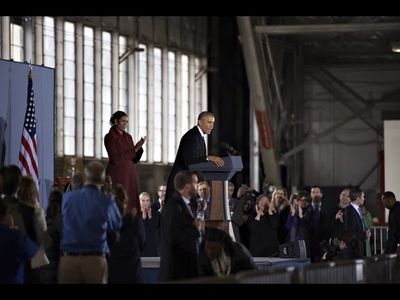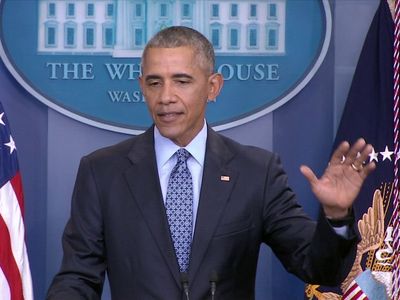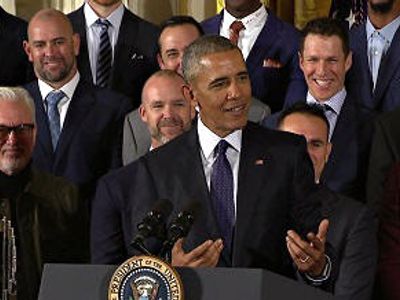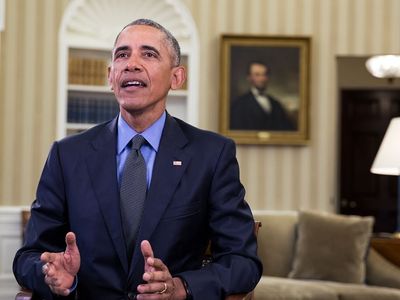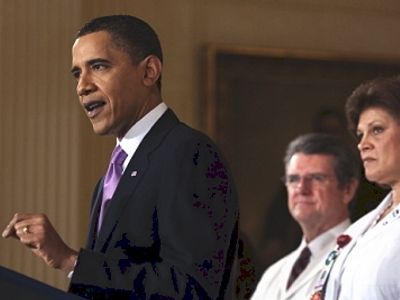
Thank you so much, all of you, for joining us today. And I want to thank Julie, Barbara, Roland, Stephen, Renee, and Christopher, standing behind me -- physicians, physicians assistants, and nurses who understand how important it is for us to make much needed changes in our health care system. 非常感谢大家今天能来参加此次活动。我想感谢站在我身后的朱莉、芭芭拉、罗兰、斯蒂芬、蕾妮和克里斯托弗——这些医生、医生助理和护士们深知,对我们的医疗体系进行迫切需要的改革是何等重要。
I want to thank all of you who are here today. I want to specially recognize two people who have been working tirelessly on that -- on this effort, my Secretary of Health and Human Services, Kathleen Sebelius -- as well as our quarterback for health reform out of the White House, Nancy-Ann DeParle. 我想感谢今天到场的所有人。我想特别感谢两位为此项努力不辞辛劳的人——我的卫生与公众服务部长凯瑟琳·西贝利厄斯,以及来自白宫的医疗改革"四分卫"南希-安·德帕尔。
We began our push to reform health insurance last March, in this room, with doctors and nurses who know the system best. And so it's fitting to be joined by all of you as we bring this journey to a close. 去年三月,我们就是在这个房间,与最了解这一体系的医生和护士们一同发起了医疗保险改革的推动。因此,在我们即将为这段历程画上句号之际,能与诸位并肩而立,实属恰当。
Last Thursday, I spent seven hours at a summit where Democrats and Republicans engaged in a public and very substantive discussion about health care. This meeting capped off a debate that began with a similar summit nearly one year ago. And since then, every idea has been put on the table. Every argument has been made. 上周四,我花了七个小时参加了一场峰会,民主党人与共和党人在会上就医疗改革展开了公开且极具实质性的讨论。这次会议为将近一年前始于类似峰会的这场辩论画上了句号。自那以来,每一种想法都已被摆上桌面,每一种论点都已被阐明。
Everything there is to say about health care has been said -- and just about everybody has said it. So now is the time to make a decision about how to finally reform health care so that it works, not just for the insurance companies, but for America's families and America's businesses. 关于医疗改革该说的话都已经说过了——而且差不多每个人都已经说过了。因此,现在是为最终改革医疗体系作出决定的时候了,要让这一体系不仅为保险公司服务,更要为美国的家庭和美国的企业的利益运作。
Now, where both sides say they agree is that the status quo is not working for the American people. Health insurance is becoming more expensive by the day. Families can't afford it. Businesses can't afford it. The federal government can't afford it. Smaller businesses and individuals who don't get coverage at work are squeezed especially hard. And insurance companies freely ration health care based on who's sick and who's healthy; who can pay and who can't. That's the status quo. That's the system we have right now. 如今,双方都说他们一致认为,现状对美国人民而言是行不通的。医疗保险一天比一天昂贵。家庭负担不起。企业负担不起。联邦政府也负担不起。那些在工作单位得不到保险的小企业和个人受到的挤压尤为严重。而保险公司则随心所欲地根据谁生病、谁健康,谁能付钱、谁付不起来配给医疗服务。这就是现状。这就是我们当下所拥有的体系。
Democrats and Republicans agree that this is a serious problem for America. And we agree that if we do nothing -- if we throw up our hands and walk away -- it's a problem that will only grow worse. Nobody disputes that. More Americans will lose their family's health insurance if they switch jobs or lose their job. More small businesses will be forced to choose between health care and hiring. 民主党人和共和党人都同意,这对美国而言是一个严重的问题。我们也同意,如果我们无所作为——如果我们双手一摊转身离去——这个问题只会愈演愈烈。没有人对此提出异议。会有更多的美国人在更换工作或失去工作时丧失家庭的医疗保险。会有更多的小企业被迫在提供医疗保险和雇用员工之间做出抉择。
More insurance companies will deny people coverage who have preexisting conditions, or they'll drop people's coverage when they get sick and need it most. And the rising cost of Medicare and Medicaid will sink our government deeper and deeper and deeper into debt. On all of this we agree. So the question is, what do we do about it? 会有更多的保险公司拒绝为已有健康问题的人提供保险,或者在他们生病、最需要保险的时候取消他们的保险。而不断攀升的联邦医疗保险和医疗补助费用,将使我们的政府陷入越来越深、越来越深的债务之中。在所有这些问题上我们都意见一致。所以问题是,我们该怎么做?
On one end of the spectrum, there are some who've suggested scrapping our system of private insurance and replacing it with a government-run health care system. And though many other countries have such a system, in America it would be neither practical nor realistic. 在这一议题的一端,有些人建议废除我们的私人保险体系,代之以政府运营的医疗体系。尽管许多其他国家实行这样的体系,但在美国,这既不切实可行,也不切合实际。
On the other end of the spectrum, there are those, and this includes most Republicans in Congress, who believe the answer is to loosen regulations on the insurance industry -- whether it's state consumer protections or minimum standards for the kind of insurance they can sell. The argument is, is that that will somehow lower costs. I disagree with that approach. I'm concerned that this would only give the insurance industry even freer rein to raise premiums and deny care. 在另一端,有些人——其中包括国会中的大多数共和党人——认为答案在于放松对保险行业的监管,无论是州一级的消费者保护,还是他们所能销售的保险的最低标准。他们的论点是,这样做在某种程度上会降低成本。我不同意这种做法。我担心,这只会让保险行业在提高保费和拒绝赔付方面拥有更加不受约束的权力。
So I don't believe we should give government bureaucrats or insurance company bureaucrats more control over health care in America. I believe it's time to give the American people more control over their health care and their health insurance. I don't believe we can afford to leave life-and-death decisions about health care to the discretion of insurance company executives alone. I believe that doctors and nurses and physician assistants like the ones in this room should be free to decide what's best for their patients. 因此,我不认为我们应当让政府官僚或保险公司官僚对美国医疗拥有更多控制权。我认为,应当让美国人民对自己的医疗服务和医疗保险拥有更多控制权的时刻已经到来。我不认为我们能承受把医疗中生与死的决定权交由保险公司高管独自裁量的后果。我相信,像在座各位一样的医生、护士和医生助理,应当有权自由决定什么对他们的病人最为有利。
Now, the proposal I put forward gives Americans more control over their health insurance and their health care by holding insurance companies more accountable. It builds on the current system where most Americans get their health insurance from their employer. If you like your plan, you can keep your plan. If you like your doctor, you can keep your doctor. I can tell you as the father of two young girls, I would not want any plan that interferes with the relationship between a family and their doctor. 我所提出的方案,通过让保险公司承担更多责任,使美国人对自己的医疗保险和医疗服务拥有更多控制权。它建立在现有体系之上,即大多数美国人通过雇主获得医疗保险。如果你喜欢你的保险计划,你可以保留它。如果你喜欢你的医生,你可以继续看你的医生。作为两个小女孩的父亲,我可以告诉大家,我不希望任何计划干扰一个家庭与其医生之间的关系。
Essentially, my proposal would change three things about the current health care system. First, it would end the worst practices of insurance companies. No longer would they be able to deny your coverage because of a preexisting condition. No longer would they be able to drop your coverage because you got sick. No longer would they be able to force you to pay unlimited amounts of money out of your own pocket. 本质上,我的方案将改变当前医疗体系的三件事。首先,它将终结保险公司最恶劣的做法。他们再也不能因为你已有健康问题而拒绝为你提供保险。他们再也不能因为你生病而取消你的保险。他们再也不能迫使你从自己口袋里支付无限额度的费用。
No longer would they be able to arbitrarily and massively raise premiums like Anthem Blue Cross recently tried to do in California -- up to 39 percent increases in one year in the individual market. Those practices would end. 他们再也不能像安森蓝十字公司最近在加利福尼亚州试图做的那样,任意地、大幅度地提高保费——在个人市场一年之内涨幅高达39%。这些做法都将终结。
Second, my proposal would give uninsured individuals and small business owners the same kind of choice of private health insurance that members of Congress get for themselves -- because if it's good enough for members of Congress, it's good enough for the people who pay their salaries. 其次,我的方案将给予未投保的个人和小企业主与国会议员本人所享有的同等的私人医疗保险选择权——因为如果某种保险对国会议员来说足够好,那么对支付他们薪水的人来说也应足够好。
The reason federal employees get a good deal on health insurance is that we all participate in an insurance market where insurance companies give better coverage and better rates, because they get more customers. It's an idea that many Republicans have embraced in the past, before politics intruded. 联邦雇员之所以能在医疗保险上获得优惠,是因为我们都参与一个保险市场,在这个市场里,保险公司因为获得了更多客户而提供更好的保障和更优惠的费率。这是一个许多共和党人在政治介入之前曾经拥护过的理念。
And my proposal says that if you still can't afford the insurance in this new marketplace, even though it's going to provide better deals for people than they can get right now in the individual marketplace, then we'll offer you tax credits to do so -- tax credits that add up to the largest middle-class tax cut for health care in history. After all, the wealthiest among us can already buy the best insurance there is, and the least well off are able to get coverage through Medicaid. So it's the middle class that gets squeezed, and that's who we have to help. 我的方案还规定,如果你在这个新的保险市场上仍然买不起保险——尽管它将为人们提供比目前在个人市场上能获得的更优惠的条件——那么我们将为你提供税收抵免来实现这一目标,这些税收抵免加总起来将是历史上针对医疗保健的最大规模的中产阶级减税。毕竟,我们当中最富有的人已经能买到最好的保险,而最贫困的人则能通过医疗补助获得保障。因此,受挤压的是中产阶级,而这正是我们必须帮助的群体。
Now, it is absolutely true that all of this will cost some money -- about $100 billion per year. But most of this comes from the nearly $2 trillion a year that America already spends on health care -- but a lot of it is not spent wisely. A lot of that money is being wasted or spent badly. So within this plan, we're going to make sure the dollars we spend go towards making insurance more affordable and more secure. 诚然,所有这些确实需要花费一些资金——大约每年1000亿美元。但其中大部分资金来自美国已经在医疗保健上花费的近每年2万亿美元——只是其中很多并没有被明智地使用。那笔钱中有许多被浪费或使用不当。因此,在这一计划中,我们将确保所花费的每一美元都用于使保险更加可负担、更加安全可靠。
We're going to eliminate wasteful taxpayer subsidies that currently go to insurance and pharmaceutical companies; set a new fee on insurance companies that stand to gain a lot of money and a lot of profits as millions of Americans are able to buy insurance; and we're going to make sure that the wealthiest Americans pay their fair share on Medicare. 我们将取消目前流向保险公司和制药公司的浪费性纳税人补贴;对那些将因数百万美国人能够购买保险而获得大量金钱和利润的保险公司征收一项新费用;我们还将确保最富有的美国人为联邦医疗保险支付他们应承担的份额。
The bottom line is our proposal is paid for. And all the new money generated in this plan goes back to small businesses and middle-class families who can't afford health insurance. It would also lower prescription drug prices for seniors. And it would help train new doctors and nurses and physician assistants to provide care for American families. 归根结底,我们的方案是有资金来源的。这一计划所产生的所有新资金都将回流到那些负担不起医疗保险的小企业和中产阶级家庭。它还将降低老年人的处方药价格。同时,它还将帮助培训新的医生、护士和医生助理,以为美国家庭提供医疗服务。
Finally, my proposal would bring down the cost of health care for millions -- families, businesses, and the federal government. We have now incorporated most of the serious ideas from across the political spectrum about how to contain the rising cost of health care -- ideas that go after the waste and abuse in our system, especially in programs like Medicare. But we do this while protecting Medicare benefits, and extending the financial stability of the program by nearly a decade. 最后,我的方案将降低数以百万计的家庭、企业和联邦政府的医疗成本。我们已经吸纳了来自政治光谱各方的多数严肃建议,关于如何遏制不断攀升的医疗成本——这些建议旨在打击我们体系中的浪费和滥用,尤其是在联邦医疗保险等项目中。但我们在这样做的同时,保护了联邦医疗保险的福利,并将该项目的财务稳定性延长了近十年。
Our cost-cutting measures mirror most of the proposals in the current Senate bill, which reduces most people's premiums and brings down our deficit by up to a trillion dollars over the next two decades -- brings down our deficit. Those aren't my numbers; those are the savings determined by the Congressional Budget Office, which is the Washington acronym for the nonpartisan, independent referee of Congress in terms of how much stuff costs. 我们削减成本的措施与当前参议院法案中的多数提案相呼应,该法案降低了大多数人的保费,并在未来二十年内将我们的赤字减少多达一万亿美元——降低我们的赤字。这些数字不是我编出来的;它们是国会预算办公室测算出的节省额度,该机构是华盛顿对国会的无党派独立裁判,负责评估各项事务的成本。
So that's our proposal. This is where we've ended up. It's an approach that has been debated and changed and I believe improved over the last year. It incorporates the best ideas from Democrats and Republicans -- including some of the ideas that Republicans offered during the health care summit, like funding state grants on medical malpractice reform, and curbing waste and fraud and abuse in the health care system. 这就是我们的方案。这就是我们最终形成的结果。这一方案在过去一年中经过了辩论、修改,我相信它已得到完善。它融合了民主党和共和党最好的想法——包括共和党人在医疗改革峰会上提出的一些建议,比如为医疗事故改革提供州级拨款资助,以及遏制医疗体系中的浪费、欺诈和滥用。
My proposal also gets rid of many of the provisions that had no place in health care reform -- provisions that were more about winning individual votes in Congress than improving health care for all Americans. 我的方案还剔除了许多本不该出现在医疗改革中的条款——那些条款更多是为了在国会中赢得个别议员的支持,而非为了改善所有美国人的医疗保健。
Now, despite all that we agree on and all the Republican ideas we've incorporated, many -- probably most -- Republicans in Congress just have a fundamental disagreement over whether we should have more or less oversight of insurance companies. And if they truly believe that less regulation would lead to higher quality, more affordable health insurance, then they should vote against the proposal I've put forward. 现在,尽管我们存在诸多共识,也吸纳了诸多共和党的想法,国会中许多——也许是大多数——共和党人就是在一个根本问题上存在分歧:我们应当对保险公司加强还是放松监管。如果他们确实相信放松监管能带来更高质量、更可负担的医疗保险,那么他们就应该对我所提出的方案投反对票。
Now, some also believe that we should, instead of doing what I'm proposing, pursue a piecemeal approach to health insurance reform, where we tinker around the edges of this challenge for the next few years. Even those who acknowledge the problem of the uninsured say we just can't afford to help them right now -- which is why the Republican proposal only covers 3 million uninsured Americans while we cover over 31 million. 还有人认为,我们不应采取我所提议的做法,而应在未来几年里采取零敲碎打的方式来推进医疗保险改革,在这一挑战的边缘修修补补。即便是那些承认未投保者问题的人也说,我们眼下就是无力帮助他们——正因如此,共和党的方案只覆盖300万未投保的美国人,而我们的方案覆盖超过3100万人。
The problem with that approach is that unless everyone has access to affordable coverage, you can't prevent insurance companies from denying coverage based on preexisting conditions; you can't limit the amount families are forced to pay out of their own pockets. The insurance reforms rest on everybody having access to coverage. 这种做法的问题在于,除非人人都能获得可负担的保险,否则你就无法阻止保险公司以已存在健康问题为由拒绝提供保险;你也无法限制家庭被迫自掏腰包支付的金额。保险改革的基础是人人都能获得保险。
And you also don't do anything about the fact that taxpayers currently end up subsidizing the uninsured when they're forced to go to the emergency room for care, to the tune of about a thousand bucks per family. You can't get those savings if those people are still going to the emergency room. So the fact is, health reform only works if you take care of all of these problems at once. 同时,对于目前纳税人最终为未投保者被迫去急诊室就医而买单这一事实——每家庭大约一千美元——你也无能为力。如果这些人还是去急诊室看病,你就无法获得那些节省。因此事实是,只有同时解决所有这些问题,医疗改革才能奏效。
Now, both during and after last week's summit, Republicans in Congress insisted that the only acceptable course on health care reform is to start over. But given these honest and substantial differences between the parties about the need to regulate the insurance industry and the need to help millions of middle-class families get insurance, I don't see how another year of negotiations would help. 现在,无论是在上周的峰会期间还是会后,国会中的共和党人都坚持认为,医疗改革唯一可接受的路径就是推倒重来。但鉴于两党在是否需要监管保险行业以及是否需要帮助数以百万计的中产阶级家庭获得保险这一问题上存在如此真诚而重大的分歧,我看不出再谈一年能有什么帮助。
Moreover, the insurance companies aren't starting over. They're continuing to raise premiums and deny coverage as we speak. For us to start over now could simply lead to delay that could last for another decade, or even more. The American people, and the U.S. economy, just can't wait that long. So, no matter which approach you favor, I believe the United States Congress owes the American people a final vote on health care reform. 更何况,保险公司并没有推倒重来。就在我们说话的此刻,他们仍在继续提高保费、拒绝承保。我们现在推倒重来,只会导致可能再持续十年甚至更久的拖延。美国人民和美国经济已经等不了那么久了。因此,无论你倾向于哪种方案,我都认为美国国会欠美国人民一次对医疗改革的最终投票。
We have debated this issue thoroughly, not just for the past year but for decades. Reform has already passed the House with a majority. It has already passed the Senate with a supermajority of 60 votes. And now it deserves the same kind of up or down vote that was cast on welfare reform, that was cast on the Children's Health Insurance Program, that was used for COBRA health coverage for the unemployed, and, by the way, for both Bush tax cuts -- all of which had to pass Congress with nothing more than a simple majority. 我们已经对这一问题进行了充分辩论,不仅在过去一年,而且是在过去数十年间。改革法案已以多数票在众议院获得通过。它也已以60票的绝对多数在参议院获得通过。现在,它理应得到与福利改革、与儿童医疗保险计划、与用于失业者的COBRA医疗保险同样的上下一记投票,顺便说一句,也与两次布什减税一样——所有这些都只需简单多数就能在国会通过。
I, therefore, ask leaders in both houses of Congress to finish their work and schedule a vote in the next few weeks. From now until then, I will do everything in my power to make the case for reform. And I urge every American who wants this reform to make their voice heard as well -- every family, every business, every patient, every doctor, every nurse, every physician's assistant. Make your voice heard. 因此,我请求国会两院的领袖们完成他们的工作,在接下来的几周内安排投票。从现在起直到那时,我将竭尽全力为改革奔走呼号。我也敦促每一位希望看到这项改革的美国人发出自己的声音——每一个家庭、每一个企业、每一位患者、每一位医生、每一位护士、每一位医生助理。让你们的声音被听到。
This has been a long and wrenching debate. It has stoked great passions among the American people and their representatives. And that's because health care is a difficult issue. It is a complicated issue. If it was easy, it would have been solved long ago. As all of you know from experience, health care can literally be an issue of life or death. And as a result, it easily lends itself to demagoguery and political gamesmanship, and misrepresentation and misunderstanding. 这是一场漫长而痛苦的辩论。它在美国人民及其代表中间激起了强烈的情感。这是因为医疗保健是一个艰难的议题。它是一个复杂的议题。如果它容易解决,早就被解决了。正如诸位从经验中所知,医疗保健确实可能是一个关乎生死的议题。正因如此,它很容易被煽动家和政治权术所利用,被歪曲和误解。
But that's not an excuse for those of us who were sent here to lead. That's not an excuse for us to walk away. We can't just give up because the politics are hard. I know there's been a fascination, bordering on obsession, in this media town about what passing health insurance reform would mean for the next election and the one after that. How will this play? What will happen with the polls? I will leave it to others to sift through the politics, because that's not what this is about. That's not why we're here. 但这不能成为我们这些被派来领导的人的借口。这不是我们转身离开的借口。我们不能仅仅因为政治上困难就放弃。我知道,在这个媒体之城,人们对通过医疗保险改革对下一次选举乃至再下一次选举意味着什么,有着近乎痴迷的执念。这会怎样影响选情?民调会怎样?我会把政治问题留给别人去琢磨,因为这不是本次改革的核心所在。这不是我们来到这里的原因。
This is about what reform would mean for the mother with breast cancer whose insurance company will finally have to pay for her chemotherapy. This is about what reform would mean for the small business owner who will no longer have to choose between hiring more workers or offering coverage to the employees she has. This is about what reform would mean for middle-class families who will be able to afford health insurance for the very first time in their lives and get a regular checkup once in a while, and have some security about their children if they get sick. 这关乎改革对于一位患有乳腺癌的母亲意味着什么——她的保险公司终于不得不为她支付化疗费用。这关乎改革对于一位小企业主意味着什么——她不再不得不在多雇员工或为现有员工提供保险之间二选一。这关乎改革对于中产家庭意味着什么——他们将能有生以来第一次负担得起医疗保险,偶尔能做一次常规体检,并在孩子生病时拥有一些安全感。
This is about what reform would mean for all those men and women I've met over the last few years who've been brave enough to share their stories. When we started our push for reform last year, I talked to a young mother in Wisconsin named Laura Klitzka. She has two young children. She thought she had beaten her breast cancer but then later discovered it had spread to her bones. 这关乎改革对于我过去几年间所遇到的所有那些勇敢地分享自己故事的男女意味着什么。去年我们开始推动改革时,我与威斯康星州一位名叫劳拉·克利茨卡的年轻母亲交谈过。她有两个年幼的孩子。她本以为已经战胜了乳腺癌,但后来却发现癌症已经扩散到了她的骨骼。
She and her husband were working and had insurance, but their medical bills still landed them in debt. And now she spends time worrying about that debt when all she wants to do is spend time with her children and focus on getting well. 她和她的丈夫都有工作,也有保险,但医疗账单还是让他们陷入了债务。而如今,她把时间花在为那笔债务担忧上,而她所想做的不过是陪伴她的孩子、专心康复。
This should not happen in the United States of America. And it doesn't have to. 这种事情不应该发生在美国。而且它并非不可避免。
In the end, that's what this debate is about. It's about what kind of country we want to be. It's about the millions of lives that would be touched and, in some cases, saved by making private health insurance more secure and more affordable. 归根结底,这就是这场辩论的核心所在。它关乎我们想成为一个怎样的国家。它关乎数以百万计的生命将被触及,其中一些将被拯救——通过使私人医疗保险更加安全可靠、更加可负担。
So at stake right now is not just our ability to solve this problem, but our ability to solve any problem. The American people want to know if it's still possible for Washington to look out for their interests and their future. They are waiting for us to act. They are waiting for us to lead. And as long as I hold this office, I intend to provide that leadership. I do not know how this plays politically, but I know it's right. And so I ask Congress to finish its work, and I look forward to signing this reform into law. 因此,眼下利害攸关的不仅是我们解决这一问题的能力,更是我们解决任何问题的能力。美国人民想知道,华盛顿是否仍有可能为他们的利益和未来着想。他们在等待我们行动。他们在等待我们引领。只要我担任这一职务,我就打算提供这种领导力。我不知道这在政治上会产生怎样的影响,但我知道这是正确的。因此,我请求国会完成它的工作,我期待着将这项改革签署成法。
Thank you very much, everybody. Let's get it done. 非常感谢大家。让我们把它完成吧。