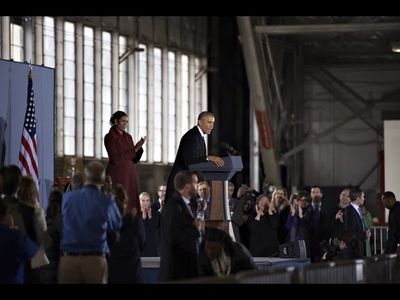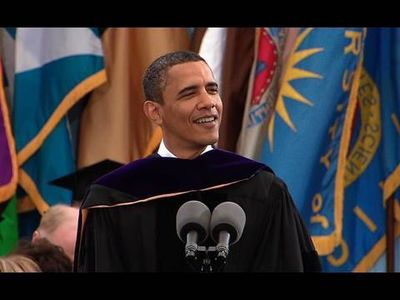
It is great to be here in The Big House -- and so may I say, "Go Blue!" I thought I'd go for the cheap applause line to start things off. 来到"大房子"真是太棒了——所以请允许我说一声:"Go Blue!"我想先来一句最容易讨好的开场白来赢得掌声。
Good afternoon, President Coleman, the Board of Trustees, to faculty, parents, family and friends of the class of 2010. Congratulations on your graduation, and thank you for allowing me the honor of being a part of it. Let me acknowledge your wonderful governor, Jennifer Granholm; your mayor, John Hieftje; and all the members of Congress who are here today. 下午好,科尔曼校长、董事会、教职员工、家长、家人和朋友,以及2010届的毕业生们。祝贺你们毕业,也感谢你们让我有幸参与这一盛典。我要向你们出色的州长珍妮弗·格兰霍姆、市长约翰·希夫特杰,以及今天在场的所有国会议员致意。
It is a privilege to be with you on this happy occasion, and, you know, it's nice to spend a little time outside of Washington. Now, don't get me wrong -- Washington is a beautiful city. It's very nice living above the store; you can't beat the commute. It's just sometimes all you hear in Washington is the clamor of politics. And all that noise can drown out the voices of the people who sent you there. 能在这个欢乐的时刻与你们相聚是我的荣幸。你们知道,能在华盛顿之外待上一会儿真不错。当然,别误会——华盛顿是座美丽的城市。住在"店堂楼上"挺不错,通勤时间更是没得比。只是有时候,你在华盛顿听到的全是政治的喧嚣。所有那些噪音,会淹没那些把你送到那里的人们的声音。
So when I took office, I decided that each night I would read 10 letters out of the tens of thousands that are sent to us by ordinary Americans every day -- this is my modest effort to remind myself of why I ran in the first place. 所以我就任总统后,决定每晚从每天寄给我们的数万封普通美国人的信件中挑出10封来读——这是我用来提醒自己当初为何竞选的一种小小努力。
Some of these letters tell stories of heartache and struggle. Some express gratitude, some express anger. I'd say a good solid third call me an idiot -- which is how I know that I'm getting a good, representative sample. Some of the letters make you think -- like the one that I received last month from a kindergarten class in Virginia. 其中一些信讲述了心酸和挣扎的故事。一些表达感激,一些表达愤怒。我敢说有整整三分之一的人骂我是白痴——这恰好让我知道,我得到的是一个有代表性的好样本。有些信让人深思——比如上个月我收到的一封来自弗吉尼亚州某个幼儿园全班小朋友的信。
Now, the teacher of this class instructed the students to ask me any question they wanted. So one asked, "How do you do your job?" Another asked, "Do you work a lot?" Somebody wanted to know if I wear a black jacket or if I have a beard -- so clearly they were getting me mixed up with the other tall guy from Illinois. And one of my favorites was from a kid who wanted to know if I lived next to a volcano. I'm still trying to piece the thought process on this one. Loved this letter. 这个班的老师让学生们随意问我任何问题。于是有人问:"你是怎么做你这份工作的?"另一个问:"你工作很多吗?"还有人想知道我穿的是黑色外套,还是我留胡子——显然他们把我和另一位来自伊利诺伊州的高个子搞混了。而我最喜欢的一个问题是,有个孩子想知道我是不是住在火山旁边。我至今仍在努力揣摩这孩子的思路。这封信我太喜欢了。
But it was the last question from the last student in the letter that gave me pause. The student asked, "Are people being nice?" Are people being nice? 但信中最后一个学生问的最后一个问题,让我陷入沉思。那个学生问:"人们对你好不好?"人们对你好不好?
Well, if you turn on the news today, or yesterday, or a week ago, or a month ago -- particularly one of the cable channels -- you can see why even a kindergartener would ask this question. We've got politicians calling each other all sorts of unflattering names. Pundits and talking heads shout at each other. The media tends to play up every hint of conflict, because it makes for a sexier story -- which means anyone interested in getting coverage feels compelled to make their arguments as outrageous and as incendiary as possible. 如果你今天打开新闻,或者昨天、一周前、一个月前——尤其是某个有线电视频道——你就能理解为什么连幼儿园小朋友都会问出这样的问题。政客们用各种难听的话互相攻击。评论员和电视名嘴们彼此叫嚷。媒体倾向于放大任何一点冲突的迹象,因为这样故事更"带劲"——这意味着任何想获得报道的人,都不得不把自己的论点说得尽可能耸人听闻、火药味十足。
Now, some of this contentiousness can be attributed to the incredibly difficult moment in which we find ourselves as a nation. The fact is, when you leave here today you will search for work in an economy that is still emerging from the worst crisis since the Great Depression. You live in a century where the speed with which jobs and industries move across the globe is forcing America to compete like never before. 如今,这种激烈的争吵有一部分要归因于我们国家当下所处的极其艰难的时刻。事实上,今天你们离开这里之后,将要在这样一个经济中寻找工作——它仍处于自大萧条以来最严重危机之后的艰难复苏之中。你们所生活的这个世纪,工作岗位和产业以空前的速度在全球流动,迫使美国以前所未有的姿态投入竞争。
You will raise your children at a time when threats like terrorism and climate change aren't confined within the borders of any one country. And as our world grows smaller and more connected, you will live and work with more people who don't look like you or think like you or come from where you do. 你们将要抚养孩子所处的时代,恐怖主义和气候变化等威胁不再局限于任何一个国家的边界之内。而随着我们的世界变得更小、联系更紧密,你们将与越来越多看上去不同、想法不同、出身不同的人共同生活和工作。
I really enjoyed Alex's remarks because that's a lot of change. And all these changes, all these challenges, inevitably cause some tension in the body politic. They make people worry about the future and sometimes they get people riled up. 我非常喜欢亚历克斯的发言,因为这正说明变化之多。所有这些变化、所有这些挑战,必然会在国民政治中引发一些紧张。它们让人担忧未来,有时也让人群情激奋。
But I think it's important that we maintain some historic perspective. Since the days of our founding, American politics has never been a particularly nice business. It's always been a little less gentile during times of great change. A newspaper of the opposing party once editorialized that if Thomas Jefferson were elected, "Murder, robbery, rape, adultery, and incest will be openly taught and practiced." Not subtle. 但我认为保持某种历史视角很重要。自建国之初起,美国政治就从来不是什么特别温文尔雅的行当。在巨变时代,它总会显得更加粗野。一家反对党的报纸曾发表社论说,如果托马斯·杰斐逊当选,"谋杀、抢劫、强奸、通奸和乱伦都将被公开传授和实践。"毫不隐晦。
Opponents of Andrew Jackson often referred to his mother as a "common prostitute," which seems a little over the top. Presidents from Teddy Roosevelt to Lyndon Johnson have been accused of promoting socialism, or worse. And we've had arguments between politicians that have been settled with actual duels. There was even a caning once on the floor of the United States Senate -- which I'm happy to say didn't happen while I was there. It was a few years before. 安德鲁·杰克逊的反对者常常把他的母亲称作"普通妓女",这未免有点过头。从西奥多·罗斯福到林登·约翰逊,多位总统都曾被指责推行社会主义,甚至更糟。政客之间的争论,甚至有过用真正的决斗来解决的情形。美国参议院议事厅里甚至还发生过一次杖击事件——我很高兴地说,那不是我任上的事。那是几年前的事。
The point is, politics has never been for the thin-skinned or the faint-of-heart, and if you enter the arena, you should expect to get roughed up. Moreover, democracy in a nation of more than 300 million people is inherently difficult. It's always been noisy and messy, contentious, complicated. We've been fighting about the proper size and role of government since the day the Framers gathered in Philadelphia. 关键是,政治从来不是脸皮薄或胆小者能从事的行当,一旦你踏入竞技场,就要做好被摔打的准备。此外,在一个拥有三亿多人口的国家里,民主本质上是困难的。它一向嘈杂、混乱、充满争议、错综复杂。自从制宪者们在费城齐聚一堂那天起,我们就一直在争论政府的适当规模和角色。
We've battled over the meaning of individual freedom and equality since the Bill of Rights was drafted. As our economy has shifted emphasis from agriculture to industry, to information, to technology, we have argued and struggled at each and every juncture over the best way to ensure that all of our citizens have a shot at opportunity. 自《权利法案》起草以来,我们一直在就个人自由和平等的含义进行斗争。随着我国经济重心从农业转向工业、再转向信息和技术,我们在每一个转折点上都为如何确保所有公民都能获得机会而争论和努力。
So before we get too depressed about the current state of our politics, let's remember our history. The great debates of the past all stirred great passions. They all made somebody angry, and at least once led to a terrible war. What is amazing is that despite all the conflict, despite all its flaws and its frustrations, our experiment in democracy has worked better than any form of government on Earth. 所以在我们对当前政治状况过于悲观之前,让我们回顾一下历史。过去那些伟大的辩论都激起了强烈的激情。它们都曾让某些人愤怒,至少有一次引发了一场可怕的战争。令人惊叹的是,尽管冲突不断、尽管它有种种缺陷和挫败,我们的民主实验仍比地球上任何其他政体运转得更好。
On the last day of the Constitutional Convention, Benjamin Franklin was famously asked, "Well, Doctor, what have we got -- a republic or a monarchy?" And Franklin gave an answer that's been quoted for ages: He said, "A republic, if you can keep it." If you can keep it. 在制宪会议的最后一天,本杰明·富兰克林被问到那个著名的问题:"那么,博士,我们得到的究竟是什么——是共和国还是君主制?"富兰克林给出了一个被传颂至今的回答:他说:"是共和国,如果你们能守得住的话。"如果你们守得住。
Well, for more than 200 years, we have kept it. Through revolution and civil war, our democracy has survived. Through depression and world war, it has prevailed. Through periods of great social and economic unrest, from civil rights to women's rights, it has allowed us slowly, sometimes painfully, to move towards a more perfect union. 两百多年来,我们守住了它。历经革命和内战,我们的民主存活了下来。历经大萧条和世界大战,它取得了胜利。在社会和经济剧烈动荡的时期,从民权到妇女权利,它让我们得以缓慢地、有时是痛苦地,迈向一个更加完美的联邦。
And so now, class of 2010, the question for your generation is this: How will you keep our democracy going? At a moment when our challenges seem so big and our politics seem so small, how will you keep our democracy alive and vibrant; how will you keep it well in this century? 所以,2010届的毕业生们,现在你们这一代要面对的问题是:你们将如何让我们的民主延续下去?在一个挑战如此之大、政治如此之小的时刻,你们将如何让我们的民主保持生机与活力;如何让它在下个世纪依然康健?
I'm not here to offer some grand theory or detailed policy prescription. But let me offer a few brief reflections based on my own experiences and the experiences of our country over the last two centuries. 我来这里并不是要提出什么宏大的理论或详尽的政策方案。但请允许我结合自己的经历,以及我国过去两个世纪的经验,作几点简短的思考。
First of all, American democracy has thrived because we have recognized the need for a government that, while limited, can still help us adapt to a changing world. On the fourth panel of the Jefferson Memorial is a quote I remember reading to my daughters during our first visit there. It says, "I am not an advocate for frequent changes in laws and constitutions, but...with the change of circumstances, institutions must advance also to keep pace with the times." 首先,美国民主之所以繁荣,是因为我们认识到需要一个虽然有限、但仍能帮助我们去适应不断变化之世界的政府。在杰斐逊纪念堂的第四块石板上有一段话,我记得第一次带女儿们去参观时念给她们听过。上面写着:"我并不主张频繁修改法律和宪法,但是……随着环境的变化,制度也必须随之进步,以跟上时代的步伐。"
The democracy designed by Jefferson and the other founders was never intended to solve every problem with a new law or a new program. Having thrown off the tyranny of the British Empire, the first Americans were understandably skeptical of government. And ever since we've held fast to the belief that government doesn't have all the answers, and we have cherished and fiercely defended our individual freedom. That's a strand of our nation's DNA. 杰斐逊和其他建国者所设计的民主,从来就不是要用一项新法律或一个新计划来解决每一个问题。在摆脱了大英帝国的暴政之后,第一批美国人理应对政府心存戒备。从那以后,我们一直坚信政府并不能给出所有答案,并且我们珍视、也激烈捍卫我们的个人自由。这是我们国家DNA中的一条线索。
But the other strand is the belief that there are some things we can only do together, as one nation -- and that our government must keep pace with the times. When America expanded from a few colonies to an entire continent, and we needed a way to reach the Pacific, our government helped build the railroads. When we transitioned from an economy based on farms to one based on factories, and workers needed new skills and training, our nation set up a system of public high schools. 但另一条线索是这样一个信念:有些事我们只能作为同一个国家共同完成——而我们的政府必须跟上时代的步伐。当美国从几个殖民地扩展为一整片大陆,我们需要一条通往太平洋的通路时,我们的政府帮助修建了铁路。当我们从一个以农业为基础的经济转向以工厂为基础的经济,工人们需要新的技能和培训时,我们国家建立了一套公立高中体系。
When the markets crashed during the Depression and people lost their life savings, our government put in place a set of rules and safeguards to make sure that such a crisis never happened again, and then put a safety net in place to make sure that our elders would never be impoverished the way they had been. And because our markets and financial systems have evolved since then, we're now putting in place new rules and safeguards to protect the American people. 当大萧条时期市场崩盘、人们毕生积蓄化为乌有时,我们的政府制定了一系列规则和保障措施,以确保这样的危机不再发生,并随后建立起一张安全网,确保我们的长者不会再像从前那样陷入贫困。而由于我们的市场和金融体系此后不断演进,我们现在正在制定新的规则和保障措施,以保护美国人民。
Now, this notion -- this notion, class, hasn't always been partisan. It was the first Republican President, Abraham Lincoln, who said the role of government is to do for the people what they cannot do better for themselves. And he'd go on to begin that first intercontinental railroad and set up the first land-grant colleges. 注意——同学们,这种观念并非一向带有党派色彩。正是第一位共和党总统亚伯拉罕·林肯说过,政府的作用就是去做人民自己做不好的事情。他随后启动了第一条横贯大陆的铁路,并建立了第一批赠地学院。
It was another Republican, Teddy Roosevelt, who said, "the object of government is the welfare of the people." And he's remembered for using the power of government to break up monopolies, and establish our National Park system. Democrat Lyndon Johnson announced the Great Society during a commencement here at Michigan, but it was the Republican President before him, Dwight Eisenhower, who launched the massive government undertaking known as the Interstate Highway System. 另一位共和党人西奥多·罗斯福曾说:"政府的目标就是人民的福祉。"人们铭记他借助政府的力量打破垄断,并建立我们的国家公园体系。民主党人林登·约翰逊正是在密歇根大学的一场毕业典礼上宣布了"伟大社会"计划,但上任的那位共和党总统德怀特·艾森豪威尔,才是发起州际公路系统这一庞大政府工程的推动者。
Of course, there have always been those who've opposed such efforts. They argue government intervention is usually inefficient; that it restricts individual freedom and dampens individual initiative. And in certain instances, that's been true. For many years, we had a welfare system that too often discouraged people from taking responsibility for their own upward mobility. At times, we've neglected the role of parents, rather than government, in cultivating a child's education. And sometimes regulation fails, and sometimes their benefits don't justify their costs. 当然,反对这类努力的声音一直都有。他们主张政府干预通常效率低下;认为它限制了个人自由,挫伤了个人积极性。在某些情况下,确实如此。多年来,我们的福利制度常常打消人们为自己向上流动承担责任的意愿。有时我们忽视了父母而非政府在孩子教育培养中的作用。有时监管会失灵,有时其收益并不能抵消成本。
But what troubles me is when I hear people say that all of government is inherently bad. One of my favorite signs during the health care debate was somebody who said, "Keep Your Government Hands Out Of My Medicare" -- which is essentially saying "Keep Government Out Of My Government-Run Health Care Plan." 但令我忧虑的是,当我听到有人说政府本质上都是坏的。在医改辩论期间,我最喜欢的一条标语是有人写的:"别让你的政府插手我的 Medicare"——这其实就等于说"别让政府插手我那由政府运营的医保计划"。
When our government is spoken of as some menacing, threatening foreign entity, it ignores the fact that in our democracy, government is us. We, the people -- We, the people, hold in our hands the power to choose our leaders and change our laws, and shape our own destiny. 当我们的政府被说成是某种可怕的、充满威胁的外来之物时,它就忽视了一个事实:在我们的民主中,政府就是我们。我们人民——我们人民,手中握有选择领袖、修改法律、塑造自身命运的力量。
Government is the police officers who are protecting our communities, and the servicemen and women who are defending us abroad. Government is the roads you drove in on and the speed limits that kept you safe. Government is what ensures that mines adhere to safety standards and that oil spills are cleaned up by the companies that caused them. Government is this extraordinary public university -- a place that's doing lifesaving research, and catalyzing economic growth, and graduating students who will change the world around them in ways big and small. 政府是保护我们社区的警察,是在海外保卫我们的男女军人。政府是你们开车驶过的道路,是保障你们安全的限速规定。政府确保矿场遵守安全标准,确保石油泄漏由肇事公司负责清理。政府就是这所杰出的公立大学——一个从事挽救生命的研究、催化经济增长、并培养出一届届将以各种方式改变世界的毕业生的所在。
The truth is, the debate we've had for decades now between more government and less government, it doesn't really fit the times in which we live. We know that too much government can stifle competition and deprive us of choice and burden us with debt. But we've also clearly seen the dangers of too little government -- like when a lack of accountability on Wall Street nearly leads to the collapse of our entire economy. 事实是,几十年来我们围绕"政府多一点还是少一点"展开的辩论,其实并不契合我们所处的时代。我们知道,政府过多会抑制竞争、剥夺我们的选择权、并让我们背负债务。但我们也清楚地看到了政府过少的危险——比如当华尔街缺乏问责时,几乎导致我们整个经济的崩溃。
So, class of 2010, what we should be asking is not whether we need "big government" or a "small government," but how we can create a smarter and better government. Because in an era of iPods and Tivo, where we have more choices than ever before -- even though I can't really work a lot of these things -- but I have 23-year-olds who do it for me -- government shouldn't try to dictate your lives. 所以,2010届的同学们,我们应当问的不是我们需要"大政府"还是"小政府",而是我们如何打造一个更聪明、更高效的政府。因为在iPod和Tivo的时代,我们拥有的选择前所未有地丰富——尽管我自己多半也搞不定这些东西——但我有23岁的年轻人替我弄——政府不应试图去支配你们的生活。
But it should give you the tools you need to succeed. Government shouldn't try to guarantee results, but it should guarantee a shot at opportunity for every American who's willing to work hard. 但它应当给你们成功所需的工具。政府不应试图保证结果,但它应当保证每一个愿意努力工作的美国人都有机会去争取。
So -- So, yes, we can and should debate the role of government in our lives. But remember, as you are asked to meet the challenges of our time, remember that the ability for us to adapt our government to the needs of the age has helped make our democracy work since its inception. 所以——所以,是的,我们可以、也应该就政府在我们生活中的角色展开辩论。但请记住,当你们被召唤去应对我们这个时代的挑战时,请记住:让我们的政府能够与时俱进的能力,自建国之初起就一直帮助我们的民主运转。
Now, the second way to keep our democracy healthy is to maintain a basic level of civility in our public debate. These arguments we're having over government and health care and war and taxes -- these are serious arguments. They should arouse people's passions, and it's important for everybody to join in the debate, with all the vigor that the maintenance of a free people requires. 保持民主健康的第二条途径,是在公共辩论中维持一种基本的文明。我们围绕政府、医改、战争和税收所进行的这些争论——都是严肃的争论。它们理应唤起人们的热情,每个人都应参与其中,付出自由人民所需要的那种活力。
But we can't expect to solve our problems if all we do is tear each other down. You can disagree with a certain policy without demonizing the person who espouses it. You can question somebody's views and their judgment without questioning their motives or their patriotism. Throwing around phrases like "socialists" and "Soviet-style takeover" and "fascist" and "right-wing nut" -- that may grab headlines, but it also has the effect of comparing our government, our political opponents, to authoritarian, even murderous regimes. 但如果我们所做的只是相互拆台,就无法指望解决我们的问题。你可以不同意某项政策,而不必妖魔化支持它的人。你可以质疑某人的观点和判断,而不必质疑他们的动机或爱国心。把"社会主义者"、"苏式接管"、"法西斯"、"右翼疯子"之类的词挂在嘴边——或许能博得头条,但也会把我们的政府、我们的政治对手,与专制甚至残暴的政权相提并论。
Now, we've seen this kind of politics in the past. It's been practiced by both fringes of the ideological spectrum, by the left and the right, since our nation's birth. But it's starting to creep into the center of our discourse. And the problem with it is not the hurt feelings or the bruised egos of the public officials who are criticized. Remember, they signed up for it. Michelle always reminds me of that. 如今,这种政治我们过去也见过。它从我们建国之初起,就被意识形态光谱两端——左翼和右翼——的极端派别所实践。但它正开始渗透进我们话语的中心。问题并不在于被批评的公职人员伤了感情或受挫了自尊。要知道,他们本来就是自愿入局的。米歇尔常这样提醒我。
The problem is that this kind of vilification and over-the-top rhetoric closes the door to the possibility of compromise. It undermines democratic deliberation. It prevents learning -- since, after all, why should we listen to a "fascist," or a "socialist," or a "right-wing nut," or a left-wing nut? 问题在于,这种诋毁和过激言论,关闭了妥协的可能性。它破坏了民主的审议。它阻碍了学习——毕竟,我们为什么要去听一个"法西斯"、一个"社会主义者"、一个"右翼疯子"或一个"左翼疯子"的话呢?
It makes it nearly impossible for people who have legitimate but bridgeable differences to sit down at the same table and hash things out. It robs us of a rational and serious debate, the one we need to have about the very real and very big challenges facing this nation. It coarsens our culture, and at its worst, it can send signals to the most extreme elements of our society that perhaps violence is a justifiable response. 它让那些有正当但可弥合分歧的人几乎无法坐到同一张桌子旁一起商量事情。它剥夺了我们进行理性而严肃的辩论——那种我们面临非常现实、非常巨大的挑战时所必需的辩论。它使我们的文化变得粗鄙,最糟糕的时候,它还会向我们社会中最极端的分子发出信号,似乎暴力是一种正当的回应。
So what do we do? As I found out after a year in the White House, changing this type of politics is not easy. And part of what civility requires is that we recall the simple lesson most of us learned from our parents: Treat others as you would like to be treated, with courtesy and respect. But civility in this age also requires something more than just asking if we can't just all get along. 那么我们该怎么办?正如我在白宫一年后所体会到的,改变这种政治并不容易。而文明所要求的一部分,是我们重温多数人从父母那里学到的那个简单教训:以你希望被对待的方式对待他人,带着礼貌和尊重。但这个时代的文明,需要的还不仅仅是问我们能不能和睦相处。
Today's 24/7 echo-chamber amplifies the most inflammatory soundbites louder and faster than ever before. And it's also, however, given us unprecedented choice. Whereas most Americans used to get their news from the same three networks over dinner, or a few influential papers on Sunday morning, we now have the option to get our information from any number of blogs or websites or cable news shows. 今天24小时不间断的"回声室",比以往任何时候都更大声、更快地放大最具煽动性的只言片语。然而它也给了我们前所未有的选择。过去大多数美国人晚饭时从同样的三大电视网获取新闻,或周日上午翻阅几份有影响力的报纸,而现在我们可以从无数的博客、网站或有线新闻节目中获取信息。
And this can have both a good and bad development for democracy. For if we choose only to expose ourselves to opinions and viewpoints that are in line with our own, studies suggest that we become more polarized, more set in our ways. That will only reinforce and even deepen the political divides in this country. 这对民主而言既可能是好事,也可能是坏事。因为如果我们只选择接触与自己一致的观点和看法,研究表明我们会变得更加两极分化,更加固步自封。那只会强化、甚至加深这个国家的政治分歧。
But if we choose to actively seek out information that challenges our assumptions and our beliefs, perhaps we can begin to understand where the people who disagree with us are coming from. 但如果我们主动去寻找那些挑战我们假设和信念的信息,也许我们就能开始理解那些与我们意见不同的人,他们究竟从何而来。
Now, this requires us to agree on a certain set of facts to debate from. That's why we need a vibrant and thriving news business that is separate from opinion makers and talking heads. That's why we need an educated citizenry that values hard evidence and not just assertion. As Senator Daniel Patrick Moynihan famously once said, "Everybody is entitled to his own opinion, but not his own facts." 要做到这一点,我们需要就一组共同的事实展开辩论。正因如此,我们需要一个充满活力、蓬勃发展的新闻行业,与意见领袖和电视名嘴区分开来。正因如此,我们需要一个重视确凿证据而非仅仅是断言的有教养的公民群体。正如参议员丹尼尔·帕特里克·莫伊尼汉那句名言所说:"每个人都可以有自己的意见,但不能有自己的事实。"
Still, if you're somebody who only reads the editorial page of The New York Times, try glancing at the [Opinion] page of The Wall Street Journal once in a while. If you're a fan of Glenn Beck or Rush Limbaugh, try reading a few columns on the Huffington Post website. It may make your blood boil; your mind may not be changed. But the practice of listening to opposing views is essential for effective citizenship. It is essential for our democracy. 不过,如果你只读《纽约时报》的社论版,不妨偶尔瞥一眼《华尔街日报》的评论版。如果你是格伦·贝克或拉什·林博的粉丝,试着读一读《赫芬顿邮报》网站上的几篇专栏。它可能让你火冒三丈;你的想法也未必会改变。但倾听对立观点的习惯,对有效的公民素养至关重要。它对我们的民主至关重要。
And so, too, is the practice of engaging in different experiences with different kinds of people. I look out at this class and I realize for four years at Michigan you have been exposed to diverse thinkers and scholars, professors and students. Don't narrow that broad intellectual exposure just because you're leaving here. Instead, seek to expand it. 同样至关重要的是,去接触不同的人、不同的经历。我看着台下的这一届毕业生,意识到在密歇根的四年里,你们接触到了形形色色的思想家与学者、教授与学生。不要因为即将离开这里,就缩窄了那种广阔的思想视野。相反,要去拓展它。
If you grew up in a big city, spend some time with somebody who grew up in a rural town. If you find yourself only hanging around with people of your own race or ethnicity or religion, include people in your circle who have different backgrounds and life experiences. You'll learn what it's like to walk in somebody else's shoes, and in the process, you will help to make this democracy work. 如果你在大城市长大,那就花点时间和在小镇长大的人相处。如果你发现自己只与同一种族、族裔或宗教的人为伍,那就把背景不同、生活经历不同的人纳入你的圈子。你会体会到穿上别人的鞋子走路是什么感觉,而在这个过程中,你也将帮助这个民主运转起来。
Which brings me to the last ingredient in a functioning democracy, one that's perhaps most basic -- and it's already been mentioned -- and that is participation. 这就引出了一个运转良好的民主的最后一个要素,也许是最基本的要素——前面也已经提到过——那就是参与。
Class of 2010, I understand that one effect of today's poisonous political climate is to push people away from participation in public life. If all you see when you turn on the TV is name-calling, if all you hear about is how special interest lobbying and partisanship prevented Washington from getting something done, you might think to yourself, "What's the point of getting involved?" 2010届的同学们,我理解,当今政治气候的乌烟瘴气,会让人们远离公共生活。如果你打开电视看到的只是互相谩骂,如果你听到的全是特殊利益游说和党派之争如何阻碍华盛顿做成事情,你可能会想:"参与有什么意义?"
Here's the point. When we don't pay close attention to the decisions made by our leaders, when we fail to educate ourselves about the major issues of the day, when we choose not to make our voices and opinions heard, that's when democracy breaks down. That's when power is abused. That's when the most extreme voices in our society fill the void that we leave. That's when powerful interests and their lobbyists are most able to buy access and influence in the corridors of power -- because none of us are there to speak up and stop them. 意义就在这里。当我们不去密切关注领袖们所作的决策,当我们不去了解当今的重大议题,当我们选择不让自己声音和意见被听见时,民主就会失灵。那时权力就会被滥用。那时我们社会中最极端的声音就会填补我们留下的空白。那时强大的利益集团及其说客就能最轻易地在权力走廊中买到接近和影响力——因为我们中没有人在那里发声、去阻止他们。
Participation in public life doesn't mean that you all have to run for public office -- though we could certainly use some fresh faces in Washington. But it does mean that you should pay attention and contribute in any way that you can. Stay informed. Write letters, or make phone calls on behalf of an issue you care about. 参与公共生活并不意味着你们都得去竞选公职——尽管华盛顿确实可以换些新面孔。但它确实意味着你应当关注并以任何力所能及的方式贡献力量。保持知情。为你关心的问题写信、打电话。
If electoral politics isn't your thing, continue the tradition so many of you started here at Michigan and find a way to serve your community and your country -- an act that will help you stay connected to your fellow citizens and improve the lives of those around you. 如果选举政治不是你的兴趣所在,那就延续你们许多人在密歇根开始的传统,找到一种服务社区和国家的方式——这种行为将帮助你与同胞保持联系,并改善身边人的生活。
It was 50 years ago that a young candidate for president came here to Michigan and delivered a speech that inspired one of the most successful service projects in American history. And as John F. Kennedy described the ideals behind what would become the Peace Corps, he issued a challenge to the students who had assembled in Ann Arbor on that October night: "on your willingness to contribute part of your life to this country," he said, will depend the answer whether a free society can compete. I think it can," he said. 五十年前,一位年轻的总统候选人来到密歇根大学发表演讲,启发了美国历史上最成功的公共服务项目之一。当约翰·F·肯尼迪描述后来成为"和平队"的理想时,他对那个十月夜晚在安娜堡聚集的学生们提出了挑战:"你们是否愿意把生命的一部分献给这个国家,"他说,"将决定一个自由社会能否竞争的答案。我认为可以,"他说。
This democracy we have is a precious thing. For all the arguments and all the doubts and all the cynicism that's out there today, we should never forget that as Americans, we enjoy more freedoms and opportunities than citizens in any other nation on Earth. We are free to speak our mind and worship as we please. We are free to choose our leaders, and criticize them if they let us down. We have the chance to get an education, and work hard, and give our children a better life. 我们所拥有的这项民主是宝贵的。尽管今天有种种争论、种种质疑和种种愤世嫉俗,我们永远不应忘记,作为美国人,我们享有的自由和机会比地球上任何其他国家的公民都要多。我们可以自由地表达想法,自由地按自己意愿礼拜。我们可以自由地选择领袖,并在他们让我们失望时批评他们。我们有机会接受教育、努力工作,并给我们的孩子更好的生活。
None of this came easy. None of this was preordained. The men and women who sat in your chairs 10 years ago and 50 years ago and 100 years ago -- they made America possible through their toil and their endurance and their imagination and their faith. Their success, and America's success, was never a given. 这一切都不是轻易得来的。这一切都不是命中注定的。十年前、五十年前、一百年前坐在你们座位上的那些男女——他们用辛劳、坚韧、想象力和信仰,使美国成为可能。他们的成功,以及美国的成功,从来都不是理所当然。
And there is no guarantee that the graduates who will sit in these same seats 10 years from now, or 50 years from now, or 100 years from now, will enjoy the same freedoms and opportunities that you do. You, too, will have to strive. You, too, will have to push the boundaries of what seems possible. For the truth is, our nation's destiny has never been certain. 而且无法保证十年后、五十年后、一百年后坐在同样座位上的毕业生,能享受到你们今天所享有的同样自由和机会。你们也必须去奋斗。你们也必须去拓展看似可能的边界。因为事实是,我们国家的命运从未确定无疑。
What is certain -- what has always been certain -- is the ability to shape that destiny. That is what makes us different. That is what sets us apart. That is what makes us Americans -- our ability at the end of the day to look past all of our differences and all of our disagreements and still forge a common future. That task is now in your hands, as is the answer to the question posed at this university half a century ago about whether a free society can still compete. 可以确定的是——一直以来可以确定的是——塑造那种命运的能力。这才是我们的不同之处。这才是我们的独特之处。这才是我们之所以是美国人——我们在一天结束时能够超越所有的分歧和争执,仍能共同铸就一个共同的未来。这个任务现在交到了你们手中,半个世纪前在这所大学提出的那个问题——一个自由社会是否还能竞争——其答案也交到了你们手中。
If you are willing, as past generations were willing, to contribute part of your life to the life of this country, then I, like President Kennedy, believe we can. Because I believe in you. 如果你们愿意像过去的世代那样,把生命的一部分献给这个国家,那么我,像肯尼迪总统一样,相信我们可以。因为我相信你们。
Congratulations on your graduation, 2010. May God bless you, and may God bless the United States of America. 祝贺你们毕业,2010届。愿上帝保佑你们,愿上帝保佑美利坚合众国。
Thank you. 谢谢大家。