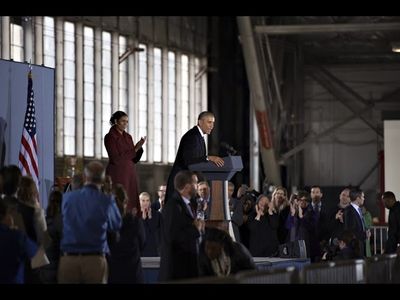
To Vicki, Ted, Patrick, Curran, Caroline, Ambassador Smith, members of the Kennedy family -- thank you so much for inviting me to speak today. Your Eminence, Cardinal O'Malley; Vice President Biden; Governor Baker; Mayor Walsh; members of Congress, past and present; and pretty much every elected official in Massachusetts -- it is an honor to mark this occasion with you. 维基、泰德、帕特里克、柯伦、卡罗琳、史密斯大使、肯尼迪家族成员——非常感谢你们邀请我今天发表演讲。奥马利红衣主教阁下;拜登副总统;贝克州长;沃尔什市长;各位前任和现任国会议员;以及几乎所有马萨诸塞州的民选官员——很荣幸能与你们一起纪念这个时刻。
Boston, know that Michelle and I have joined our prayers with yours these past few days for a hero -- former Army Ranger and Boston Police Officer John Moynihan, who was shot in the line of duty on Friday night. I mention him because, last year, at the White House, the Vice President and I had the chance to honor Officer Moynihan as one of America's "Top Cops" for his bravery in the line of duty, for risking his life to save a fellow officer. And thanks to the heroes at Boston Medical Center, I'm told Officer Moynihan is awake, and talking, and we wish him a full and speedy recovery. 波士顿的朋友们,请知道,在过去的几天里,米歇尔和我一直在和你们一起为一位英雄祈祷——前陆军游骑兵、波士顿警察约翰·莫伊尼汉,他在周五晚间执行任务时中弹。我提到他,是因为去年在白宫,副总统和我有幸表彰莫伊尼汉警官为美国"顶级警察"之一,表彰他在执行任务时的勇敢,表彰他冒着生命危险拯救战友。多亏了波士顿医疗中心的英雄们,我听说莫伊尼汉警官已经苏醒并能说话了,我们祝愿他完全、迅速地康复。
I also want to single out someone who very much wanted to be here, just as he was every day for nearly 25 years as he represented this commonwealth alongside Ted in the Senate -- and that's Secretary of State John Kerry. As many of you know, John is in Europe with our allies and partners, leading the negotiations with Iran and the world community, and standing up for a principle that Ted and his brother, President Kennedy, believed in so strongly: "Let us never negotiate out of fear, but let us never fear to negotiate." 我还要特别提到一个人,他非常想来到这里,就像他在近25年里每天都在参议院与泰德一起代表这个州一样——那就是国务卿约翰·克里。你们中许多人都知道,约翰目前在欧洲与我们的盟友和伙伴一起,领导与伊朗和国际社会的谈判,并捍卫着泰德和他的哥哥肯尼迪总统如此坚信的一项原则:"让我们永远不要出于恐惧而谈判,但让我们永远不要害怕谈判。"
And, finally, in his first years in the Senate, Ted dispatched a young aide to assemble a team of talent without rival. The sell was simple: Come and help Ted Kennedy make history. So I want to give a special shout-out to his extraordinarily loyal staff -- 50 years later a family more than one thousand strong. This is your day, as well. We're proud of you. Of course, many of you now work with me. So enjoy today, because we got to get back to work. 最后,在泰德进入参议院的最初几年里,他派了一位年轻的助手组建了一支无与伦比的人才团队。招募条件很简单:来帮助泰德·肯尼迪创造历史吧。所以我要特别向他极其忠诚的工作人员致敬——50年后,这个大家庭已经有一千多人了。今天也是你们的日子。我们为你们感到骄傲。当然,你们中许多人现在为我工作。所以好好享受今天吧,因为我们还得回去工作。
Distinguished guests, fellow citizens -- in 1958, Ted Kennedy was a young man working to reelect his brother, Jack, to the United States Senate. On election night, the two toasted one another: "Here's to 1960, Mr. President," Ted said, "If you can make it." With his quick Irish wit, Jack returned the toast: "Here's to 1962, Senator Kennedy, if you can make it." They both made it. And today, they're together again in eternal rest at Arlington. 各位贵宾,同胞们——1958年,泰德·肯尼迪还是个年轻人,正在为他的哥哥杰克连任参议员而努力。选举之夜,两人互相敬酒:"敬1960年,总统先生,"泰德说,"如果你能成功的话。"杰克以他敏捷的爱尔兰机智回敬道:"敬1962年,肯尼迪参议员,如果你能成功的话。"他们俩都成功了。而今天,他们又在阿灵顿的永恒安息中团聚了。
But their legacies are as alive as ever together right here in Boston. The John F. Kennedy Library next door is a symbol of our American idealism; the Edward M. Kennedy Institute for the United States Senate as a living example of the hard, frustrating, never-ending, but critical work required to make that idealism real. 但他们的遗产依然鲜活,就在这里,在波士顿。隔壁的约翰·肯尼迪图书馆是我们美国理想主义的象征;爱德华·肯尼迪美国参议院研究所则是将那种理想主义变为现实所需的艰苦、令人沮丧、永无止境但至关重要的工作的生动例证。
What more fitting tribute, what better testament to the life of Ted Kennedy, than this place that he left for a new generation of Americans -- a monument not to himself but to what we, the people, have the power to do together. 还有什么比这座他留给新一代美国人的地方更合适的致敬,更能证明泰德·肯尼迪的一生呢——这座纪念碑不是为了他自己,而是为了我们人民共同拥有的力量。
Any of us who have had the privilege to serve in the Senate know that it's impossible not to share Ted's awe for the history swirling around you -- an awe instilled in him by his brother, Jack. Ted waited more than a year to deliver his first speech on the Senate floor. That's no longer the custom. It's good to see Trent and Tom Daschle here, because they remember what customs were like back then. 我们中任何有幸在参议院任职的人都知道,你不可能不分享泰德对环绕在你周围的历史的敬畏——这种敬畏是他的哥哥杰克灌输给他的。泰德等了一年多才在参议院发表第一次演讲。这已经不是现在的惯例了。很高兴看到特伦特和汤姆·达施勒在这里,因为他们记得那时候的惯例是什么样的。
And Ted gave a speech only because he felt there was a topic -- the Civil Rights Act -- that demanded it. Nevertheless, he spoke with humility, aware, as he put it, that "a freshman Senator should be seen, not heard; should learn, and not teach." 泰德发表演讲只是因为他觉得有一个议题——民权法案——需要他发声。尽管如此,他还是怀着谦卑的心情发言,正如他所说,他意识到"一位新参议员应该被看到,而不是被听到;应该学习,而不是教导"。
Some of us, I admit, have not always heeded that lesson. But fortunately, we had Ted to show us the ropes anyway. And no one made the Senate come alive like Ted Kennedy. It was one of the great pleasures of my life to hear Ted Kennedy deliver one of his stem winders on the Floor. Rarely was he more animated than when he'd lead you through the living museums that were his offices. He could -- and he would -- tell you everything that there was to know about all of it. 我承认,我们中有些人并不总是听从这个教训。但幸运的是,我们有泰德来给我们指点迷津。没有人能像泰德·肯尼迪那样让参议院焕发生机。我一生中最大的乐趣之一,就是听泰德·肯尼迪在参议院议事厅发表他那些慷慨激昂的演讲。很少有什么比他带你参观他那些办公室——那些活生生的博物馆——时更让他神采飞扬的了。他能够——而且他也确实会——告诉你关于这一切的所有来龙去脉。
And then there were more somber moments. I still remember the first time I pulled open the drawer of my desk. Each senator is assigned a desk, and there's a tradition of carving the names of those who had used it before. And those names in my desk included Taft and Baker, Simon, Wellstone, and Robert F. Kennedy. 然后还有一些更严肃的时刻。我仍然记得第一次拉开我办公桌抽屉的时候。每个参议员都分配到一张办公桌,有一个传统是在上面刻上之前使用者的名字。我办公桌上的那些名字包括塔夫脱、贝克、西蒙、韦尔斯通和罗伯特·肯尼迪。
The Senate was a place where you instinctively pulled yourself up a little bit straighter; where you tried to act a little bit better. "Being a senator changes a person," Ted wrote in his memoirs. As Vicki said, it may take a year, or two years, or three years, but it always happens; it fills you with a heightened sense of purpose. 参议院是一个让你本能地把腰杆挺得更直的地方;一个让你努力表现得更好的地方。"成为一名参议员会改变一个人,"泰德在他的回忆录中写道。正如维基所说,这可能需要一年、两年或三年,但它总会发生;它会让你充满一种更高的使命感。
That's the magic of the Senate. That's the essence of what it can be. And who but Ted Kennedy, and his family, would create a full-scale replica of the Senate chamber, and open it to everyone? 这就是参议院的魔力。这就是它的本质所在。而除了泰德·肯尼迪和他的家人,还有谁会创建一个全尺寸的参议院议事厅复制品,并向所有人开放呢?
We live in a time of such great cynicism about all our institutions. And we are cynical about government and about Washington, most of all. It's hard for our children to see, in the noisy and too often trivial pursuits of today's politics, the possibilities of our democracy -- our capacity, together, to do big things. 我们生活在一个对我们所有制度都充满巨大犬儒主义的时代。我们对政府,尤其是对华盛顿持怀疑态度。我们的孩子们很难从当今政治的喧嚣和往往琐碎的追逐中,看到我们民主的可能性——看到我们共同成就大事的能力。
And this place can help change that. It can help light the fire of imagination, plant the seed of noble ambition in the minds of future generations. Imagine a gaggle of school kids clutching tablets, turning classrooms into cloakrooms and hallways into hearing rooms, assigned an issue of the day and the responsibility to solve it. 而这个地方可以帮助改变这一点。它可以帮助点燃想象之火,在后代心中种下崇高抱负的种子。想象一下,一群拿着平板电脑的学童,把教室变成衣帽间,把走廊变成听证室,被分配一个当日议题并有责任去解决它。
Imagine their moral universe expanding as they hear about the momentous battles waged in that chamber and how they echo throughout today's society. Great questions of war and peace, the tangled bargains between North and South, federal and state; the original sins of slavery and prejudice; and the unfinished battles for civil rights and opportunity and equality. 想象一下,当他们听到在那个议事厅中进行的重大斗争,以及这些斗争如何在当今社会产生回响时,他们的道德世界正在扩展。关于战争与和平的重大问题,南北之间、联邦与州之间错综复杂的交易;奴隶制和偏见的原罪;以及民权、机会和平等的未竟之战。
Imagine the shift in their sense of what's possible. The first time they see a video of senators who look like they do -- men and women, blacks and whites, Latinos, Asian-Americans; those born to great wealth but also those born of incredibly modest means. 想象一下他们对可能性的认知发生的转变。第一次看到与他们相像的参议员的视频——男人和女人,黑人和白人,拉丁裔、亚裔美国人;那些出身巨富的人,也有那些出身极其贫寒的人。
Imagine what a child feels the first time she steps onto that floor, before she's old enough to be cynical; before she's told what she can't do; before she's told who she can't talk to or work with; what she feels when she sits at one of those desks; what happens when it comes her turn to stand and speak on behalf of something she cares about; and cast a vote, and have a sense of purpose. 想象一下,一个孩子第一次踏上那个议事厅时的感受——在她还没长大到变得愤世嫉俗之前;在她被告知她不能做什么之前;在她被告知她不能和谁说话或合作之前;当她坐在其中一张办公桌前时她的感受;当轮到她站起来为她关心的事情发声、投下一票、拥有一种使命感时会发生什么。
It's maybe just not for kids. What if we all carried ourselves that way? What if our politics, our democracy, were as elevated, as purposeful, as she imagines it to be right here? 这也许不仅仅是为了孩子们。如果我们都以那种方式行事呢?如果我们的政治、我们的民主,像她在这里想象的那样高尚、那样有意义呢?
Towards the end of his life, Ted reflected on how Congress has changed over time. And those who served earlier I think have those same conversations. It's a more diverse, more accurate reflection of America than it used to be, and that is a grand thing, a great achievement. 在他生命的最后阶段,泰德反思了国会是如何随着时间而改变的。而那些更早任职的人,我想,也有过同样的对话。现在的国会比过去更多元化、更准确地反映了美国,这是一件了不起的事情,一项伟大的成就。
But Ted grieved the loss of camaraderie and collegiality, the face-to-face interaction. I think he regretted the arguments now made to cameras instead of colleagues, directed at a narrow base instead of the body politic as a whole; the outsized influence of money and special interests -- and how it all leads more Americans to turn away in disgust and simply choose not to exercise their right to vote. 但泰德为同志情谊和协作精神的丧失、面对面交流的减少而感到痛惜。我认为他对现在的争论是对着摄像机而不是对着同事、针对狭隘的基础而不是全体公民感到遗憾;对金钱和特殊利益的巨大影响——以及这一切如何导致更多美国人厌恶地转身离去,干脆选择不行使他们的投票权——感到遗憾。
Now, since this is a joyous occasion, this is not the time for me to suggest a slew of new ideas for reform. Although I do have some. Maybe I'll just mention one. 现在,既然这是一个欢乐的场合,现在不是我提出一大堆改革新想法的时候。尽管我确实有一些想法。也许我就提一个。
What if we carried ourselves more like Ted Kennedy? What if we worked to follow his example a little bit harder? To his harshest critics, who saw him as nothing more than a partisan lightning rod -- that may sound foolish, but there are Republicans here today for a reason. They know who Ted Kennedy was. It's not because they shared Ted's ideology or his positions, but because they knew Ted as somebody who bridged the partisan divide over and over and over again, with genuine effort and affection, in an era when bipartisanship has become so very rare. 如果我们更像泰德·肯尼迪那样行事呢?如果我们更努力地追随他的榜样呢?对于那些把他视为不过是一个党派避雷针的最严厉批评者来说,这听起来可能很愚蠢,但今天有共和党人在这里是有原因的。他们知道泰德·肯尼迪是谁。不是因为他们认同泰德的意识形态或立场,而是因为他们知道泰德是一个一次又一次跨越党派分歧的人,带着真诚的努力和情谊,在一个两党合作变得如此罕见的时代。
They knew him as somebody who kept his word. They knew him as somebody who was willing to take half a loaf and endure the anger of his own supporters to get something done. They knew him as somebody who was not afraid. And fear so permeates our politics, instead of hope. People fight to get in the Senate and then they're afraid. 他们知道他是一个信守诺言的人。他们知道他是一个愿意接受半个面包、忍受自己支持者的愤怒也要做成事情的人。他们知道他是一个无所畏惧的人。而恐惧如此弥漫在我们的政治中,而不是希望。人们为进入参议院而奋斗,然后就害怕了。
We fight to get these positions and then don't want to do anything with them. And Ted understood the only point of running for office was to get something done -- not to posture; not to sit there worrying about the next election or the polls -- to take risks. He understood that differences of party or philosophy could not become barriers to cooperation or respect. 我们为获得这些职位而奋斗,然后就不想用它们做任何事情。而泰德明白,竞选公职的唯一意义就是做成事情——不是装腔作势;不是坐在那里担心下一次选举或民调——而是要承担风险。他明白,党派或哲学的分歧不能成为合作或尊重的障碍。
He could howl at injustice on the Senate floor like a force of nature, while nervous aides tried to figure out which chart to pull up next. But in his personal dealings, he answered Edmund Randolph's call to keep the Senate a place to "restrain, if possible, the fury of democracy." 他可以像自然力量一样在参议院议事厅对不公正怒号,而紧张的助手们则在想下一张该用什么图表。但在他的个人交往中,他响应了埃德蒙·伦道夫的呼吁,让参议院成为一个"尽可能遏制民主狂热"的地方。
I did not know Ted as long as some of the speakers here today. But he was my friend. I owe him a lot. And as far as I could tell, it was never ideology that compelled him, except insofar as his ideology said, you should help people; that you should have a life of purpose; that you should be empathetic and be able to put yourself in somebody else's shoes, and see through their eyes. His tirelessness, his restlessness, they were rooted in his experience. 我不像今天在座的一些演讲者那样认识泰德那么久。但他是我的朋友。我欠他很多。在我看来,驱使他的从来不是意识形态,除非他的意识形态说,你应该帮助别人;你应该过有意义的生活;你应该有同理心,能够设身处地为别人着想,透过他们的眼睛看世界。他的不知疲倦、他的永不停歇,都植根于他的经历。
By the age of 12, he was a member of a Gold Star Family. By 36, two of his brothers were stolen from him in the most tragic, public of ways. By 41, he nearly lost a beloved child to cancer. And that made suffering something he knew. And it made him more alive to the suffering of others. 到12岁时,他已经是一个金星家庭的成员。到36岁时,他的两个兄弟以最悲惨、最公开的方式被夺走。到41岁时,他差点因为癌症失去一个深爱的孩子。这让他深知苦难的滋味。也让他对他人的苦难更加敏感。
While his son was sleeping after treatment, Ted would wander the halls of the hospital and meet other parents keeping vigil over their own children. They were parents terrified of what would happen when they couldn't afford the next treatment; parents working out what they could sell or borrow or mortgage just to make it just a few more months -- and then, if they had to, bargain with God for the rest. 当他的儿子在治疗后熟睡时,泰德会在医院的走廊里徘徊,遇见其他为自己孩子守夜的父母。这些父母害怕当他们付不起下一次治疗费用时会发生什么;父母们盘算着他们能卖掉什么、借到什么、抵押什么,只为再多撑几个月——然后,如果必要的话,再与上帝讨价还价剩下的日子。
There, in the quiet night, working people of modest means and one of the most powerful men in the world shared the same intimate, immediate sense of helplessness. He didn't see them as some abstraction. He knew them. He felt them. Their pain was his as much as they might be separated by wealth and fame. 在那里,在寂静的夜晚,收入微薄的劳动者和世界上最有权势的人之一,分享着同样深切、直接的无助感。他没有把他们看作某种抽象概念。他了解他们。他感受他们。他们的痛苦就是他的痛苦,尽管他们之间可能隔着财富和名望。
And those families would be at the heart of Ted's passions. Just like the young immigrant, he would see himself in that child. They were his cause -- the sick child who couldn't see a doctor; the young soldier sent to battle without armor; the citizen denied her rights because of what she looked like or where she came from or who she loves. 而那些家庭正是泰德热情的核心。就像那个年轻的移民一样,他会在那个孩子身上看到自己。他们是他的事业——看不起病的生病孩子;被派去战场却没有盔甲的年轻士兵;因为她的长相、她的出身或她爱的人而被剥夺权利的公民。
He quietly attended as many military funerals in Massachusetts as he could for those who fell in Iraq and Afghanistan. He called and wrote each one of the 177 families in this commonwealth who lost a loved one on 9/11, and he took them sailing, and played with their children, not just in the days after, but every year after. 他尽可能安静地参加马萨诸塞州在伊拉克和阿富汗阵亡士兵的军事葬礼。他给这个州在9/11中失去亲人的177个家庭中的每一个都打过电话、写过信,他带他们出海航行,和他们的孩子玩耍——不仅是在事发后的日子里,而是此后每一年都如此。
His life's work was not to champion those with wealth or power or connections; they already had enough representation. It was to give voice to the people who wrote and called him from every state, desperate for somebody who might listen and help. It was about what he could do for others. 他一生的工作不是为有权有势或有关系的人摇旗呐喊;他们已经有足够的代表了。而是为那些从各州写信、打电话给他的人们发声,他们迫切地希望有人能倾听并帮助他们。这关乎他能为别人做什么。
It's why he'd take his hearings to hospitals in rural towns and inner cities, and push people out of their comfort zones, including his colleagues. Because he had pushed himself out of his comfort zone. And he tried to instill in his colleagues that same sense of empathy. Even if they called him, as one did, "wrong at the top of his lungs." Even if they might disagree with him 99 percent of the time. Because who knew what might happen with that other 1 percent? 这就是为什么他会把听证会带到农村小镇和内城的医院,把人们推出他们的舒适区,包括他的同事们。因为他已经把自己推出了舒适区。他试图向他的同事们灌输同样的同理心。即使他们像有人那样称他为"扯着嗓子喊错了"。即使他们可能99%的时间都不同意他的观点。因为谁知道剩下那1%会发生什么呢?
Orrin Hatch was sent to Washington in part because he promised to fight Ted Kennedy. And they fought a lot. One was a conservative Mormon from Utah, after all; the other one was, well, Ted Kennedy. But once they got to know one another, they discovered certain things in common -- a devout faith, a soft spot for health care, very fine singing voices. 奥林·哈奇被派往华盛顿,部分原因是他承诺要与泰德·肯尼迪斗争。他们确实斗了很多次。一个是来自犹他州的保守派摩门教徒,毕竟;另一个呢,嗯,是泰德·肯尼迪。但一旦他们了解了彼此,他们发现了一些共同点——虔诚的信仰、对医疗保健的特殊兴趣、非常美妙的歌喉。
In 1986, when Republicans controlled the Senate, Orrin held the first hearing on the AIDS epidemic, even hugging an AIDS patient -- an incredible and very important gesture at the time. The next year, Ted took over the committee, and continued what Orrin started. When Orrin's father passed away, Ted was one of the first to call. It was over dinner at Ted's house one night that they decided to try and insure the 10 million children who didn't have access to health care. 1986年,当共和党控制参议院时,奥林主持了第一次关于艾滋病流行的听证会,甚至拥抱了一位艾滋病患者——在当时这是一个令人难以置信且非常重要的姿态。第二年,泰德接管了委员会,继续了奥林开创的事业。当奥林的父亲去世时,泰德是最早打电话的人之一。正是在泰德家的一次晚餐上,他们决定尝试为1000万无法获得医疗保健的儿童提供保险。
As that debate hit roadblocks in Congress, as apparently debates over health care tend to do, Ted would have his Chief of Staff serenade Orrin to court his support. When hearings didn't go Ted's way, he might puff on a cigar to annoy Orrin, who disdained smoking. When they didn't go Orrin's way, he might threaten to call Ted's sister, Eunice. 当那场辩论在国会遇到障碍时——显然关于医疗保健的辩论往往如此——泰德会让他的幕僚长为奥林唱歌来争取他的支持。当听证会不按泰德的意思进行时,他可能会抽着雪茄来惹恼讨厌抽烟的奥林。当事情不按奥林的意思进行时,他可能会威胁要打电话给泰德的姐姐尤妮斯。
And when it came time to find a way to pay for the Children's Health Insurance Program that they, together, had devised, Ted pounced, offering a tobacco tax and asking, "Are you for Joe Camel and the Marlboro Man, or millions of children who lack adequate health care?" 当谈到如何为他们共同设计的儿童健康保险计划筹集资金时,泰德抓住机会,提议征收烟草税,并问道:"你是支持乔·骆驼和万宝路男人,还是数百万缺乏足够医疗保健的儿童?"
It was the kind of friendship unique to the Senate, calling to mind what John Calhoun once said of Henry Clay: "I don't like Clay. He is a bad man, an imposter, a creator of wicked schemes. I wouldn't speak to him, but, by God, I love him!" 这是参议院独有的一种友谊,让人想起约翰·卡尔霍恩曾这样评价亨利·克莱:"我不喜欢克莱。他是个坏人,是个骗子,是个邪恶阴谋的制造者。我不会和他说话,但是,上帝啊,我爱他!"
So, sure, Orrin Hatch once called Ted "one of the major dangers to the country." But he also stood up at a gathering in Ted's last months, and said, "I'm asking you all to pray for Ted Kennedy." 所以,没错,奥林·哈奇曾称泰德为"这个国家的主要危险之一"。但他也在泰德生命最后几个月的一次聚会上站起来说:"我请求你们所有人为泰德·肯尼迪祈祷。"
The point is, we can fight on almost everything. But we can come together on some things. And those "somethings" can mean everything to a whole lot of people. 关键是,我们几乎可以在所有事情上斗争。但我们可以在某些事情上走到一起。而那些"某些事情"对很多人来说可能意味着一切。
It was common ground that led Ted and Orrin to forge a compromise that covered millions of kids with health care. It was common ground, rooted in the plight of loved ones, that led Ted and Chuck Grassley to cover kids with disabilities; that led Ted and Pete Domenici to fight for equal rights for Americans with a mental illness. 正是共同立场让泰德和奥林达成了一项妥协,为数百万儿童提供了医疗保险。正是植根于亲人苦难中的共同立场,让泰德和查克·格拉斯利为残疾儿童提供了保障;让泰德和皮特·多梅尼奇为患有精神疾病的美国人争取平等权利。
Common ground, not rooted in abstractions or stubborn, rigid ideologies, but shared experience, that led Ted and John McCain to work on a Patient's Bill of Rights, and to work to forge a smarter, more just immigration system. 共同立场,不是植根于抽象概念或顽固、僵化的意识形态,而是共同的经历,让泰德和约翰·麦凯恩致力于制定病人权利法案,并努力打造一个更明智、更公正的移民体系。
A common desire to fix what's broken. A willingness to compromise in pursuit of a larger goal. A personal relationship that lets you fight like heck on one issue, and shake hands on the next -- not through just cajoling or horse-trading or serenades, but through Ted's brand of friendship and kindness, and humor and grace. 一种修复破损事物的共同愿望。一种为追求更大目标而妥协的意愿。一种让你可以在一个问题上激烈斗争、在下一个问题上握手言和的个人关系——不仅仅是通过哄骗或政治交易或唱歌,而是通过泰德式的友谊、善良、幽默和优雅。
"What binds us together across our differences in religion or politics or economic theory," Ted wrote in his memoirs, "[is] all we share as human beings -- the wonder that we experience when we look at the night sky; the gratitude that we know when we feel the heat of the sun; the sense of humor in the face of the unbearable; and the persistence of suffering. And one thing more -- the capacity to reach across our differences to offer a hand of healing." "将我们跨越宗教、政治或经济理论的差异联系在一起的,"泰德在他的回忆录中写道,"是我们作为人类所共有的一切——当我们仰望夜空时体验到的惊奇;当我们感受到阳光的温暖时所知道的感恩;面对无法忍受之事时的幽默感;以及苦难的持续存在。还有一件事——跨越我们的分歧伸出援手、提供治愈之手的能力。"
For all the challenges of a changing world, for all the imperfections of our democracy, the capacity to reach across our differences is something that's entirely up to us. 尽管世界变化带来了所有挑战,尽管我们的民主有种种不完美,但跨越分歧的能力完全取决于我们自己。
May we all, in our own lives, set an example for the kids who enter these doors, and exit with higher expectations for their country. 愿我们所有人都在自己的生活中,为那些走进这些大门、对国家抱有更高期望的孩子们树立榜样。
May we all remember the times this American family has challenged us to ask what we can do; to dream and say why not; to seek a cause that endures; and sail against the wind in its pursuit, and live our lives with that heightened sense of purpose. 愿我们都记得,这个美国家族曾一次次挑战我们,问我们能做些什么;去梦想并说为什么不呢;去寻求一项永恒的事业;在追求中逆风航行,并以那种更高的使命感度过我们的一生。
Thank you. May God bless you. May He continue to bless this country we love. Thank you. 谢谢你们。愿上帝保佑你们。愿他继续保佑我们热爱的这个国家。谢谢。