Fellow-Citizens:
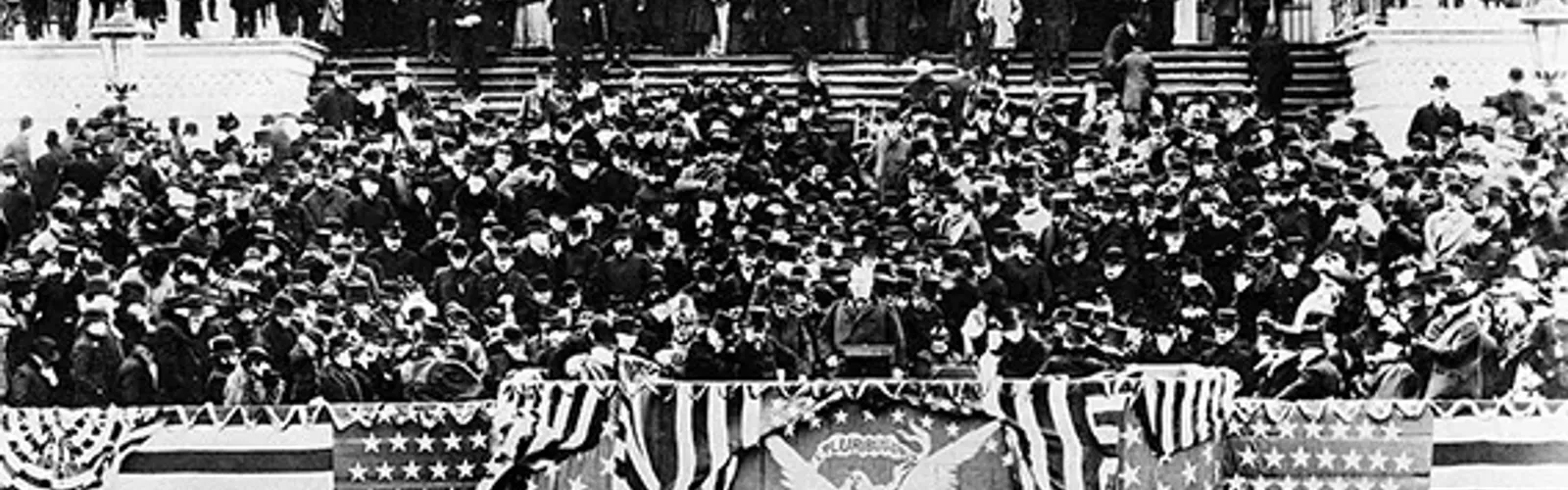
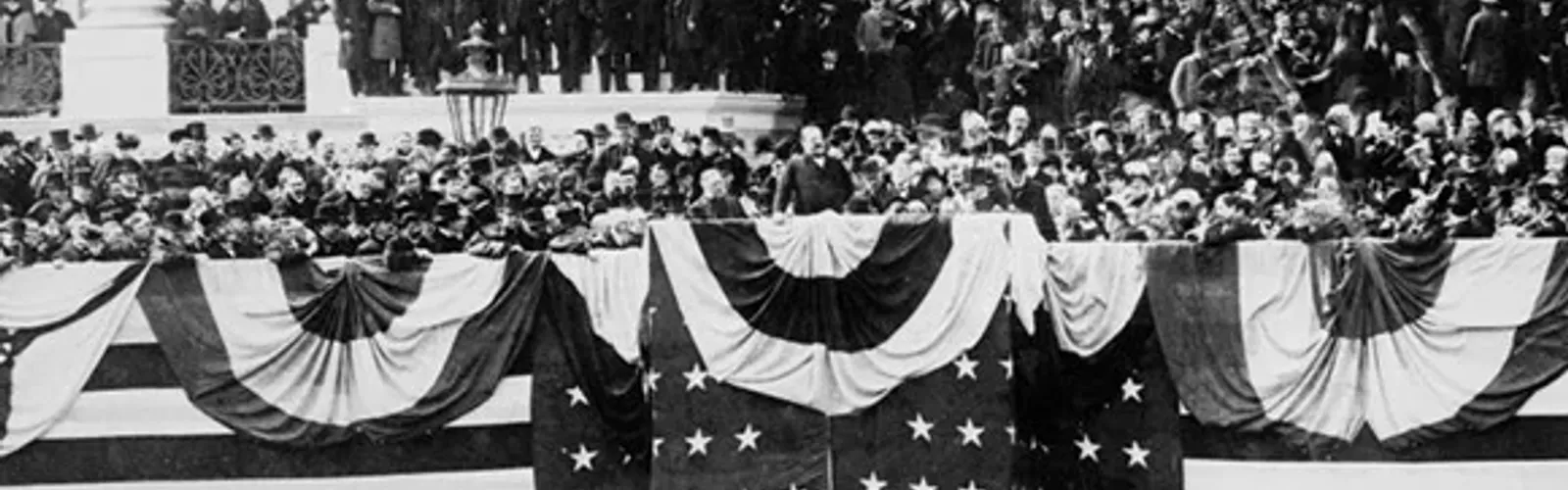
In the presence of this vast assemblage of my countrymen I am about to supplement and seal by the oath which I shall take the manifestation of the will of a great and free people.
In the exercise of their power and right of self-government they have committed to one of their fellow-citizens a supreme and sacred trust, and he here consecrates himself to their service.
This impressive ceremony adds little to the solemn sense of responsibility with which I contemplate the duty I owe to all the people of the land.
Nothing can relieve me from anxiety lest by any act of mine their interests may suffer, and nothing is needed to strengthen my resolution to engage every faculty and effort in the promotion of their welfare.
Amid the din of party strife the people's choice was made, but its attendant circumstances have demonstrated anew the strength and safety of a government by the people.
In each succeeding year it more clearly appears that our democratic principle needs no apology, and that in its fearless and faithful application is to be found the surest guaranty of good government.
But the best results in the operation of a government wherein every citizen has a share largely depend upon a proper limitation of purely partisan zeal and effort and a correct appreciation of the time when the heat of the partisan should be merged in the patriotism of the citizen.
To-day the executive branch of the Government is transferred to new keeping.
But this is still the Government of all the people, and it should be none the less an object of their affectionate solicitude.
At this hour the animosities of political strife, the bitterness of partisan defeat, and the exultation of partisan triumph should be supplanted by an ungrudging acquiescence in the popular will and a sober, conscientious concern for the general weal.
Moreover, if from this hour we cheerfully and honestly abandon all sectional prejudice and distrust, and determine, with manly confidence in one another, to work out harmoniously the achievements of our national destiny, we shall deserve to realize all the benefits which our happy form of government can bestow.
On this auspicious occasion we may well renew the pledge of our devotion to the Constitution, which, launched by the founders of the Republic and consecrated by their prayers and patriotic devotion, has for almost a century borne the hopes and the aspirations of a great people through prosperity and peace and through the shock of foreign conflicts and the perils of domestic strife and vicissitudes.
By the Father of his Country our Constitution was commended for adoption as "the result of a spirit of amity and mutual concession."
In that same spirit it should be administered, in order to promote the lasting welfare of the country and to secure the full measure of its priceless benefits to us and to those who will succeed to the blessings of our national life.
The large variety of diverse and competing interests subject to Federal control, persistently seeking the recognition of their claims, need give us no fear that "the greatest good to the greatest number" will fail to be accomplished if in the halls of national legislation that spirit of amity and mutual concession shall prevail in which the Constitution had its birth.
If this involves the surrender or postponement of private interests and the abandonment of local advantages, compensation will be found in the assurance that the common interest is subserved and the general welfare advanced.
In the discharge of my official duty I shall endeavor to be guided by a just and unstrained construction of the Constitution, a careful observance of the distinction between the powers granted to the Federal Government and those reserved to the States or to the people, and by a cautious appreciation of those functions which by the Constitution and laws have been especially assigned to the executive branch of the Government.
But he who takes the oath today to preserve, protect, and defend the Constitution of the United States only assumes the solemn obligation which every patriotic citizen--on the farm, in the workshop, in the busy marts of trade, and everywhere--should share with him.
The Constitution which prescribes his oath, my countrymen, is yours; the Government you have chosen him to administer for a time is yours; the suffrage which executes the will of freemen is yours; the laws and the entire scheme of our civil rule, from the town meeting to the State capitals and the national capital, is yours.
Your every voter, as surely as your Chief Magistrate, under the same high sanction, though in a different sphere, exercises a public trust.
Nor is this all. Every citizen owes to the country a vigilant watch and close scrutiny of its public servants and a fair and reasonable estimate of their fidelity and usefulness.
Thus is the people's will impressed upon the whole framework of our civil polity--municipal, State, and Federal; and this is the price of our liberty and the inspiration of our faith in the Republic.
It is the duty of those serving the people in public place to closely limit public expenditures to the actual needs of the Government economically administered, because this bounds the right of the Government to exact tribute from the earnings of labor or the property of the citizen, and because public extravagance begets extravagance among the people.
We should never be ashamed of the simplicity and prudential economies which are best suited to the operation of a republican form of government and most compatible with the mission of the American people.
Those who are selected for a limited time to manage public affairs are still of the people, and may do much by their example to encourage, consistently with the dignity of their official functions, that plain way of life which among their fellow-citizens aids integrity and promotes thrift and prosperity.
The genius of our institutions, the needs of our people in their home life, and the attention which is demanded for the settlement and development of the resources of our vast territory dictate the scrupulous avoidance of any departure from that foreign policy commended by the history, the traditions, and the prosperity of our Republic.
It is the policy of independence, favored by our position and defended by our known love of justice and by our power.
It is the policy of peace suitable to our interests.
It is the policy of neutrality, rejecting any share in foreign broils and ambitions upon other continents and repelling their intrusion here.
It is the policy of Monroe and of Washington and Jefferson--"Peace, commerce, and honest friendship with all nations; entangling alliance with none."
A due regard for the interests and prosperity of all the people demands that our finances shall be established upon such a sound and sensible basis as shall secure the safety and confidence of business interests and make the wage of labor sure and steady.
And that our system of revenue shall be so adjusted as to relieve the people of unnecessary taxation, having a due regard to the interests of capital invested and workingmen employed in American industries, and preventing the accumulation of a surplus in the Treasury to tempt extravagance and waste.
Care for the property of the nation and for the needs of future settlers requires that the public domain should be protected from purloining schemes and unlawful occupation.
The conscience of the people demands that the Indians within our boundaries shall be fairly and honestly treated as wards of the Government and their education and civilization promoted with a view to their ultimate citizenship.
And that polygamy in the Territories, destructive of the family relation and offensive to the moral sense of the civilized world, shall be repressed.
The laws should be rigidly enforced which prohibit the immigration of a servile class to compete with American labor, with no intention of acquiring citizenship, and bringing with them and retaining habits and customs repugnant to our civilization.
The people demand reform in the administration of the Government and the application of business principles to public affairs.
As a means to this end, civil-service reform should be in good faith enforced.
Our citizens have the right to protection from the incompetency of public employees who hold their places solely as the reward of partisan service, and from the corrupting influence of those who promise and the vicious methods of those who expect such rewards.
And those who worthily seek public employment have the right to insist that merit and competency shall be recognized instead of party subserviency or the surrender of honest political belief.
In the administration of a government pledged to do equal and exact justice to all men there should be no pretext for anxiety touching the protection of the freedmen in their rights or their security in the enjoyment of their privileges under the Constitution and its amendments.
All discussion as to their fitness for the place accorded to them as American citizens is idle and unprofitable except as it suggests the necessity for their improvement.
The fact that they are citizens entitles them to all the rights due to that relation and charges them with all its duties, obligations, and responsibilities.
These topics and the constant and ever-varying wants of an active and enterprising population may well receive the attention and the patriotic endeavor of all who make and execute the Federal law.
Our duties are practical and call for industrious application, an intelligent perception of the claims of public office, and, above all, a firm determination, by united action, to secure to all the people of the land the full benefits of the best form of government ever vouchsafed to man.
And let us not trust to human effort alone, but humbly acknowledging the power and goodness of Almighty God, who presides over the destiny of nations, and who has at all times been revealed in our country's history, let us invoke His aid and His blessings upon our labors.