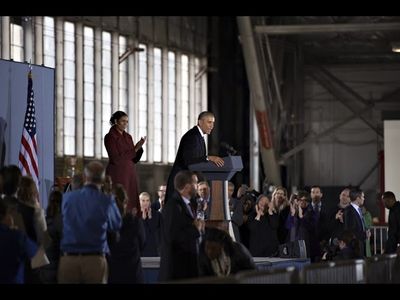
Hillary Clinton: Thank you very much. I have the great pleasure to introduce our next two speakers, who are about to have a conversation concerning health care. And I thought hard about how to introduce these two men. 希拉里·克林顿:非常感谢。我很荣幸介绍接下来两位发言人,他们即将就医疗保健展开对话。我认真想过该如何介绍这两位先生。
And the more I thought about it, the more I realized how much they have in common. They are both left-handed. They both love golf, a game that does not often reciprocate the love they put into it. They both are fanatic sports fans and go to great lengths to be in front of the TV or on the side of the court or the field. They both are master politicians. Each of them has only lost one election. They are both Democrats. They have fabulous daughters. They each married far above themselves. And they each love our country. 想得越多,我越发现他们有许多共同点。他们都是左撇子,都热爱高尔夫,虽然这项运动往往不回报他们投入的热情。他们也都是狂热的体育迷,会想尽办法守在电视机前,或坐到球场边。他们都是出色的政治家,各自只输过一次选举。他们都是民主党人,都有出色的女儿,娶的妻子都远胜过自己,而且都热爱我们的国家。
And so please join me in welcoming "Number 42" and "Number 44" -- Bill Clinton and President Barack Obama. 现在,请大家和我一起欢迎第42任和第44任总统,比尔·克林顿和巴拉克·奥巴马总统。
President Obama: Mr. President. 奥巴马总统:总统先生。
WJClinton: Are you interviewing me? 威廉·杰斐逊·克林顿:是你来采访我吗?
President Obama: That would be bad. I've been talking a lot today. 奥巴马总统:那可不妙。我今天已经讲了很多话。
WJClinton: I want to thank you for giving Hillary a job. That was a good thing you did. Thank you for coming. 威廉·杰斐逊·克林顿:我要感谢你给希拉里一份工作。你做得好。也谢谢你来到这里。
President Obama: Well, it is wonderful to be back. And let me start just by saying to all the people who have for years now supported the incredible efforts of CGI, thank you. Because wherever we travel, all across the globe, we see the impact that it's making every single day. And we're very proud of what you all do. 奥巴马总统:能够再回来真好。首先,我想感谢多年来支持克林顿全球倡议卓越工作的所有人。因为无论我们走到世界哪个地方,每天都能看到你们的工作带来的影响。我们为你们所做的一切深感自豪。
And let me say that we still miss our former Secretary of State. And I should add that there's nothing she said that was not true, particularly the part about us marrying up. 我还想说,我们仍然怀念前国务卿。她刚才说的话句句属实,尤其是关于我们娶到了比自己更优秀的妻子那部分。
WJClinton: Well, that brings me to my first health care comment. This is going to be a conversation about domestic and international health, and America's role in it. But I want to begin by telling you that I think the First Lady has done a great job in this fight against childhood obesity. 威廉·杰斐逊·克林顿:这就引出了我对医疗保健的第一个看法。我们今天要谈国内和国际医疗,以及美国在其中的作用。但我想先说,第一夫人在防治儿童肥胖方面做得非常出色。
We have been honored at our foundation to be asked to represent her effort in 18,000 schools where we've lowered the calories in drinks being served in schools by 90 percent. But she has been great on that one. The other thing I think is that I was a little upset -- and, as you know, called one of your administration members when you got to Africa -- when I read an article that said that you didn't have a big initiative in Africa. And I said -- I can't say exactly what I said -- but I said that is inaccurate. That's the sanitized version of what I said. 我们基金会很荣幸受托在一万八千所学校协助推进她的工作,使学校供应的饮料所含热量降低了百分之九十。她在这件事上表现得很好。还有一件事让我有些不高兴:你去非洲时,我读到一篇文章,说你在那里没有什么重大倡议。我还因此打电话给你政府的一位成员,你也知道。我当时说的话不能原样复述,但意思就是,那篇文章不准确。这已经是经过修饰的说法了。
Because when the President took office, our program, begun under President Bush, PEPFAR, was giving antiretroviral medicine to 1.7 million people. Because of an agreement that I made with President Bush to use generic drugs that were approved by the FDA, about half our drugs were being purchased in that way. Under President Obama, we've gone to 99 percent. We are treating more than 5.1 million, three times as many for less money. 奥巴马总统上任时,始于布什总统时期的美国总统防治艾滋病紧急救援计划,正向一百七十万人提供抗逆转录病毒药物。由于我与布什总统达成协议,使用经美国食品药品监督管理局批准的仿制药,约一半药物通过这种方式采购。到了奥巴马总统任内,这一比例升至百分之九十九。现在接受治疗的超过五百一十万人,是原来的三倍,而花费却更少。
That is a stunning legacy -- so that more money has been put into malaria medicine, bed nets, so you saved a lot of money and saved more lives while doing it. And I'm very proud of that. And I want to thank you for it. It's important. 这是一项惊人的成就。这样一来,就有更多资金可用于疟疾药物和蚊帐。你们节省了大量资金,同时挽救了更多生命。我为此非常自豪,也要感谢你。这件事很重要。
Now, maybe at the end of this conversation we can get back to some of your current global health initiatives. But let's talk a little about the health care law, because we're about to begin on October 1st open enrollment for six months. And I'd like to give you a chance, first of all, to tell them why -- when you took office, we were teetering on the brink of a depression. You had to avert it. You had to start the recovery again. Why in the midst of all this grief did you also take on this complex issue? Many people were saying, why doesn't he just focus on the economy and leave this alone? 也许在对话结束前,我们可以再谈谈你目前的一些全球卫生倡议。不过先来谈医疗法案,因为为期六个月的开放登记即将在十月一日开始。我想先给你一个机会,向大家解释为什么要推行它。你上任时,我们正处于经济萧条的边缘;你必须阻止危机,重新启动复苏。为什么在这么多困难之中,还要处理医疗保健这个复杂问题?当时许多人问,为什么他不专心处理经济问题,先别碰这个?
So tell us why you did it. 所以,请告诉我们你为什么这样做。
President Obama: Well, first of all, I think it's important to remember that health care is the economy -- a massive part of our economy. And so the idea that somehow we can separate out the two is a fallacy. 奥巴马总统:首先,我认为要记住,医疗保健本身就是经济的重要组成部分,在经济中占有巨大比重。因此,认为两者可以分开处理,是一种错误看法。
Second of all, the effort for us to deal with a multifaceted health care crisis has been going on for decades. And the person who just introduced us, as well as you, early in your presidency, had as much to do with helping to shape the conversation as anybody. 其次,为应对涉及多个方面的医疗保健危机,我们已经努力了几十年。刚才介绍我们的那个人,也就是希拉里,以及你在总统任期初期,都为塑造这场讨论作出了重大贡献。
The fact is that we have been, up until recently, the only advanced industrialized nation on Earth that permits large numbers of its people to languish without health insurance. 事实是,直到最近,我们还是全球发达工业化国家中唯一允许大量人民长期得不到医疗保险的国家。
Not only is there the cruelty of people who are unable to get health insurance having to use the emergency room as their doctor or their health service, but -- we’re also more efficient than anybody else and so when we talk about, for example, our deficit -- you know this better than anybody -- the reason that we have not only current deficits but also projected long-term deficits -- the structural deficit that we have is primarily based on the fact that we have a hugely inefficient, wildly expensive health care system that does not produce better outcomes. 无法获得医疗保险的人只能把急诊室当作医生或医疗服务机构,这本身就很残酷。而且,就效率而言,我们的医疗体系也存在严重问题。比如谈到财政赤字,你比任何人都清楚,我们不仅有眼前的赤字,还有预计长期持续的赤字。结构性赤字的主要原因,是我们拥有一个效率低下、费用高昂,却没有带来更好治疗结果的医疗体系。
And if we spent the same amount of money on health care that Canada or France or Great Britain did, or Japan, or any other industrialized country, with the same outcomes or better outcomes, that essentially would remove our structural deficit, which would then free up dollars for us to invest in early-childhood education and infrastructure and medical research and all the other things that can make sure that we’re competitive and growing rapidly over the long term. 如果我们在医疗保健上的花费能和加拿大、法国、英国、日本或任何其他工业化国家一样,同时取得相同或更好的效果,结构性赤字实际上就会消失。这样,我们就能腾出资金,投资于幼儿教育、基础设施、医学研究,以及其他能够确保我们在长期内保持竞争力和快速增长的事业。
So my view when I came into office was we’ve got an immediate crisis -- we’ve got to get the economy growing. But what we also have to do is to start tackling some of these structural problems that had been building up for years. And one of the biggest structural problems was health care. It’s what accounts for our deficit. It’s what accounts for our debt. It causes pain and misery to millions of people all across the country. It is a huge burden on our businesses. 所以,我上任时的想法是:眼前的危机要求我们推动经济增长,但我们也必须开始解决一些积累多年的结构性问题。其中最大的问题之一就是医疗保健。它造成赤字和债务,让全国数百万人蒙受痛苦,也给企业带来沉重负担。
I was out at a Ford plant out in Missouri -- making the F series out there -- and this is a big stamping plant. Ford is now the biggest seller in the United States. We took that lead back from the Japanese automakers. But we are still burdened by the fact that every U.S. automobile that is manufactured requires a couple of thousand dollars in added health care costs that our foreign competitors don’t have to pay. 我去过密苏里州一家生产福特F系列汽车的大型冲压厂。福特如今是美国销量最大的汽车品牌,我们从日本汽车制造商手中夺回了这个领先位置。但我们仍面临一个负担:每生产一辆美国汽车,就要比外国竞争对手多承担几千美元的医疗费用。
So this has everything to do with the economy, in addition to what I consider to be the moral imperative that a mom should not have to go bankrupt if her son or daughter gets sick; that a family who’s dealing with a layoff and is already struggling to pay the bills shouldn’t also be wondering whether they’re one illness away from losing their home. And I think most Americans agree with that. 所以,医疗保健与经济息息相关。除此之外,在我看来还有道义上的责任:母亲不应因为儿女患病而破产;一个家庭已经因裁员而难以支付账单,就不该还要担心一场疾病会使他们失去住房。我想大多数美国人都认同这一点。
WJClinton: So first of all, folks, for those of you who are from the United States, that’s about as good an overview as you’re ever going to hear of what this economic issue is. But you remember the President said our structural deficit would disappear if we had a comparable health care system in terms of cost to the French and Germans that are consistently rated the highest. It’s about a trillion dollars a year, and somewhere around 44 percent of that money is government-funded money. So you just run the numbers. 威廉·杰斐逊·克林顿:首先,各位来自美国的朋友,这恐怕是你们能听到的对这一经济问题最清楚的概述。大家记得总统说过,如果我国医疗体系的成本能与法国和德国相当,结构性赤字就会消失;这两个国家的医疗体系经常被评为最好的。差额大约每年一万亿美元,其中约百分之四十四来自政府资金。各位可以自己算算。
Think -- over half of our deficit has already disappeared because of economic growth and the revenues you raised and the spending we cut. And you pretty much get rid of the rest of it if we just had a comparably expensive system to any other country. 想想看,由于经济增长、你增加的收入以及我们削减的开支,赤字已经减少了一半以上。如果我国医疗体系的成本能与其他国家相当,剩下的赤字也就基本可以消除。
Before you took office, we lost a car company that wanted to locate in Michigan that went instead to Canada, and they announced -- they said, look, we’re a car company that provides health care benefits to an employee; we're not a health care company that sells cars to cover our bills. We have to go to Canada. And it was one of the few companies willing to go on record and say this. So thank you for doing it. 你上任前,我们失去了一家原本想在密歇根州设厂、后来却去了加拿大的汽车公司。他们公开说:我们是一家为员工提供医疗福利的汽车公司,不是一家为了支付医疗账单而卖车的医疗公司,所以必须去加拿大。愿意公开说明这个原因的公司并不多。因此,谢谢你推动改革。
So let’s talk about this. What does this open enrollment mean? How are people going to get involved? When you have universal enrollment you can manage your costs better and cut inflation down. 现在来谈谈这件事。开放登记意味着什么?人们怎样参与?实现全民参保后,就能更好地控制成本,降低医疗费用涨幅。
I'll give the President a chance to talk about all the good stuff that's happened, but I just want you to know one thing. In the last three years, just as we started doing this, inflation in health care costs has dropped to 4 percent for three years in a row for the first time in 50 years. Fifty years. Before that, the costs were going up at three times the rate of inflation for a decade. 稍后我会让总统谈谈已经取得的成果。但我想先请大家知道一件事:就在我们开始实施改革的过去三年里,医疗费用的涨幅连续三年降至百分之四,这是五十年来第一次。五十年来第一次。此前十年,医疗费用的上涨速度一直是总体通胀率的三倍。
So now what? What are you going to do on October 1st? Tell them how this has got to work. 接下来呢?十月一日你们要做什么?请告诉大家,这项制度将怎样运作。
President Obama: Well, let me give folks just a little bit of background about what’s already in place and then what happens on October 1st. 奥巴马总统:我先向大家介绍一下已经实施的措施,然后再谈十月一日将发生什么。
When we passed the Affordable Care Act, there were a number of components to it. A big part of it was essentially providing a Patient’s Bill of Rights that Americans and advocates have been fighting for for decades. So what we wanted to do was make sure if you already have health insurance that you get a fair deal, that you're being treated well by your insurers. 我们通过《平价医疗法案》时,它包含几个部分。一个重要部分实际上是确立一份患者权利法案,这是美国民众和倡导者争取了几十年的。我们希望确保已经拥有医疗保险的人得到公平待遇,保险公司能够善待他们。
So we eliminated, prohibited insurance companies from imposing lifetime limits, which oftentimes if a family member really got sick, they thought they were covered until suddenly they hit that limit and now they’re out hundreds of thousands of dollars with no way of paying. 因此,我们禁止保险公司设置终身给付上限。过去,家人如果患上重病,一家人原以为有保险保障,直到突然达到上限,才发现自己要承担几十万美元的费用,而且根本无力支付。
We said to insurance companies, you’ve got to use at least 80 percent of your premium that you're receiving on actual health care -- not on administrative costs and CEO bonuses. And if you don't, you’ve got to rebate anything that you spent back to the consumer. So there are millions of Americans who’ve received rebates. They may not know that they got it because of the Affordable Care Act -- or “ObamaCare” -- but they’re pretty happy to get those rebates back, because it made sure that the insurance companies were treating folks fairly. 我们告诉保险公司,收到的保费至少百分之八十必须用于实际医疗服务,不能花在行政开支和首席执行官的奖金上。如果做不到,就必须把多花的钱退还消费者。因此,数百万美国人收到了退款。他们可能不知道这是《平价医疗法案》,也就是所谓“奥巴马医改”带来的,但能拿回这笔钱,他们当然很高兴;这项规定确保保险公司公平对待民众。
We said that any young person who doesn’t have health insurance can stay on their parent’s health insurance until they’re 26 years old. And as a consequence, what we’ve seen is steadily the rate of uninsured for young people dropping over the last three years since the bill passed and obviously providing a lot of relief to a lot of parents out there because a lot of young people, as they’ve been entering into the job market at a time when jobs are tough to get and oftentimes benefits are slim, this is providing enormous security until they get more firmly established in the labor market. 我们还规定,没有自己医疗保险的年轻人可以继续参加父母的保险,直到二十六岁。因此,法案通过后的三年里,未参保年轻人的比例持续下降。这也让许多父母松了一口气,因为年轻人进入就业市场时,工作难找,福利待遇也常常有限;这项保障可以在他们站稳脚跟前提供很大的安全感。
We provided additional discounts for prescription drugs for seniors under the Medicare program. And so seniors have saved billions of dollars when it comes to their prescription drugs. 我们还为参加联邦医疗保险计划的老年人提供更多处方药折扣。因此,老年人在购买处方药时节省了数十亿美元。
So there have been over the last three years a whole array of consumer protections and savings for consumers that result directly from the law that we passed. And for those who say that they want to repeal it, typically when you ask them about, what are all these various benefits, they say, well, that one is good, and that one is pretty good, and we’d keep that. And you pretty much go down the list, and there’s not too much people object to. 过去三年,我们通过的法律直接带来了一系列消费者保护措施和费用节省。那些主张废除法案的人,听到你逐项问起这些好处,通常又会说,这一项不错,那一项也很好,我们会保留。这样一路问下来,人们真正反对的内容其实并不多。
You will recall also at the time that part of the way that we paid for the health care bill was we said Medicare is wasting a lot of money without making seniors healthier. And there was a lot of hue and cry about how we were taking money out of Medicare -- well, it turns out that we were right, that we could change how doctors and hospitals and providers were operating, rewarding them for outcomes, as opposed to simply how many procedures that they did. You started seeing practices change among millions of providers across the country. 大家还记得,我们为医疗法案筹措资金的一种办法,是指出联邦医疗保险计划花了许多冤枉钱,却没有让老年人更健康。当时有人大声抗议,说我们在削减这项计划的资金。事实证明我们是对的:我们可以改变医生、医院和其他服务提供者的运作方式,按照治疗效果,而不是仅仅按照做了多少项医疗程序来给予回报。全国数百万医疗服务提供者的做法也开始改变。
Medicare rates have actually slowed in terms of inflation. Seniors have saved money. Folks are healthier. And some of those savings we’ve been able to use to make sure that people who don't have health insurance get health insurance. 联邦医疗保险费用的上涨速度确实放缓了。老年人省了钱,人们更健康了。我们还能用节省下来的一部分资金,帮助没有医疗保险的人获得保险。
Now, this brings me to October 1st. The one part of the Affordable Care Act that required several years to set up, but a critical part, was how do we provide health insurance for individuals who don't get health insurance through the job? It’s a historical accident that in this country health care is attached to employers. And part of the problem is if you’re out there shopping for health insurance on your own, you're not part of a big pool, well, there’s no aggregation of risk taking place for the insurers. So they're basically going to say, let’s see, you're 50 years old. 这就说到十月一日了。《平价医疗法案》中有一个关键部分需要几年时间筹备:如何为无法通过工作获得医疗保险的人提供保险?在美国,医疗保障与雇主绑定,是历史演变的结果。问题在于,如果你独自购买保险,不属于一个大型参保群体,保险公司就无法分摊风险。于是他们会说,让我看看,你五十岁了。
You got high blood pressure. And we just look at the actuarial tables and we figure you’re going to get sick, so we’re going to charge you $1,500 a month for health insurance, which the average person has no way of affording -- because there’s no pooling of risk. 你还有高血压。我们查查精算表,觉得你可能会生病,于是每月向你收取一千五百美元保费。普通人根本负担不起,因为风险没有得到共同分担。
So what we said was we need to set up a mechanism to pool people who currently don't have health insurance so that they have the same purchasing power, the same leverage that a big companies does when they're negotiating with the insurance company. 因此,我们说必须建立一种机制,把目前没有保险的人组织成参保群体,让他们在与保险公司谈判时,拥有和大企业一样的购买力与议价能力。
And essentially what we’ve done is we’ve created what we’re calling marketplaces in every state across the country where consumers are now able to be part of a big pool. Insurers have to bid, essentially compete for the business of that pool. And what we now have set up are these marketplaces that provide high-quality health care at affordable prices, giving people choices so that they can get the health insurance that they need and they want. And the premiums are significantly lower than what they were able to previously get. 我们基本上是在全国每个州设立了所谓的保险市场,让消费者加入大型参保群体。保险公司必须投标,争取这个群体的业务。这些市场如今能够以可负担的价格提供优质医疗保障,让人们有选择,买到自己需要和想要的保险。保费也远低于他们以前能够获得的价格。
I’ll take the example of New York State. The insurers put in their bids to participate in these marketplaces. It turns out that their rates are up to 50 percent lower than what was available previously if you just went on the open market and you tried to get health insurance. Fifty percent lower in this state. California -- it’s about 33 percent lower. In my home state of Illinois, they just announced it’s about 25 percent lower. 以纽约州为例,保险公司为参与这些市场提交了报价。结果,与人们以前自己在公开市场购买保险相比,保费最高降低了百分之五十。在纽约州,降幅是百分之五十。加利福尼亚州约为百分之三十三。我的家乡伊利诺伊州刚宣布,降幅约为百分之二十五。
So just by pooling and creating competition so that insurers have to go after people’s business the way they go after a group plan, we have drastically reduced premiums and costs. On top of that, what we’re now doing is we’re saying if with the better deal that you got you still can’t afford it, we’re going to give you tax credits to essentially subsidize your purchase of health insurance. 仅仅通过集中投保并引入竞争,促使保险公司像争取团体保险业务那样争取消费者,我们就大幅降低了保费和成本。此外,我们还规定:即使享受了更优惠的价格,你仍然负担不起,我们就提供税收抵免,实际上是补贴你购买医疗保险。
And here’s the net result. We’ll be continuing to roll out what the actual prices are going to end up being, but I can tell you right now that in many states across the country, if you’re, say, a 27-year-old young woman, don’t have health insurance, you get on that exchange, you’re going to be able to purchase high-quality health insurance for less than the cost of your cellphone bill. 结果会怎样呢?实际价格还将陆续公布,但现在我可以告诉各位,在全国许多州,一个比如二十七岁、没有医疗保险的年轻女性,可以在这个市场上以低于手机账单的费用购买优质医疗保险。
And because all the insurers who participate are required to, for example, provide free preventive care, free contraceptive care, that young woman, she may make up what she’s spending on premiums just on her monthly use of health care. 而且,参与的保险公司都必须提供免费预防性医疗和免费避孕保健等服务。对于这位年轻女性来说,她每月使用医疗服务获得的价值,甚至可能抵得上支付的保费。
So this is going to be a good deal for those who don’t have health insurance. Those who already have health insurance get better health insurance. And the best part of the whole thing is, because of these changes we initiated in terms of how we’re paying providers, health care costs have grown, as you pointed out, Mr. President, at the slowest rate in 50 years. We are bending the cost curve and getting at the problems that are creating our deficits in Medicare and Medicaid. 所以,对没有医疗保险的人来说,这是笔划算的交易;已经有保险的人则能得到更好的保障。最重要的是,由于我们改变了支付医疗服务提供者费用的方式,正如总统先生所指出的,医疗费用以五十年来最慢的速度增长。我们正在压低成本增长曲线,着手解决造成联邦医疗保险和医疗补助计划赤字的问题。
WJClinton: I should point out that, so far, in most states, one of the good things that at least I didn’t know whether it would happen is when we began this in the United States, more than 80 percent of the American states had only one or two companies providing health insurance who had more than 80 percent of the market. So there was, in effect, no price competition. So what I was terrified of was we’d open these things and there would only be one company show up and bid, and this whole thing, we’d be having an academic conversation. 威廉·杰斐逊·克林顿:我还要指出,至少有一件好事是我先前也不确定会不会发生的。当美国开始这项改革时,百分之八十以上的州,其医疗保险市场中,只有一两家公司占有超过百分之八十的份额。因此,实际上不存在价格竞争。我当时很担心,市场开放后只来一家公司投标,那我们今天谈的就只会是纸上谈兵。
Instead, it’s actually led to the establishment of more companies doing more bidding. 结果恰恰相反,参与投标的公司反而更多了。
And I think part of it is they have greater confidence that they can deliver health care at a more modest cost. So, so far, it’s good. But I think it’s important for you to the tell the people why we’re doing all this outreach -- because this only works, for example, if young people show up. And even if they buy their cheapest plan, then they claim their tax credits, so it won’t cost them much -- 100 bucks a month or so. 我想,部分原因是他们更有信心能以较低成本提供医疗服务。所以,到目前为止情况不错。但我认为,你应该告诉大家为什么要做这么多宣传,因为这项制度要发挥作用,年轻人就必须参加。即使他们买最便宜的方案,也可以申领税收抵免,实际花费不会太多,每月大约一百美元。
We got to have them in the pools, because otherwise all these projected low costs cannot be held if older people with preexisting conditions are disproportionately represented in any given state. You've got to have everybody lined up. 我们必须让他们加入参保群体。否则,如果某个州参保者中有既有疾病的老年人比例过高,就无法维持预计的低成本。必须让所有人都参与进来。
So explain what kind of -- all the work you've been doing on the outreach for the opening on October. 因此,请你解释一下,为十月开放登记所做的宣传工作。
President Obama: I think President Clinton makes a really important point. And the way pools work, any pool, is essentially those of us who are healthy subsidize somebody who is sick at any given time. We do that because we anticipate, well, at some point we'll get sick and hope the healthy person is in our pool so those costs and those risks get spread. That's what insurance is all about. 奥巴马总统:克林顿总统提出了非常重要的一点。任何保险群体的运作方式,基本上都是由眼下健康的人补贴生病的人。我们这样做,是因为我们预料自己终有一天也会生病,希望那时群体里有健康的人与我们共同分担费用和风险。这就是保险的意义。
And what happens is if you don't have pools that are a cross-section of society, then people who are already sick or more likely to get sick, they'll all rush out and buy insurance. People who are healthy, they say, you know what, I won't bother. And you get what's called adverse selection. Essentially what happens is that the premiums start going higher and higher because the risks aren't spread broadly enough across the population. 如果参保群体不能反映社会各类人群的构成,就会发生这样的情况:已经生病或更可能生病的人纷纷购买保险;健康的人却觉得自己不用买。这就是所谓的逆向选择。由于风险没有在足够广泛的人群中分摊,保费便会越来越高。
So you want to get a good cross-section in every pool. That's why big companies have an easier time getting good rates for their employees than small companies, because if you only have five employees and one person is stricken with breast cancer, let's say, your rates potentially shoot up. But if it's a thousand employees, then it gets spread out. 所以,每个参保群体都需要涵盖各类人群。这也是大企业比小企业更容易为员工争取到优惠费率的原因。假设一家企业只有五名员工,其中一人患乳腺癌,保费就可能猛涨;如果有一千名员工,风险就会分散。
So on October 1st, open enrollment begins. All these folks can start signing up for the marketplace. And what we want to make sure of is that everybody, in every category, in every age group, understands why health insurance is important, understands why they should sign up, understands the choices that are going to be available to them. 十月一日,开放登记开始,大家都可以开始在保险市场注册。我们希望确保各类人群、各个年龄段的人都明白医疗保险为什么重要、为什么应该报名,以及自己有哪些选择。
They're going to be able to go to a computer, tap on the web page and they're going to be able to shop just like you shopped for an airline ticket or a flat-screen TV, and see what's the best price for you, what's the plan that's best suited for you, and go ahead and sign up right there and then. 人们可以打开电脑,进入网页,像购买机票或平板电视那样比较方案,看看什么价格最合适、哪项计划最适合自己,然后当场完成登记。
And that the open enrollment period will last from October 1st until the end of March and so there will be six months for folks to sign up. Normally, this would be pretty straightforward. A lot of people don't have health insurance. A lot of people realize they should get health insurance. But let's face it, it's been a little political, this whole ObamaCare thing. 开放登记从十月一日持续到三月底,人们有六个月时间报名。按理说,这应该很简单:许多人没有保险,也知道自己应该购买。但坦率地说,所谓“奥巴马医改”一直带有一些政治争议。
And so what you’ve had is an unprecedented effort that you’ve seen ramp up over the last month or so in which those who have opposed the idea of universal health care in the first place and have fought this thing tooth and nail through Congress and through the courts and so forth have been trying to scare and discourage people from getting a good deal. And some of you may have seen some of the commercials out there that are a little whacky. 因此,过去一个月左右,反对全民医疗保障的人加大了前所未有的阻挠力度。他们从一开始就反对这个主张,在国会和法院都竭力抵制,如今又试图吓阻人们获得一项划算的保障。各位可能看到过一些相当荒唐的广告。
And the main message we have -- and we’re using social media, we’re talking to churches, we’re talking to various civic groups -- and what we’re saying to people is, look, just go to the website yourself. Go to healthcare.gov; take a look at whether this is a good deal or not and make your own decision about whether this is good for you. Because what we are confident about is that when people look and see that they can get high-quality, affordable health care for less than their cell phone bill, they’re going to sign up. They are going to sign up. 我们传达的主要信息是:请大家自己上网站看看。我们通过社交媒体宣传,也与教会和各类民间团体沟通。我们请大家访问政府医疗网站,看看这是否划算,并自行判断是否适合自己。我们相信,当人们发现花费比手机账单还低,就能获得优质、可负担的医疗保障时,他们会登记的,一定会登记。
And part of what I think the resistance that we’ve seen ramp up particularly over the last couple of months is all about is the opponents of health care reform know they’re going to sign up. In fact, one of the major opponents, when asked, well, why is it that you’d potentially shut down the government at this point just to block ObamaCare, he basically fessed up. He said, well, once consumers get hooked on having health insurance and subsidies, then they won’t want to give it up. I mean, that’s -- you can look at the transcript. This is one of the major opponents of health care reform. 我认为,近几个月反对声浪增强,部分原因正是医改反对者知道人们会登记。事实上,有一位主要反对者被问及为什么可能为了阻止“奥巴马医改”而让政府停摆时,基本上说出了实情。他说,一旦消费者习惯拥有医疗保险和补贴,就不愿放弃了。各位可以去看原始记录;这话确实出自一位主要医改反对者之口。
It is an odd logic. Essentially they’re saying people will like this thing too much and then it will be really hard to roll back. 这种逻辑很奇怪。他们实际上是在说,人们会太喜欢这项制度,以后就很难取消了。
So it is very important that people just know what’s out there, what’s available to them, and let people make up their own minds as to whether it makes sense or not. 所以,让人们知道有哪些选择、哪些保障可供自己使用,然后自行判断是否合适,这一点非常重要。
Now, one last thing I want to say, because I do think sometimes -- people come up to me and they say, well, if this is such a good deal, how come the polls show that it’s not popular? Well, one of the things you and I both know is that when you come to health care, there’s no more personal and intimate decision for people. I mean, this is something that people really care about. And frankly, the devil you know is always better than the devil you don’t know. And that’s what “Harry and Louise” was all about back in the ‘90s, right? It was scaring people with the prospect of change. 最后我还想说一件事。有时有人问我:如果改革这么好,为什么民调显示它不受欢迎?你我都知道,谈到医疗保健,对人们而言没有什么决定比这更切身、更私密了。人们确实非常在意。坦率说,熟悉的麻烦总比未知的麻烦让人安心。九十年代的“哈里和路易丝”广告正是利用这一点,不断渲染改变带来的恐惧,对吧?
And so part of our goal here is just to make sure people have good information. And there has been billions of dollars spent making people scared and worried about this stuff. And rather than trying to disabuse people of every single bit of misinformation that’s been out there, what we’re saying is just look for yourself. Take a look at it and you will discover that this is a good deal for you. 因此,我们的目标之一,就是确保人们得到可靠信息。有人花了数十亿美元让民众对此感到害怕和担忧。我们不打算逐条驳斥所有流传的错误信息,只是请大家亲自去看。看过之后,你会发现这对自己是划算的。
WJClinton: Well, first of all, I completely agree with that. I think we’ve got to just drive people to the websites. The states that are participating -- the Supreme Court decision that upheld the health care law said that states didn’t have to set up these marketplaces if they didn’t want to, but if they didn’t the federal government would set it up. They also said that states didn’t have to expand Medicaid coverage to help people whose incomes are up to 138 percent of the federal poverty level buy health insurance. 威廉·杰斐逊·克林顿:首先,我完全同意。我们得让人们去访问这些网站。对于参与的州,最高法院在维持医疗法案有效的判决中说,各州如果不愿意,可以不自行设立保险市场,但联邦政府会代为设立。法院还说,各州可以不扩大医疗补助计划的覆盖范围,不必帮助收入达到联邦贫困线百分之一百三十八的人购买医疗保险。
There are some states, believe it or not, that want the marketplace but don't want the Medicaid. And that's going to lead to a cruel result, and there’s nothing the President can do and it’s not his fault. That's what the Supreme Court said. So we can have this bizarre situation where, let’s say, a business with 60 employees can -- or an individual going into the individual market will get the benefit of tax credits for everybody with incomes of 138 percent of the federal poverty level or above, but they won't get it for people who are between 100 and 138 percent. 信不信由你,有些州想要保险市场,却不愿扩大医疗补助计划。这将造成残酷的结果。总统对此无能为力,也不是他的错;这是最高法院的判决造成的。于是可能出现一种荒谬情况:比如一家有六十名员工的企业,或在个人市场购买保险的人,收入达到联邦贫困线百分之一百三十八及以上时可以享受税收抵免,而收入在贫困线百分之一百到百分之一百三十八之间的人却享受不到。
So lower-income people who desperately need the health insurance -- we would have the cruelest of all situations in those states. And there’s nothing the President can do about it because of the Supreme Court decision. So we have to persuade the states to come on. But more and more states with Republican governors, Republican legislatures are doing it. 在那些州,最迫切需要医疗保险的低收入者将遭遇最不公平的处境。受最高法院判决所限,总统无能为力。所以,我们必须说服各州加入。好消息是,越来越多由共和党州长和议会领导的州也开始这样做。
Tell them about Arkansas, because we're doing well down there. 请谈谈阿肯色州,因为我们在那里进展不错。
President Obama: A little hometown bias, there’s nothing wrong with that. A couple of things that are happening that I think are very interesting. First of all, look, I'm sympathetic to some of these Republican governors who are under a lot of pressure because the whole issue of whether you're for ObamaCare or not has become a litmus test in the other party. So some of them, politically it’s been tough; sometimes state legislatures that refuse to allow governors to go ahead and implement. 奥巴马总统:对家乡有一点偏爱也无妨。有几件正在发生的事,我觉得很有意思。首先,我理解一些共和党州长承受的压力,因为是否支持“奥巴马医改”已经成了另一党派的政治试金石。他们当中一些人在政治上处境艰难,有时州议会甚至不允许州长推进实施。
But as you indicated, what we've seen is that when Republican governors take a look at the deal they’re getting where, in addition to these exchanges, we're also providing a much more significant match, much more federal money to provide health insurance -- from the state’s perspective, they’re not paying; the federal government is picking up the tab -- and this is helping them because people are no longer going to the emergency room and they now have good health care, they’re now getting preventive care. 但正如你指出的,我们看到一些共和党州长仔细研究后发现,除了保险交易平台,联邦政府还提供了高得多的配套资金,用于扩大医疗保险。站在州政府的角度,费用不是由他们承担,而是由联邦政府支付。这对州也有好处,因为人们不必再依赖急诊室,而能得到正常医疗和预防保健。
You're seeing some Republican governors step up and saying, I may not like ObamaCare, but I’m going to go ahead and make sure that my people are benefiting from this plan. So that's one good thing that's happening. 因此,一些共和党州长站出来说,我可能不喜欢“奥巴马医改”,但我还是要确保本州人民从中受益。这是一件好事。
The second thing that's happening is there are a couple of states -- Arkansas is a good example; Kentucky is another good example; Idaho, interesting example -- these are states where I just got beat. I mean, I do not have a big constituency in these states. Well, I take that back. You know what, 40 percent is still a lot of people -- but I’m losing by 20 percent in these states. But the governors were still able to say we’re going to set up our own state exchanges, their own marketplaces. And each state is just using their own name for it. 另一件事发生在几个州:阿肯色州、肯塔基州和爱达荷州都是例子。在这些州,我刚刚输掉了选举,没有庞大的支持者群体。好吧,我收回这话,百分之四十的支持者也不少,只不过我在这些州输了大约二十个百分点。但州长们仍然决定建立自己的州保险交易平台,也就是自己的保险市场,各州还给它取了自己的名字。
So I had a meet -- I had a conference, a video conference with all the state directors of all the marketplaces, and I’m talking to the director in Kentucky and Idaho. And in Kentucky, it’s called like, Kentucky Connect. And in Idaho, it’s called the Idaho Health Care Exchange. And there’s a story that came out of Kentucky where some folks were signing people up at a county fair somewhere. Some guy goes up and he starts looking at the rates and decides he’s going to sign up. And he turns to his friend and said, this is a great deal. This is a lot better than ObamaCare. Right? Which is fine. 我曾通过视频会议与所有州保险市场的负责人交谈,其中包括肯塔基州和爱达荷州的负责人。肯塔基州的平台好像叫“肯塔基连接”,爱达荷州的叫“爱达荷医疗保险交易平台”。肯塔基州还传出一个故事:有人在某个县集市上帮民众登记,一个人走过去看了价格,决定报名。他转头对朋友说,这太划算了,比“奥巴马医改”好多了,对吧?这也没关系。
Because we -- I don't have pride of authorship on this thing. I just want the thing to work. 因为我并不在乎这项制度归功于谁,我只希望它真正发挥作用。
And Arkansas just came out with its rates, and as has been true in virtually every single state, not only are premiums lower than they were, they're a lot lower than even the most optimistic predictions were about how low they would be. 阿肯色州刚公布费率。和几乎每个州的情况一样,保费不仅低于以往,甚至比最乐观的预测还要低得多。
And once these marketplaces are up and running, it turns out that what has traditionally been a pretty conservative principle, which is competition and choice work, well, in the insurance market, competition and choice work. And what we’re seeing is that people are going to be able to get the kind of health care that they have never been able to get before. States are going to benefit from it because they're going to save money. 这些保险市场一旦运作起来,人们会发现,竞争与选择能够发挥作用,这原本就是一种相当传统的保守派原则。在保险市场,竞争与选择同样有效。人们将获得以前无法得到的医疗保障,各州也会因为节省开支而受益。
And one thing that all of you -- there are probably very few people in this room who don't have health insurance, although if you don't, you should sign up starting on October 1st. One of the things that many people don't realize is that the subsidy that all of you provide for the uninsured is about $1,000 per family. You pay $1,000 -- everybody here who has got health insurance pays about $1,000 more for your families' insurance than you otherwise would have, because hospitals are mandated, they are required to provide service to anybody who shows up. 在座大概很少有人没有医疗保险;不过如果你还没有,请从十月一日起报名。许多人不知道,大家对未参保者提供的隐性补贴,平均每个家庭约一千美元。在座拥有医疗保险的每个人,家庭保费都比本来应付的多出约一千美元,因为医院依法必须为任何前来求医的人提供服务。
And so what happens is when you've got 15 percent of the population without health insurance, they end up showing up at the emergency room typically at a point when they're much sicker than if they had been getting regular checkups and preventive care. So you pay for the most expensive care there is, because hospitals have got to recoup that money somewhere. 当百分之十五的人口没有医疗保险时,他们通常等到病情比定期体检和接受预防保健时严重得多,才到急诊室就医。于是,我们支付的是最昂贵的医疗费用,因为医院总得从别处收回这笔钱。
And the way they do it is to charge higher prices. And people who have health insurance end up picking it up. So part of what will help reduce the increase in health care costs is making sure that that hidden subsidy no longer exists. 他们的办法就是提高收费,最后由有保险的人承担。因此,消除这种隐性补贴,也有助于减缓医疗费用上涨。
WJClinton: Let's talk a little bit about business, because we're out of time, but I think it's really important. As you pointed out, most people who have insurance work for a living, or somebody in their family does, and they get their insurance through their workplace. The law says that all employers have to participate if they have 50 employees or more. Many employers with fewer than 50 employees already voluntarily provide some health insurance. 威廉·杰斐逊·克林顿:我们时间不多了,但企业问题非常重要,还是谈一谈吧。正如你所说,大多数有保险的人自己在工作,或家里有人工作,并通过工作单位获得保险。法律规定,员工达到五十人的雇主都必须参与。许多员工不足五十人的雇主也已自愿提供一些医疗保险。
Both the companies with 50 or more and the companies with fewer than 50 are somewhat concerned. And the employees that have to be insured are those who work 30 hours a week or more. So there were many people who speculated that when this law came into place that it would add to the cost and there would be a lot more part-time workers instead of full-time workers. I'll save the President the time in the interview on this -- so far, that's not true. 员工达到五十人的企业和人数不足五十人的企业都有些担忧。必须参保的是每周工作三十小时或以上的员工。因此,许多人曾推测,法案实施后会增加企业成本,兼职岗位将大幅增多,全职岗位相应减少。为了节省总统在访谈中的时间,我先说结论:到目前为止,事实并非如此。
The overwhelming number of people who have been hired coming out of this recession have been -- they have been hired at lower wages, but they have been full-time employees. 经济衰退结束后,新雇用的绝大多数人虽然工资较低,但仍是全职员工。
There has not been an increase in the percentage of our employment in part-time work. There has been an increase in relatively lower-wage new jobs. But that means they need health insurance even more. So explain very briefly to them how this is going to work, how private employers are helped to buy their insurance and the requirements. 兼职工作占就业总量的比例没有上升。较低工资的新岗位确实有所增加,但这只意味着这些人更需要医疗保险。请简要解释制度将如何运作,如何帮助私人雇主购买保险,以及相关要求是什么。
President Obama: Well, first of all, if you're a large employer or an employer with more than 50 employees, you’re already providing health insurance, you don’t have to do anything other than just make sure that you can show that you’re providing health insurance. 奥巴马总统:首先,如果你是一家拥有五十名以上员工的大企业,且已经提供医疗保险,就无需采取额外行动,只要能证明自己确实在提供保险即可。
And there was a lot of news recently about how we delayed the so-called employer mandate for a year -- because under the law, what it says is if you have more than 50 employees, you’re not providing health insurance to your employees, then you’re going to pay a penalty to help pay for the fact that we, the taxpayers, are going to have to provide your employees with health insurance -- which, by the way, is only fair. 最近有不少新闻报道,我们将所谓的雇主义务推迟了一年。法律规定,员工超过五十人而不为他们提供医疗保险的雇主,必须支付罚款,以分担纳税人为其员工提供保险的费用。顺便说一句,这才公平。
A lot of the controversy around the Affordable Care Act had to do with these so-called mandates, both an employer mandate and an individual mandate. And the employer mandate says, if you don’t meet your responsibilities by your employees, and they end up getting Medicaid or they’re ending up in the emergency room, you’re basically dumping those costs onto society. That’s not fair. So we’re going to charge you a couple thousand dollars to help pay for health care for those employees. 围绕《平价医疗法案》的许多争议,都与所谓的强制参保要求有关,包括对雇主和个人的要求。对雇主而言,规定是:如果你不履行对员工的责任,结果他们不得不参加医疗补助计划或去急诊室,你实际上就把成本转嫁给社会。这不公平。所以,我们会向你收取几千美元,用于支付这些员工的医疗费用。
To the individuals, what we said was we’re going to make health insurance so affordable, so cheap for you, so heavily subsidized if you’re not making a lot of money, that if you’re not getting health insurance then it’s because you just decided you don’t want to, you don’t need to. And in that circumstance, what happens when you get hit by a bus, heaven forbid, or somebody in your family gets sick, and you hadn’t had them covered? Well, we’re going to end up having to pay for you anyway because we’re not going to just let somebody bleed in front of the emergency room. 对个人,我们的主张是把医疗保险变得足够便宜、足够负担得起。收入不高的人能得到大量补贴。因此,如果你仍不购买,就是自己决定不需要保险。在这种情况下,万一你遭遇车祸,或家人生病,却没有投保,会怎样?最后我们还是得为你支付费用,因为我们不能让一个人在急诊室门前流血却置之不理。
So what we’ve said is you’ve got to take responsibility, and so there’s a small penalty if you don’t get health insurance. 所以,我们说每个人都必须承担责任,不购买医疗保险的人要支付一笔小额罚款。
This is where a lot of the controversy and unpopularity came in, because people generally don’t like to be told, “you’ve got to get health insurance,” and employers don’t like be told, “you’ve got to give your employees health insurance.” But, as a society, what we cannot do is to say, you have no responsibilities whatsoever, but you’ve got guaranteed coverage. 许多争议和反感由此而来,因为人们通常不喜欢被告知“你必须购买保险”,雇主也不喜欢被告知“你必须为员工提供保险”。但作为一个社会,我们不能一方面说你没有任何责任,另一方面又保证你享有医疗保障。
And this raises the whole issue of preexisting conditions, which we haven’t talked a lot about but is really important. 这也涉及我们还没有深入谈过、但十分重要的既有疾病问题。
One of the central components of this law, one of the main perversities of the health care system before this law passed was there were millions of people around the country who, if you had gotten sick before, if you had had a heart attack, if you had had cancer, if you had diabetes; let’s say, when it first happened you had a job, you got cured; then you lose your job or you’re trying to change jobs or you’re trying to start a business, you try to go out and get health insurance, the health insurance company not only could deny you but had every incentive to deny you. 这项法律的一个核心内容,就是纠正此前医疗体系中极不合理的现象。全国有数百万人,只要以前生过病,例如患过心脏病、癌症或糖尿病,即使患病时有工作、已经治愈,后来一旦失业、想换工作或创业,再去购买医疗保险时,保险公司不仅可以拒绝他们,而且有充分动机这么做。
Because, basically, they’d rather have healthy people who are paying premiums and never asking for a payout. They don’t want somebody who actuarially they can anticipate might get sick. 因为保险公司基本上更愿意接收那些缴纳保费却从不索赔的健康人,而不愿接收精算数据表明今后可能生病的人。
And so, keep in mind that a huge percentage of our society has some sort of preexisting condition, and they can be locked out. You can do everything right, work hard, build a strong middle-class life, but if you’ve been sick and then you lose your job or something happens, you may suddenly be locked out of the insurance market, or the premiums may be so high that only somebody fabulously rich could afford it. 请记住,我们社会中很大一部分人都有某种既有疾病,因此可能被拒之门外。你可以事事尽责,努力工作,过上稳定的中产生活;但如果你曾生病,后来又失业或遭遇其他变故,就可能突然无法购买保险,或者保费高到只有极其富有的人才付得起。
So what we said is, all right, you know what, insurance companies, you can no longer bar somebody from getting health insurance just because they’ve got a preexisting condition. But the only way that works is if everybody had a requirement to get health insurance. Because think about what happens if you don’t have that rule. 因此,我们告诉保险公司:不能再仅仅因为一个人有既有疾病,就拒绝他购买医疗保险。但要使这项规定可行,唯一的办法就是要求每个人都参保。想想看,如果没有这一要求,会发生什么。
Well, all of us -- not all of us, but a lot of us who were trying to figure out how to save some money would say, well, I’m not going to worry about it until I get sick, and then right when I’m diagnosed with something that’s going to be expensive I’ll go to the insurance company and say, you can’t prevent me from getting health insurance just because I’ve got a preexisting condition. So they could potentially game the system and it wouldn’t work. 我们当中许多人为了省钱,可能会说,先不买,等生病再说。等到被诊断出一种治疗费用高昂的疾病,就立刻去找保险公司,说你不能因为我有既有疾病而拒绝承保。这样,人们就可能钻制度的空子,整个体系也无法运作。
So now what we’ve done is said you’ve got to provide health insurance to anybody, all comers -- that’s the deal. The flipside of it is everybody has got some responsibility and we’ll help you pay for it to get health insurance. And that's where a lot of the misunderstandings, the frustrations about health care reform came in. 所以,我们现在规定,保险公司必须接纳所有申请人,为所有人提供医疗保险。与此相应,每个人也要承担一定责任;我们会帮助大家支付保费。这正是许多人对医疗改革产生误解和不满的地方。
I should add, by the way, that this was the same proposition that was set up in Massachusetts under a governor named Mitt Romney that's working really well. Ninety-nine percent of the people in Massachusetts have coverage. And that same principle was, ironically, considered a very smart Republican conservative principle. But it was the right one. The economics of it are true. 顺便说一句,这与马萨诸塞州在一位名叫米特·罗姆尼的州长任内建立的制度相同,而且运行得很好。马萨诸塞州百分之九十九的人都有保险。颇具讽刺意味的是,同一原则当时被认为是一项非常明智的共和党保守派原则。但它确实正确,在经济上也说得通。
So, just to finish up the question, when it comes to businesses, if you're already providing health insurance for your employees, that's great. You don't have do much other than just make sure that you show us that you’ve got health insurance for your employees. 所以,回到企业问题,已经为员工提供医疗保险的企业很好,基本无须再做什么,只要能向我们证明员工确实有保险。
If you have more than 50 employees, and you’re not providing health insurance for them, you now have the opportunity to join a pool of small businesses to get a better price and a better deal on health insurance. You're eligible for tax credits in providing health insurance to your employees. Up to 35 percent of the premiums for each employee will be a tax benefit -- a tax credit from the federal government. But if you still aren’t providing health insurance for your employees after that, then we’re going to go ahead and penalize you for it. 如果企业有五十名以上员工,却还没有为他们提供医疗保险,现在可以加入小企业组成的参保群体,以更优惠的价格购买保险。为员工提供保险还能享受税收抵免,每名员工保费最高可有百分之三十五由联邦政府给予税收优惠。但在这些帮助之后,如果你仍不为员工提供保险,我们就会实施处罚。
And I can understand why some businesses wouldn’t want to pay for it. If they're not currently providing health insurance for their employees, what that means is that they’d rather have those additional profits than make sure that their employees are getting a fair deal. 我能理解有些企业不愿承担这笔费用。如果它们目前没有为员工提供保险,那意味着它们宁愿多赚利润,也不愿确保员工得到公平待遇。
In some cases, they may be operating under some very small margins. But keep in mind, since people are -- companies are exempted, the average small business with five employees, mom-and-pop shop, 10 employees, they're not under that requirement. So I’m not that sympathetic to a company, typically, if it’s got more than 50 employees and generating some significant revenue, we’re making it affordable for them to provide health insurance for their employees. They should do the right thing. 有些企业的利润空间可能确实很小。但请记住,小企业是豁免的。一般只有五名或十名员工的夫妻店,并不受这项要求约束。对于一家通常拥有五十名以上员工、有一定收入,而且我们已使员工保险变得负担得起的企业,我并不太同情它拒绝参保的理由。它应该做正确的事。
WJClinton: I agree with that. We have to close, but I think there’s one last issue we ought to deal with. The most important thing obviously is just to get people enrolled in this. We’ll work through it as we go along. 威廉·杰斐逊·克林顿:我同意。我们必须结束了,但我觉得还有最后一个问题应该谈。显然,最重要的是先让人们登记参加。制度中的问题可以在实施过程中逐步解决。
But you just heard the President say that so far in virtually every state, the actual prices of the insurance are coming in quite a bit lower than they were originally estimated to. 刚才总统说,迄今几乎每个州公布的实际保费,都比最初估计的低了许多。
With the original price estimates and with the government obligated to provide subsidies -- which costs money on the budget, right? -- it was, nonetheless, estimated that in the first 10 years, this would keep the national debt $110 billion lower than it otherwise would have been, which means if we come in at even less, we can bring the debt down more, or we can subsidize more small businesses and get more small businesses into this loop. 按原先的价格估算,政府还必须提供补贴,这当然要花财政资金。尽管如此,预计法案在最初十年仍能使国债比原本的水平少一千一百亿美元。如果实际费用更低,我们就能进一步减少债务,或者给更多小企业提供补贴,让更多企业参与进来。
A lot of people come up to me and say, now, you sound like the people you used to criticize who say we could cut taxes all day long, increase spending and balance the budget. Don't give me that; this sounds too good to be true. So I think before you leave, you should tell people how we can spend more -- not so much in direct spending, but in tax credits -- and still wind up reducing overall federal spending by $110 billion during this decade. 许多人来问我:你听起来怎么像过去批评的那些人,说可以不断减税、增加开支,还能平衡预算?别来这一套,听起来好得不真实。所以在离开前,你应该告诉大家,我们怎么能够增加支出,主要是税收抵免而非直接拨款,同时还在这个十年减少一千一百亿美元的联邦总支出。
President Obama: Well, a couple of things just in terms of how this whole thing got paid for. First of all, I think it’s really important to point out here that the total cost of the Affordable Care Act to provide health insurance for every American out there at an affordable rate is costing about the same amount over the course of 10 years as the cost of the prescription drug bill that President Bush passed -- except that wasn’t paid for. We felt obliged to actually pay for it and not just add to the deficit. 奥巴马总统:关于这整项改革如何筹资,有几点要说明。首先,非常重要的一点是,《平价医疗法案》在十年内以可负担的价格为所有美国人提供医疗保险,所需费用大约与布什总统通过的处方药法案相同。但当时的法案没有筹措资金。我们认为自己有责任为改革筹资,而不是简单地把费用加到赤字上。
So what we did -- it’s paid for by a combination of things. We did raise taxes on some things. We, for example, said that for high-end income individuals, you can pay a slightly higher Medicare rate -- Medicare tax. So we bumped that up a little bit. 我们的资金来自几方面。某些项目的税收确实提高了。例如,我们规定高收入者可以缴纳略高一些的联邦医疗保险税,因此稍微提高了税率。
We said that for employers who are currently providing a so-called Cadillac health care plan, where there are so many bells and whistles, there’s no incentive to actually spend wisely when it comes to health care -- we’re actually going to penalize you for that -- not only to raise a little bit of money, but also to say you're encouraging the worst aspects of a health care system where you spend a lot of money, you don't get better outcomes. 对于那些向员工提供所谓“豪华医疗计划”的雇主,我们也制定了处罚措施。这些计划附加待遇过多,导致人们在使用医疗服务时缺乏节约的动力。处罚不仅能筹集一点资金,也是在说明:你们鼓励了医疗体系中花钱很多、效果却没有改善的最糟糕做法。
I mentioned to you Medicare. We basically said -- there’s a program in Medicare called Medicare Advantage that provides some additional options for Medicare recipients above and beyond standard Medicare. And it’s very popular with a lot of seniors. You get eyeglasses and other benefits. But it turned out that it was so uncompetitive that we were providing tens of billions of dollars of subsidies to the insurance companies under this Medicare Advantage Plan without getting better outcomes, health outcomes for seniors. 我刚才提到联邦医疗保险。该计划中有一项“联邦医疗保险优势计划”,为参保老人提供标准保障之外的额外选择。它很受许多老年人欢迎,能够提供眼镜等福利。但事实证明,这项计划缺乏竞争,我们每年向参与计划的保险公司提供数百亿美元补贴,老年人的健康结果却没有因此改善。
So what we said was we'll keep Medicare Advantage and we'll give them a small premium if they're providing better services for seniors, but we're going to make you compete for it a little bit. And we're going to save tens of billions of dollars in the process, and that will go into paying for the Affordable Care Act. 所以,我们决定保留优势计划,并对为老年人提供更好服务的保险公司给予少量额外补偿,但要求它们适度竞争。这样可以节省数百亿美元,用于支付《平价医疗法案》的费用。
So the bottom line is, through these various mechanisms we raised enough money to pay for providing health insurance for those who don't have it, to provide these tax credits in the marketplace, and at the same time, because we're driving down costs, we actually end up saving a little money. It is a net reduction of our deficit. 归根结底,通过这些不同机制,我们筹得足够资金,为没有保险的人提供保障,也为在保险市场购买保险的人提供税收抵免。同时,由于我们压低了成本,最终还节省了一些钱。法案使财政赤字净额下降。
The irony of those who are talking about repealing ObamaCare because it's so wildly expensive is if they actually repealed the law, it would add to the deficit. It would add to the deficit. 那些因为“奥巴马医改”费用太高而主张废除它的人,矛盾之处在于:真废除了法案,财政赤字反而会增加。赤字会增加。
Now, there have been a couple of Republicans in the House who have been smart enough to say, we're going to repeal all the benefits so that 25, 30 million people don't get health insurance, but we're going to keep the taxes that Obama raised, we just won't talk about that. And then, that way we can say we reduced the deficit. But obviously, you're doing some funny business there with the budget. 众议院里有几位共和党人相当精明。他们说,要废除所有福利,让两千五百万到三千万人得不到医疗保险,但保留奥巴马提高的税收,只是对此避而不谈。这样一来,就可以宣称自己减少了赤字。显然,这是在预算上耍花招。
But, look, nothing is free. The bottom line, though, is do we want to continue to live in a society where we've got the most inefficient health care system on Earth, leaving millions of people exposed to the possibilities that they could lose everything because they get sick? Or we've got little children and families going to the emergency room once a week because they've got asthma and other preventable diseases, because their families aren't linked up with a primary care physician who is providing them regular care? 但说到底,没有什么是免费的。关键问题是:我们是否要继续生活在这样一个社会,拥有全球效率最低的医疗体系,让数百万人面临一场疾病就可能失去一切的风险?让患哮喘或其他本可预防疾病的孩子和家人每周都去急诊室,只因为他们没有固定的初级保健医生提供日常照护?
Where the costs to society for reduced productivity, illnesses, et cetera, all burden our businesses? Is that the kind of society we aspire to? 疾病、生产效率下降等问题给社会带来的成本都压在企业身上。我们向往的是这样的社会吗?
And I think the answer is no. And the notion that we would resist, or at least some would resist as fiercely as they have, make this their number-one agenda, perpetuating a system in which millions of people across the country, hardworking Americans don't have access to health care I think is wrong. 我认为答案是否定的。有些人如此激烈地抵制改革,甚至把这当成头号政治目标,延续一个让全国数百万勤劳美国人无法获得医疗服务的制度。我认为这是错误的。
WJClinton: We have to close. But I will close with a story. I told you all this morning that the employee that our health access program lost in the Kenya mall shooting was a Dutch nurse. And we spend a lot of time in the Netherlands; we get a lot of support there. Oxi is one of the biggest insurance companies in Europe. They're one of our partners here. I went to celebrate their 200th anniversary with them. They started as a fire insurance company with 39 farmers, 200 years ago. 威廉·杰斐逊·克林顿:我们得结束了。不过,我想用一个故事收尾。今天上午我告诉大家,我们的医疗服务项目在肯尼亚商场枪击事件中失去了一名员工,她是一位荷兰护士。我们经常去荷兰,在那里得到许多支持。奥西是欧洲最大的保险公司之一,也是我们在这里的合作伙伴。我曾参加它的二百周年庆典。两百年前,三十九名农民创办了这家公司,当时它是一家火灾保险公司。
And we were out there in this big farm field in a tent in the shadow of a 13th century church and a big Dutch windmill. And I asked the chairman of the company, I said, do you write health insurance? Because in the Netherlands there's no Medicare and no Medicaid, everybody is on an individual mandate and you just subsidize people based on their incomes. 我们当时站在一大片农田中的帐篷里,旁边有一座十三世纪的教堂和一架巨大的荷兰风车。我问公司董事长:你们承保医疗保险吗?因为荷兰没有美国的联邦医疗保险和医疗补助计划,人人都须购买个人保险,政府按收入水平提供补贴。
He said, yes, I write it; we all do. And he looked at me and he said, but we don't make any money on it. And he said, we shouldn't. This guy is running a huge -- can you imagine somebody saying that in America? He said, we shouldn't. If I can't make money on this business doing traditional insurance business, I've got no business in the work. He said, look, health care is a public good and you've got to find a way to finance it for everybody. And he said, it's just an intermediary function that somebody has to handle. 他说,承保,我们都承保。他看着我说,但我们不靠它赚钱。他说,我们也不应该靠它赚钱。这个人经营着一家大公司,你能想象美国有人这样说吗?他说,确实不该靠它赚钱。如果我不能通过经营传统保险业务来赚钱,就没有资格从事这一行。他说,医疗保健是一项公共产品,必须找到让所有人都能获得资金支持的办法。保险只是需要有人承担的一项中介职能。
But in the end, it's how it's delivered, how it's priced, and how healthy you can keep your people. 最终关键在于医疗服务如何提供、如何定价,以及能让人民保持多健康。
So the First Lady is trying to keep us all healthier, and you're trying to change the delivery and the pricing. And you have to cover everybody to do it. I think this is a big step forward for America. This will, over the next decade, not only make us healthier, but it will free up in the private sector largely funds that can then be reinvested in other areas of economic growth, and give us a much more well-balanced economy. But, first, we've got to get everybody to sign up. 所以,第一夫人正努力让我们都更健康,而你正努力改变医疗服务的提供方式和价格。要做到这些,就必须覆盖所有人。我认为这是美国迈出的重要一步。未来十年,这不仅会让我们更健康,还会在很大程度上释放私人部门的资金,用于再投资其他经济增长领域,使经济更加均衡。但首先,我们必须让每个人都报名参加。
President Obama: Everybody, sign up. Go to healthcare.gov. Thank you very much. 奥巴马总统:各位,都报名吧。访问政府医疗网站。非常感谢。
WJClinton: Thank you. 威廉·杰斐逊·克林顿:谢谢。