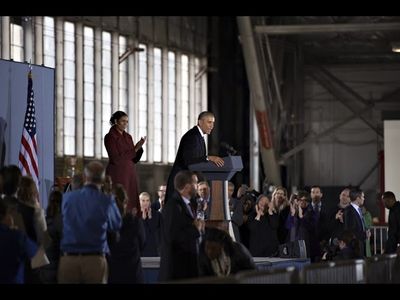
Moderator Anita Woo: Welcome to the Young Southeast Asian Leaders Initiative Town Hall. My name is Anita Woo, your moderator this afternoon. Today we have the crème de la crème of ASEAN youth right here, gathered in Kuala Lumpur, Malaysia in University of Malaya's Tunku Chancellor Hall. 主持人安妮塔·吴:欢迎来到东南亚青年领袖倡议座谈会。我叫安妮塔·吴,是今天下午的主持人。今天,东盟青年中的佼佼者齐聚马来西亚吉隆坡的马来亚大学东姑大礼堂。
Having produced two Malaysia prime ministers, this venue is no stranger to young leaders, such as yourselves. We are here because, as youth under the age of 35, we currently represent 60 percent of the ASEAN population; and being the single largest demographic in ASEAN, we not only have an impact on our respective nations, but also across the region. 这座礼堂曾培养出两位马来西亚总理,对各位这样的年轻领袖并不陌生。我们聚在这里,是因为35岁以下青年目前占东盟人口的60%。作为东盟规模最大的年龄群体,我们不仅影响各自的国家,也影响整个地区。
From a global perspective, although ASEAN covers just three percent of land area, ASEAN is a single -- as a single identity would rank as the seventh largest economy in the world; however, each nation within ASEAN is in a different place in our journeys towards development, each journey unique. 从全球角度看,东盟虽只占世界陆地面积的3%,但如果作为一个整体,其经济规模可排世界第七。不过,东盟各国的发展阶段不同,各自的发展道路也独一无二。
Deep poverty persists in the region, but one of the leaders tackling this issue is Indonesia's Dr. Sri Mulyani Indrawati, who is currently managing director of World Bank Group. 本地区仍存在严重贫困,而致力解决这一问题的领导者之一,是印尼的斯里·穆利亚妮·英德拉瓦蒂博士;她目前担任世界银行集团常务董事。
Similarly, although the record on upholding human rights and democratic governance within the region still leaves much to be desired, Aung San Suu Kyi heroic struggle and triumph proves that mountains can be moved with determination and tenacity. 同样,本地区在人权和民主治理方面的记录仍有许多有待改进之处,但昂山素季英勇的斗争和胜利证明,只要有决心与韧性,就能撼动高山。
ASEAN young entrepreneurs don't have to look far to know that success is within their reach as AirAsia's Tan Sri Tony Fernandes carved his success from within this very region, Moreover, with a thriving scene in Southeast Asia -- creative scene -- who knows? The next Jimmy Choo could be amongst us this very moment. 东盟的年轻创业者不必远寻,就能看到成功触手可及:亚洲航空的东尼·费尔南德斯爵士就在本地区开创了自己的事业。再看看东南亚蓬勃发展的创意产业——谁知道呢?下一位周仰杰或许此刻就在我们当中。
As our region faces the challenges inherent in a rapidly developing nation and economy, where perspectives on education, business, environment must change with the times, we should use our ingenuity and entrepreneurial spirit to change how we plan to overcome these obstacles and emerge stronger than ever. Southeast Asia is one of the diversity-rich regions, home to an array of cultures and histories, and as we know, it was once even home to President Obama. 本地区面对快速发展中的国家和经济体所固有的挑战,教育、商业与环境方面的观念都必须与时俱进。我们应运用聪明才智和创业精神,改变克服障碍的规划方式,并变得比以往更强大。东南亚文化与历史多样,曾经甚至也是奥巴马总统的家园。
The future of ASEAN will lie in its ability to not only celebrate this diversity, but to harness it as a key building block for our success. Today the President himself will be taking questions directly from those present here, as well as questions submitted to you -- submitted by you through Facebook and Twitter from around the region. Without further ado, please join me in welcoming to stage the 44th President of the United States, President Barack Obama! President Obama: Hello, everybody. Well, good afternoon. Selamat petang. Please, everybody have a seat. 东盟的未来,取决于它能否不仅赞颂多样性,还能把多样性作为成功的重要基石。今天,总统将直接回答在场各位的问题,也会回答本地区各位通过脸书和推特提交的问题。现在,请和我一起欢迎美国第44任总统巴拉克·奥巴马登台!奥巴马总统:大家好。下午好。马来语也向大家道一声下午好。请大家坐下。
It is wonderful to be here and it is wonderful to see all these outstanding young people here. 来到这里真好,看到这么多优秀的年轻人也真好。
I want to thank, first of all, the University of Malaya for hosting us. I want to thank the Malaysian people for making us feel so welcome. Anita, thank you for helping to moderate. 首先感谢马来亚大学接待我们。感谢马来西亚人民让我们感受到热情欢迎。安妮塔,也谢谢你协助主持。
These trips are usually all business for me, but every once in a while I want to have some fun, so I try to hold an event like this where I get to hear directly from young people like you -- because I firmly believe that you will shape the future of your countries and the future of this region. And I'm glad to see so many students who are here today, including young people from across Southeast Asia. And I know some of you are joining us online and through social media, and you’ll be able to ask me questions, too. 这些出访对我来说通常都是公务,但我偶尔也想放松一下,所以会尽量举办这样的活动,直接听听像你们这样的年轻人怎么说。因为我坚信,你们将塑造自己国家和本地区的未来。很高兴今天有这么多学生到场,其中包括东南亚各地的年轻人。我知道还有一些人通过网络和社交媒体参与,你们也可以向我提问。
This is my fifth trip to Asia as President, and I plan to be back again later this year -- not just because I like the sights and the food, although I do, but because a few years ago I made a deliberate and strategic decision as President of the United States that America will play a larger, more comprehensive role in this region’s future. 这是我担任总统以来第五次访问亚洲,今年晚些时候我还打算再来。这不只是因为我喜欢这里的风景和美食——虽然我确实喜欢——更因为几年前,作为美国总统,我经过深思熟虑作出了一项战略决定:美国将在本地区的未来发挥更大、更全面的作用。
I know some still ask what this strategy is all about. So before I answer your questions, I just want to answer that one question -- why Asia is so important to America, and why Southeast Asia has been a particular focus, and finally, why I believe that young people like you have to be the ones who lead us forward. 我知道有人仍在问,这项战略究竟意味着什么。所以在回答各位问题前,我想先回答这个问题:为什么亚洲对美国如此重要,为什么东南亚是特别关注的重点,最后,为什么我相信像你们这样的年轻人必须带领我们前进。
Many of you know this part of the world has special meaning for me. I was born in Hawaii, right in the middle of the Pacific. I lived in Indonesia as a boy. Hey! There’s the Indonesian contingent. Yes, that’s where they’re from. My sister, Maya, was born in Jakarta. She’s married to a man whose parents were born here -- my brother-in-law’s father in Sandakan, and his mom in Kudat. And my mother spent years working in the villages of Southeast Asia, helping women buy sewing machines or gain an education so that they could better earn a living. 你们许多人知道,世界的这一地区对我有特殊意义。我出生在太平洋中央的夏威夷,小时候住过印尼。嘿,那边是印尼代表团!对,他们来自那里。我的妹妹玛雅出生在雅加达。她的丈夫的父母出生在这里——我妹夫的父亲出生在山打根,母亲出生在古达。我的母亲则花了多年时间在东南亚的村庄工作,帮助妇女购买缝纫机或接受教育,让她们能够更好地谋生。
And as I mentioned last night to His Majesty the King, and the Prime Minister, I’m very grateful for the Islamic Arts Museum Malaysia for hosting an exhibit that showcased some of my mother’s batik collection, because it meant a lot to her and it's part of the connection that I felt and I continue to feel to this region. 正如我昨晚对国王陛下和首相所说,我非常感谢马来西亚伊斯兰艺术博物馆举办展览,展出我母亲收藏的部分蜡染织品。这些收藏对她意义重大,也是我过去和现在始终感到与本地区相连的一部分。
So the Asia Pacific, with its rich cultures and beautiful traditions and vibrant society -- that's all part of who I am. It helped shape how I see the world. And it's also helped to shape my approach as President. 所以,亚太地区丰富的文化、美丽的传统和充满活力的社会,都是我身份的一部分。它帮助塑造了我看世界的方式,也影响了我担任总统时采取的方针。
And while our government, our financial centers, many of our traditions began along the Atlantic Coast, America has always been a Pacific nation, as well. Our biggest, most populous state is on the Pacific Coast. And for generations, waves of immigrants from all over Asia -- from different countries and races and religions -- have come to America and contributed to our success. 尽管我们的政府、金融中心和许多传统起源于大西洋沿岸,美国始终也是一个太平洋国家。我国面积最大、人口最多的州就在太平洋沿岸。几代以来,来自亚洲各地、不同国家、种族和宗教的移民来到美国,为我们的成功作出贡献。
From our earliest years, when our first President, George Washington, sent a trade mission to China, through last year, when the aircraft carrier that bears his name, the George Washington, helped with typhoon relief in the Philippines, America has always had a history with Asia. And we’ve got a future with Asia. This is the world’s fastest-growing region. Over the next five years, nearly half of all economic growth outside the United States is projected to come from right here in Asia. 从建国早期首任总统乔治·华盛顿派遣贸易使团前往中国,到去年以他命名的“乔治·华盛顿”号航母在菲律宾协助台风救灾,美国与亚洲始终有历史联系。我们与亚洲也有共同的未来。这里是世界上增长最快的地区。据预测,未来五年,美国以外的经济增长有近一半将来自亚洲。
That means this region is vital to creating jobs and opportunity not only for yourselves but also for the American people. And any serious leader in America recognizes that fact. And because you're home to more than half of humanity, Asia will largely define the contours of the century ahead -- whether it’s going to be marked by conflict or cooperation; by human suffering or human progress. This is why America has refocused our attention on the vast potential of the Asia Pacific region. 这意味着,本地区不仅对你们自身创造就业和机会至关重要,对美国人民也是如此。任何认真的美国领导人都认识这一点。亚洲居住着全人类的一半以上,将在很大程度上决定未来一个世纪的轮廓:它将以冲突还是合作、人类苦难还是人类进步为特征。这就是美国重新把注意力投向亚太地区巨大潜力的原因。
My country has come through a decade in which we fought two wars and an economic crisis that hurt us badly -- along with countries all over the globe. But we’ve now ended the war in Iraq; our war in Afghanistan will end this year. Our businesses are steadily creating new jobs. And we’ve begun addressing the challenges that have weighed down our economy for too long -- reforming our health care and financial systems, raising standards in our schools, building a clean energy economy, cutting our fiscal deficits by more than half since I took office. 过去十年,我国经历了两场战争和一场严重伤害我们、也伤害全球各国的经济危机。但现在我们已结束伊拉克战争;阿富汗战争今年也将结束。企业持续创造新工作岗位。我们还开始解决长期拖累经济的挑战:改革医疗和金融体系,提高学校教育标准,建设清洁能源经济,并使财政赤字比我上任时减少一半以上。
Though we’ve been busy at home, the crisis still confronts us in other parts of the world from the Middle East to Ukraine. But I want to be very clear. Let me be clear about this, because some people have wondered whether because of what happens in Ukraine or what happens in the Middle East, whether this will sideline our strategy -- it has not. We are focused and we’re going to follow through on our interest in promoting a strong U.S.-Asia relationship. 虽然国内事务繁忙,中东、乌克兰等世界其他地区的危机仍在我们面前。但我要说得非常清楚。有些人怀疑,乌克兰或中东发生的事是否会使我们的战略搁置;答案是不会。我们会集中精力,落实促进美亚关系强劲发展的目标。
America has responsibilities all around the world, and we’re glad to embrace those responsibilities. And, yes, sometimes we have a political system of our own and it can be easy to lose sight of the long view. But we have been moving forward on our rebalance to this part of the world by opening ties of commerce and negotiating our most ambitious trade agreement; by increasing our defense and educational exchange cooperation, and modernizing our alliances; by participating fully in regional institutions like the East Asia Summit; 美国在世界各地肩负责任,我们愿意承担。是的,我们有自己的政治体制,有时容易失去长远眼光。但我们正持续推进对本地区的战略再平衡:拓展商业联系,谈判最具雄心的贸易协定;加强防务与教育交流合作,使同盟关系现代化;全面参与东亚峰会等区域机构;
building deeper partnerships with emerging powers like Indonesia and Vietnam. 并与印尼、越南等新兴力量建立更深厚的伙伴关系。
And increasingly, we’re building these partnerships throughout Southeast Asia. Since President Johnson’s visit here to Malaysia in 1966, there’s perhaps no region on Earth that has changed so dramatically. Old dictatorships have crumbled. New voices have emerged. Controlled economies have given way to free markets. What used to be small villages, kampungs, are now gleaming skyscrapers. The 10 nations that make up ASEAN are home to nearly one in 10 of the world’s citizens. 我们也越来越多地在整个东南亚建立这些伙伴关系。自约翰逊总统1966年访问马来西亚以来,地球上或许没有哪个地区发生过如此巨大的变化。旧独裁政权崩溃,新声音涌现,管制经济让位于自由市场。昔日的小村庄,如今矗立着闪亮的摩天大楼。组成东盟的十个国家,拥有全球近十分之一的人口。
And when you put those countries together, you’re the seventh largest economy in the world, the fourth largest market for American exports, the number-one destination for American investment in Asia. 把这十个国家合在一起,你们是世界第七大经济体、美国出口的第四大市场,也是美国在亚洲投资的第一大目的地。
And I’m proud to be the first American President to meet regularly with all 10 ASEAN leaders, and I intend to do it every year that I remain President. By the way, I want to congratulate Malaysia on its turn to assume the chairmanship of ASEAN next year. Malaysia plays a central role in this region that will only keep growing over time, with an ability to promote economic growth and opportunity, and be an anchor of stability and maritime security. 我很自豪,自己是第一位定期与东盟十国领导人会晤的美国总统;只要我仍担任总统,就打算每年这样做。顺便说一句,我要祝贺马来西亚明年将担任东盟主席国。马来西亚在本地区发挥着核心作用,这一作用会继续扩大;它有能力促进经济增长与机会,并成为地区稳定和海上安全的支柱。
Now, one of the things that makes this region so interesting is its diversity. That diversity creates a unique intersection of humanity -- people from so many ethnic groups and backgrounds and religious and political beliefs. It gives Malaysia, as one primary example, the chance to prove -- as America constantly tries to prove -- that nations are stronger and more successful when they work to uphold the civil rights and political rights and human rights of all their citizens. 本地区如此引人入胜的原因之一,是其多样性。这种多样性交织出独特的人类图景:不同族群、背景、宗教和政治信念的人们汇聚于此。以马来西亚为重要例子,它有机会证明,正如美国不断努力证明的那样,国家只要致力维护所有公民的公民权利、政治权利和人权,就会更强大、更成功。
That’s why, over the past few years, Prime Minister Najib and I have worked to broaden and deepen the relationship between our two countries in the same spirit of berkerja sama that I think so many of you embody. The United States remains the number-one investor in Malaysia. We’re partnering to promote security in shipping lanes. We’re making progress on the Trans-Pacific Partnership to boost trade that supports good jobs and prosperity in both our countries. 正因如此,过去几年,纳吉布首相和我本着许多在座各位所体现的合作精神,努力拓宽并深化两国关系。美国仍是马来西亚的第一大投资者。我们合作维护航道安全,也在跨太平洋伙伴关系谈判中取得进展,推动能为两国带来良好就业与繁荣的贸易。
Today, I’m very pleased that we’ve forged a comprehensive partnership that lays the foundation for even closer cooperation for years to come. 今天,我非常高兴我们建立了全面伙伴关系,为未来多年更紧密的合作奠定基础。
But our strategy is more than just security alliances or trade agreements. It’s also about building genuine relationships between the peoples of Asia and the peoples of the United States, especially young people. We want you to be getting to know the young people of the United States and partnering well into the future in science and technology, and entrepreneurship, and education. 但我们的战略不只有安全联盟或贸易协定,还包括在亚洲人民和美国人民之间建立真正的关系,尤其是在年轻人之间。我们希望你们了解美国年轻人,并在科学技术、创业和教育领域建立长远合作。
One program that we’re proud of here in Malaysia is the Fulbright English Teaching Assistant Program. Hey, there we go. Over the past two years, nearly 200 Americans have come here, and they haven’t just taught English -- they’ve made lifelong friendships with their students and their communities. 我们在马来西亚引以为豪的项目之一,是富布赖特英语助教计划。嘿,那里有人响应了。过去两年,近200名美国人来到这里;他们不仅教授英语,还与学生和当地社区结下了一生的友谊。
One of these Americans, I’m told, was a young woman named Kelsey, from a city in Boston -- the city of Boston. Last year, after the Boston Marathon was attacked, she taught her students all about her hometown -- its history and its culture. She taught them a phrase that’s popular in Boston -- “wicked awesome.” So that was part of the English curriculum. 我听说,其中一位美国人是来自波士顿市的年轻女性凯尔西。去年波士顿马拉松遭袭后,她向学生介绍自己的家乡,讲它的历史和文化,还教了他们一句波士顿人常说的话:“真是棒极了。”这也成了英语课程的一部分。
And so her students began to feel like a place -- that this place, Boston, that was a world away was actually something they understood and they connected to and they cared about. They responded by writing get-well cards and sending them to hospitals where many of the victims were being treated. 于是,她的学生开始觉得,远在世界另一端的波士顿,其实是他们能够理解、能够建立联系、也会关心的地方。他们写了慰问卡,寄到收治许多伤者的医院。
Partnerships like those remind us that the relationship between nations is not just defined by governments, but is defined by people -- especially the young people who will determine the future long after those of us who are currently in positions of power leave the stage. And that’s especially true in Southeast Asia, because almost two-thirds of the population in this region is under 35 years old. This is a young part of the world. 这样的伙伴关系提醒我们,国家之间的关系不仅由政府界定,更由人民界定,尤其由在我们这些当权者离开舞台之后仍将决定未来的年轻人界定。在东南亚尤其如此,因为本地区近三分之二的人口不到35岁。这是一个年轻的地区。
And I’ve seen the hope and the energy and the optimism of your generation wherever I travel, from Rangoon to Jakarta to here in KL. I've seen the desire for conflict resolution through diplomacy and not war. I've seen the desire for prosperity through entrepreneurship, not corruption or cronyism. I’ve seen a longing for harmony not by holding down one segment of society but by upholding the rights of every human being, regardless of what they look like or who they love or how they pray. And so you give me hope. 无论我走到仰光、雅加达,还是这里的吉隆坡,我都看到你们这一代人的希望、活力和乐观。我看到人们希望通过外交而非战争解决冲突,希望通过创业而非腐败或裙带关系实现繁荣。我看到人们渴望的和谐不是压制某个社会群体,而是维护每个人的权利,无论他们长什么样、爱谁、如何祈祷。所以你们给了我希望。
Robert Kennedy once said, “It is a revolutionary world that we live in, and thus it is young people who must take the lead.” And I believe it is precisely because you come of age in such world with fewer walls, with instant information -- you have the world at your fingertips, and you can change it for the better. And I believe that together we can do things that your parents, your grandparents, your great-grandparents would have never imagined. 罗伯特·肯尼迪曾说:“我们生活在一个革命性的世界,因此必须由年轻人带头。”我相信,正因为你们成长在一个壁垒更少、信息即时可得的世界,世界就在你们指尖,你们能够把它变得更好。我相信,只要我们一起努力,就能完成你们的父母、祖父母和曾祖父母无法想象的事情。
But today I am proud that we’re launching a new Young Southeast Asian Leaders Initiative to increase and enhance America’s engagement with young people across the region. You’re part of this new effort. You’re the next generation of leaders -- in government, in civil society, in business and the arts. 今天,我很自豪我们正在启动新的东南亚青年领袖倡议,以扩大并加强美国与本地区年轻人的接触。你们是这一新努力的一部分,是政府、公民社会、商业和艺术领域的下一代领袖。
Some of you have already founded non-profit organizations to promote human rights, or prevent human trafficking, or encourage religious tolerance and interfaith dialogue. Some of you have started projects to educate young people on the environment, and engage them to protect our air and our water, and to prevent climate change. Some of you have been building your own ASEAN-wide network of young leaders to meet challenges like youth unemployment. And I know that some of you have been spending this weekend collaborating on solutions to these major issues. 在座一些人已经创办非营利组织,促进人权、防止人口贩运,或推动宗教宽容与跨宗教对话。一些人开展项目,教育青年认识环境问题,动员他们保护空气和水资源、应对气候变化。还有人建立跨东盟的青年领袖网络,迎接青年失业等挑战。我知道,本周末在座的一些人就在合作寻找这些重大问题的解决办法。
And over the next few months, across Southeast Asia, we’re going to find ways to listen to young people about your ideas and the partnerships we can then build together to empower your efforts, develop new exchanges, connect young leaders across Southeast Asia with young Americans. 未来几个月,我们将在东南亚各地寻找途径,倾听年轻人的想法,了解我们可以共同建立什么样的伙伴关系,赋能你们的工作、发展新的交流,并把东南亚青年领袖与美国青年联系起来。
So that’s part of what we’re starting here today. And before I take your questions, let me just close by sharing with you the future that I want to work for in this region, about where we want America’s rebalance in the Asia Pacific to lead, about the work we can do together. 这也是我们今天在这里开启的工作。在回答问题前,我想最后谈谈我愿为本地区争取的未来:美国亚太再平衡战略应通向何方,以及我们能够共同做些什么。
I believe that together we can make the Asia Pacific more secure. America has the strongest military in the world, but we don’t seek conflict; we seek to keep the peace. We want a future where disputes are resolved peacefully and where bigger nations don’t bully smaller nations. All nations are equal in the eyes of international law. 我相信,我们共同努力,能让亚太更安全。美国拥有世界上最强大的军队,但我们不寻求冲突,而是致力维护和平。我们希望看到争端以和平方式解决,大国不欺凌小国。所有国家在国际法面前一律平等。
We want to deepen our cooperation with other nations on issues like counterterrorism and piracy, but also humanitarian aid and disaster relief -- which will help us respond quickly to catastrophes like the tsunami in Japan, or the typhoon in the Philippines. We want to do that together. 我们希望深化与其他国家在反恐和打击海盗方面的合作,也希望在人道援助和救灾方面合作,这将帮助我们迅速应对日本海啸或菲律宾台风之类的灾难。我们希望一起做到这一点。
Together, we want to make the Asia Pacific more prosperous, with more commerce and shared innovation and entrepreneurship. And we want to see broader and more inclusive development and prosperity. Through agreements like the TPP, we want to make sure nations in the Asia Pacific can trade under rules that ensure fair access to markets, and support jobs and economic growth for everybody, and set high standards for the protection of workers and the environment. 我们共同希望亚太更加繁荣,贸易更多,创新与创业成果共享。我们希望发展与繁荣惠及更广泛的人群。通过跨太平洋伙伴关系等协定,我们要确保亚太各国能按照保障公平市场准入的规则进行贸易,支持所有人的就业和经济增长,并为劳动者与环境保护设立高标准。
Together, we want to make the Asia Pacific -- and the world –- cleaner and more secure. The nations of this region are uniquely threatened by climate change. No nation is immune to dangerous and disruptive weather patterns, so every nation is going to have to do its part. And the United States is ready to do ours. Last year, I introduced America’s first-ever Climate Action Plan to use more clean energy and less dirty energy, and cut the dangerous carbon pollution that contributes to climate change. 我们共同希望让亚太乃至世界更加清洁、更加安全。本地区各国受到气候变化的威胁尤其突出。没有哪个国家能免受危险且扰乱生活的天气模式影响,因此每个国家都必须尽自己的一份力。美国已准备承担我们的责任。去年,我提出美国首个《气候行动计划》,推动使用更多清洁能源、减少使用污染严重的能源,并削减导致气候变化的危险碳污染。
So we want to cooperate with countries in Southeast Asia to do the same, to combat the destruction of our forests. We can’t condemn future generations to a planet that is beyond fixing. We can only do that together. 因此,我们希望与东南亚各国合作采取同样行动,共同阻止森林遭到破坏。我们不能让后代继承一个无法修复的地球,而这件事只能靠我们携手完成。
Together, we can make this world more just. America is the world’s oldest constitutional democracy; that means we’re going to stand up for democracy -- it’s a part of who we are. And we do this not only because we think it’s right, but because it’s been proven to be the most stable and successful form of government. In recent decades, many Asian nations have shown that different nations can realize the promise of self-government in their own way; they have their own path. But we must recognize that democracies don’t stop just with elections; 我们携手能够让世界更加公正。美国是世界上历史最悠久的宪政民主国家,因此我们会捍卫民主;它是我们身份的一部分。我们这样做,不仅因为认为这是正确的,还因为民主已被证明是最稳定、最成功的治理形式。近几十年,许多亚洲国家表明,不同国家能够以自己的方式实现自治的承诺,各有各的道路。但我们必须认识到,民主并不止于选举;
they also depend on strong institutions and a vibrant civil society, and open political space, and tolerance of people who are different than you. We have to create an environment where the rights of every citizen, regardless of race or gender, or religion or sexual orientation are not only protected, but respected. 它还依赖强健的制度、充满活力的公民社会、开放的政治空间,以及对与你不同的人的宽容。我们必须创造一种环境,让每位公民的权利无论其种族、性别、宗教或性取向如何,都不仅受到保护,也受到尊重。
We want a future where nations that are pursuing reforms, like Myanmar, like Burma, consolidate their own democracy, and allow for people of different faiths and ethnicities to live together in peace. We want to see open space for civil society in all our countries so that citizens can hold their governments accountable and improve their own communities. And we want to work together to ensure that we’re drawing on the potential of all our people –- and that means ensuring women have full and equal access to opportunity, just like men. 我们希望看到缅甸这样的改革国家巩固自己的民主,让不同信仰和族裔的人民和平共处。我们希望各国都为公民社会留出开放空间,让公民能够监督政府、改善社区。我们还希望共同努力,发挥所有人民的潜力——这意味着确保女性和男性一样,充分而平等地获得机会。
And to make sure we can sustain all these efforts, we want a future where we’re building an architecture of institutions and relationships. For America, that always begins with our alliances, which serve as the cornerstone of our approach to the world. But we also want to work with organizations like ASEAN and in forums like APEC and the East Asia Summit to resolve disputes and forge new partnerships. And we want to cooperate with our old allies and our emerging partners, and with China. 为了让所有这些努力持续下去,我们希望建设由制度和关系组成的架构。对美国而言,这总是从我们的同盟开始,它们是我们处理世界事务的基石。但我们也希望同东盟等组织合作,在亚太经合组织和东亚峰会等论坛解决争端,建立新的伙伴关系。我们希望同老盟友、新伙伴以及中国合作。
We want to see a peaceful rise for China, because we think it can and should contribute to the stability and prosperity that we all seek. 我们希望看到中国和平崛起,因为我们认为中国能够、也应当为大家共同追求的稳定与繁荣作出贡献。
So that’s the shared future I want to see in the Asia Pacific. Now, America cannot impose that future. It’s one we need to build together, in partnership, with all the nations and peoples of the region, especially young people. That vision is within our reach if we’re willing to work for it. 这就是我希望看到的亚太共同未来。美国无法把这样的未来强加给别人。我们需要与本地区所有国家和人民,尤其是年轻人,结成伙伴,共同建设。只要我们愿意为之努力,这一愿景就触手可及。
Now, this world has its share of threats and challenges, and that’s usually what makes the news. We know that progress can always be reversed, and that positive change is achieved not through passion alone, but through patient and persistent effort. But we’ve seen things change for the better in this region and around the world because of the effort of ordinary people, together -- working together. It’s possible. We’ve seen it in the opportunity and progress that’s been unleashed in this amazing part of the world. 这个世界有其威胁和挑战,通常也正是这些事登上新闻。我们知道进步随时可能倒退,积极的改变不能只靠热情,还需要耐心而持久的努力。但我们也看到,正是普通人携手努力,使本地区和世界其他地方变得更好。这是可能的;我们已在这片令人赞叹的地区释放出的机会与进步中看到它。
I’ve only been in Malaysia for a day, but I’ve already picked up a new phrase: Malaysia boleh. Malaysia can do it. Now, I have to say, we have a similar saying in America: Yes, we can. That’s the spirit in which I hope America and all the nations of Southeast Asia can work together, and it’s going to depend on your generation to carry it forward. As Presidents and Prime Ministers, they can help lay the foundation, but you’ve got to build the future. 我来到马来西亚才一天,却已经学会了一句话:“马来西亚能!”美国也有一句类似的话:“是的,我们能!”我希望美国和东南亚各国本着这种精神共同努力,而这项事业要靠你们这一代继续推进。总统和首相可以帮助奠定基础,但建设未来要靠你们。
And now I want to hear directly from you. I want to hear your aspirations for your own lives, your hopes for your communities and your culture, what you think we can do together in the years to come. 现在我想直接听听你们的声音。我想知道你们对自己生活的抱负,对社区和文化的希望,以及你们认为未来几年我们能一起做些什么。
Terima kasih banyak. 非常感谢。
Moderator Anita Woo: Thank you very much, Mr. President. If you may? 主持人安妮塔·吴:非常感谢您,总统先生。请问可以开始吗?
President Obama: Well, I’m going to take the first question, and then I think Anita is going to take a question from social media. This is tough because we have so many outstanding young people. I’ll call on this young lady right here, right in the front. 奥巴马总统:好,我先回答第一个问题,然后我想安妮塔会从社交媒体上选一个问题。这里有这么多出色的年轻人,真难选。我请前排这位年轻女士提问。
Tell me your name. If you’re going to school, tell me what level you’re at, what year you are in school, and where you’re from. 请告诉我你的名字。如果你在上学,也告诉我你处于哪个教育阶段、读几年级,以及来自哪里。
Question: Hi, Mr. President. I’m from Cambodia, and I went to Institute of Foreign Languages at the Royal University of Phnom Penh. And I’ve got a very simple question for you. What was your dream when you were in your 20s, and did you achieve it? And if so, how did you achieve it? President Obama: Well, it’s a short question but it’s not a simple one. When I was in high school -- so, for those of you who are studying under a different system, when I was 15, 16, 17, before I went to the university -- I wasn’t always the best student. Sometimes I was enjoying life too much. 提问:您好,总统先生。我来自柬埔寨,曾就读于金边皇家大学外国语学院。我有个很简单的问题:您二十多岁时的梦想是什么?实现了吗?如果实现了,是怎样实现的?奥巴马总统:问题很短,却并不简单。我上高中时——对采用不同学制的各位来说,就是我十五、十六、十七岁、上大学之前——并不总是最好的学生。有时候,我太贪图享受生活了。
Don’t clap. This guy is the same way. No, part of it I was rebelling, which is natural for young people that age. I didn’t know my father, and so my family life was complicated. So I didn’t always focus on my studies, and that probably carried over into the first two years of university. But around the age of 20, I began to realize that I could have an impact on the world if I applied myself more. I became interested in social policy and government, and I decided that I wanted to work in the non-profit sector for people who are disadvantaged in the United States. 别鼓掌。这位先生当年也一样。不,我那时有些叛逆,这对那个年龄的年轻人很自然。我不认识父亲,家庭生活也比较复杂,所以并不总能专心学习。这种状态大概延续到大学前两年。但在大约二十岁时,我开始意识到,只要自己更加努力,就能对世界产生影响。我开始关心社会政策和政府,并决定到非营利部门工作,帮助美国处境不利的人。
And so I was able to do that for three years after I graduated from college. That’s how I moved to the city of Chicago. I was hired by a group of churches to work in poor areas to help people get jobs and help improve housing and give young people more opportunity. And that was a great experience for me, and it led me to go to law school and to practice civil rights laws, and then ultimately to run for elected office. 大学毕业后,我有机会做了三年这样的工作,因此搬到芝加哥。一群教会聘请我在贫困社区工作,帮助人们找工作、改善住房,并为年轻人创造更多机会。那段经历对我很宝贵,促使我进入法学院、从事民权法律工作,最终竞选公职。
And when I think back to my journey, my past, I think the most important thing for -- and maybe the most important thing for all the young people here -- is to realize that you really can have an impact on the world; you can achieve your dreams. But in order to do so, you have to focus not so much on a title or how much money you’re going to make, you have to focus more on what kind of influence and impact are you going to have on other people’s lives -- what good can you do in the world. 回顾自己的道路和过去,我认为对我来说,也许对今天在座的所有年轻人来说,最重要的是认识到:你确实能够影响世界,能够实现梦想。但要做到这一点,就不能太在意职位头衔或能挣多少钱,而应更多思考你会给他人的生活带来什么影响,能为世界做什么好事。
Now, that may involve starting a business, but if you want to start a business you should be really excited about the product or the service that you’re making. It shouldn’t just be how much money I can make -- because the business people who I meet who do amazing things, like Bill Gates, who started Microsoft -- they’re usually people who are really interested in what they do and they really think that it can make a difference in people’s lives. 这可能意味着创办企业。但如果想创业,你应该真正热爱自己创造的产品或服务,而不只是想着能赚多少钱。我认识的一些做出非凡成就的企业家,比如创办微软的比尔·盖茨,通常都对自己的工作真正感兴趣,也真心认为它能够改变人们的生活。
If you want to go into government, you shouldn’t just want to be a particular government official. You should want to go into government because you think it can help educate some children, or it can help provide jobs for people who need work. 如果你想进入政府,就不该只想着当某个级别的官员。你应该是因为相信政府能够帮助孩子接受教育,或为需要工作的人提供就业机会,才选择进入政府。
So I think the most important thing for me was when I started thinking more about other people and how I could have an impact in my larger society and community, and wasn’t just thinking about myself. That’s when I think your dreams can really take off -- because if you’re only thinking about you, then your world is small; if you‘re thinking about others, then your world gets bigger. 所以,对我最重要的转变,是开始更多地考虑他人,考虑自己能怎样影响更广阔的社会和社区,而不再只考虑自己。我想,那时梦想才真正能够起飞。因为只想着自己,世界就很小;想着他人,世界就会变大。
Thank you. 谢谢。
Moderator Woo: Thank you, Mr. President. We now have a question from the social media, which we’ve been collecting over the week. 主持人吴:谢谢您,总统先生。现在我们有一个社交媒体上的问题,是过去一周收集到的。
President Obama: Okay. 奥巴马总统:好的。
Question: The question comes from our friend from Burma, from Myanmar. And he asks: To Mr. President, what would be your own key words or encouragement for each of us leaders of our next generation while we are cooperating with numerous diversities such as different races, languages, beliefs and cultures not only in Myanmar, but also across ASEAN? Thank you. 提问:这个问题来自缅甸的一位朋友。他问:总统先生,在我们这一代领导人需要与不同种族、语言、信仰和文化的多样性合作时,不论是在缅甸还是整个东盟,您会给我们什么关键建议或鼓励?谢谢。
President Obama: Well, it’s a great question. If you look at the biggest source of conflict and war and hardship around the world, one of the most if not the most important reasons is people treating those who are not like them differently. So in Myanmar right now, they’re going through a transition after decades of repressive government, they’re trying to open things up and make the country more democratic. And that’s a very courageous process that they’re going through. 奥巴马总统:这是个很好的问题。看看世界各地冲突、战争和苦难的最大来源,你会发现,一个最重要、甚至可能是最重要的原因,是人们区别对待与自己不同的人。缅甸目前正在经历转型:经过数十年的压制性统治,他们试图开放社会,让国家更加民主。这是一个非常勇敢的过程。
But the danger, now that they’re democratizing is that there are different ethnic groups and different religions inside of Myanmar, and if people start organizing politically around their religious identity or around their ethnic identity as opposed to organizing around principles of justice and rule of law and democracy, then you can actually start seeing conflicts inside those countries that could move Myanmar in a very bad direction -- particularly, 但民主化带来的危险是,缅甸内部有不同族群和宗教。如果人们按宗教或族裔身份组织政治,而不是围绕正义、法治和民主的原则组织起来,国内就可能发生冲突,把缅甸引向很糟糕的方向。尤其是在,
if you’ve got a Muslim minority inside of Myanmar right now that the broader population has historically looked down upon and whose rights are not fully being protected. 缅甸现在有一个穆斯林少数群体,长期以来受到多数人的轻视,其权利也没有得到充分保护的情况下。
Now, that’s not unique to Myanmar. Here in Malaysia, this is a majority Muslim country. But then, there are times where those who are non-Muslims find themselves perhaps being disadvantaged or experiencing hostility. In the United States, obviously historically the biggest conflicts arose around race. And we had to fight a civil war and we had to have a civil rights movement over the course of generations until I could stand before you as a President of African descent. But of course, the job is not done. 这不只是缅甸的问题。马来西亚是一个穆斯林占多数的国家,但有时非穆斯林可能处于不利地位,或遭遇敌意。在美国,历史上最严重的冲突显然与种族有关。我们经历了一场内战,几代人持续开展民权运动,我这个非洲裔人士才得以作为总统站在各位面前。但这项工作当然还没有结束。
There is still discrimination and prejudice and ethnic conflict inside the United States that we have to be vigilant against. 美国仍存在歧视、偏见和族裔冲突,我们必须对此保持警惕。
So my point is all of us have within us biases and prejudices of people who are not like us or were not raised in the same faith or come from a different ethnic background. But the world is shrinking. It’s getting smaller. You could think that way when we were all living separately in villages and tribes, and we didn’t have contact with each other. We now have the Internet and smart phones, and our cultures are all colliding. The world has gotten smaller and no country is going to succeed if part of its population is put on the sidelines because they’re discriminated against. 我的意思是,我们每个人心里都可能对与自己不同、信仰不同或族裔背景不同的人怀有成见和偏见。但世界正在缩小,彼此越来越近。过去我们分别生活在村庄和部落,互不往来时,或许还可以那样想。如今有了互联网和智能手机,各种文化不断交汇。世界变小了;如果一个国家的一部分人口因歧视而被排除在外,这个国家就不可能成功。
Malaysia won’t succeed if non-Muslims don’t have opportunity. Myanmar won’t succeed if the Muslim population is oppressed. No society is going to succeed if half your population -- meaning women -- aren’t getting the same education and employment opportunities as men. So I think the key point for all of you, especially as young people, is you should embrace your culture. You should be proud of who you are and your background. And you should appreciate the differences in language and food. 如果非穆斯林没有机会,马来西亚就不会成功;如果穆斯林人口受到压迫,缅甸也不会成功。如果一半人口,也就是女性,得不到与男性相同的教育和就业机会,任何社会都不可能成功。因此,我想告诉各位,尤其是年轻人:拥抱自己的文化,为自己的身份和背景感到自豪,也欣赏语言与饮食的差异。
And how you worship God is going to be different, and those are things that you should be proud of. But it shouldn’t be a tool to look down on somebody else. It shouldn’t be a reason to discriminate. 人们敬拜上帝的方式也会不同,这些都是值得骄傲的事。但它们不该成为轻视他人的工具,也不该成为歧视的理由。
And you have to make sure that you are speaking out against that in your daily life, and as you emerge as leaders you should be on the side of politics that brings people together rather than drives them apart. That is the most important thing for this generation. And part of the way to do that is to be able to stand in other people’s shoes, see through their eyes. Almost every religion has within it the basic principle that I, as a Christian, understand from the teachings of Jesus. Do unto others as you would have them do unto you. Treat people the way you want to be treated. 你们必须确保在日常生活中反对这种歧视。将来成为领导者时,要站在使人们团结而不是分裂的政治一边。这是这一代人最重要的事。要做到这一点,部分关键是设身处地,从他人的眼睛看世界。几乎每种宗教都有一个基本原则;作为基督徒,我从耶稣的教导中理解为:你希望别人怎样对待自己,就怎样对待别人。
And if you’re not doing that and if society is not respecting that basic principle, then we’re going backwards instead of going forward. 如果你们不这样做,社会也不尊重这一基本原则,我们就在倒退,而不是前进。
And this is true all around the world. And sometimes, it’s among groups that those of us on the outside, we look -- they look exactly the same. In Northern Ireland, there has been a raging conflict -- although they have finally come to arrive at peace -- because half or a portion of the population is Catholic, a portion is Protestant. From the outside, you look -- why are they arguing? They’re both Irish. They speak the same language. It seems as if they’d have nothing to argue about. 世界各地都是如此。有时,冲突发生在外人看来几乎一模一样的群体之间。北爱尔兰曾有激烈冲突,虽然最终实现了和平,原因却是部分人口是天主教徒,部分是新教徒。从外面看,你会问:他们争什么?他们都是爱尔兰人,说同一种语言,似乎没有什么可争的。
But that’s been a part of Ireland that has been held back and is poor and less developed than the part of Ireland that didn’t have that conflict. 但那个曾经历冲突的爱尔兰地区因此发展受阻,比没有这种冲突的地区更贫穷、更不发达。
In Africa, you go to countries -- my father’s country of Kenya, where oftentimes you’ve seen tribal conflicts from the outside you’d think, what are they arguing about? This is a country that has huge potential. They should be growing, but instead they spend all their time arguing and organizing politically only around tribe and around ethnicity. And then, when one gets on top, they’re suspicious and they’re worried that the other might take advantage of them. And when power shifts, then it’s payback. And we see that in society after society. 在非洲,比如我父亲的故乡肯尼亚,你常看到部族冲突。从外面看你也会问:他们争什么?这个国家潜力巨大,本应发展,却把时间都花在争论上,只围绕部族和族裔组织政治。当一方掌权,便怀疑另一方会利用自己;权力易手后,又进行报复。我们在一个又一个社会看到这种情形。
The most important thing young people can do is break out of that mindset. 年轻人最重要的任务,是摆脱这种思维方式。
When I was in Korea, I had a chance to -- or in Tokyo rather -- I had a chance to see an exhibit with an astronaut, a Japanese astronaut who was at the International Space Station and it was looking at the entire globe and they’re tracking now changing weather patterns in part because it gives us the ability to respond to disasters quicker. 我在韩国时有机会——不,是在东京——看了一个展览,展示一位曾在国际空间站的日本宇航员如何俯瞰整个地球。他们现在还追踪天气模式的变化,部分原因是这样能让我们更快应对灾害。
And when you see astronauts from Japan or from the United States or from Russia or others working together, and they’re looking down at this planet from a distance you realize we’re all on this little rock in the middle of space and the differences that seem so important to us from a distance dissolve into nothing. 当你看到来自日本、美国、俄罗斯或其他国家的宇航员共同工作,从远处俯瞰地球,就会意识到我们都在太空中这块小小的岩石上。那些在我们看来无比重要的差异,远远望去便消失了。
And so, we have to have that same perspective -- respecting everybody, treating everybody equally under the law. That has to be a principle that all of you uphold. Great question. Let me call on the -- I’m going to go boy, girl, boy, girl so that everybody gets a fair chance. Let’s see, hold on. This gentleman right here, right there with the glasses. There you go. 因此,我们也需要这种视角:尊重每个人,在法律面前平等对待每个人。这必须成为你们所有人维护的原则。好问题。我再请一位——我要按男、女、男、女的顺序提问,让每个人都有公平机会。让我看看,稍等。这里这位戴眼镜的先生。对,就是你。
Question: Hello, Mr. President. 提问:您好,总统先生。
President Obama: Hello. 奥巴马总统:你好。
Question: I’m from Malaysia, currently with YES Alumni Malaysia. Well, I have a question. I wondered what was your first project -- community service project that you didn’t like and how did the project impact your community? Thank you so much. 提问:我来自马来西亚,目前参加马来西亚“YES”校友组织。我想问,您做过的第一个自己不喜欢的社区服务项目是什么?那个项目对您的社区产生了怎样的影响?非常感谢。
President Obama: That’s a great question. I told you that when I graduated from college, I wanted to work in poor neighborhoods. And so, I moved to Chicago and I worked. This community had gone through some very difficult times. The steel plants there, the steel mills had closed. A lot of manufacturing was moving out of America or becoming technologically obsolete, these old mills. And so, these were areas that had been entirely dependent on steel. And as those jobs left, the communities were being abandoned. 奥巴马总统:这是个好问题。我告诉过你们,大学毕业后我想在贫困社区工作。于是我搬到芝加哥,开始了工作。那个社区经历了非常艰难的时期:钢铁厂关闭,许多制造业撤离美国,老旧工厂也因技术发展而被淘汰。那些地区曾完全依赖钢铁业;随着工作岗位流失,社区也被遗弃。
And there was also racial change in the area. They had been predominantly white, and then blacks and Latinos had moved in. And there was fear among the various groups. So they had a lot of problems. I will tell you this, what I did was I organized a series of meetings listening to people to find out what they wanted to do something about first. The most immediate problem they saw was there was a lot of crime that had emerged in the area, but they didn’t quite know how to do anything about it. 当地的种族构成也在变化。这里过去以白人为主,后来黑人和拉美裔居民搬了进来,各群体之间出现恐惧。因此社区有许多问题。我当时组织了一系列会议,倾听居民意见,了解他们最想先解决什么。大家最迫切看到的问题,是当地犯罪增多,但又不太清楚能怎么做。
So I organized a meeting with the police commander, so that they could file their complaints directly to the police commander and try to get more action to create more safe space in those communities for children and to end people standing on street corners, because it was depressing the whole community. 于是我安排居民与警察局长开会,让他们直接向局长提出投诉,争取警方采取更多行动,为社区儿童创造更安全的空间,也制止人们长期聚在街角,因为那让整个社区感到压抑。
Now, here’s the main thing I want to tell you. That first meeting, nobody came. It was a complete failure and I was very depressed, because I thought, well, everybody said that they were concerned about crime, but when I organized the meeting nobody came. And what it made me realize is, is that if you want to bring about change in a community or in a nation it’s not going to happen overnight. Usually, it’s very hard to bring about change, because people are busy in their daily lives. They have things to do. 但我要告诉你最重要的一点:第一次会议,一个人也没来。那是彻底的失败,我很沮丧。我心想,大家都说担心犯罪,可我组织会议时却没人来。这让我意识到,如果想改变一个社区或国家,事情不会一夜之间发生。改变通常很困难,因为人们忙于日常生活,有自己的事情要做。
One of the things I realized was I hadn’t organized the meeting at the right time. It was right around dinner time, and if people were working they were coming home and picking up their kids, and they couldn’t get to the meeting fast enough. 我后来发现,自己安排会议的时间不对。那正好是晚饭时间;上班的人刚回家,还要接孩子,根本来不及赶到会场。
So, first of all, you’ve got to try to get people involved. And a lot of people are busy in their own lives or they don’t think it’s going to make a difference or they’re scared if they’re speaking out against authority. And many of the problems that we’re facing, like trying to create jobs or better opportunity or dealing with poverty or dealing with the environment, these are problems that have been going on for decades. And so, to think that somehow you’re going to change it in a day or a week, and then if it doesn’t happen you just give up, well, then you definitely won’t succeed. 因此,首先要努力让人们参与进来。许多人忙于自己的生活,也有人觉得参与没有用,或害怕公开反对当权者。我们面对的许多问题,如创造就业与更好的机会、应对贫困和环境问题,都已持续几十年。如果以为一天或一周就能改变,没发生便放弃,那肯定无法成功。
So the most important thing that I learned as a young person trying to bring about change is you have to be persistent, and you have to get more people involved, and you have to form relationships with different groups and different organizations. And you have to listen to people about what they’re feeling and what they’re concerned about, and build trust. 作为一个试图推动改变的年轻人,我学到的最重要一课是:必须坚持不懈,让更多人参与,与不同群体和组织建立关系。还要倾听人们的感受与关切,建立信任。
And then, you have to try to find a small part of the problem and get success on that first, so that maybe from there you can start something else and make it bigger and make it bigger, until over time you are really making a difference in your community and in that problem. 接着,试着找到问题中的一小部分,先在那里取得成果。也许由此就能开始其他行动,让成果越来越大,随着时间推移,真正改变社区、解决问题。
But you can’t be impatient. And the great thing about young people is they’re impatient. The biggest problem with young people is they’re impatient. It’s a strength, because it’s what makes you want to change things. But sometimes, you can be disappointed if change doesn’t happen right away and then you just give up. And you just have to stay with it and learn from your failures, as well as your successes. 但你不能急躁。年轻人的优点是急于改变,最大的问题也是急于改变。这是一种力量,因为它驱使你想改变现状;但有时,改变没有马上发生,你就会失望并放弃。你必须坚持下去,从失败和成功中学习。
Anita. 安妮塔。
Moderator Woo: Mr. President, thank you very much. We have a question from our friend in Singapore. He asks, what is the legacy you wish to leave behind? 主持人吴:总统先生,非常感谢。这里有一个来自新加坡朋友的问题。他问,您希望留下怎样的遗产?
President Obama: I’ve still got two and a half years left as President, so I hope he’s not rushing me. But what is true is that as President of the United States, you have so many issues coming at you every day, but sometimes I try to step back and think about 20 years from now when I look back what will I be most proud of or what do I think will be most important in the work that I’ve done. 奥巴马总统:我还有两年半的总统任期,希望他别太急着让我离任。但确实,身为美国总统,每天都有许多问题迎面而来,我有时会退一步想:二十年后回顾时,自己最引以为傲的是什么,或所做工作中什么最重要?
Now, my most important legacy is Malia and Sasha, who are turning out to be wonderful young people. So your children, if you’re a parent the most important legacy you have is great children -- and I have those -- who are happy and healthy, and I think they’re going to do great things. Another important legacy is being a good husband. So I’ve tried to do that. That’s important, because if you don’t do those things well, then everything else you’re going to have some problems with. 我最重要的遗产是玛丽娅和萨莎,她们正成长为出色的年轻人。如果你是父母,最重要的遗产是优秀的孩子。我就有这样的孩子,她们快乐健康,我相信将来会成就大事。另一个重要遗产是做一个好丈夫,我一直努力做到。这很重要,因为这些事若做不好,其他事情也会遇到问题。
But I think as President, what I’ve tried to do in the United States is really focus on how do you create opportunity for all people. And when I first came into office, we were in a huge financial crisis that had hit the entire world. And it was the worst crisis the United States had had since the 1930s. So the first thing I had to do was just make sure that we stop the crisis and start allowing the economy to recover. And we've now created more than 9 million jobs and the economy is beginning to improve for a lot of people. 但作为总统,我在美国着力思考的是,如何为所有人创造机会。我刚上任时,一场席卷全球的巨大金融危机正在发生,那是美国自20世纪30年代以来最严重的危机。所以我首先必须阻止危机,让经济开始复苏。如今我们已创造了900多万个工作岗位,许多人的经济处境开始改善。
But what you’ve also seen is a trend in the United States but also around the world in which even when the economy grows, it tends to benefit a lot of people at the very top, but the vast majority of people, they don't benefit as much. And you're starting to see bigger and bigger gaps in inequality and in wealth and in opportunity. 但你们也看到美国及世界各地的一种趋势:即使经济增长,收益往往更多流向最富有的少数人,而绝大多数人所得较少。收入、财富和机会方面的不平等差距越来越大。
And that's true not just in the United States, it's true in Europe; it's long been true in parts of Asia; it's been true in Latin America. And I believe that economies work best when growth and development is broad-based, when it's shared -- when ordinary people, if they work hard and they take responsibility, they can succeed. Not everybody is going to be rich, but everybody should be able to live a good life. Not everybody is going to be a billionaire, but everybody should be able to have a nice home and educate their children and feel some sense of security. 这不仅发生在美国,也发生在欧洲;亚洲部分地区长期如此,拉丁美洲也是如此。我相信,经济在增长和发展广泛惠及人民、成果得到分享时,运行得最好。普通人只要努力工作、承担责任,就应能够取得成功。不是每个人都会富有,但每个人都应该能够过上好日子;不是每个人都会成为亿万富翁,但每个人都应能拥有舒适的家、供孩子读书,并获得一定的安全感。
So that's not something that I can do by myself as President of the United States, but everything that I do -- whether it's providing more help for people to go to college, or giving early childhood education to young children because we know that the younger children get some additional schooling, especially poor children, the better off they’ll do in school for all the years to come, 作为美国总统,这不是我一人能完成的。但我所做的一切,无论是帮助更多人上大学,还是为幼儿提供早期教育——因为我们知道,儿童特别是贫困儿童越早得到额外教育,往后的在校表现就越好——
to the work that we're trying to do in providing health care for all Americans so that they don't experience a crisis when somebody in their family gets sick -- all of those efforts are with the objective of making sure that ordinary people, if they work hard and act responsibly, they can succeed. 以及努力为所有美国人提供医疗保障,让家庭有人生病时不至于陷入危机,所有这些努力都有同一个目标:确保普通人只要努力工作、负责任地生活,就能够成功。
And internationally, my main goal has been to work with other partners to promote a system of rules so that conflicts can be resolved peacefully, so that nations observe basic rules of behavior, so that whether you're a big country or a small country, you know that there are certain principles that are observed -- that might doesn’t just make right, but that there’s a set of ideals and there’s justice both inside countries and between countries. 在国际事务上,我的主要目标是与伙伴合作,促进一个以规则为基础的体系,让冲突能够和平解决,各国遵守基本行为准则。无论是大国还是小国,都知道有些原则必须得到遵守:强权不能直接等于公理;国家内部和国家之间都应有共同的理想与正义。
Now, that means trying to end the proliferation of nuclear weapons, which are a threat to humanity. And we've made progress in that front, me negotiating the reduction of our nuclear stockpiles with the Russians, and trying to resolve through diplomacy the problem that Iran has been trying to pursue nuclear weapons, and working with countries like Malaysia to prevent the proliferation of nuclear weapons. 这意味着努力终止威胁人类的核武器扩散。我们在这方面取得了进展:我与俄罗斯谈判削减双方核武库,努力通过外交解决伊朗追求核武器的问题,也与马来西亚等国家合作防止核扩散。
That means working to get chemical weapons out of Syria. It means trying to promote a just peace between the Israelis and the Palestinians. It means opening up to Burma. And I was the first President to visit there, and seeing if we could take advantage of the opportunity with Aung San Suu Kyi’s release to create a country that was a responsible part of the world order. 这也意味着努力从叙利亚清除化学武器,推动以色列人与巴勒斯坦人之间实现公正的和平,向缅甸敞开大门。我是第一位访问缅甸的美国总统;我们希望利用昂山素季获释带来的契机,帮助它成为国际秩序中负责任的一员。
Sometimes our efforts have been successful; sometimes, as I told this young man here, my efforts initially haven't been as successful and I've had to keep on trying. And I am confident that when I'm done as President there’s still going to be parts of the world that are having war, that are having conflict, that are oppressing their own people. So I'm not going to solve all these problems. I've got to leave some work for all of you. 有时我们的努力成功了;有时,正如我刚才对那位年轻人说的,最初并不成功,我不得不继续尝试。我确信,即使我卸任后,世界仍会有地区发生战争和冲突,仍有政府压迫本国人民。所以我无法解决所有问题,还得给各位留些工作。
But what I do hope is that I will have made progress on each of those fronts -- that if when I leave I can say there are a few more countries that are democracies now and the United States helped; if there are countries where I can say -- or areas of the world where I can say we avoided conflict between two countries because we helped to mediate a dispute, I'll be proud of that. If there are countries where a spotlight has been shined internationally on the oppression of a minority group and it has forced that country to change its practices, that will be a success. 但我希望在这些方面都取得进展。如果离任时我能说,有更多国家实现了民主,而美国提供了帮助;如果我能说,因为我们协助调解争端,两个国家避免了冲突,我就会为此自豪。如果国际社会的关注照亮了某个少数群体所受的压迫,迫使那个国家改变做法,那也是成功。
I don't consider -- I don't think I can do that by myself, of course. I can only do that not only with the cooperation and consultation of other leaders, but it's also other citizens of the world -- all of you and people in various regions, they’ve got to want more justice and more peace in order for us to achieve it. 当然,我并不认为自己能独自做到这些。不仅需要与其他领导人合作、协商,也需要世界各地的公民——在座各位以及各地区的人们——都希望实现更多正义与和平,我们才能达成目标。
Sometimes the United States is viewed as, on the one hand, the cause of everybody’s problem, or on the other hand, the United States is expected to solve everybody’s problem. And we are a big, powerful nation and we take our responsibilities very seriously, but we can only do so much. Ultimately, the people in these countries themselves have to partner with us -- because we have problems in our own country that we have to solve. But hopefully, I'm also lifting up certain universal principles and ideals that all of us can embrace and share. 有时,美国被视为所有人问题的根源;有时,人们又期待美国解决所有人的问题。我们是一个强大国家,也认真承担责任,但能力终究有限。最终,这些国家的人民自己必须与我们合作,因为美国国内也有需要解决的问题。但我希望,我也在倡导我们大家都能接受并分享的一些普世原则与理想。
All right, it’s a woman’s turn. It's a young woman’s turn. I've got to -- let’s see who is back here. No, it's a young lady’s turn. Okay, this young lady right here -- since the microphone is right there. 好,现在该一位女性提问了。年轻女士的回合。让我看看后面有谁。不,该年轻女士了。好,就请这里这位女士,麦克风正好在她旁边。
Question: Good afternoon, Mr. President, and welcome to Malaysia. Gathering from what you’ve said, I think it's a shared consensus that youth worldwide can be the catalyst, planting the seeds for an early conditioning on certain global issues here. So my question is how exactly can America lead us youth internationally in championing such issues, for example, climate change, women empowerment, poverty eradication -- the goal being to bring the human race together? 提问:下午好,总统先生,欢迎来到马来西亚。从您刚才的话来看,大家似乎有共识:世界各地的青年能够成为催化剂,及早为人们认识一些全球议题播下种子。我的问题是,美国究竟如何在国际上引领我们青年去推动这些议题,例如气候变化、赋权女性、消除贫困,最终让全人类团结起来?
It appears that a lot of policies have been put in place, but a lot of the policies that have been put in place by the Gen Xers, the Baby Boomers. People like us, the Gen Ys, we don't have a say in this policy, so we are supposed to champion them, but how are we supposed to do all these things? 看起来已经制定了很多政策,但其中许多是由X世代和婴儿潮一代制定的。像我们这样的Y世代,在制定政策时没有发言权,却被要求去推动它们。那么我们该怎样完成这些事?
President Obama: I'm trying to figure out which generation I am. You got Baby Boomers, then Gen X, and then there’s a Gen Y -- we're on Y? Is that Z, are they here yet, or -- that's next? 奥巴马总统:我正试着弄清自己属于哪一代。有婴儿潮一代,然后是X世代,再是Y世代——已经到Y了吗?Z世代出现了没有,还是下一代?
Well, first of all, just to be very specific, as I said in my speech, part of the reason that I like to meet with young people is to get their suggestions and their ideas. But then what we try to do is set up a process and a network of young leaders who can share ideas with each other and with us, to let us know how they think we can empower you. 首先说具体一点。正如我在讲话中说的,我喜欢与年轻人见面,部分原因就是想听你们的建议和想法。随后,我们努力建立一个程序和青年领袖网络,让你们彼此交流,也与我们交流,告诉我们怎样才能更好地支持你们。
So coming out of this meeting, there will be mechanisms through social media and in our embassies in each of the 10 ASEAN countries where we're going to be bringing together youth leaders to talk to each other about their plans, what their priorities are, how they think the United States can be most helpful. And we're going to take your suggestions. 这次会面后,我们将通过社交媒体,以及东盟十国的美国使馆建立机制,召集青年领袖彼此讨论计划、优先事项和美国能提供何种最有用的帮助。我们会采纳你们的建议。
And let’s take the example of something like climate change. The voice of young people on this issue is so important because you are the ones who are going to have to deal with the consequences of this most significantly. I rode with Prime Minister Najib from our press conference to the new MaGIC Center that's been set up -- entrepreneurial center that came out of our global entrepreneur summit that was hosted here in Malaysia. And on the ride over, it hadn’t started raining yet, but you could tell it was going to be raining soon. 以气候变化为例,年轻人的声音在这件事上极其重要,因为你们将最深切地承受它的后果。我们开完记者会后,我和纳吉布首相一起坐车去新成立的马来西亚全球创新与创意中心,那是一家创业中心,源于此前在马来西亚举办的全球创业峰会。路上还没下雨,但明显快要下了。
And he said that here in Malaysia you’ve already seen a change in weather patterns -- it used to be that the dry season and the rainy season was very clear. Now it all just kind of is blurring together. 首相说,马来西亚的天气模式已经发生变化:过去旱季和雨季分得很清楚,如今界限越来越模糊。
Now, not all of that can be directly attributed precisely to climate change. But when you look at what’s been happening all across the country or all around the world, there’s no doubt that weather patterns are changing. It is getting warmer. That is going to have impacts in terms of more flooding, more drought, displacement. It could affect food supplies. It could affect the incidences of diseases. Coastal communities could be severely affected. And what happens when humans are placed under stress is the likelihood of conflict increases. 不能把这种变化的每个方面都精确地直接归因于气候变化。但放眼全国和世界各地发生的事,天气模式正在改变,气温正在升高,这是毫无疑问的。其影响包括更多洪水、干旱和人口迁移;粮食供应可能受影响,疾病发生率也可能变化,沿海社区可能遭受严重冲击。人类承受压力时,冲突发生的可能性也会上升。
There is a theory that one of the things that happened in Syria to trigger the protests that resulted in the terrible, violent efforts to suppress them by President Assad was repeated drought in Syria that drove people off their land, so they could no longer afford to make the traditional living that they had made. Now, whether that’s true or not we don’t know precisely. But what we do know is that you see in communities that are under severe weather pressure -- drought, famine, food prices increasing -- they’re more likely to be in conflict. 有一种理论认为,叙利亚反复发生的干旱迫使人们离开土地,再也无法按传统方式谋生;这可能是引发抗议的因素之一,而抗议随后遭到阿萨德总统可怕的暴力镇压。这一解释是否准确,我们并不完全清楚。但我们知道,遭受严重天气压力、干旱、饥荒和食品涨价的社区,更容易发生冲突。
And you’re going to have to deal with this, unless we do something about it. So the question is what can we do? Every country should be coming up with a Climate Action Plan to try to reduce its carbon emissions. In Southeast Asia, one of the most important issues is deforestation. In Indonesia and Malaysia, what you’ve seen is huge portions of tropical forests that actually use carbon and so reduce the effects of climate change, reduce carbon being released into the atmosphere and warming the planet -- they’re just being shredded because of primarily the palm oil industry. 如果我们不采取行动,你们将不得不面对这些后果。那么我们能做什么?每个国家都应制定气候行动计划,努力减少碳排放。在东南亚,毁林是最重要的问题之一。印尼和马来西亚大片热带森林本能吸收碳、减轻气候变化影响,减少进入大气并使地球升温的碳,但主要由于棕榈油产业,这些森林正被大规模毁坏。
And there are large business interests behind that industry. 而那个产业背后有庞大的商业利益。
Now, the question is are we going to in each of those countries say how can we help preserve these forests while using a different approach to economic development that does less to damage the atmosphere? And that means engaging then with the various stakeholders. You’ve got to talk to the businesses involved. 问题在于,我们是否会在各国提出:怎样在保护森林的同时,采用对大气破坏更小的经济发展方式?这意味着必须与各种利益相关方接触,包括参与其中的企业。
You’ve got to talk to the government, the communities who may be getting jobs -- because their first priority is feeding themselves, so if you just say, we’ve got to stop cutting down the forests, but you don’t have an alternative opportunity for people then they may just ignore you. So there are going to be all kinds of pieces just to that one part of the problem. And each country may have a different element to it. 也必须与政府及可能从中获得工作的社区交谈。因为人们首先要养活自己;如果你只说必须停止砍伐森林,却不给他们其他机会,他们可能根本不理会你。仅这一个问题就涉及许多环节,而各国面临的具体情况也可能不同。
The point, though, is that you have to be part of the solution, not part of the problem. You have to say, this is important. You don’t have to be a climate science expert, but you can educate yourselves on the issue. You can discuss it with your peer groups. You can organize young people to interact with international organizations that are already dealing with this issue. You can help to publicize it. You can educate your parents, friends, coworkers. And through that process, you can potentially change policy. 关键是,你必须成为解决办法的一部分,而不是问题的一部分。你必须表明这件事很重要。你不必成为气候科学专家,但可以学习相关知识,与同龄人讨论,组织青年同已经在处理这一问题的国际组织交流,帮助宣传,向父母、朋友和同事介绍情况。在这个过程中,你可能推动政策改变。
So it may take -- it will take years. It will not happen next week. But our hope is that through this network that we’re going to be developing that we can be a partner with you in that process. 所以这也许要花——确实要花好几年,不会下周就实现。但我们希望,通过正在建立的网络,在这一过程中成为你们的伙伴。
So I just want to check how many -- how much time do we have here? Who is in charge? 我想确认一下,我们还——还有多少时间?谁负责安排?
Moderator Woo: We’ve got time, Mr. President. 主持人吴:还有时间,总统先生。
President Obama: How much time? 奥巴马总统:还有多久?
Moderator Woo: A couple more questions. 主持人吴:还能问几个问题。
President Obama: A couple more questions -- all right, because I just want to make sure that I’m being fair here. All right, it’s a guy’s turn. Let’s see -- all right, how about this guy, because I like his hair cut, the guy with the spiky hair right there. 奥巴马总统:还能问几个——好,我只是想确保公平。好,该一位男士了。让我看看——就这位吧,我喜欢他的发型,就是那位竖着头发的先生。
Question: In your opinion, what are the top three advice to fellow Malaysians and government to become a developed country in six years’ time? As this is one of country’s missions and I think it’s important for fellow Malaysians to contribute together in order to achieve that. Thank you. 提问:您认为,马来西亚人民和政府要在六年内把国家建设成发达国家,最重要的三项建议是什么?这是国家的一项目标,我认为马来西亚人民共同贡献力量才能实现。谢谢。
President Obama: Well, I had an extensive conversation with Prime Minister Najib about his development strategy. First of all, Malaysia is now a middle-income country. It’s done much better than many other countries in per capita income and growth over the last two decades, and there’s been some wise leadership that has helped to promote Malaysian exports and to help to train its people. 奥巴马总统:我与纳吉布首相深入讨论了他的发展战略。首先,马来西亚现在是中等收入国家。过去二十年,这里的人均收入和增长表现优于许多国家。一些富有远见的领导措施促进了马来西亚出口,也帮助培训了人民。
You’ve got high literacy rates, which is critically important. Investing in people is the single most important thing in the knowledge economy. Traditionally, wealth was defined by land and natural resources. Today the most important resources is between our ears. And Malaysia has made a good investment in young people. So that continues to be I think the most important strategy for growth in the 21st century. 你们的识字率很高,这极其重要。在知识经济中,投资于人是最重要的事。过去,财富由土地和自然资源界定;如今最重要的资源就在我们两耳之间。马来西亚在年轻人身上作了很好的投资。我认为,这仍是21世纪最重要的增长战略。
And in the United States, my main focus is improving our education system and lifelong learning. Because part of what’s changed in the economy -- in the 20th century, you got a change at a company, you might stay there for 30 years; things didn’t change that much. Now you may be at one company and that company may be absorbed, and you might have to retrain for a new job because the thing that you were doing before has been made obsolete because of technology. 在美国,我最关注改善教育体系和终身学习。因为经济已发生变化:20世纪,你进入一家公司,可能在那里工作三十年,事情变化不大。现在你所在的公司可能被另一家公司收购;技术使原来的工作过时,你可能必须重新培训,胜任新岗位。
So we have to keep on investing in not only elementary school and secondary school and even universities. But in the United States, for example, we have a system of community colleges and job training where somebody who’s in their 30s or even 40s or 50s can go back, get retrained, get more skills, adapt to a new industry, and then be a productive citizen. That’s a critical investment that needs to be made. 所以,我们不仅要持续投资小学、中学,甚至大学。以美国为例,我们还有社区学院和职业培训体系,让三十多岁、四十多岁甚至五十多岁的人也能重新学习、获得技能、适应新行业,继续成为有生产力的公民。这是一项必须作出的关键投资。
The second thing that I know Prime Minister Najib is focused on -- and this applies throughout the region -- is if you want to move to the next level of development, then you have to open up an economy to innovation and entrepreneurship. The initial push for growth in Southeast Asia initially started with exporting raw materials, and then shifted to manufacturing and light assembly and being part of the global supply chain. And that’s all a very important ladder into development. But now a lot of wealth is being created by new products and new ideas. 我知道纳吉布首相关注的第二件事,也适用于整个地区:如果想迈向下一发展阶段,就必须向创新和创业开放经济。东南亚最初的增长动力来自原材料出口,后来转向制造、简单组装和融入全球供应链。这些都是通往发展的重要阶梯。但如今,许多财富来自新产品和新思想。
And at least in the United States, for example, we don’t want to just assemble the latest smartphone, we want to invent the latest smartphone. We want to invent the apps and the content for those smartphones. And then we have an asset that whoever is manufacturing it, some of the value is still flowing to us. Well, what that requires then is changes in the economy to make it more open, to make it more entrepreneurial. Some of the old systems have to be broken down. 至少在美国,我们不只想组装最新的智能手机,还想发明最新的智能手机,创造上面的应用程序和内容。这样,不论谁制造产品,部分价值仍会流向我们。要做到这一点,就得改变经济,让它更开放、更富创业活力;一些旧体制必须被打破。
Now, different countries in ASEAN and different countries around the world are at different stages of development. In some countries, the most important thing for development is just basic rule of law, and something that I said earlier, which is making sure that the law applies to everybody in the same way. I believe if Malaysia is going to take that next leap, then it’s going to have to make sure that the economy is one where everybody has the opportunity, regardless of where they started, to succeed. And that energy has to be unleashed. And I think Prime Minister Najib understands that. 东盟各国和世界各国处于不同的发展阶段。在一些国家,发展最重要的条件是基本法治,也是我先前说过的一点:确保法律以同样方式适用于每个人。我相信,如果马来西亚要迈出下一大步,就必须确保经济让每个人无论起点如何,都有成功的机会,并释放这种活力。我想纳吉布首相明白这一点。
And the trade agreement that we’re trying to create, the TPP, part of what we’re trying to do is to create higher standards for labor protection, higher standards for environmental protection, more consistent protection of intellectual property -- because increasingly that’s the next phase of wealth. All those things require more transparency and more accountability and more rule of law, and I think that it’s entirely consistent with Malaysia moving into the next phase. 我们努力缔结的跨太平洋伙伴关系协定,部分目标是为劳动者保护设立更高标准,为环境保护设立更高标准,并更一致地保护知识产权,因为那日益成为创造财富的下一阶段。所有这些都要求更高的透明度、问责和法治。我认为,这完全符合马来西亚迈向下一发展阶段的需要。
Now, it’s hard to change old ways of doing things -- and that’s true for every country. I mean, China right now, after unprecedented growth over the last 20 years, realizes it’s got to change its whole strategy. It’s been so export-oriented, but now they’re starting to realize that if they want to continue to grow they’ve got to develop consumer markets inside their own country. 改变旧的做事方式很难,对每个国家都是如此。中国在过去二十年取得空前增长后,现在也意识到必须改变整个战略。中国过去极度依赖出口,如今开始认识到,要继续增长,就得培育国内消费市场。
And what that means is, is that they’ve got to give workers more ability to spend on consumer goods, and that they have to have a social safety net so that workers aren’t just saving all the time, because if they get sick they don’t have any social insurance programs and they don’t have any retirement groups. And so they’re starting to make these shifts, but these are hard shifts. 这意味着工人必须有更强的消费能力,也需要社会保障网,避免因生病时没有社会保险、退休后没有保障而总是把钱存起来。中国正在开始作这些调整,但调整很困难。
Even in a country that’s controlled by the central party that’s not democratic. It’s because certain people have gotten accustomed to and done very well with an export-driven strategy. So when you shift, there’s going to be somebody who resists. That’s true in every country. It’s true in the United States. We’ve got to change how we do things. And when you try to change, somebody somewhere is benefiting from the status quo. Malaysia is no different. But I’m confident that you can make it happen. 即使在一个由非民主体制的中央政党控制的国家也是如此,因为有些人已经习惯了出口驱动的战略,并从中获益良多。战略转变时,必然有人反对。每个国家都是这样,美国也是。我们必须改变做事方式,而每当你试图改变,总有人受益于现状。马来西亚也不例外。但我相信你们能做到。
I’ll take two more questions. And it’s a young lady’s turn. So, guys, you can all put down your hands. Let’s see -- this young lady with the yellow. 我再回答两个问题。现在轮到年轻女士了,男士们可以把手放下。让我看看——穿黄色衣服的这位年轻女士。
Question: Good morning. I’m from Indonesia. 提问:早上好。我来自印尼。
President Obama: Apa kabar? 奥巴马总统:你好吗?
Question: Baik-baik saja. 提问:我很好。
President Obama: Baik. 奥巴马总统:好。
Question: Well, okay, I have a very short question. What does happiness mean for you? 提问:好,我有个很短的问题。幸福对您意味着什么?
President Obama: What does happiness mean to me? 奥巴马总统:幸福对我意味着什么?
Question: Yes. 提问:是的。
President Obama: Wow, you guys -- that’s a big, philosophical question. I mentioned earlier my family, and it really is true that the older I get the more -- when I think about when I’m on my deathbed -- I mean, I don’t think about this all the time. I don’t want you to think -- I’m still fairly young. But when I think, at the end of my life and I’m looking back, what will have been most important to me, I think it’s the time I will have spent with the people I love. And so that makes me happy. 奥巴马总统:哇,你们的问题真有哲理。我刚才提到了家人。确实,年龄越大,我越会想:等到自己临终时——我不是一直在想这个,别误会,我还算年轻——回望一生,对我最重要的会是什么?我想,是与所爱的人共度的时间。那让我幸福。
But I also think that, as I get older, what’s most important to me is feeling as if I’ve been true to my beliefs and that I’ve lived with some integrity. Now, that doesn’t always make you happy in the sense of you’re laughing or just enjoying life -- because sometimes, being true to your beliefs is uncomfortable. Sometimes doing things that you think are right may put you in some conflict with somebody. Sometimes people may not appreciate it and it may be inconvenient. 但我也认为,随着年龄增长,对我最重要的是觉得自己忠于信念,活得正直。这未必总让你像大笑或享受生活时那样快乐,因为忠于信念有时会令人不舒服。有时做你认为正确的事,会让你与别人发生冲突;有时别人不领情,还会给你带来不便。
But I think that part of being satisfied at least with life as you get older is feeling as if you know that every day you wake up and there’s certain things you believe in -- for example, respecting other people, or showing kindness to others, or trying to promote justice, or whatever it is that you think is best in you -- that at the end of each day you can say, okay, you know what, I was consistent with what I say I’m about, what I say I believe in -- the image I have of myself. 但我认为,年纪渐长后,对生活感到满足的一部分,是知道自己每天醒来都持有一些信念:例如尊重他人、善待他人、推动正义,或你认为自己身上最美好的任何品质。每天结束时,你能够说:好,我今天的行为与我所宣称的身份、所信奉的价值、对自己的期望是一致的。
And when I’m uncomfortable is when I think, you know, I didn’t do my best today. Maybe I didn’t speak out when I should have spoken out. Maybe I didn’t work as hard on this issue as I should have worked. Then I’m tossing and turning and I don’t feel good. 我感到不安时,通常是想到:今天我没有尽力;也许该发声时没发声,也许在某件事上不够努力。那时我就会辗转反侧,心里难受。
And I think that having that kind of integrity is important -- where you can look at yourself in the mirror and you can say, okay, I am who I want -- who I say I want to be. And nobody is perfect and everybody is going to make mistakes, but I think if you feel as if you’re always striving towards your ideals, then you’ll feel okay at the end. 因此,保持这种正直很重要:你能够看着镜中的自己说,我就是我希望成为、也说自己要成为的人。没人完美,每个人都会犯错;但只要觉得自己始终在努力靠近理想,我想最终就能心安。
Okay, last question. And it’s -- let’s see. No, no, it’s a guy’s question. Women, put down your hands. Okay, I’ll call on this gentleman here because he -- there you go, with the glasses. 好,最后一个问题。让我看看——不,不,这次是男士提问。女士们把手放下。好,我请这位戴眼镜的先生,对,就是你。
Question: Good evening, Mr. President Obama. I’m from Malaysia. I’m an undergrad from University of Malaya. So my question is, in your position right now, what values that you uphold the most that you think is very important, that makes you what you are today? And what do you wish to bring that value to the young people of today that can change the world to become a better world? Thank you. 提问:晚上好,奥巴马总统先生。我来自马来西亚,是马来亚大学的本科生。我的问题是,在您现在的位置上,您最坚持、认为最重要、并使您成为今天的自己的价值观是什么?您希望把什么价值观传给今天的年轻人,让他们使世界变得更好?谢谢。
President Obama: Well, thank you. I’m going to take another question after that, because I’ve already answered this question. Wait, wait, wait -- let me -- let me explain the -- what I think is most important is showing people respect who you disagree with, right? And so, for example, there’s a note over there -- I don’t know what those young people are putting a note about -- but I think that the basic idea that if somebody is not like you, if they look differently than you, if they believe differently than you -- that you are treating them as you want to be treated. 奥巴马总统:谢谢。我回答完还要再请一位提问,因为这个问题我已经回答过了。等等,让我解释一下。我认为最重要的是尊重与你意见不同的人,对吧?例如那边有一块标语——我不知道那些年轻人在标语上写了什么——但根本原则是,如果有人与你不同,外貌或信念与你不同,你仍按自己希望得到的方式对待他们。
If you are applying those ideas, I think you’re going to be halfway there in terms of solving most of the world’s problems. 如果你们践行这些理念,我想解决世界上大多数问题就已经走完一半路程。
And a lot of that is around some of the traditional divisions that we have in our society -- race, ethnicity, religion, gender. Treat people with respect, whoever they are, and expect your governments to treat everybody with respect. And if you do that, then you’re going to be okay. 其中许多问题与社会传统的分界线有关:种族、族裔、宗教、性别。无论对方是谁,都以尊重待人,也要求政府尊重每个人。做到这一点,你们就会走在正确的道路上。
All right, last question. Young ladies -- wait, wait, wait, everybody put down their hands for a second. Okay, now I’ve heard from -- I’ve had an Indonesian, a Malaysian, a Cambodian, Myanmar. Thailand didn’t get called on. So I think -- all right, Thailand. Where -- okay. And the Philippines -- well, see, I can’t call on everybody. Thailand said -- they were the first ones to shout. Go ahead, this young lady right here. 好,最后一个问题。年轻女士们——等等,等等,大家先把手放下。好,我已经听过——我请过印度尼西亚、马来西亚、柬埔寨和缅甸的朋友提问。泰国还没被点到。所以我想——好吧,泰国。在哪儿——好。还有菲律宾——你看,我不可能请每个人都提问。泰国的朋友先喊出来的。来,请这边这位年轻女士提问。
Question: Hi, President. Very short question. What are the things that you regret now that you have done in the past? 提问者:您好,总统先生。我的问题很简短。您过去做过的哪些事情,现在感到后悔?
President Obama: What are the things that I regret? Oh, the list is so long. I regret calling on you, because now I’m going to be telling everybody my business. No, I’m just joking about that. 奥巴马总统:我后悔的事有哪些?哦,那可是一长串。我后悔点了你,因为现在我要把自己的私事都告诉大家了。没有啦,我只是在开玩笑。
I’m now 52. And I still feel pretty good. I’m a little gray-haired. But I will tell you two things I regret -- one is very specific, one is more general. The specific thing is I regret not having spent more time with my mother. Because she died early -- she got cancer right around when she was my age, actually, she was just a year older than I am now -- she died. It happened very fast, in about six months. 我现在52岁了,感觉仍然不错。头发有点花白。不过我想告诉你们两件我后悔的事:一件非常具体,另一件比较笼统。具体的一件是,我后悔没有花更多时间陪伴母亲。因为她很早就去世了——她患癌症时大概和我现在一样大,准确说只比现在的我大一岁——后来她去世了。这一切发生得很快,大约只有六个月。
And I realized that -- there was a stretch of time from when I was, let’s say, 20 until I was 30 where I was so busy with my own life that I didn’t always reach out and communicate with her and ask her how she was doing and tell her about things. I was nice and I’d call and write once in a while. But this goes to what I was saying earlier about what you remember in the end I think is the people you love. 我意识到,在我大约20岁到30岁的那段日子里,我太忙于自己的生活,没有经常主动联系她、与她交流,问她过得怎么样,告诉她我的近况。我对她很好,偶尔也会打电话、写信。但这又回到我刚才说的:我想,到最后留在记忆里的,是你所爱的人。
I realized that I didn’t -- every single day, or at least more often, just spend time with her and find out what she was thinking and what she was doing, because she had been such an important part of my life. 我意识到,自己没有每天,或者至少更经常地花时间陪她,了解她在想什么、做什么,而她曾是我生命中如此重要的一部分。
Now, that’s natural as young people. As you grow up, you become independent. But for those of you who have not called their parents lately, I would just say that that is something, actually, that I regret. 年轻人这样做很自然。长大后,你会变得独立。但如果你们当中有人最近没给父母打电话,我只想说,这确实是我感到后悔的一件事。
The more general answer is I regret wasting time. I think when I was young I spent a lot of time on things that I realize now were not very important and I wish I had used my time more wisely. 比较笼统的回答是,我后悔浪费时间。我想,我年轻时把很多时间花在一些如今看来并不重要的事上;我希望当时能更明智地利用时间。
Now, I don’t want people to spend every minute of every day working all the time, because you have to enjoy life and you have to have friends and you have to appreciate all that life has to offer. But I do think that in America at least, but now I think worldwide, we spend an awful lot of time on diversions -- watching TV or playing video games. And all that time, when you add it all up, I say to myself, I could have spent more time learning a foreign language, or I could have spent more time working on a project that was important. 当然,我不希望大家每天每一分钟都不停地工作,因为你们需要享受生活,需要朋友,也需要欣赏人生所能给予的一切。但我确实认为,至少在美国如此,而现在恐怕在全世界也是这样,我们把大量时间花在消遣上——看电视或玩电子游戏。把那些时间加在一起,我会对自己说:我本可以多花些时间学一门外语,或者多花些时间做一个重要的项目。
And I think it would be useful for all of you to consider how you’re spending your time and make sure that you’re making every day count. 我想,你们每个人都值得想一想自己如何使用时间,确保每一天都过得有价值。
Let me just say this by way of thank you to all of you. I think you’ve asked terrific questions. I’m so impressed with all of you and what you have done and what you’ll do in the future. I do want you to feel optimistic about your future. Even though I told you about some problems like climate change that seem so big now, I always say -- we get White House interns to come in and they work at the White House, and they’re there for six months, and then I usually speak to them at the end of six months. 最后,我想借这个机会感谢各位。你们提出了很精彩的问题。你们已经取得的成就,以及将来会做的事,都让我非常钦佩。我确实希望你们对自己的未来抱有乐观态度。虽然我向你们谈到气候变化这类眼下显得极其庞大的难题,但我常常这样说——我们会请白宫实习生来工作,他们在白宫待六个月,我通常会在六个月结束时对他们讲话。
And I always tell them that despite how hard sometimes the world seems to be, and all you see on television is war and conflict and poverty and violence, the truth is that if you had to choose when to be born, not knowing where or who you would be, in all of human history, now would be the time. Because the world is less violent, it is healthier, it is wealthier, it is more tolerant and it offers more opportunity than any time in human history for more people than any time in human history. 我总是告诉他们:尽管这个世界有时看起来很艰难,尽管你们在电视上看到的尽是战争、冲突、贫困和暴力,但事实是,如果让你在不知道自己会出生在哪里、成为谁的情况下,从整个人类历史中选择出生的时代,你会选择现在。因为世界比过去更少暴力,更健康、更富裕、更宽容;它为更多的人提供了人类历史上任何时期都未曾有过的更多机会。
Now, that doesn’t mean that there aren’t still terrible things happening around the world or in this region. We still have things like human trafficking. And we still have terrible abuse of children. And there are conflicts. And so these are things that we’re going to have to tackle and deal with. But you should know that with each successive generation things have improved just a little bit. And over time, that little bit adds to a lot. 当然,这并不是说世界上或这个地区不再发生可怕的事。人口贩运依然存在,虐待儿童的恶行也依然存在,冲突也没有消失。所以,这些都是我们必须面对和解决的问题。但你们应该知道,一代接一代,情况都在一点点改善;时间久了,这一点点改善就会积累成巨大的进步。
And it’s now up to you, the next generation, to make sure that 20 years from now, or 30 years from now, people look back and say, wow, things are a lot better now than they were back then. 现在轮到你们这一代人了。你们要确保20年或30年后,人们回头看时会说:哇,如今的情况比当年好多了。
And there will still be problems 20 or 30 years from now also. But they will be different problems, because you will have solved many of the problems that exist today. And America wants to be a partner with you in that process, so good luck. 20年或30年后,问题仍会存在。但那将是不同的问题,因为今天存在的许多问题已经被你们解决。美国愿意在这一过程中与你们并肩合作。祝你们好运。
Thank you, everybody. 谢谢大家。
Moderator Woo: Thank you very much, Mr. President. It’s been a wonderful opportunity and we appreciate it very much. 吴主持人:非常感谢您,总统先生。这是一次非常难得的机会,我们对此深表感激。
President Obama: Thank you, everybody. 奥巴马总统:谢谢大家。