
Sign in to access your saved items
Save speeches, speakers, and quotes — revisit them right here.
Popular Speeches
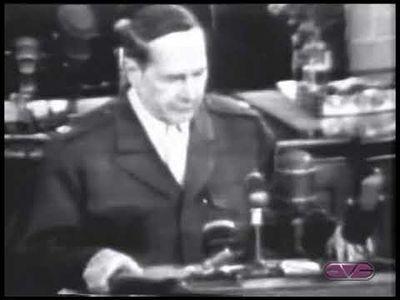
Farewell Address to Congress
On April 19, 1951, eight days after President Harry S. Truman relieved him of his commands, General Douglas MacArthur addressed a joint meeting of the U.S. Congress. Their dispute centered on the Korean War: MacArthur advocated stronger economic and military pressure against China, while the administration sought to limit the conflict and prevent escalation. In the speech, MacArthur reviewed postwar Asia, set out his views on Pacific defense, Taiwan, Japan, and the Korean battlefield, and defended the strategy he had proposed. He also argued that a war, once forced upon a nation, must be fought for victory and brought to a swift end. He closed his fifty-two-year military career with the barracks refrain, “Old soldiers never die; they just fade away.”
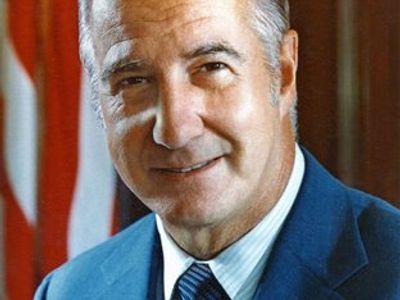
Television News Coverage
On November 13, 1969, U.S. Vice President Spiro Agnew delivered this address at a Republican Midwest regional meeting in Des Moines, Iowa. Ten days earlier, President Richard Nixon had given his “Silent Majority” speech on the Vietnam War, after which network commentators immediately analyzed and criticized his position. Using that episode as his starting point, Agnew questioned the power held by a small group of television anchors, commentators, and producers to select, present, and interpret the news. He acknowledged television’s contributions in exposing hunger, occupational disease, war, and environmental damage, while arguing that its preference for conflict, extremity, and negative images could distort public understanding of American society. He concluded that he was not calling for government censorship, but for media self-scrutiny, public oversight, and a clearer separation between reporting and commentary.
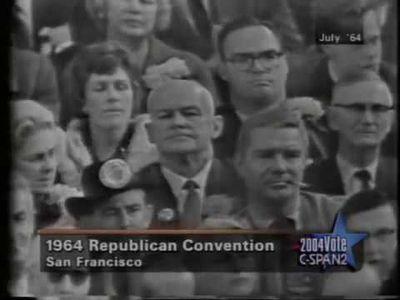
Speech Accepting the Republican Presidential Nomination
On July 16, 1964, Barry Morris Goldwater delivered this famous speech accepting the Republican presidential nomination at the Cow Palace in San Francisco, California. Goldwater was an iconic figure of the American conservative movement, and this speech is considered the foundational document of modern American conservatism. In the speech, he sharply criticized the Democratic administration's domestic and foreign policies, emphasized the importance of individual liberty and limited government, and famously stated: "Extremism in the defense of liberty is no vice" and "Moderation in the pursuit of justice is no virtue." Although he lost the presidential election in a landslide that year, this speech inspired a new generation of conservatives and laid the groundwork for the conservative resurgence of the Reagan era.
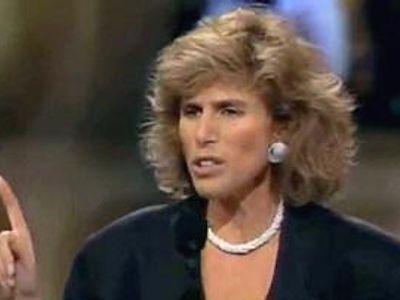
1992 Democratic National Convention Address
On July 14, 1992, Elizabeth Glaser delivered this deeply moving speech at the Democratic National Convention in New York. Glaser was an AIDS activist who contracted the HIV virus through a blood transfusion during childbirth in 1981, and unknowingly passed it to her two children. Her daughter Ariel died of AIDS in 1988 at the age of seven. In this speech, Glaser shared her personal struggle with AIDS, criticized the Reagan and Bush administrations for their neglect of the AIDS crisis, and called for universal health care and increased AIDS research. Her speech, filled with personal emotion and urgency, became a pivotal moment in the American AIDS movement, inspiring countless people to pay attention to and address the AIDS crisis.
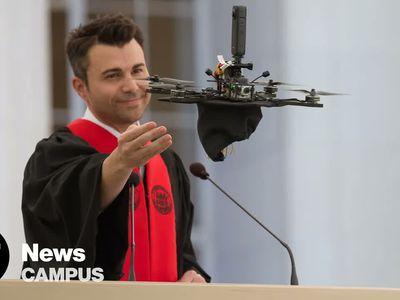
Mark Rober Address to MIT Class of 2023
On June 1, 2023, engineer and science video creator Mark Rober addressed MIT’s graduating class. He jokingly proposed making a video in thirty years about the graduates’ accomplishments, then offered advice for making a positive impact: embrace naive optimism when the future is uncertain, frame failures like setbacks in a video game, and actively foster relationships. He described his mother’s influence on his life and closed with a fourth suggestion, occasional playful anarchy, by sending his mortarboard aloft on a drone.
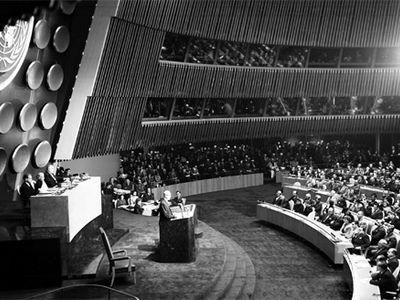
Atoms for Peace
On December 8, 1953, U.S. President Dwight D. Eisenhower delivered the landmark 'Atoms for Peace' speech to the United Nations General Assembly during the early Cold War era. After World War II, both the United States and the Soviet Union had developed nuclear weapons, casting a shadow of nuclear war over the world and causing widespread atomic anxiety. In this speech, Eisenhower first proposed the concept of peaceful uses of atomic energy, calling for the establishment of an International Atomic Energy Agency to regulate nuclear materials internationally and redirect atomic energy from military purposes to peaceful fields such as agriculture, medicine, and energy. This speech not only eased international tensions at the time but also directly led to the founding of the International Atomic Energy Agency (IAEA) in 1957.
Latest Added
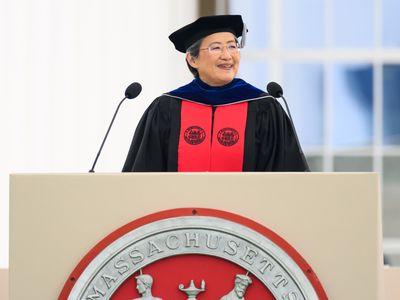
Lisa Su Address to MIT Class of 2026
On May 28, 2026, AMD chair and CEO and MIT alumna Lisa Su addressed the Class of 2026 at the OneMIT Commencement ceremony. She recalled arriving at MIT at age 17, entering a clean room through undergraduate research, and later confronting difficult problems at IBM and AMD. She described the engineer’s instinct as breaking complex challenges into steps and working with a team to find answers, and urged graduates to run toward the hardest problems. Speaking about artificial intelligence, she said it could accelerate discovery in medicine and other fields, while people must still choose which problems matter, make judgments with incomplete information, and take responsibility for outcomes. She closed by encouraging graduates to challenge the limits of their knowledge, work with people who make them better, and make their own luck.
Mark Rober Address to MIT Class of 2023
On June 1, 2023, engineer and science video creator Mark Rober addressed MIT’s graduating class. He jokingly proposed making a video in thirty years about the graduates’ accomplishments, then offered advice for making a positive impact: embrace naive optimism when the future is uncertain, frame failures like setbacks in a video game, and actively foster relationships. He described his mother’s influence on his life and closed with a fourth suggestion, occasional playful anarchy, by sending his mortarboard aloft on a drone.
Farewell Address to Congress
On April 19, 1951, eight days after President Harry S. Truman relieved him of his commands, General Douglas MacArthur addressed a joint meeting of the U.S. Congress. Their dispute centered on the Korean War: MacArthur advocated stronger economic and military pressure against China, while the administration sought to limit the conflict and prevent escalation. In the speech, MacArthur reviewed postwar Asia, set out his views on Pacific defense, Taiwan, Japan, and the Korean battlefield, and defended the strategy he had proposed. He also argued that a war, once forced upon a nation, must be fought for victory and brought to a swift end. He closed his fifty-two-year military career with the barracks refrain, “Old soldiers never die; they just fade away.”
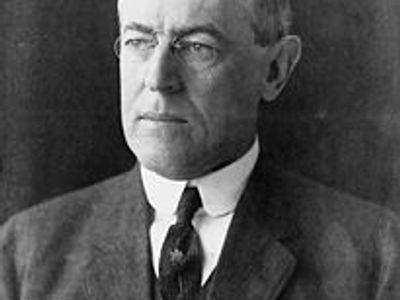
Final Address in Support of the League of Nations
On September 25, 1919, U.S. President Woodrow Wilson delivered this address at the City Hall Auditorium in Pueblo, Colorado. It was his final public speech during a nationwide tour promoting the Treaty of Versailles and the League of Nations. The Senate was bitterly divided over whether the United States should join the League, with opponents particularly questioning whether Article 10 would weaken Congress's authority over war and peace. Wilson explained the League's council, assembly, and cooling-off period for disputes, and defended collective security, self-determination, labor rights, and protections for China. Invoking American soldiers killed in World War I and their families, he urged the nation to fulfill its wartime promise of a durable peace. His tour soon ended because of worsening health; the Senate ultimately rejected the treaty, and the United States never joined the League.
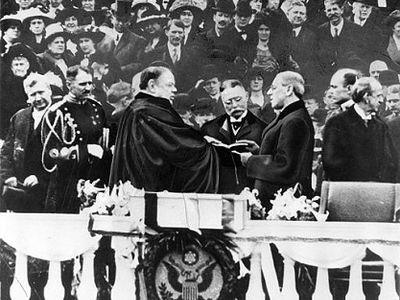
Woodrow Wilson's 1913 First Inaugural Address
On March 4, 1913, Democrat Woodrow Wilson took the oath as the 28th President of the United States at the East Portico of the Capitol in Washington, D.C., and delivered his first inaugural address. The Democrats had regained the White House for the first time since 1897 and also controlled both houses of Congress. Confronting the wealth and damage created by industrialization—including wasted resources, harm to workers, and imbalances in tariff, banking, and currency systems—Wilson interpreted the change of party as a change in the nation's moral direction. He called for reforms in taxation, finance, labor protection, public health, and conservation while preserving property and individual rights. He presented reform not as partisan triumph or destruction, but as the restoration of justice and the purification of government, and summoned honest, patriotic, forward-looking citizens to share the task.
Television News Coverage
On November 13, 1969, U.S. Vice President Spiro Agnew delivered this address at a Republican Midwest regional meeting in Des Moines, Iowa. Ten days earlier, President Richard Nixon had given his “Silent Majority” speech on the Vietnam War, after which network commentators immediately analyzed and criticized his position. Using that episode as his starting point, Agnew questioned the power held by a small group of television anchors, commentators, and producers to select, present, and interpret the news. He acknowledged television’s contributions in exposing hunger, occupational disease, war, and environmental damage, while arguing that its preference for conflict, extremity, and negative images could distort public understanding of American society. He concluded that he was not calling for government censorship, but for media self-scrutiny, public oversight, and a clearer separation between reporting and commentary.
Famous Speeches
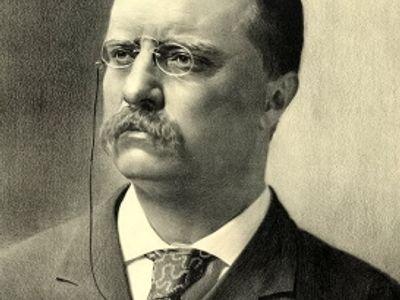
The Man with the Muck-rake
On April 14, 1906, President Theodore Roosevelt delivered his famous "Man with the Muck-rake" speech in Washington, D.C. During the Progressive Era, journalists and writers (known as "muckrakers") used investigative reporting to expose corporate corruption, political scandals, and social ills. Roosevelt praised the role of these exposers but warned against their excessive focus on scandal-mongering at the expense of higher ideals. Drawing an analogy from Bunyan's "Pilgrim's Progress," he compared those who only focus on filth to a man with a muck-rake — while cleaning dirt is necessary, one should not lose sight of noble pursuits. This speech marked Roosevelt's complex attitude toward the reform movement — supporting the exposure of corruption but opposing unscrupulous attacks.
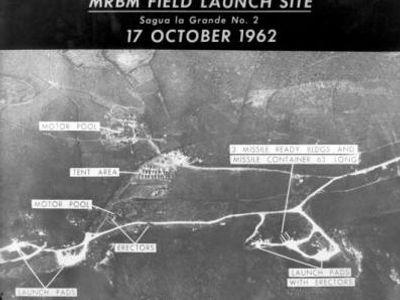
Cuban Missile Crisis Address to the Nation
In October 1962, U-2 spy planes discovered Soviet nuclear missile bases being deployed in Cuba. On October 22, President Kennedy delivered a nationwide televised speech exposing the offensive missile sites and announcing a naval quarantine of Cuba. He outlined seven initial steps including a strict blockade, increased surveillance, and a policy of full retaliatory response to any nuclear missile launch from Cuba. This was the most dangerous moment of the Cold War, bringing the world to the brink of nuclear war. After 13 days of tense confrontation, Khrushchev agreed to withdraw the missiles and Kennedy pledged not to invade Cuba. The crisis became a turning point in the Cold War and led both superpowers to explore arms control measures.
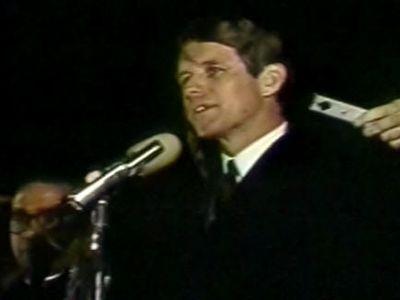
Remarks on the Assassination of Martin Luther King, Jr.
On April 4, 1968, Martin Luther King Jr. was assassinated in Memphis. That evening, Robert F. Kennedy was campaigning for president in Indianapolis when he learned of the tragedy. Without prepared remarks, he delivered this brief but profoundly impactful speech to the assembled crowd. Regarded as one of the greatest impromptu speeches in American history, Kennedy called for love and understanding instead of hatred and violence, and quoted Greek poet Aeschylus to comfort the grieving audience. He expressed empathy for the black community by sharing his own experience of losing his brother John Kennedy to a white assassin, demonstrating extraordinary compassion and leadership.
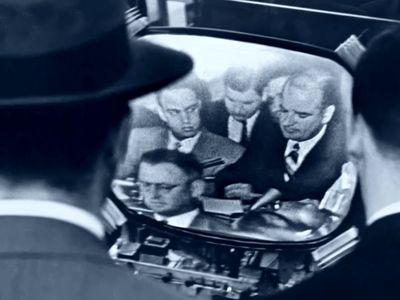
Have You Left No Sense of Decency?
On June 9, 1954, the Army-McCarthy Hearings reached their dramatic climax. Senator Joseph McCarthy accused members of the Army's legal team of having communist sympathies, attempting to undermine the fairness of the hearings. In this historic confrontation, Army counsel Joseph N. Welch delivered this powerful response to McCarthy's unwarranted attack on his young assistant. Welch's question 'Have you no sense of decency?' became one of the most famous political statements in American history, marking the beginning of the decline of McCarthyism. Broadcast live on television, the hearings allowed millions of Americans to witness McCarthy's bullying tactics and paranoia, ultimately leading to his censure by the Senate.
Speech Accepting the Republican Presidential Nomination
On July 16, 1964, Barry Morris Goldwater delivered this famous speech accepting the Republican presidential nomination at the Cow Palace in San Francisco, California. Goldwater was an iconic figure of the American conservative movement, and this speech is considered the foundational document of modern American conservatism. In the speech, he sharply criticized the Democratic administration's domestic and foreign policies, emphasized the importance of individual liberty and limited government, and famously stated: "Extremism in the defense of liberty is no vice" and "Moderation in the pursuit of justice is no virtue." Although he lost the presidential election in a landslide that year, this speech inspired a new generation of conservatives and laid the groundwork for the conservative resurgence of the Reagan era.
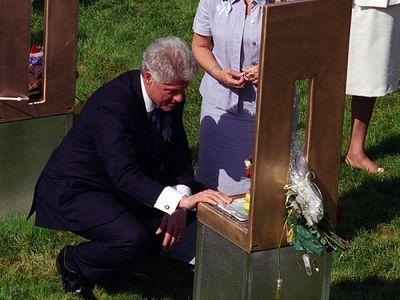
Oklahoma Bombing Memorial Prayer Service Address
On April 19, 1995, the Alfred P. Murrah Federal Building in Oklahoma City was bombed, killing 168 people, including 19 children. This was one of the deadliest domestic terrorist attacks in American history. On April 23, 1995, U.S. President Bill Clinton delivered this deeply moving speech at a memorial prayer service in Oklahoma City. In his address, he expressed the nation's grief, praised the heroic efforts of rescue workers, and called for unity and justice against hatred and violence. This speech is considered one of the most impactful of Clinton's presidency, serving as a symbol of American resilience and hope in the face of tragedy.
Famous Speakers
Henry Louis 'Lou' Gehrig (1903-1941) was an American Major League Baseball first baseman who played for the New York Yankees. Known as 'The Iron Horse,' he held the record for 2,130 consecutive games played—a record that stood for 56 years. Diagnosed with amyotrophic lateral sclerosis (later known as 'Lou Gehrig's disease') in 1939, he was forced to retire. His emotional farewell speech at Yankee Stadium on July 4, 1939, became legendary. He was posthumously inducted into the Baseball Hall of Fame in 2002.
「Today, I consider myself the luckiest man on the face of the earth.」
Anna Eleanor Roosevelt (1884-1962) was one of the most influential First Ladies in American history and a renowned human rights advocate and diplomat. She was the wife of President Franklin D. Roosevelt and actively participated in social reform and New Deal programs during her husband's presidency (1933-1945). After World War II, she served as Chair of the UN Human Rights Commission, leading the drafting of the Universal Declaration of Human Rights, which was adopted in 1948. Mrs. Roosevelt was a steadfast advocate for the human rights cause, and her speeches and writings had a profound impact on the global human rights movement. Known as the "First Lady of the World," she is widely celebrated for her outstanding contributions to promoting human rights, equality, and justice.
「Basic human rights are simple and easily understood: freedom of speech and a free press; freedom of religion and worship; freedom of assembly and the right of petition; the right of men to be secure in their homes and free from unreasonable search and seizure and from arbitrary arrest and punishment.」
Dwight David Eisenhower (1890-1969) was the 34th President of the United States, a Republican, and a renowned military general and statesman. Born in Texas and graduated from West Point, he served as Supreme Allied Commander in Europe during World War II, leading the decisive D-Day invasion and other major campaigns that defeated Nazi Germany. Elected president by a landslide in 1952, he served two terms from 1953 to 1961. During his presidency, he ended the Korean War, launched the Interstate Highway System, signed civil rights legislation, and proposed the landmark 'Atoms for Peace' initiative during the early Cold War. Eisenhower was known for his steady, pragmatic leadership and deep insight into international affairs, making him one of the key Western leaders of the Cold War era.
「It is not enough to take this weapon out of the hands of the soldiers. It must be put into the hands of those who will know how to adapt it to the arts of peace.」
Mario Matthew Cuomo (June 15, 1932 – January 1, 2015) was a prominent American politician who served as the 52nd Governor of New York (1983-1994). Born to Italian immigrant parents in Queens, New York, he graduated from St. John's University Law School. Cuomo was known for his exceptional oratory skills and unwavering commitment to social justice. His 1984 keynote address at the Democratic National Convention catapulted him to national prominence. He advocated for an active government role, supporting civil rights, labor rights, and education investment. His son, Andrew Cuomo, later served as Governor of New York as well.
「We believe in a government strong enough to use words like 'love' and 'compassion'.」
Stokely Carmichael (1941-1998), also known as Kwame Ture, was an American civil rights activist and Black Power movement leader. He was a key member of the Student Nonviolent Coordinating Committee (SNCC) and later a major theoretician of the Black Panther Party. In 1966 he coined the 'Black Power' slogan that became iconic in the civil rights movement. He advocated for Black people to build their own political and economic power. In his later years, he moved to Guinea and continued working for Pan-Africanism.
「We want black power.」
Anita Faye Hill (born 1956) is a prominent American law professor and civil rights activist. Born in Oklahoma, she earned her bachelor's degree from Oklahoma State University and her Juris Doctor from Yale Law School. Hill worked at the U.S. Department of Education's Office for Civil Rights and the Equal Employment Opportunity Commission, where she served as an assistant to Clarence Thomas. In 1991, she testified during Thomas's Supreme Court confirmation hearings, accusing him of sexual harassment, an event that sparked a nationwide discussion about workplace sexual harassment and gender equality. Hill currently serves as a professor at Brandeis University School of Law, where she has long been dedicated to gender equality, civil rights, and social justice, making her an important advocate for women's rights in contemporary America.
「Telling the world is the most difficult experience of my life, but it is very close to having to live through the experience that occasioned this meeting.」