Building a Safer, More Secure Britain in the Age of AI
On 12 October 2026, UK Minister of State for Artificial Intelligence Kanishka Narayan spoke at Base One, Imperial College London, setting out a security and sovereignty framework for increasingly capable AI. Drawing on the creation of factory inspection during the Industrial Revolution, he argued that when technology alters the balance of power, government needs not only laws but institutions with the expertise to act. The address covered model evaluation, hardware-enabled verification, cyber defence, responses to agentic-AI incidents, corporate responsibility, and international cooperation, and announced the urgent use of frontier AI to find weaknesses in government systems. Narayan also stressed the need for sovereign British AI and semiconductor capability, rejecting technological dependence as the price of investment. Protecting workers, preserving democratic control, and ensuring that machines serve people were presented as the central principles of the policy.
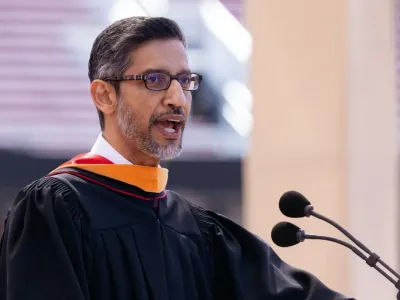
Sundar Pichai's 2026 Stanford Commencement Address: Igniting Your Inner Fire
On 2026-06-14, Sundar Pichai delivered this address at Stanford University's Commencement. Organized around life choices, optimism, and moving forward amid technological change, it joins personal experience, professional judgment, and the public concerns of its moment. The address asks not only what graduates might do next, but also how educated people should understand their abilities, accept public responsibility, and help build a shared future. This edition is based on a complete authoritative transcript and preserves the sequence and character of the original address.
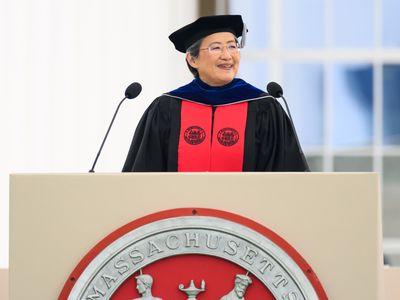
Lisa Su Address to MIT Class of 2026
On May 28, 2026, AMD chair and CEO and MIT alumna Lisa Su addressed the Class of 2026 at the OneMIT Commencement ceremony. She recalled arriving at MIT at age 17, entering a clean room through undergraduate research, and later confronting difficult problems at IBM and AMD. She described the engineer’s instinct as breaking complex challenges into steps and working with a team to find answers, and urged graduates to run toward the hardest problems. Speaking about artificial intelligence, she said it could accelerate discovery in medicine and other fields, while people must still choose which problems matter, make judgments with incomplete information, and take responsibility for outcomes. She closed by encouraging graduates to challenge the limits of their knowledge, work with people who make them better, and make their own luck.
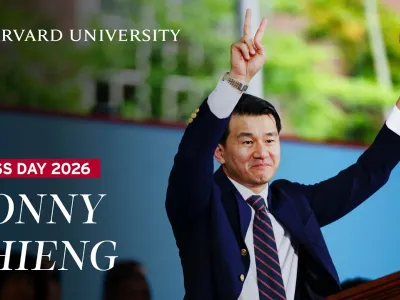
Ronny Chieng's 2026 Harvard Class Day Address: An AI Warning for Graduates
On May 27, 2026, comedian and Daily Show correspondent Ronny Chieng addressed Harvard College's Class of 2026 at Class Day in Tercentenary Theatre; Harvard University released the video on May 30. Mixing self-deprecation with satire, he joked about Harvard grades, institutional prestige, and the job market before turning to artificial intelligence. He distinguished valuable scientific uses from tools that replace thought and creativity, warned that excessive reliance on large language models can create cognitive debt, and urged graduates to master fundamentals without surrendering the pleasure of making things. He also encouraged them to build richer offline lives, pursue more than money, follow work they love, tackle real problems, and become people whom others will remember with gratitude for having helped them.
Aravind Srinivas's 2025 Winter Commencement Address at UC Berkeley: Relentless Curiosity
On December 20, 2025, Perplexity co-founder and CEO and UC Berkeley alumnus Aravind Srinivas addressed Berkeley's winter commencement. Rather than predict how artificial intelligence would reshape society and work, he organized his advice around three questions: “Who cares what you do next?”, “What are you waiting for?”, and “What's with all these questions?” He used velocity, compounding, and pain tolerance to explain growth, urging graduates to act quickly, keep learning, wait patiently for long-term results, and remain consistent through setbacks. The address culminated in a call for relentless curiosity. Education, he argued, is not chiefly about accumulating correct answers but about developing the spirit of inquiry. The defining ability for the future will be asking better questions, seeking truth, and using curiosity to create a world that does not yet exist.
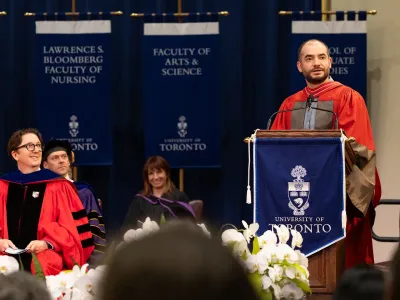
Ilya Sutskever's 2025 Honorary Degree Address at University of Toronto: Pay Attention to AI
On June 8, 2025, AI researcher Ilya Sutskever received an honorary degree from the University of Toronto and addressed graduates in the same hall where he had earned his bachelor's degree twenty years earlier. Recalling a decade at U of T, his studies with Geoff Hinton, and his participation in pioneering AI research, he first offered one conventional piece of advice: accept reality, do not dwell on regret, and keep asking for the best next step. He then turned to AI, arguing that digital intelligence will continue to improve until it may perform every task humans can do, greatly accelerating research, economic activity, and technological progress. Because that radical future is difficult to internalize emotionally, he urged graduates to use the best available AI, build intuition from its actual capabilities, and refuse to ignore it. He stressed that the truthfulness and safety of future superintelligence will raise profound questions; AI may be humanity's greatest challenge, while overcoming it may also bring its greatest reward.
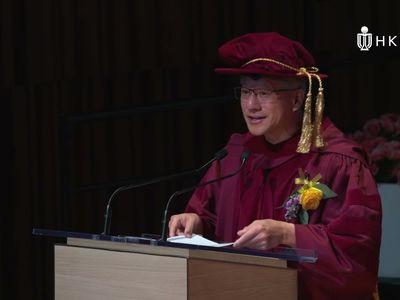
Jensen Huang's 2024 Address at the Hong Kong University of Science and Technology: The Age of AI Has Started
On November 23, 2024, Jensen Huang, founder and CEO of NVIDIA, was conferred an Honorary Doctor of Engineering at the Hong Kong University of Science and Technology (HKUST) Congregation 2024, and delivered this commencement address to graduates. In his speech, Huang reflected on NVIDIA's 25-year journey in China and its deep ties with HKUST. He systematically articulated the profound impact of artificial intelligence on computing paradigms, scientific research, and industrial transformation, declaring that the age of AI has started and the whole world is being reset. Huang emphasized that AI is not only the most important technology of our time, but potentially of all time. He encouraged graduates to stand at the starting line of a new era, seize unprecedented opportunities, and use AI tools to tackle challenges that were once unimaginable. On the same day, Huang also held a fireside chat with HKUST Council Chairman Prof. Harry Shum on the theme of "Technology, Leadership, and Entrepreneurship."
Tan Eng Chye's 2024 Commencement Address at NUS
On July 11, 2024, National University of Singapore President Tan Eng Chye reflected on a graduating class whose university journey began online during the pandemic. He argued that rigorous interdisciplinary training, domain expertise, experiential learning, resilience, and innovation prepared graduates to make an impact in a fast-changing world. Aisha Shamsudin, who navigated family, financial, and mental-health pressures while supporting others, and Ng Jun Kang, who lives with cerebral palsy and hopes to apply computing to real-world problems, illustrated holistic growth and service. Tan then conferred honorary degrees on Chief Justice Sundaresh Menon and former Head of the Civil Service Peter Ho for contributions to justice, public administration, and NUS. He closed with three lessons: remain curious, learn from failure, and aspire to make a difference rather than merely a living, urging graduates to become architects of change, champions of justice, and trailblazers of innovation.
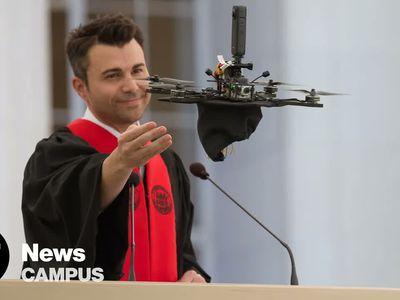
Mark Rober Address to MIT Class of 2023
On June 1, 2023, engineer and science video creator Mark Rober addressed MIT’s graduating class. He jokingly proposed making a video in thirty years about the graduates’ accomplishments, then offered advice for making a positive impact: embrace naive optimism when the future is uncertain, frame failures like setbacks in a video game, and actively foster relationships. He described his mother’s influence on his life and closed with a fourth suggestion, occasional playful anarchy, by sending his mortarboard aloft on a drone.
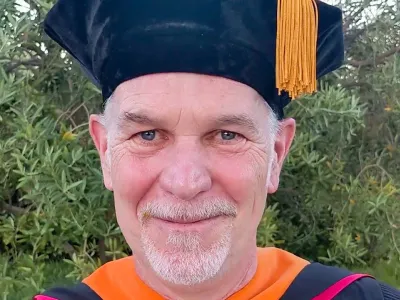
Reed Hastings' 2022 Stanford Commencement Address: Invention, Storytelling, and the Slow Movers
On 2022-06-12, Reed Hastings delivered this address at Stanford University's Commencement. Organized around inventions, stories, and long-term growth, it joins personal experience, professional judgment, and the public concerns of its moment. The address asks not only what graduates might do next, but also how educated people should understand their abilities, accept public responsibility, and help build a shared future. This edition is based on a complete authoritative transcript and preserves the sequence and character of the original address.
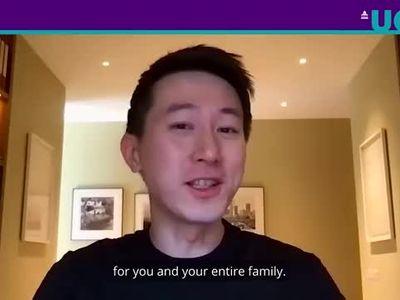
Shou Zi Chew's 2022 Graduation Guest Address at UCL
On March 14, 2022, University College London alumnus and TikTok CEO Shou Zi Chew delivered a recorded guest address to graduates in the social and historical sciences. Recalling that he had sat in their place as an Economics graduate sixteen years earlier, Chew described a career with no grand plan: from Goldman Sachs and DST to business school, ByteDance, and TikTok. He argued that growth often comes from working hard with what is available, putting oneself forward, and accepting opportunities despite uncertainty. Chew encouraged graduates to embrace the journey ahead, avoid overthinking, and leave their comfort zones when necessary. In a fast-changing world filled with unfamiliar situations, he urged them to trust the knowledge and skills gained at UCL and to remember the continuing support of professors, friends, and family.
Thomas F. Hofmann's 2021 First Years' Convocation Address at the Technical University of Munich
On October 18, 2021, Technical University of Munich President Thomas F. Hofmann delivered this English-language address at the first-years' convocation on the Garching campus. More than 14,000 new students were returning to campus after a long period of online learning, remote work, and social distancing. Hofmann used the TUM Boring team's victory in Elon Musk's Not-a-Boring Competition—where students built a 22-ton machine and bored a tunnel more than 20 metres long—to frame three lessons: be authentic while respecting diversity and accepting challenges from teammates; remain curious, cross disciplinary boundaries, and embrace adventure; and do not let obstacles dampen the spirit, but learn through experimentation, adaptation, and improvement. He highlighted opportunities in interdisciplinary courses, student initiatives, sport and music, language learning, the EuroTech Universities Alliance, and entrepreneurship, inviting newcomers to make the entire university their laboratory.