Rimsky Yuen's 2026 Keynote Address at the University of Hong Kong
On July 13, 2026, Hong Kong Senior Counsel and former Secretary for Justice Rimsky Yuen delivered the Guest of Honour's keynote address at the University of Hong Kong Faculty of Law's 217th Congregation. Drawing on changes in cheques, letters of credit, litigation, arbitration, and mediation, he argued that legal study and practice evolve with society, technology, and the international environment. Yuen welcomed artificial intelligence as a useful professional aid but warned that law is not a mechanical production line: fair dispute resolution still depends on humanity, empathy, judgment, and justice. He also called for an international perspective among Hong Kong lawyers, linking the city's continued success to cross-border awareness and attention to global legal developments. Whatever changes occur in law or legal practice, he concluded, maintaining and strengthening the rule of law remains the legal community's fundamental mission.
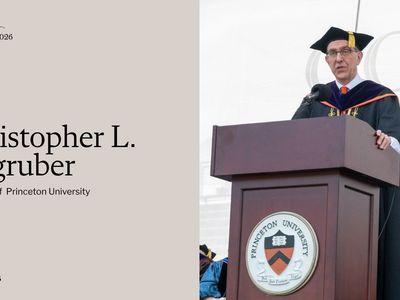
Christopher L. Eisgruber's 2026 Commencement Address at Princeton University: Learning, Citizenship, and the Courage to Be Unpopular
On 26 May 2026, Princeton President Christopher L. Eisgruber delivered the Commencement address 'Learning, Citizenship, and the Courage to Be Unpopular' at the University's 279th Commencement. He began with Robert F. Goheen, who led Princeton through the upheavals of the 1960s, and drew on Goheen, Toni Morrison, and Justice Louis Brandeis to argue that courage is not merely a heroic virtue tested by danger but the willingness to stand as a judge of society's tastes and actions when it is not popular. He held that academic freedom and civic responsibility sometimes require us to speak anyway, to voice dissent, and equally to admit error and change one's mind. He urged graduates to treasure Princeton's spirit of the 'millrace of jostling and tumbling ideas,' preferring hard truth to comfortable fiction and self-respect to popular esteem.
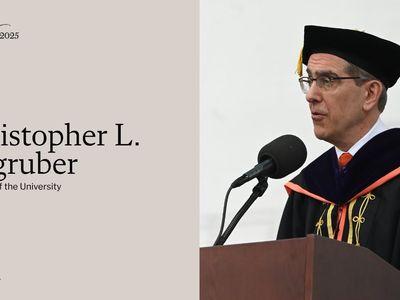
Christopher L. Eisgruber's 2025 Commencement Address at Princeton University: A Fierce Independence of Mind
On 27 May 2025, Princeton President Christopher L. Eisgruber delivered the Commencement address 'A Fierce Independence of Mind' to the Class of 2025. He began from the blur of his own graduation, a Samsonite briefcase, and a copy of Tocqueville's Democracy in America, recalling how the nineteenth-century Frenchman, despite magnificent insights, never foresaw the rise of American research universities, having declared that Americans had no literature properly speaking and few devoted to abstract knowledge. Eisgruber used this to show that the creativity universities cultivate, the idiosyncrasies they tolerate, and the speculative research they cherish can put them at odds with the pragmatic culture around them and jeopardize academic freedom. He criticized the double meaning in 'institutional neutrality,' and, citing the Kalven Committee's invocation of Socrates, insisted that a good university, like Socrates, should be upsetting. He urged graduates to cultivate a fierce independence of mind, with the courage to ask questions that are unsettling to the world and to themselves.
Lucy Yen's 2024 Keynote Address at the University of Hong Kong
On July 19, 2024, Hong Kong solicitor and first-cohort HKU Law graduate Lucy Yen delivered the Guest of Honour's keynote address at the Faculty of Law's 212th Congregation. Marking the 55th anniversary of legal education at HKU, she recalled the first class of forty students in 1969 and the teachers and practitioners who helped build the Faculty. Yen linked her own decision to study law, made after advice from her father, to the importance of purpose and gratitude. She urged graduates to embrace artificial intelligence while resisting intellectual laziness and preserving love, kindness, empathy, and integrity. She also stressed the value of legal education, an independent judiciary and profession, and the rule of law to Hong Kong. Comparing life to a journey, a classroom, and a storybook, she encouraged continuous learning, courage in failure, service to the community, and deliberate authorship of a purposeful life.

Heidi Heitkamp's 2024 Convocation Address at the University of Chicago: Do Hard, Good and Great Things
On May 31, 2024, former U.S. senator Heidi Heitkamp addressed the University of Chicago Class of 2024 at Class Day. She praised the resilience and community the class developed during the pandemic and framed the practical purpose of free speech as persuasion: truly listening to opposing views, understanding the emotions behind facts, avoiding the anger trap, and using grace to create opportunities for reconnection. Drawing on her North Dakota upbringing and Senate career, she urged graduates to practice kindness, talk with many different people, remain curious, confront fear, quit when appropriate, and take risks. Her story of helping Korean War veteran Andy Shaw receive a Purple Heart showed how public service can matter deeply to an individual, and she challenged graduates to use their educational privilege in causes larger than themselves and to do hard, good, and great things.
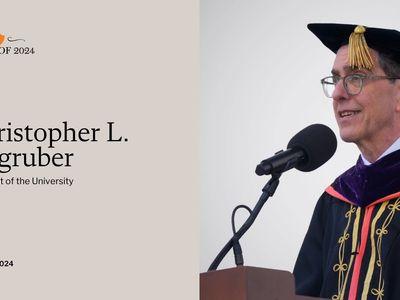
Christopher L. Eisgruber's 2024 Commencement Address at Princeton University: Leaning Into Life, at Princeton and Beyond
On 28 May 2024, Princeton President Christopher L. Eisgruber delivered the Commencement address 'Leaning Into Life, at Princeton and Beyond' to the Class of 2024. He observed that commencement addresses are a curious genre that rarely contains profound wisdom, and joked that he was delivering a 'you are special' speech. He then devoted his time to gratitude and a wish: he thanked the graduates for breathing new life into the campus after the pandemic had eroded social norms, reconstructing and revitalizing countless organizations from a cappella groups and athletic teams to debating societies and laboratories; and he wished that they would lean into life after Princeton and into their communities with the same dazzling energy and imagination, continuing to show up in person and fully. He suggested that happiness often comes from collective human endeavor to produce something of value to society, with goals that need not be grand or newsworthy, and expressed hope that Princeton would remain a source of community and a home in their lives.
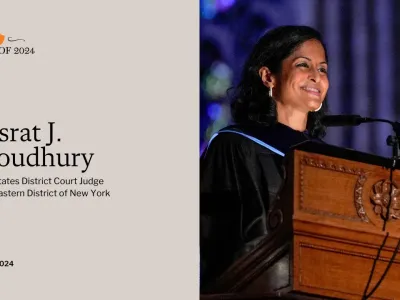
Nusrat J. Choudhury's 2024 Baccalaureate Address at Princeton University: Finding Common Ground
On May 26, 2024, Nusrat J. Choudhury, a judge of the U.S. District Court for the Eastern District of New York, spoke at Princeton University's Baccalaureate service. A 2006 graduate of Princeton's Master in Public Affairs program, she recalled her Bangladeshi immigrant parents' perseverance and community service, her training in law and public policy, her public interest litigation, and her path to the federal bench. She described education as a gift that brings responsibilities and explained equal justice through her work defending vulnerable people. She encouraged graduates to respect differing views, find common ground, explore multiple career paths, and continually ask whether their work reflects their values. This text follows the university's prepared remarks; the audio comes from its official recording.
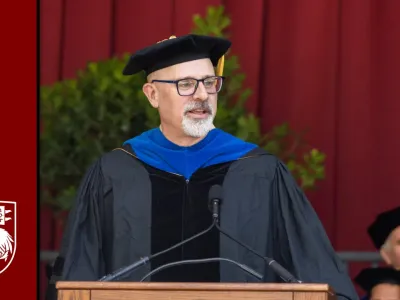
Tom Ginsburg's 2023 Convocation Address at the University of Chicago: Conversation and Democracy
On June 3, 2023, comparative constitutional scholar Tom Ginsburg delivered "Conversation and Democracy" at the University of Chicago's Convocation. Beginning with Francis Fukuyama's "end of history" thesis, he argued that democracy now faces pressure from authoritarianism, partisan polarization, and public disappointment, yet remains animated by hope rather than fear. Drawing on John Dewey, he stressed that legal rights cannot sustain democracy without free communication in daily life. Examples from South Africa's constitution-making, Shirley Chisholm's visit to George Wallace, and a Northern Ireland citizens' assembly showed how listening can bridge profound divisions. Universities, he said, should create better environments for dialogue and debate. Machines may imitate conversation, but they have no mind to change and no vote to cast; democratic progress requires people to keep talking, keep listening, and implement ideas formed with others.
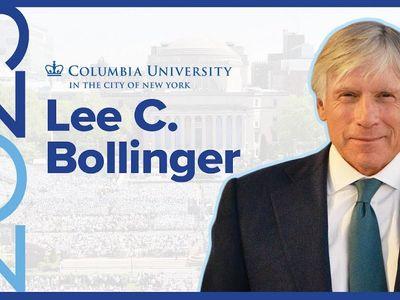
Lee C. Bollinger's 2023 Commencement Address at Columbia University: How to Be an Open Person
On May 17, 2023, Columbia University President Lee C. Bollinger delivered his final Commencement address after more than two decades leading the University. Preparing to return to the law faculty, he begins with the affectionate thought that he and the graduates are graduating together. Rather than center the speech on large-scale threats to democracy, he asks how a person can cultivate an open disposition in the world. Using the First Amendment and the academy's Scholarly Temperament as reference points, he explains that social rules and academic norms may both seek truth but cannot simply govern ordinary personal life. Bollinger offers ten practices: recognize closed-minded impulses, face shared ignorance, appreciate complexity, make openness a habit, ask more questions, inhabit an opponent's reasoning, bring empathy to relationships, keep notes, and let age deepen patience and curiosity.
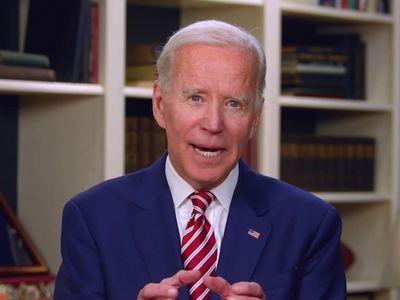
Joe Biden's 2020 Commencement Address at Columbia Law School: Healing and Hope
On May 20, 2020, former U.S. vice president and presumptive Democratic presidential nominee Joseph R. Biden Jr. delivered the keynote address at Columbia Law School's virtual graduation; his granddaughter Naomi was also a member of the class. Facing deaths, unemployment, and shutdowns caused by the COVID-19 pandemic, Biden recalls graduating from law school in 1968 amid war, assassinations, and social division. Difficult eras, he argues, accelerate change and place responsibility on a new generation. He calls overcoming the immediate crisis “job one” and remaking a fairer, more resilient world “job two.” Quoting Franklin Roosevelt, he urges graduates not merely to make their way in the world but to remake the world before them, transforming trauma and chaos into healing, progress, and hope.
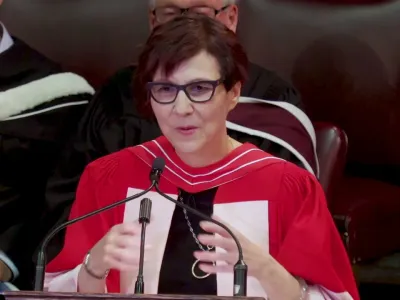
Cindy Blackstock's 2018 Honorary Degree Address at University of Toronto: Love and Moral Courage
On June 19, 2018, First Nations children's-rights advocate Cindy Blackstock delivered an honorary-degree address at the University of Toronto. Framing love and moral courage as the means to confront hate, she urged graduates to speak and act when told to remain silent or become bystanders, drawing on Shannen Koostachin, Jordan River Anderson, and other children as examples of continuing inequality. The address centers on U of T alumnus and public-health pioneer Peter Henderson Bryce, who documented catastrophic mortality among Indigenous children in residential schools and was punished for challenging government inaction, in contrast with residential-school administrator Duncan Campbell Scott, who received public honours. Recounting a later human-rights victory and Bryce's restored recognition, Blackstock argued that doing right may not be rewarded immediately, moral cowardice should never be honoured, and graduates must carry the love of family and ancestors into courageous public action.
Cristina Cifuentes's 2018 Graduation Address at the University of Sydney
In 2018, University of Sydney economics alumna and Australian Competition and Consumer Commission member Cristina Cifuentes addressed a Business School graduation ceremony. With humour, she recalled her own graduation, a difficult job search, and an embarrassing first-week incident at the state treasury. Her message was that dreams can be large, but reaching them depends on sustained attention to immediate challenges and on perseverance rather than luck. Cifuentes presented personal and professional integrity as a cardinal principle, then used the much-disliked university group assignment as a model for working life: people cannot always choose their colleagues or lead the team, but every task offers a chance to cooperate, learn from stronger peers, pass knowledge onward, and show leadership. She closed by treating graduation itself as a collective assignment completed by students, families, friends, teachers, and classmates.