Ryu Honglim's 2026 Congratulatory Address at SNU's 80th Summer Graduation Ceremony
On August 28, 2026, Seoul National University President Ryu Honglim addressed graduates at the 80th Summer Graduation Ceremony. Marking SNU's eightieth anniversary, he recalled predecessors who contributed to Korea's industrialization, democratization, and informatization, then argued that artificial intelligence and profound change have made linear predictions from the past increasingly unreliable. In such an age, a university's task is not to deliver a closed body of knowledge but to cultivate original questions, connections across people and disciplines, and bold exploration that does not fear failure. Drawing on SNU's Grand Quest initiative, the campus commons, and Stuart Kauffman's idea of the adjacent possible, Ryu explained that each act of asking, learning, meeting, and connecting opens another door of possibility. He urged graduates not to measure themselves by a single standard set by others, but to hold fast to their own questions and use curiosity, courage, boundless imagination, and initiative to contribute locally and globally.
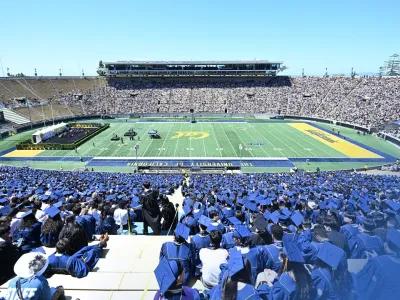
Robert B. Reich's 2026 Commencement Address at UC Berkeley: Speak Truth to Power
On May 16, 2026, former U.S. Secretary of Labor and UC Berkeley public policy professor Robert B. Reich delivered the keynote address at Berkeley's campuswide commencement. Reflecting on 17 years of teaching at Berkeley, he said he had never truly retired but had simply moved into the next stage of life. Reich described teaching and learning as reciprocal acts and lifelong learning as an embrace of life itself. Genuine leadership, he argued, does not depend on a title; it requires understanding direction, bringing people together, and treating leadership as a moral vocation. Confronting concentrated power, authoritarianism, and deep inequality, he insisted that “unfettered might does not make right” and urged graduates to defend democracy, respect facts, speak truth to power, and resist cynicism and fear. He closed by telling them they already possessed the capacity to become the teachers and leaders the world needs.
Ryu Honglim's 2026 Congratulatory Address at SNU's 80th Winter Graduation Ceremony
On February 25, 2026, Seoul National University President Ryu Honglim addressed doctoral, master's, and bachelor's graduates at the university's 80th Winter Graduation Ceremony. Marking SNU's eightieth anniversary, he recalled the predecessors who pursued national reconstruction through education and invited graduates to carry forward a tradition of boundless imagination and bold innovation. Against a future shaped by artificial intelligence, repeated career changes, inequality, and labor-market restructuring, Ryu argued that learning is not a task completed with a degree but a lifelong practice tied to happiness. Drawing on Aristotle, he distinguished intellectual capacity from the moral capacity formed through habit and action. Courage, temperance, generosity, justice, gratitude, and empathy, he said, give knowledge direction. He also reminded graduates that educational opportunity rests on collective sacrifice and urged them to use their talents for the common good and service to others.
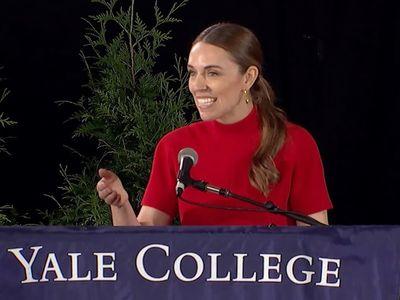
Jacinda Ardern's 2025 Class Day Address at Yale University: Empathy and Responsibility
On May 18, 2025, former New Zealand Prime Minister Jacinda Ardern delivered Yale College’s Class Day address. Beginning with a Māori greeting and a proverb about education, she reflected on her unexpected path into political leadership and on confronting M. bovis, the COVID-19 pandemic, and the Christchurch terrorist attack. Ardern argued that self-doubt can produce humility and that sensitivity can become empathy and action. Turning to war, climate change, disinformation, trade conflict, and declining respect for human rights, she maintained that domestic interests and global responsibility are linked rather than competing choices. She urged graduates to lead with shared values, a rules-based order, empathy, and responsibility because the present moment is about each person and about everyone connected to them. The text follows publisher-provided manual English captions on Yale University’s official video.
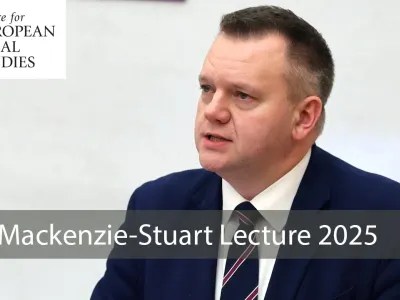
Towards Europe, Not Around It: The UK's Relationship with the European Union
On 13 March 2025, UK Paymaster General and Minister for European Union Relations Nick Thomas-Symonds delivered the annual Mackenzie Stuart Lecture at the University of Cambridge's Centre for European Legal Studies. The UK government published the speaker's notes, warning that they might differ from the delivered version; the current public text also marks three passages as political content removed. Looking back over Britain's changing European policy since the Second World War, and drawing on figures including Bevin, Attlee, Wilson, and Churchill, Thomas-Symonds argued that the UK could respect the 2016 decision to leave the EU while ending ideological division and pragmatically resetting relations with Europe. He organized the proposed strategic alliance around three pillars—security, safety, and prosperity—and discussed Ukraine and European defence, Horizon research cooperation, action against people-smuggling, reduced trade barriers, energy cooperation, and the forthcoming UK-EU Summit. Quoting John Donne in his conclusion, he said that in a period of shared challenges the road to a safe, secure, and prosperous United Kingdom runs through Europe, not around it. The lecture records the British government's policy case for the 2025 UK-EU reset.
Ryu Honglim's 2025 Congratulatory Address at SNU's 79th Winter Graduation Ceremony
On February 26, 2025, Seoul National University President Ryu Honglim addressed the 79th Winter Graduation Ceremony. He began by recognizing a class whose university memories were shaped by COVID-19, virtual classes and research, and reduced face-to-face contact, praising the wisdom and strength gained by making it through that long tunnel. He then focused on two virtues. Courage, he argued, is not recklessness but the capacity to analyze conditions, choose decisively, and maturely accept the consequences. The second virtue is living together: individual accomplishment depends on others and shines most fully when aligned with the universal values of a community. Ryu urged graduates to meet uncertainty with courageous intellect and a conscience directed toward the common good, moving forward alongside others as SNU alumni. He also marked fifty years since the university's Gwanak campus integration and invited alumni to participate in SNU's coming educational and research transformation.
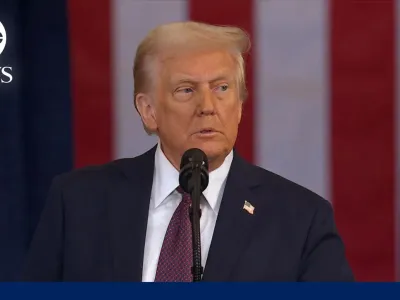
Donald J. Trump's 2025 Inaugural Address
On January 20, 2025, Donald J. Trump was sworn in at the Capitol building in Washington D.C. to begin his second term as President. He defeated incumbent President Biden by a narrow margin in the 2024 election, becoming the first person in U.S. history to serve two non-consecutive presidential terms, and the oldest president to be inaugurated (78 years old). Hundreds of thousands of supporters attended the inauguration ceremony. Trump's second inaugural address continued his signature 'Make America Great Again' (MAGA) slogan, emphasizing economic recovery, border security, energy independence, and education reform. He pledged to reverse many of the Biden administration's policies, including rejoining the Paris Agreement and the Clean Energy Act. This was the 60th presidential inauguration in U.S. history.
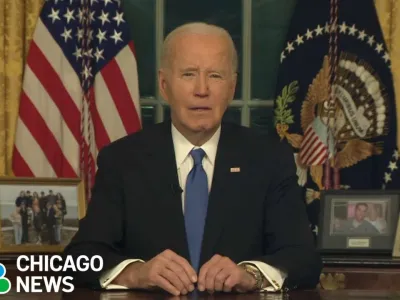
Joseph R. Biden Jr.'s 2025 Farewell Address
On January 15, 2025, Joseph R. Biden delivered his farewell address from the Oval Office of the White House. This was his last national address as President of the United States, just five days before his term ended. Biden reviewed the major achievements of his four-year term, including passing a massive infrastructure investment plan, responding to the COVID-19 pandemic, promoting climate policies and clean energy legislation, strengthening NATO, and withdrawing troops from Afghanistan. He particularly emphasized the administration's achievements in creating jobs, lowering prescription drug prices, and passing gun safety laws. In his address, Biden also warned about the dangers of concentrated wealth and power, calling for tax reform and stronger regulation of the tech industry. He concluded with the metaphor of the Statue of Liberty, encouraging the American people to be 'keepers of the flame' and continue to defend democratic values.
Andrzej Duda's 2024 Address at Fudan University: Peace and Global Justice
During his June 2024 visit to China, Polish President Andrzej Duda addressed students and faculty at Fudan University in Shanghai. This record uses June 27, the publication date of the official English version. Starting with Shanghai's river traffic, he compares Chinese development with Poland's transformation and expresses confidence in young people. He draws on Poland's loss of independence and Europe's wars to argue for peace, sovereignty, and stable borders as conditions for prosperity. He then discusses wealthy countries' responsibilities toward the Global South, rejecting colonial attitudes and national self-interest in favor of equality and global justice. The speech's broad assertions about European wars and borders are preserved as the speaker's historical judgments, not endorsed as independently verified facts. The source is the Polish presidency's official English record, accompanied by a paragraph-aligned Chinese translation.

Heidi Heitkamp's 2024 Convocation Address at the University of Chicago: Do Hard, Good and Great Things
On May 31, 2024, former U.S. senator Heidi Heitkamp addressed the University of Chicago Class of 2024 at Class Day. She praised the resilience and community the class developed during the pandemic and framed the practical purpose of free speech as persuasion: truly listening to opposing views, understanding the emotions behind facts, avoiding the anger trap, and using grace to create opportunities for reconnection. Drawing on her North Dakota upbringing and Senate career, she urged graduates to practice kindness, talk with many different people, remain curious, confront fear, quit when appropriate, and take risks. Her story of helping Korean War veteran Andy Shaw receive a Purple Heart showed how public service can matter deeply to an individual, and she challenged graduates to use their educational privilege in causes larger than themselves and to do hard, good, and great things.
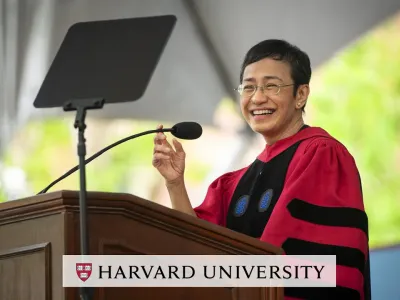
Maria Ressa's 2024 Harvard Commencement Address: Choose Bravely
On May 23, 2024, Filipino-American journalist and Rappler co-founder and CEO Maria Ressa addressed Harvard University's Class of 2024 at the 373rd Commencement. Drawing on her experience of online attacks, arrests, and legal pressure for investigative reporting and exposing disinformation, she described how technology platforms amplify lies, anger, and social division while eroding facts, trust, and democracy. Facing generative AI, deepfakes, expanding authoritarianism, and strain on the international order, she offered graduates three principles: choose your best self, turn crisis into opportunity, and be vulnerable. She urged them to stand by facts and values, rebuild trust through compassion, and work together to create a more equal and sustainable world safe from fascists and tyrants.
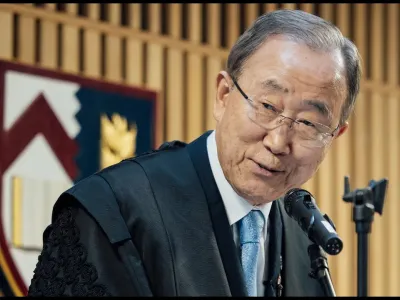
Ban Ki-moon's 2024 Oxford Kellogg College Human Rights Lecture: Human Rights in a Fractured World
On 2 May 2024, former United Nations Secretary-General Ban Ki-moon delivered Kellogg College's inaugural human rights lecture, Human Rights in a Fractured World, at the University of Oxford. He identified interconnected challenges including war, financial instability, poverty, inequality, artificial intelligence, climate change, future pandemics, and youth mental health, and reflected on his work advancing the Responsibility to Protect, the Sustainable Development Goals, UN Women, and the Paris Climate Agreement. Ban argued that human rights cannot be separated from peace, security, development, or climate action. He called for education and research, multilateral cooperation, civil society mobilization, accountability, and quiet diplomacy to protect vulnerable people, deliver net-zero commitments, and enable young people, universities, and political leaders to uphold human dignity.