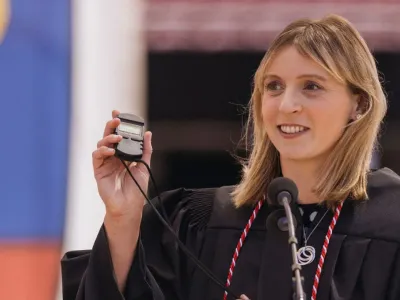
Katie Ledecky's 2025 Stanford Commencement Address: Set Your Pace and Finish the Race
On 2025-06-15, Katie Ledecky delivered this address at Stanford University's Commencement. Organized around pacing, process, time, and taking the lead, it joins personal experience, professional judgment, and the public concerns of its moment. The address asks not only what graduates might do next, but also how educated people should understand their abilities, accept public responsibility, and help build a shared future. This edition is based on a complete authoritative transcript and preserves the sequence and character of the original address.
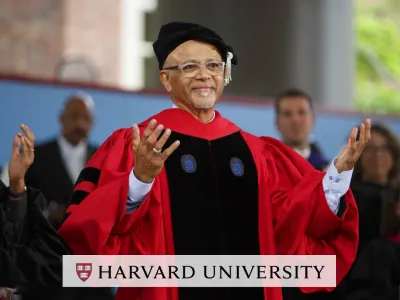
Abraham Verghese's 2025 Harvard Commencement Address: Finding Our Shared Humanity
Physician, author, and Stanford professor Abraham Verghese delivered this address at Harvard on May 29, 2025. Drawing on medical training, migration, and literary work, he considers what human capacities matter as artificial intelligence advances rapidly. Verghese recognizes the power of machines in computation, diagnosis, and knowledge processing but warns against surrendering attention, touch, story, empathy, and the rituals of human encounter to technology. Education, he argues, transmits more than information: it forms judgment, character, and the imagination needed to enter another person's experience. In uncertain times, graduates should remain curious, see the people around them fully, use expertise in service of community, and protect forms of human connection that efficiency cannot replace.
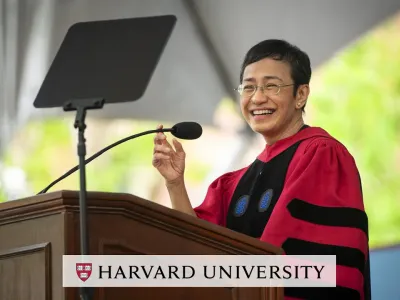
Maria Ressa's 2024 Harvard Commencement Address: Choose Bravely
On May 23, 2024, Filipino-American journalist and Rappler co-founder and CEO Maria Ressa addressed Harvard University's Class of 2024 at the 373rd Commencement. Drawing on her experience of online attacks, arrests, and legal pressure for investigative reporting and exposing disinformation, she described how technology platforms amplify lies, anger, and social division while eroding facts, trust, and democracy. Facing generative AI, deepfakes, expanding authoritarianism, and strain on the international order, she offered graduates three principles: choose your best self, turn crisis into opportunity, and be vulnerable. She urged them to stand by facts and values, rebuild trust through compassion, and work together to create a more equal and sustainable world safe from fascists and tyrants.
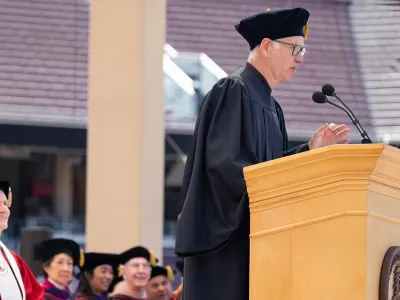
John McEnroe's 2023 Stanford Commencement Address: Life Is a Long Game
On 2023-06-18, John McEnroe delivered this address at Stanford University's Commencement. Organized around competition, failure, and life's long game, it joins personal experience, professional judgment, and the public concerns of its moment. The address asks not only what graduates might do next, but also how educated people should understand their abilities, accept public responsibility, and help build a shared future. This edition is based on a complete authoritative transcript and preserves the sequence and character of the original address.
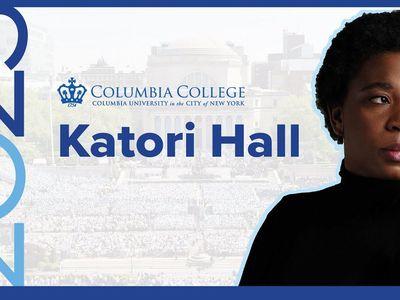
Katori Hall's 2023 Class Day Address at Columbia College: Stay True to Yourself
On May 16, 2023, Pulitzer Prize-winning playwright and television producer Katori Hall returned to Columbia University to address the Columbia College Class of 2023. Organizing the speech around “Auntie Tori's rules” voiced in the Black vernacular of her Memphis upbringing, she recalls arriving at Columbia ashamed of her Southern accent, recovering her own voice in a creative-writing class, and enduring years of rejection before her plays and television work succeeded. Hall speaks candidly about failure, identity anxiety, and industry prejudice, arguing that an authentic voice is a creator's most distinctive asset. She urges graduates not to disappear from their own mirrors, not to erase themselves by imitating others, and not to treat one rejection as a final verdict. They need only one decisive “yes,” and persistence, authenticity, and continued creation can help them reach it.
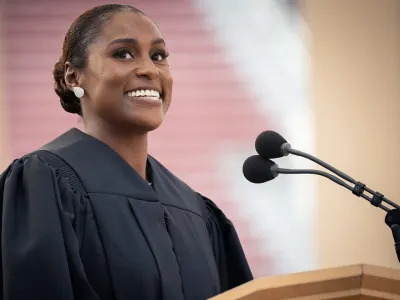
Issa Rae's 2021 Stanford Commencement Address: Build and Rely on Your Community
On 2021-06-13, Issa Rae delivered this address at Stanford University's Commencement. Organized around community, collaboration, and creating space for oneself, it joins personal experience, professional judgment, and the public concerns of its moment. The address asks not only what graduates might do next, but also how educated people should understand their abilities, accept public responsibility, and help build a shared future. This edition is based on a complete authoritative transcript and preserves the sequence and character of the original address.
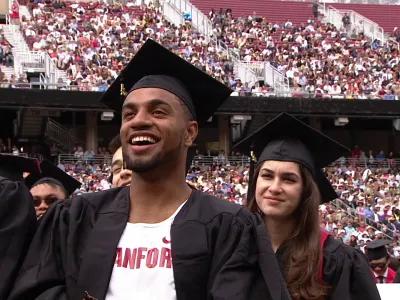
Sterling K. Brown's 2018 Stanford Commencement Address: Carrying Your Own Light
On 2018-06-17, Sterling K. Brown delivered this address at Stanford University's Commencement. Organized around identity, friendship, gratitude, and shining for others, it joins personal experience, professional judgment, and the public concerns of its moment. The address asks not only what graduates might do next, but also how educated people should understand their abilities, accept public responsibility, and help build a shared future. This edition is based on a complete authoritative transcript and preserves the sequence and character of the original address.
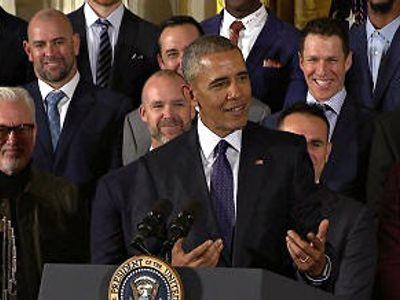
MLB Champion Chicago Cubs White House Visit Address
On January 17, 2017, Obama hosted the 2016 MLB World Series Champion Chicago Cubs at the White House, marking his final official sports event as President. The Cubs had broken the 108-year 'Billy Goat curse' to win the World Series in 2016, becoming one of the most talked-about sports stories of the year. In his address, Obama humorously recounted the Cubs' championship journey, praising the team's resilience and sportsmanship. He specifically mentioned that First Lady Michelle was a lifelong Cubs fan and that this championship meant the world to her. Obama also elevated the significance of sports to a social level, pointing out that sports has the power to unite people and change culture, linking the event to Martin Luther King Jr.'s birthday and emphasizing sports' role in breaking barriers and fostering unity. The entire speech was filled with joy and warmth, showcasing sports' social value beyond competition.
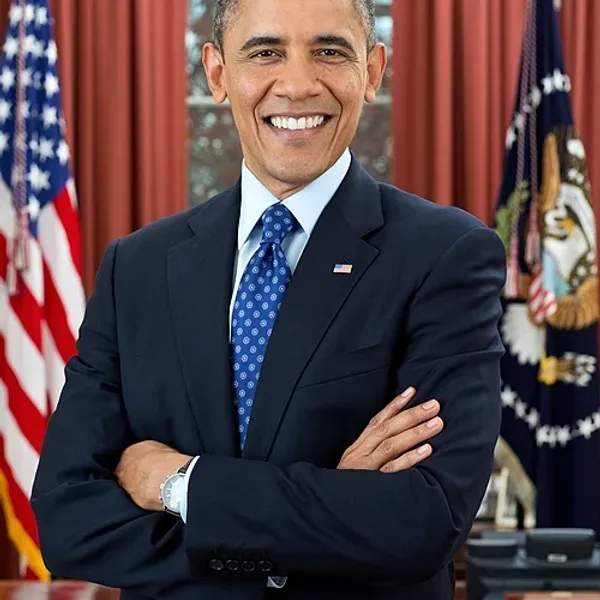
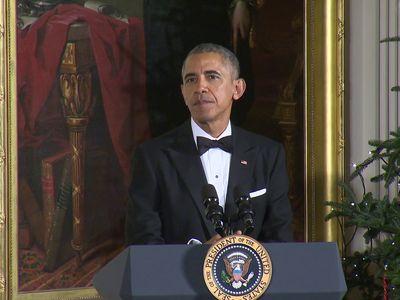
Address at the Kennedy Center Honors Reception
On December 4, 2016, President Barack Obama delivered an address at the Kennedy Center Honors Reception held at the White House. The Kennedy Center Honors are among the highest accolades in American performing arts, presented annually to artists for lifetime contributions to music, dance, theater, opera, film, and television. The 2016 honorees included soul singer Mavis Staples, actor Al Pacino, singer-songwriter James Taylor, pianist Martha Argerich, and the rock band the Eagles. In his speech, Obama reflected on eight years of promoting the arts at the White House, emphasized the vital role of the arts in democracy and national spirit, and profiled each of the five honorees' artistic achievements and life stories with humor and warmth.
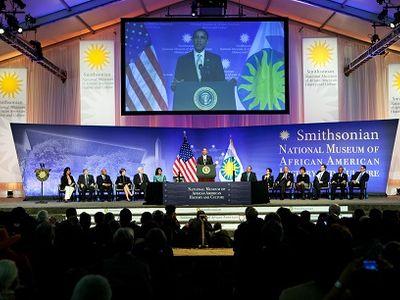
Address at the Dedication of the National Museum of African-American History & Culture
On September 24, 2016, President Barack Obama delivered an address at the dedication ceremony of the National Museum of African American History and Culture on the National Mall in Washington, D.C. As the 19th museum of the Smithsonian Institution, the museum was formally inaugurated after a century of advocacy and decades of construction. Designed by David Adjaye, the building's distinctive corona shape draws inspiration from Yoruba tribal art. Housing over 40,000 artifacts spanning from the era of slavery to the civil rights movement, the museum comprehensively presents the contributions and struggles of African Americans throughout U.S. history.
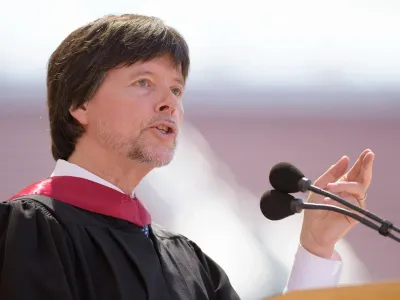
Ken Burns' 2016 Stanford Commencement Address: History and Civic Responsibility
On 2016-06-12, Ken Burns delivered this address at Stanford University's Commencement. Organized around historical memory, civic responsibility, and democracy, it joins personal experience, professional judgment, and the public concerns of its moment. The address asks not only what graduates might do next, but also how educated people should understand their abilities, accept public responsibility, and help build a shared future. This edition is based on a complete authoritative transcript and preserves the sequence and character of the original address.
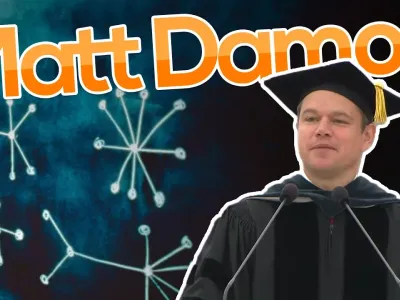
Matt Damon's 2016 MIT Commencement Address
Actor, screenwriter, and humanitarian advocate Matt Damon delivered this address at MIT's Commencement on June 3, 2016. He opens with jokes about leaving Harvard without a degree and about filming Good Will Hunting at MIT, then uses simulation theory to discuss failure and the limits of knowledge. The speech turns toward poverty, refugees, climate change, racism, and access to clean water. Damon urges graduates to “turn toward the problems you see,” meet affected people directly, keep asking questions, and continue listening. Drawing on his work with Water.org, he argues that technology is indispensable but cannot solve every problem by itself; public policy, finance, empathy, and sustained engagement matter as well.