
Building a Safer, More Secure Britain in the Age of AI
On 12 October 2026, UK Minister of State for Artificial Intelligence Kanishka Narayan spoke at Base One, Imperial College London, setting out a security and sovereignty framework for increasingly capable AI. Drawing on the creation of factory inspection during the Industrial Revolution, he argued that when technology alters the balance of power, government needs not only laws but institutions with the expertise to act. The address covered model evaluation, hardware-enabled verification, cyber defence, responses to agentic-AI incidents, corporate responsibility, and international cooperation, and announced the urgent use of frontier AI to find weaknesses in government systems. Narayan also stressed the need for sovereign British AI and semiconductor capability, rejecting technological dependence as the price of investment. Protecting workers, preserving democratic control, and ensuring that machines serve people were presented as the central principles of the policy.
Ryu Honglim's 2026 Congratulatory Address at SNU's 80th Summer Graduation Ceremony
On August 28, 2026, Seoul National University President Ryu Honglim addressed graduates at the 80th Summer Graduation Ceremony. Marking SNU's eightieth anniversary, he recalled predecessors who contributed to Korea's industrialization, democratization, and informatization, then argued that artificial intelligence and profound change have made linear predictions from the past increasingly unreliable. In such an age, a university's task is not to deliver a closed body of knowledge but to cultivate original questions, connections across people and disciplines, and bold exploration that does not fear failure. Drawing on SNU's Grand Quest initiative, the campus commons, and Stuart Kauffman's idea of the adjacent possible, Ryu explained that each act of asking, learning, meeting, and connecting opens another door of possibility. He urged graduates not to measure themselves by a single standard set by others, but to hold fast to their own questions and use curiosity, courage, boundless imagination, and initiative to contribute locally and globally.
Rimsky Yuen's 2026 Keynote Address at the University of Hong Kong
On July 13, 2026, Hong Kong Senior Counsel and former Secretary for Justice Rimsky Yuen delivered the Guest of Honour's keynote address at the University of Hong Kong Faculty of Law's 217th Congregation. Drawing on changes in cheques, letters of credit, litigation, arbitration, and mediation, he argued that legal study and practice evolve with society, technology, and the international environment. Yuen welcomed artificial intelligence as a useful professional aid but warned that law is not a mechanical production line: fair dispute resolution still depends on humanity, empathy, judgment, and justice. He also called for an international perspective among Hong Kong lawyers, linking the city's continued success to cross-border awareness and attention to global legal developments. Whatever changes occur in law or legal practice, he concluded, maintaining and strengthening the rule of law remains the legal community's fundamental mission.
Libby Lee's 2026 Guest of Honour Address at the University of Hong Kong
On July 11, 2026, Dr Libby Lee, Chief Executive of Hong Kong's Hospital Authority, addressed the 217th Congregation of the University of Hong Kong's Li Ka Shing Faculty of Medicine as Guest of Honour. She told graduates that a medical degree is not the end of education but the beginning of independent responsibility for diagnosis, treatment, and ethical judgment. Framing good practice around competence, compassion, and professionalism, Lee urged lifelong learning, fidelity to one's original purpose, and deliberate choice of specialty. She placed particular emphasis on society's trust in doctors and issued an unequivocal warning against sharing patient information or clinical images on social media, describing confidentiality as a legal and ethical duty essential to careers, institutions, and public confidence. She closed by charging the new doctors to serve patients and society without compromising professional standards.
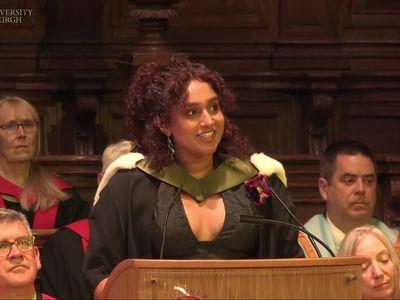
Sia Ravat's 2026 Graduation Address at the University of Edinburgh: An Uplifting Message to My Fellow Graduates
Published by the University of Edinburgh on July 8, 2026, this summer graduation oration was delivered by graduate Sia Ravat on behalf of her cohort. Beginning with the nerves, luggage, questions, and surplus IKEA belongings that accompanied students to a new city, she recalled shared memories of the Meadows, Nile Valley, Arthur's Seat, all-night study sessions, and experimental data that refused to make sense. Ravat described scientific training as learning that discovery is rarely linear, remaining curious when answers are unclear, and continuing despite uncertainty. She thanked university staff, families, friends, and other supporters. Whether graduates moved into further study, research, medicine, employment, or an as-yet-undecided path, she argued that they did not need to plan everything immediately and that unexpected routes often teach the most. She concluded by leading three rounds of applause for the graduates, university staff, and the people who had supported them throughout their studies.
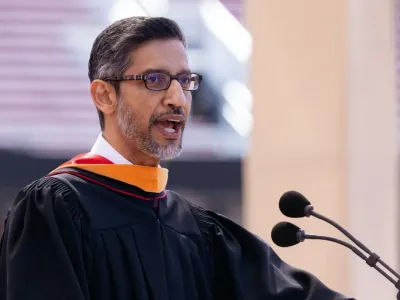
Sundar Pichai's 2026 Stanford Commencement Address: Igniting Your Inner Fire
On 2026-06-14, Sundar Pichai delivered this address at Stanford University's Commencement. Organized around life choices, optimism, and moving forward amid technological change, it joins personal experience, professional judgment, and the public concerns of its moment. The address asks not only what graduates might do next, but also how educated people should understand their abilities, accept public responsibility, and help build a shared future. This edition is based on a complete authoritative transcript and preserves the sequence and character of the original address.
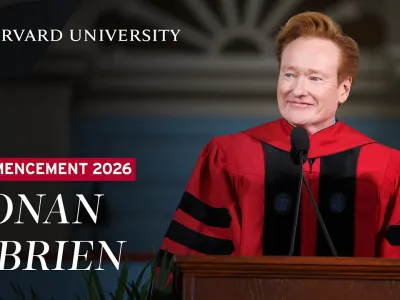
Conan O’Brien's 2026 Harvard Commencement Address: Humility
On May 28, 2026, Harvard held its 375th Commencement and invited alumnus and comedian Conan O’Brien to address the graduating class. After jokes about Harvard and his 1985 student days, he turned to lessons about a life beyond credentials: achievements depend on community and luck, careers require pivots, and humility includes being willing to be bad at new things. He urged graduates not to let a prestigious degree become their defining label.
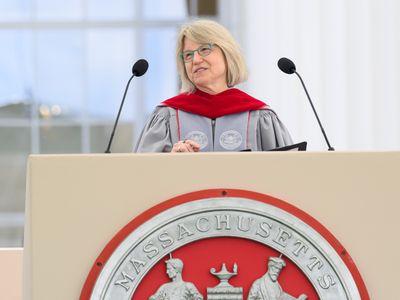
Sally Kornbluth charge to the Class of 2026
On May 28, 2026, MIT President Sally Kornbluth delivered her charge to the Class of 2026 at the OneMIT Commencement ceremony. Drawing on the collective wisdom of alumni, she reflected on the full MIT experience and focused on two core values: excellence and curiosity. She emphasized merit and potential, self-discipline, and growth through failure. She described how curiosity-driven basic research can lead to future cures and innovations, and warned that US investment in this research is declining. She closed by reminding graduates that uncommon talent brings great responsibility and urging them to act ethically, with integrity and consideration for others.
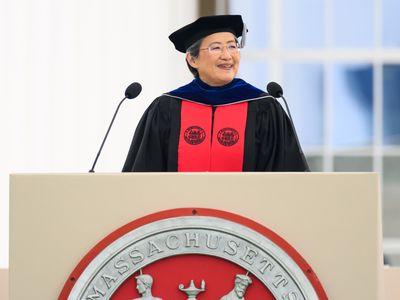
Lisa Su Address to MIT Class of 2026
On May 28, 2026, AMD chair and CEO and MIT alumna Lisa Su addressed the Class of 2026 at the OneMIT Commencement ceremony. She recalled arriving at MIT at age 17, entering a clean room through undergraduate research, and later confronting difficult problems at IBM and AMD. She described the engineer’s instinct as breaking complex challenges into steps and working with a team to find answers, and urged graduates to run toward the hardest problems. Speaking about artificial intelligence, she said it could accelerate discovery in medicine and other fields, while people must still choose which problems matter, make judgments with incomplete information, and take responsibility for outcomes. She closed by encouraging graduates to challenge the limits of their knowledge, work with people who make them better, and make their own luck.
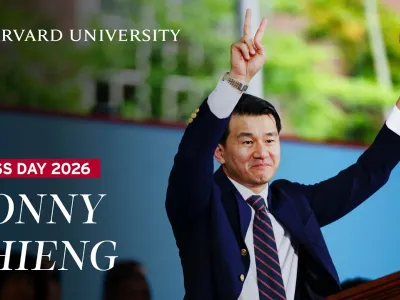
Ronny Chieng's 2026 Harvard Class Day Address: An AI Warning for Graduates
On May 27, 2026, comedian and Daily Show correspondent Ronny Chieng addressed Harvard College's Class of 2026 at Class Day in Tercentenary Theatre; Harvard University released the video on May 30. Mixing self-deprecation with satire, he joked about Harvard grades, institutional prestige, and the job market before turning to artificial intelligence. He distinguished valuable scientific uses from tools that replace thought and creativity, warned that excessive reliance on large language models can create cognitive debt, and urged graduates to master fundamentals without surrendering the pleasure of making things. He also encouraged them to build richer offline lives, pursue more than money, follow work they love, tackle real problems, and become people whom others will remember with gratitude for having helped them.
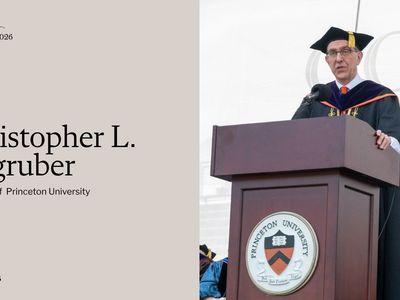
Christopher L. Eisgruber's 2026 Commencement Address at Princeton University: Learning, Citizenship, and the Courage to Be Unpopular
On 26 May 2026, Princeton President Christopher L. Eisgruber delivered the Commencement address 'Learning, Citizenship, and the Courage to Be Unpopular' at the University's 279th Commencement. He began with Robert F. Goheen, who led Princeton through the upheavals of the 1960s, and drew on Goheen, Toni Morrison, and Justice Louis Brandeis to argue that courage is not merely a heroic virtue tested by danger but the willingness to stand as a judge of society's tastes and actions when it is not popular. He held that academic freedom and civic responsibility sometimes require us to speak anyway, to voice dissent, and equally to admit error and change one's mind. He urged graduates to treasure Princeton's spirit of the 'millrace of jostling and tumbling ideas,' preferring hard truth to comfortable fiction and self-respect to popular esteem.
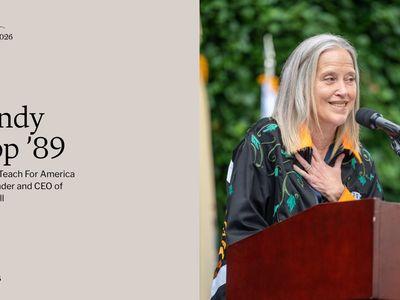
Wendy Kopp's 2026 Class Day Address at Princeton University: Shaping Who You Become
On May 25, 2026, Wendy Kopp addressed Princeton’s graduating class at Class Day; her son Haddon was among the graduates. Beginning with the competition students had faced for admission, clubs, and jobs, she encouraged them to choose their own direction beyond campus. She offered two ideas: daily work shapes people’s values, and choices about time and energy affect society. Recalling how her thesis led to Teach For America and her later role in developing Teach For All, she emphasized proximity to underserved communities as a way to deepen understanding. She argued that changing systems requires sustained learning, collaboration, and action across sectors. The text follows prepared remarks published by the University that day; program figures and research claims are retained as the speaker’s statements at the time.