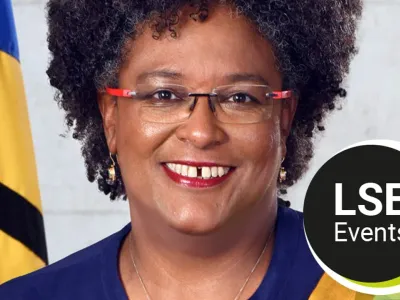
A Lecture by Mia Amor Mottley, Prime Minister of Barbados
Barbados Prime Minister Mia Amor Mottley delivered this lecture at her alma mater, the London School of Economics and Political Science, on December 6, 2023. Beginning with the destruction of families through the transatlantic slave trade, institutional racism, and the killing of George Floyd, she called for honest conversation, apology, redemption, and reparatory justice to repair souls, families, communities, and nations. Mottley connected wealth extracted through slavery and colonialism to today's climate crisis, debt burdens, and imbalances in global governance. She urged moral strategic leadership, development finance, and more representative international institutions in pursuit of fairness and collective action to save the planet.
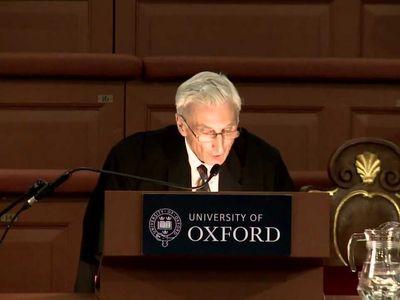
Martin Rees' 2011 Oxford Romanes Lecture: The Limits of Science
On 2 November 2011, British astrophysicist Martin Rees delivered the annual Romanes Lecture, The Limits of Science, at the Sheldonian Theatre, University of Oxford. Beginning with astronomy, he surveyed exoplanets, extraterrestrial life, the early universe, superstring theory, and the multiverse, then explained why complex systems cannot be usefully understood from fundamental physics alone and asked whether some aspects of reality may lie beyond human conceptual reach. The second half turned to nuclear weapons, population growth, pressure on resources, climate change, synthetic biology, artificial intelligence, and human enhancement. Rees argued that the gulf is widening between what science enables and what prudence, ethics, or economics should permit. Scientists, he concluded, must bring evidence into public debate, accept responsibility for the social consequences of their work, and help safeguard the Earth and future generations through values that lie beyond science itself.
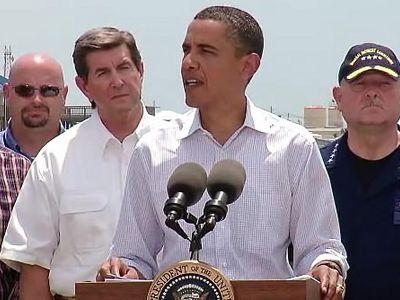
Grande Isle Briefing on the Gulf Oil Spill Disaster
On April 20, 2010, the Deepwater Horizon drilling rig operated by BP exploded and sank in the Gulf of Mexico, killing 11 people and triggering the worst offshore oil spill in U.S. history. Oil gushed into the Gulf for months, severely threatening the ecology, fisheries, and tourism of Louisiana and other coastal states. On May 28, President Obama traveled to Grande Isle, Louisiana, to inspect the damage, meeting with governors, members of Congress, and local officials, and receiving a briefing from National Incident Commander Admiral Thad Allen. In his remarks, Obama emphasized that the government would use every resource to address the crisis, ordered BP to pay economic injury claims, and pledged that the buck stops with the President. He also announced a tripling of manpower in affected areas and urged Americans to continue visiting Gulf beaches to support local economies.
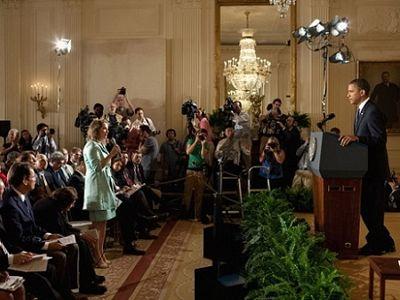
Remarks and Press Conference on the Gulf Oil Spill Disaster
On April 20, 2010, the Deepwater Horizon drilling rig operated by BP exploded in the Gulf of Mexico, killing 11 workers and triggering the worst offshore oil spill in U.S. history. Oil gushed into the Gulf for months, devastating the ecology and fishing economies of Louisiana, Mississippi, Alabama, and Florida. On May 27, President Obama held a press conference at the White House to report on the federal response, including approval of BP's top kill procedure, deployment of over 20,000 personnel for cleanup, establishment of a presidential commission to investigate the disaster's causes, and a moratorium on certain offshore drilling. This marked Obama's first formal press conference on a domestic environmental crisis since taking office.
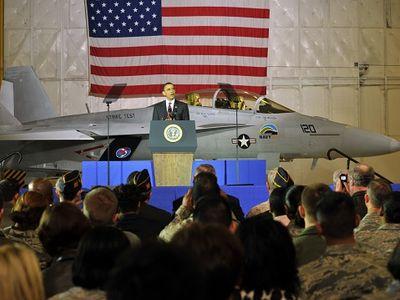
Address on Energy Security at Andrews Air Force Base
On March 31, 2010, President Barack Obama delivered this address at Andrews Air Force Base, Maryland, outlining his energy security strategy. The United States was confronting the economic pressures of post-financial-crisis recovery, deepening dependence on foreign oil, and an increasingly urgent climate change agenda. Obama announced the expansion of offshore oil and gas exploration while emphasizing massive investments in clean energy, nuclear power, and biofuels, along with measures to raise auto fuel efficiency and hybridize the federal fleet. He also highlighted the military's leadership in alternative fuels, such as the Navy's Green Hornet fighter flying on biofuel. The speech sought to balance traditional energy development with a transition to clean energy, and stands as a signature statement of the Obama administration's energy policy.
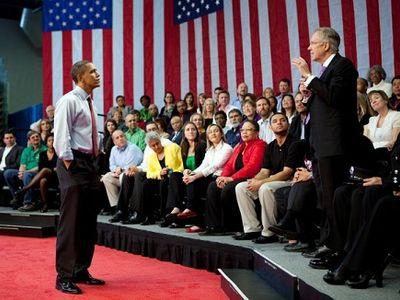
Henderson Town Hall
On February 19, 2010, President Barack Obama held a town hall meeting at Green Valley High School in Henderson, Nevada. The United States was reeling from the Great Recession, and Nevada was hit especially hard, with an unemployment rate of 13 percent, the second highest in the nation, along with soaring foreclosures and plunging home values. Obama reviewed the emergency measures his administration had taken to prevent the recession from becoming a depression, including stabilizing the financial system, rescuing the auto industry, and passing the Recovery Act, and announced a $1.5 billion fund for housing finance agencies in the hardest-hit states. Following his remarks, he took questions from the audience on health care reform, dental care, Social Security, the tourism and airline industries, and clean energy. The town hall reflected Obama's effort to engage directly with ordinary citizens amid a painful economic recovery and to advance his agenda on health care and energy.
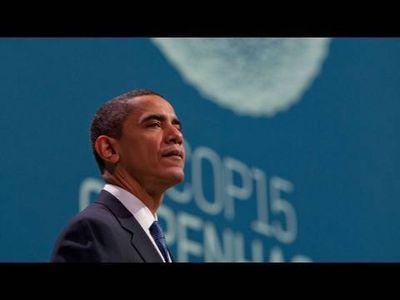
Speech at the UN Copenhagen Climate Change Conference
On December 18, 2009, U.S. President Barack Obama addressed the plenary session of the United Nations Climate Change Conference (COP15) in Copenhagen, Denmark. The conference aimed to reach a global agreement on climate change, but negotiations were deadlocked over divisions between developed and developing nations on emissions responsibility, transparency, and financial support. Obama emphasized that climate change is a real and grave scientific fact, urging nations to transcend their differences and take collective action. He pledged that America would cut emissions by 17 percent by 2020 and over 80 percent by 2050, and announced U.S. participation in fast-start funding ramping up to $10 billion by 2012. Secretary Hillary Clinton proposed mobilizing $100 billion by 2020 if a broader accord was reached. He laid out a formula of mitigation, transparency, and financing, warning that the time for talk was over and calling on all parties to seize the historic opportunity.
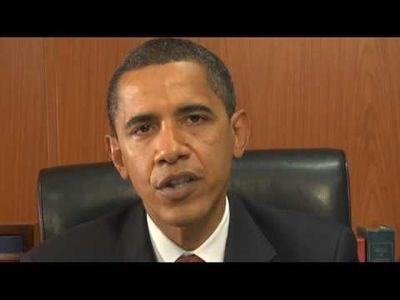
Recorded Remarks to Global Climate Summit
On November 18, 2008, President-elect Obama delivered prerecorded remarks to the Global Climate Summit held in Beverly Hills, California. Convened by Governor Schwarzenegger, the summit brought together bipartisan US governors and international representatives to advance climate action. Obama stressed that climate change is among the most urgent challenges, praised state-level efforts, and pledged to elevate climate change to the core of the national agenda, pursue bold federal action, create green jobs, reduce fossil fuel dependence, and restore American global leadership.