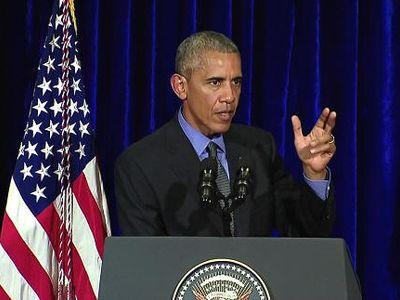
Post ASEAN Press Conference
On September 8, 2016, U.S. President Barack Obama held a press conference in Vientiane, Laos, following the ASEAN and East Asia Summits. This marked Obama's ninth and final visit to the ASEAN region during his presidency. As the first U.S. President to visit Laos, Obama reflected on the deepened cooperation between the United States and ASEAN nations under his Asia rebalance strategy, covering trade and investment, maritime security, counterterrorism, climate change, and human rights. The press conference also addressed the South China Sea arbitration ruling, the TPP trade agreement, North Korea's nuclear program, U.S.-Philippines relations, Guantanamo Bay, and Obama's assessment of his Asia policy legacy.
Address to the People of Laos
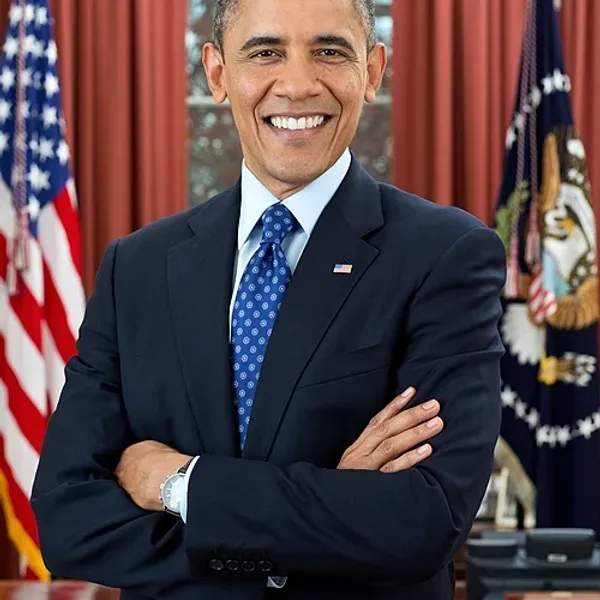
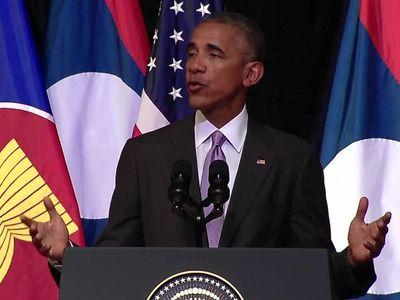
On September 6, 2016, U.S. President Barack Obama delivered a speech at the Lao National Cultural Hall in Vientiane, marking the first visit by a sitting U.S. president to Laos. The speech took place during Obama's final trip to Asia as president, while Laos held the rotating chairmanship of ASEAN. Obama formally acknowledged America's secret bombing campaign in Laos during the Vietnam War -- over nine years, more than two million tons of bombs were dropped, making Laos the most heavily bombed country per capita in history. He announced that funding for unexploded ordnance clearance would double to $90 million annually over the next three years, and proposed a comprehensive partnership between the U.S. and Laos covering education, economy, environmental protection, and human rights. The speech also systematically outlined the core values and vision of America's Asia-Pacific rebalancing strategy.
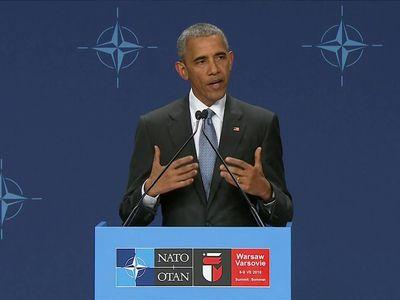
Press Conference Following NATO Summit
On July 9, 2016, U.S. President Barack Obama held a press conference following the NATO Summit in Warsaw, Poland. This was Obama's final NATO Summit as president. During the summit, NATO allies reached multiple agreements on strengthening the eastern flank defense, increasing defense spending, supporting Ukraine, fighting terrorism, and addressing the refugee crisis. The press conference came amid heightened national attention to race relations and police-community tensions following the Dallas shooting. In his opening remarks, Obama addressed the Dallas incident and called for national unity. During the Q&A session, Obama responded to questions on gun control, counterterrorism, Brexit, the legacy of war, and the Hillary Clinton email investigation, offering a comprehensive view of his domestic and foreign policy positions in his final year in office.
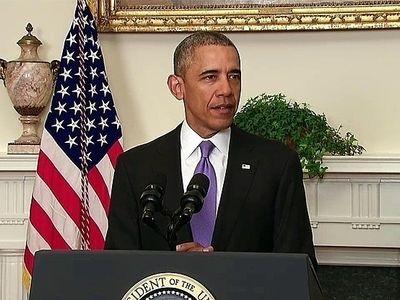
On Smart Diplomacy with Iran and Release of U.S. Detainees
On January 17, 2016, President Barack Obama delivered remarks at the White House announcing the implementation of the Iran nuclear deal and the lifting of related sanctions. Under the agreement, Iran removed two-thirds of its centrifuges, shipped out over 98 percent of its enriched uranium stockpile, and filled the core of its plutonium reactor with concrete. The International Atomic Energy Agency will conduct 24/7 monitoring of Iran's nuclear facilities. Meanwhile, five American citizens detained in Iran were released and returned home, including Washington Post journalist Jason Rezaian, Pastor Saeed Abedini, and former Marine Amir Hekmati. The United States also granted clemency to seven Iranian prisoners on humanitarian grounds. The two sides also resolved a financial dispute dating back more than three decades.
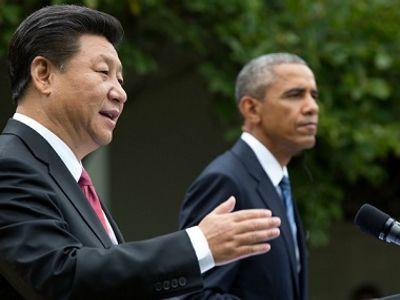
Joint Rose Garden Press Conference
On September 25, 2015, President Barack Obama and Chinese President Xi Jinping held a joint press conference in the White House Rose Garden during Xi's state visit to the United States. The two leaders took questions from reporters on a wide range of issues including U.S.-China relations, cybersecurity, economic cooperation, climate change, the South China Sea, and denuclearization of the Korean Peninsula. The press conference came amid heightened tensions over cyber espionage and trade frictions. Both sides announced important consensus on jointly combating cybercrime and emphasized that cooperation benefits both countries while confrontation harms both. The event also touched on U.S. domestic politics including the resignation of House Speaker John Boehner.
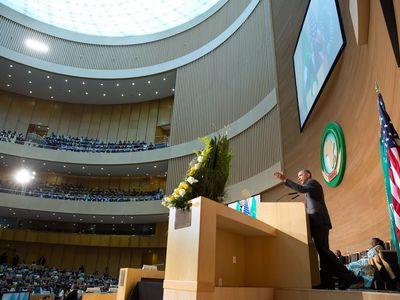
Address to Representatives of the African Union
President Barack Obama's historic address to the African Union in Addis Ababa, Ethiopia on July 28, 2015. As the first U.S. President to address the African Union, Obama outlines a new framework for U.S.-Africa relations centered on dignity, covering economic growth, development, democracy, security, and human rights.
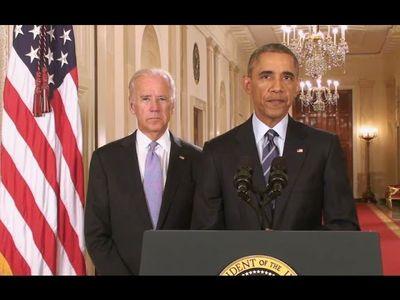
Iran Nuclear Accord Announcement
On July 14, 2015, U.S. President Barack Obama delivered a televised address from the White House to formally announce the finalization of the comprehensive Iran nuclear deal. After two years of arduous negotiations, the United States, together with the P5+1 group comprising the UK, France, Germany, Russia, China, and the European Union, reached a historic agreement with Iran. The core terms include Iran's significant reduction of its nuclear facilities and submission to rigorous IAEA inspections in exchange for the lifting of international economic sanctions. In his speech, Obama emphasized that the deal cuts off all pathways to a nuclear weapon and is built on verification, not trust. He also argued that no deal would mean a greater risk of war, and pledged to veto any congressional legislation blocking implementation. The deal stands as one of the signature achievements of Obama's foreign policy, though it sparked intense debate within the United States and across the Middle East.
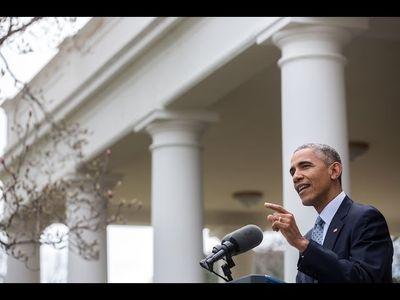
Statement on Historic Nuclear Agreement with Iran
On April 2, 2015, President Obama delivered a statement at the White House announcing that the United States, together with Iran and the P5+1 nations (China, Russia, Britain, France, and Germany), had reached a historic framework agreement on the Iran nuclear issue. The deal aims to peacefully resolve the Iranian nuclear issue through diplomacy and prevent Iran from obtaining nuclear weapons. In his address, Obama detailed three core elements of the agreement: cutting off Iran's path to a plutonium bomb, drastically reducing its uranium enrichment program, and establishing an unprecedented inspection and transparency regime. He emphasized that the deal is not based on trust but on unprecedented verification. Obama also responded to critics, arguing that a diplomatic solution is the best option, more effective than both military action and additional sanctions. He reaffirmed his commitment to the security of Israel and Gulf allies, and called on Congress to evaluate the agreement based on facts rather than politics.
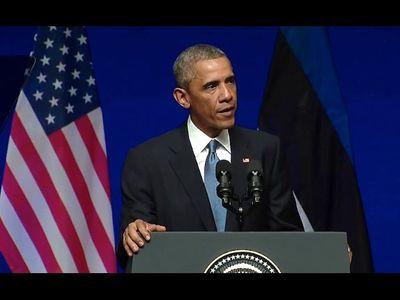
Address to the People of Estonia
On September 3, 2014, President Obama delivered a major address at the Nordea Concert Hall in Tallinn, Estonia, becoming the first U.S. President to deliver a formal address to the people of Estonia. The speech carried great strategic significance, coming on the 10th anniversary of the Baltic states' NATO membership and amid Russian aggression against Ukraine. Opening with a greeting in Estonian, Obama recalled the Baltic peoples' struggle for independence from Soviet occupation, particularly the historic achievements of the Singing Revolution and the Baltic Way. He reaffirmed the U.S. commitment to NATO's Article 5 collective defense, emphasizing that the defense of Tallinn, Riga, and Vilnius is just as important as the defense of Berlin, Paris, and London. Obama announced five measures to strengthen European security, including increased rotational U.S. military presence in the Baltics, enhanced NATO rapid response capabilities, and strengthened cyber defense. He strongly condemned Russian aggression against Ukraine and made clear that the U.S. would not accept Russia's annexation of Crimea. The speech concluded with the powerful refrain that dignity will win, justice will win, democracy will win, and freedom will win, making it one of Obama's landmark speeches on European security policy.
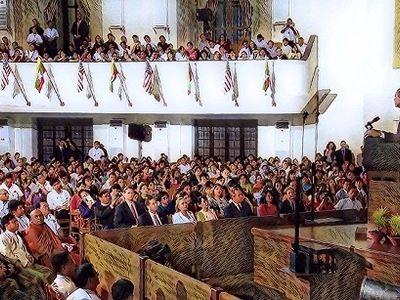
Address at Yangon University
On November 19, 2012, President Obama delivered a historic address at Yangon University in Myanmar, becoming the first U.S. President to visit the country. Opening with a Burmese greeting, he recalled the historical ties between the two nations, praised Myanmar's democratic reforms, and framed the country's future around Roosevelt's Four Freedoms: freedom of speech, freedom of worship, freedom from want, and freedom from fear. Obama emphasized the rule of law, civilian control of the military, anti-corruption, and economic transparency, called for national reconciliation particularly regarding ethnic conflict in Rakhine State, addressed North Korea's nuclear program, and pledged continued U.S. support for Myanmar's democratic transition. This speech was a key element of the U.S. pivot to Asia and an international endorsement of Myanmar's transition from military dictatorship to civilian governance.
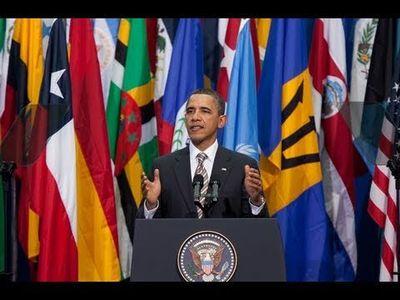
Speech on Latin American to the People of Chile
On March 21, 2011, President Barack Obama delivered this major address on Latin American policy in Santiago, Chile. At the time, Latin America was undergoing profound transformation: significant progress in democratization, rapid economic growth, and tens of millions lifted from extreme poverty. In his speech, Obama reflected on the shared history and values between the United States and Latin America, emphasizing that theirs is a partnership of equals, not a hierarchical relationship. He outlined three key areas of cooperation: combating drug trafficking and organized crime, promoting trade and economic development to create jobs, and defending democracy and human rights. Obama particularly praised Chile's peaceful transition from dictatorship to democracy and the spirit demonstrated during the 2010 mine rescue. He announced new initiatives to expand student exchanges and promote clean energy cooperation, and called on nations across the Americas to jointly address poverty, inequality, and climate change.
Address to Students at the University of Indonesia
On November 10, 2010, U.S. President Barack Obama delivered an address at the University of Indonesia in Jakarta. It was his first return as President to the country where he had spent part of his childhood, after two postponements caused by domestic pressures. The speech recalled his boyhood memories of Jakarta and Indonesia's transformation over four decades, and followed the announcement of a new Comprehensive Partnership with President Yudhoyono. Obama framed his remarks around development, democracy, and religious faith, arguing that the two Pacific democracies were bound together by shared interests and values, and held up Indonesia's motto of unity in diversity as an example for the world.