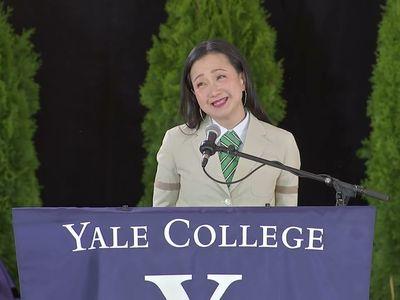
Min Jin Lee's 2026 Class Day Address at Yale University: Choose the Important Over the Urgent
On May 17, 2026, Korean American novelist Min Jin Lee delivered the Class Day address at Yale University. Beginning with her own uncertain graduation in 1990, she candidly recalled her middling grades, her difficulty finding mentors, and her later turn to fiction. Borrowing the ancient Greek words chronos and kairos, she urged graduates to choose the important over the urgent and to view their lives through a double lens of time. She told of founding the Korean Studies Task Force, campaigning for Korean language and history courses, and winning English department prizes for fiction and nonfiction on blind submission, showing that discouragement in one place can coexist with recognition in another. She closed with her own illness and recovery, arguing that time is a friend, not an enemy. The text is based on the publisher-provided manual captions, which omit the closing section.
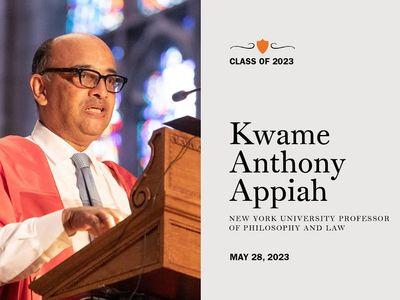
Kwame Anthony Appiah's 2023 Baccalaureate Address at Princeton University: The Power of Attention
On May 28, 2023, philosopher Kwame Anthony Appiah addressed Princeton’s Class of 2023 at Baccalaureate. Comparing life to joining an ongoing conversation, he discussed how education and companionship cultivate attention. Drawing on Iris Murdoch’s ideas about unselfing and recognizing others, he connected attention with ethical responsibility, while his own change of academic direction illustrated the importance of recognizing one’s interests. He then considered social media, artificial intelligence, and the natural environment, encouraging graduates to choose what deserves attention, notice overlooked people, and protect the worlds that sustain human life. The text follows Princeton’s official prepared remarks published that day and preserves his contemporary descriptions of technology and ecology.
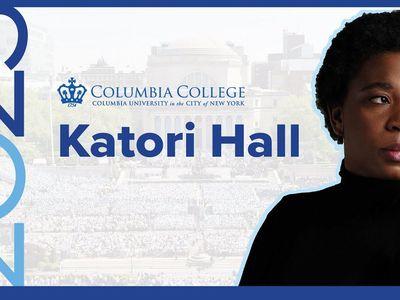
Katori Hall's 2023 Class Day Address at Columbia College: Stay True to Yourself
On May 16, 2023, Pulitzer Prize-winning playwright and television producer Katori Hall returned to Columbia University to address the Columbia College Class of 2023. Organizing the speech around “Auntie Tori's rules” voiced in the Black vernacular of her Memphis upbringing, she recalls arriving at Columbia ashamed of her Southern accent, recovering her own voice in a creative-writing class, and enduring years of rejection before her plays and television work succeeded. Hall speaks candidly about failure, identity anxiety, and industry prejudice, arguing that an authentic voice is a creator's most distinctive asset. She urges graduates not to disappear from their own mirrors, not to erase themselves by imitating others, and not to treat one rejection as a final verdict. They need only one decisive “yes,” and persistence, authenticity, and continued creation can help them reach it.
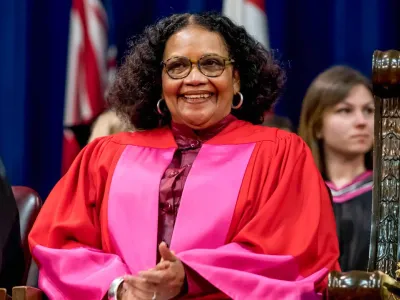
Lorna Goodison's 2019 Honorary Degree Address at University of Toronto: You Are the Treasure
On June 14, 2019, Jamaican poet Lorna Goodison addressed a University of Toronto honorary-degree convocation in a speech interwoven with original poetry. Beginning with a sari on Spadina, daffodils, and an evergreen that endured winter, she cast graduation as the arrival of spring and urged listeners to send flowers to those who supported them—or to themselves if they paid their own way. Completing a difficult task, she suggested, can itself be a form of prayer. The minds, books, laboratories, and international community graduates encountered now live within them, so “you are the treasure.” Yet a degree does not make them better than others; it appoints them as minders, menders, and repairers of the world's breaches. Invoking red dresses for missing Indigenous women and closing with a poem about an ice garden returning to colour, she invited graduates to travel lightly, preserve hope, and go forth to flower.
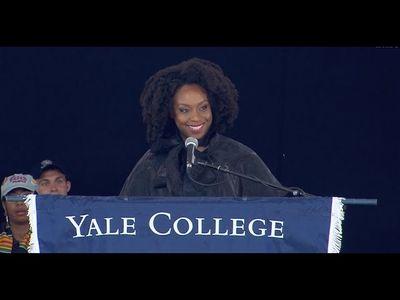
Things Are Not Standing Well
On May 19, 2019, Nigerian author Chimamanda Ngozi Adichie delivered the Class Day address at Yale University. Recalling her graduate years at Yale a decade earlier, she joked about eavesdropping to gather material for her fiction. Addressing graduates about to enter the world, she urged them to accept contradiction and uncertainty, to be open to changing their minds, and to balance idealism with pragmatism. Borrowing the Igbo expression 'things are not standing well,' she asked what America should become and warned against the self-righteous sneer, urging reliance on primary sources. She closed by calling for friendship, honest apology, and never admiring quietly. The text is based on YouTube auto-generated captions.
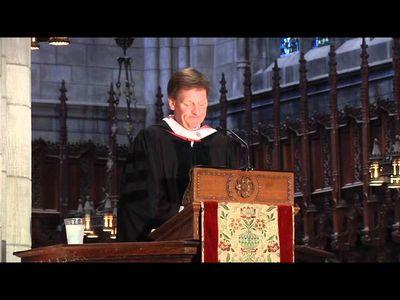
Michael Lewis's 2012 Baccalaureate Address at Princeton University: Don't Eat Fortune's Cookie
On June 3, 2012, writer Michael Lewis delivered Princeton University’s Baccalaureate address, “Don’t Eat Fortune’s Cookie.” He traced his path from an art history degree through an accidental job at Salomon Brothers, a decision to leave a lucrative career for writing, and the success of Liar’s Poker. Lewis argued that successful people often rationalize accidents as inevitabilities. Drawing on the mispriced baseball players in Moneyball and a Berkeley experiment involving an extra cookie, he showed how luck shapes status and outcomes. He urged graduates to recognize that success brings an obligation to the unlucky and to resist treating life’s extra cookies as deserved. The text follows Princeton University’s complete official prepared remarks.
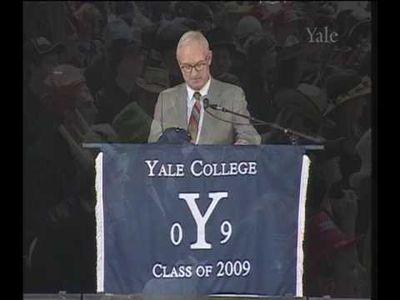
Christopher Buckley's 2009 Class Day Address at Yale University: Expect the Unexpected
On May 24, 2009, American novelist and political satirist Christopher Buckley addressed Yale College's graduating class during Class Day on Old Campus. He opened with a thirty-four-year-late apology for a profane line in his own 1975 class history, then used jokes about Francisco Franco, Harvard, Andover, the Cold War, the financial crisis, jury duty, and submarines to reflect on historical change and the unpredictability of life. Buckley told the graduates that their futures would probably depart from their plans, that mistakes become experience, and that even beginning adult life during the Great Recession could lead them somewhere richer. He urged them to take the fork, have adventures, make memories, and speak the memorable lines of their own lives. This edition is based on Buckley's signed text published on the day of the speech and cross-checked against Yale University's event record and linked official transcript.
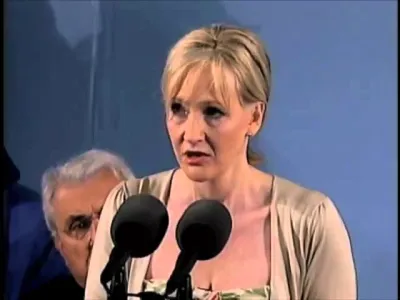
J. K. Rowling's 2008 Commencement Address at Harvard University: The Fringe Benefits of Failure, and the Importance of Imagination
British author J. K. Rowling delivered this address at Harvard's Commencement on June 5, 2008. Drawing on her experience of poverty, single parenthood, and professional setbacks after graduation, she explained how failure stripped away the inessential, helped her recognize what mattered, and gave her the strength to rebuild. She then turned to imagination, arguing that it is not only the capacity to create stories and inventions but also the foundation of empathy, allowing people to understand unfamiliar experiences and act collectively. Recalling her work at Amnesty International, Rowling urged graduates to use their education, status, and influence to speak for the powerless and accept responsibility for changing reality.
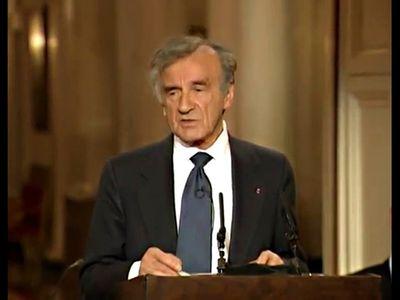
The Perils of Indifference
On April 12, 1999, Elie Wiesel delivered his famous speech "The Perils of Indifference" at the White House. Wiesel, a Holocaust survivor, writer, and human rights activist who received the Nobel Peace Prize in 1986, spoke at a Holocaust commemoration hosted by President Clinton, exactly 54 years after his liberation from the Buchenwald concentration camp. In this speech, Wiesel profoundly analyzes indifference as a moral sin, arguing that it is more dangerous than hatred because it serves as the accomplice of evil. He reflects on the tragedies of the 20th century, from two World Wars to genocides, questioning why the world remains so indifferent to the suffering of others. This speech is regarded as a classic treatise on humanity and moral responsibility.
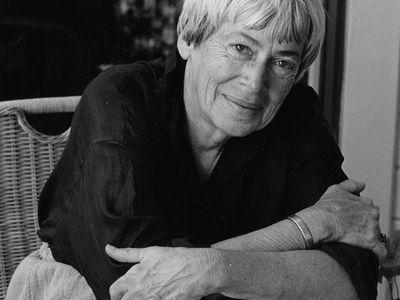
A Left-Handed Commencement Address
On May 22, 1983, renowned author Ursula K. Le Guin delivered this famous speech titled "A Left-Handed Commencement Address" at the Mills College commencement ceremony in Oakland, California. As a pioneer in science fiction literature, Le Guin challenged the clichés of traditional commencement speeches and explored the relationship between power, success, and failure from a unique feminist perspective. She criticized male-dominated language and social norms, urging women to live on their own terms and embrace the so-called "dark side" -- qualities like vulnerability, irrationality, and passivity that are devalued by mainstream society. This speech has become a classic for its profound insight and bold feminist perspective, inspiring countless women to pursue independence and self-identity.
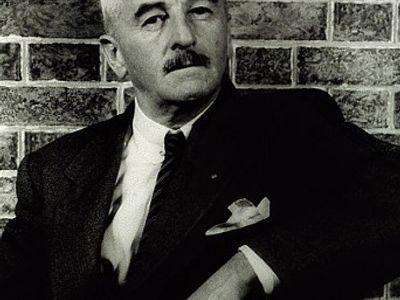
Speech Accepting the Nobel Prize in Literature
On December 10, 1950, American author William Faulkner delivered his Nobel Prize acceptance speech in Stockholm. In the speech, he outlined his views on literary creation, emphasizing that writers must explore the deep conflicts and struggles within the human heart. He stated 'I decline to accept the end of man,' expressing firm belief in the power of the human spirit. Faulkner was one of the most influential American writers of the 20th century, known for his depictions of the American South.
John Burnet's 1923 Oxford Romanes Lecture: Ignorance
On 18 May 1923, Scottish classicist John Burnet delivered the Romanes Lecture, “Ignorance,” at Oxford's Sheldonian Theatre. Beginning with Ferrier's “agnoiology” and Plato's treatment of sin and knowledge, he examined why the modern growth of potential knowledge simultaneously enlarges each person's actual ignorance, and criticized schools for confusing education with training and weakening grammatical foundations through examination and supposed inductive methods. Using classical-language teaching, he related automatic facility, first-hand knowledge, potential knowledge, and judgment, finally interpreting ignorance as the possibility of knowledge. This edition follows the formal 1923 Clarendon Press PDF and the page-level Wikisource transcription. Transcribed pages were cleaned page by page; because the final three pages were not yet transcribed, their text was manually restored directly from the scan. Seventeen authentic body blocks and the Huxley quotation are retained, while title and publication matter, footnotes, running heads, page numbers, and the printer's imprint are excluded, producing 66 aligned paragraphs.