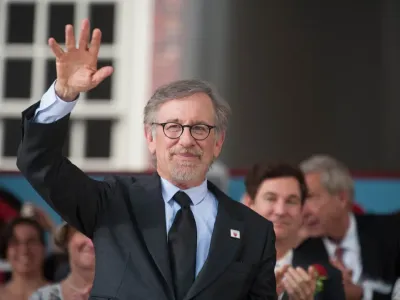
Steven Spielberg's 2016 Harvard Commencement Address: Courage, Empathy, and Purpose
On May 26, 2016, director, producer, and screenwriter Steven Spielberg addressed Harvard University’s 365th Commencement and received an honorary degree. Beginning with the 37 years it took him to complete college, he described life as a continuing series of character-defining moments and urged graduates to distinguish conscience from intuition and hear the inner whisper of what they could do. He explained how films including The Color Purple and Schindler’s List helped him discover a sense of mission. Spielberg called on graduates to study history, preserve moral courage, confront hatred and discrimination, and turn empathy into concrete action through voting, peaceful protest, and speaking for others, thereby shaping a future grounded in justice and peace.
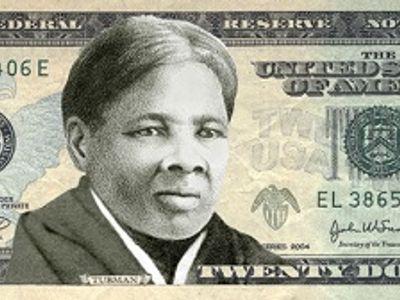
White House Correspondents' Dinner Address 2016
The White House Correspondents' Dinner is an annual event hosted by the White House Correspondents' Association, where the sitting U.S. President traditionally delivers a humorous speech roasting the media, political opponents, and even himself. On April 30, 2016, Barack Obama delivered his eighth and final White House Correspondents' Dinner speech at the Capital Hilton in Washington, D.C. Widely regarded as one of the wittiest presidents, Obama delivered a memorable performance filled with jokes about the 2016 election, Donald Trump, Hillary Clinton, Bernie Sanders, and the media landscape. The speech concluded with his iconic "Obama out" mic drop, marking a classic end of an era.
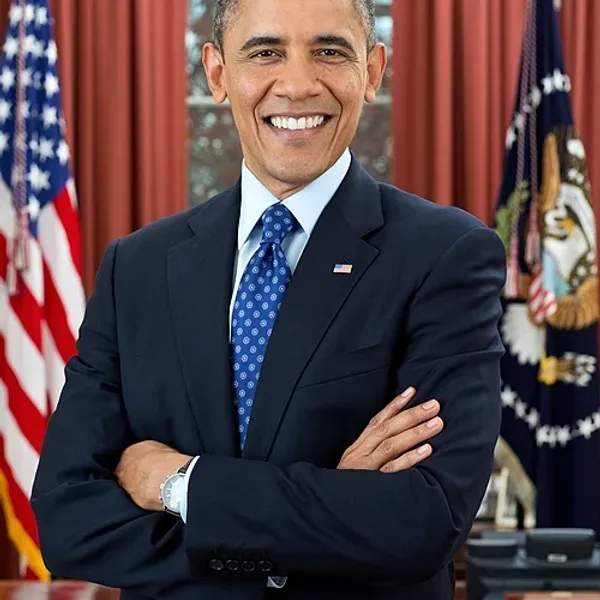
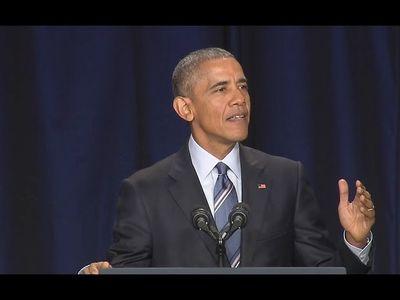
Address at the 64th National Prayer Breakfast
On February 4, 2016, President Barack Obama delivered an address at the 64th National Prayer Breakfast held at the Washington Hilton in Washington, D.C. This annual gathering brings together members of Congress, faith leaders, and people from all walks of life to build interfaith consensus through prayer and fellowship. Obama centered his speech on the verse from Second Timothy -- "For God has not given us a spirit of fear, but of power and of love and of a sound mind" -- exploring how fear erodes the human heart in an age of rapid change, and how faith serves as its antidote. He shared the story of Sergeant Roddie Edmonds declaring "We are all Jews" to save Jewish POWs in the Holocaust, and the story of Muslim American Rami Nashashibi who prayed publicly despite fears after the San Bernardino attack, emphasizing shared humanity and solidarity across faiths.
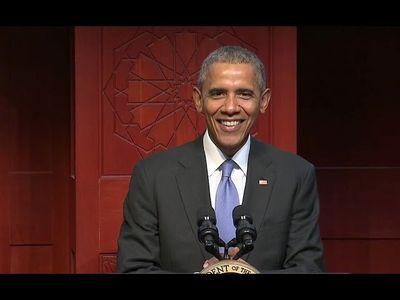
Islamic Society of Baltimore Address
On February 3, 2016, President Barack Obama delivered a speech at the Islamic Society of Baltimore in Maryland, marking only his second visit to a U.S. mosque during his presidency. The address came in the wake of the Paris and San Bernardino terrorist attacks, at a time when anti-Muslim sentiment was rising across America and hate crimes targeting Muslim communities had surged. Obama expressed gratitude and support to Muslim Americans, emphasizing that Islam has been an integral part of American history since colonial times, and highlighting Muslim American contributions in science, sports, the military, and public service. He condemned political rhetoric that conflates terrorism with an entire religion, calling on all Americans to reject prejudice and defend religious freedom as a core value.
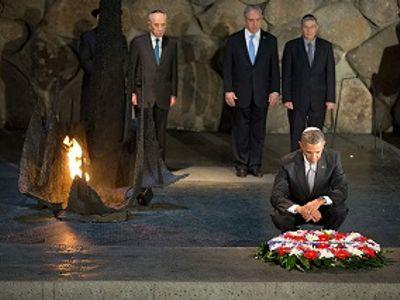
Righteous Among the Nations Award Ceremony Address
On January 27, 2016, President Barack Obama delivered this address at the Righteous Among the Nations Award Ceremony held at the United States Holocaust Memorial Museum in Washington, D.C. The Righteous Among the Nations is a prestigious honor bestowed by Yad Vashem, recognizing non-Jews who risked their lives to save Jews during the Holocaust. The ceremony posthumously honored four new Righteous individuals: the Zbijewskis of Poland, Lois Gunden of the United States, and Master Sergeant Roddie Edmonds of the U.S. Army. In his speech, Obama reflected on the trauma of the Holocaust, celebrated the extraordinary courage of the four honorees, emphasized the importance of memory and fighting anti-Semitism and all forms of hatred, and called upon governments, faith communities, and every individual to uphold justice and empathy through action.
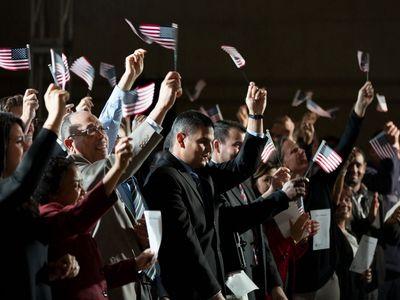
Naturalization Ceremony Speech at the National Archives
On December 15, 2015, President Barack Obama delivered a speech at a naturalization ceremony held at the National Archives in Washington, D.C., welcoming new citizens from more than 25 countries. Against the backdrop of America's founding documents, Obama reflected on America's history as a nation of immigrants -- from Pilgrim settlers to Irish refugees, from Chinese laborers to WWII survivors, generations of immigrants have shaped America. He also acknowledged dark chapters of immigration exclusion in American history, urging vigilance against hatred and bigotry and defending the founding ideal of "E Pluribus Unum." Obama concluded by encouraging new citizens to cherish their citizenship, engage actively in public life, and help write the next chapter of America's story.
Richard Engel's 2015 Stanford Commencement Address: There Is No App for Inspiration
On 2015-06-14, Richard Engel delivered this address at Stanford University's Commencement. Organized around adventure, observation, and finding inspiration beyond screens, it joins personal experience, professional judgment, and the public concerns of its moment. The address asks not only what graduates might do next, but also how educated people should understand their abilities, accept public responsibility, and help build a shared future. This edition is based on a complete authoritative transcript and preserves the sequence and character of the original address.
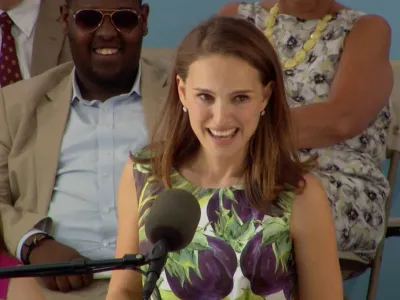
Natalie Portman's 2015 Harvard Commencement Address: I, Too, Battled Self-Doubt
On May 27, 2015, Academy Award-winning actor, director, and Harvard College Class of 2003 alumna Natalie Portman addressed the Class of 2015 at Harvard's Senior Class Day. She candidly recalled the impostor feelings she experienced on arriving as a famous actor, the dark periods she faced in college, and the gradual process of separating her work from prestige, box-office results, and other people's judgments. Drawing on stories about her son's arcade prizes, a tiny Tokyo restaurant, Léon: The Professional, Black Swan, and her directing debut, she argued that achievement matters only when people understand why they pursue it. She urged graduates to treat inexperience as an asset, forge paths grounded in their own reasons, pursue excellence and joy in particular work, and treasure the enduring value of friendship, kindness, and service to others.
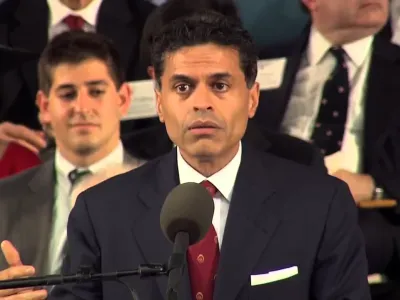
Fareed Zakaria's 2012 Harvard Commencement Address: We Live in an Age of Progress
Journalist and foreign-affairs commentator Fareed Zakaria delivered this address at Harvard on May 24, 2012. Beginning with his own failure to attend either of his graduation ceremonies, he warns against allowing crisis narratives to dominate our view of the world. Financial turmoil, terrorism, climate change, and resource pressure are real, yet long-term evidence also shows major reductions in war, poverty, disease, and violence. Pessimistic forecasts often underestimate the countless actions governments, institutions, firms, and individuals take in response. Zakaria places hope in cooperation and human agency, urging graduates to build lives shaped by intelligence, hard work, courage, loyalty, love, and generosity of spirit.
William Deresiewicz's 2010 Stanford Address: What Are You Going to Do With That?
This essay adapts William Deresiewicz's May 2010 talk to freshmen at Stanford and was later published by The Chronicle of Higher Education. Starting from the familiar question of what a field of study is useful for, he criticizes elite education for turning students into specialists who pursue prestigious schools, credentials, jobs, and measurable rewards while neglecting self-knowledge, moral imagination, and autonomous choice. He urges students not to turn even public service into another résumé hurdle, but to have the courage to invent their own lives. The piece prompted responses in and around Stanford and became an important precursor to his later critique of elite education and his book Excellent Sheep.
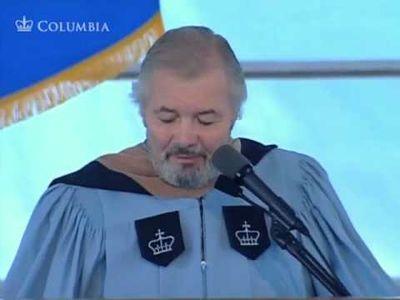
Jacques Pépin's 2010 Class Day Address at Columbia School of General Studies: Education Changes Lives
On May 16, 2010, French-American chef, author, and television host Jacques Pépin returned to Columbia University to address the School of General Studies Class Day. Pépin recalls leaving school at thirteen to apprentice as a cook, immigrating to the United States in 1959, and entering General Studies while working by day and studying at night before completing undergraduate and graduate education. He explains how a liberal-arts education overcame his insecurity, opened his mind, and helped him grow from chef into writer and television personality. Addressing the graduates, he argues that they must create their own opportunities and happiness, that a degree brings social responsibility, and that they should savor the present, love their work, and value the simple pleasure of sharing life with family and friends. This edition was prepared from the automatic captions on Columbia University's video and checked against the school's ceremony report.
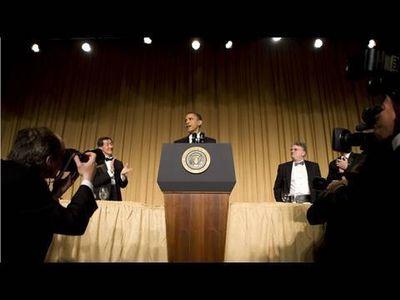
White House Correspondents' Dinner Address 2010
On May 1, 2010, President Obama delivered remarks at the annual White House Correspondents' Association Dinner at the Washington Hilton Hotel. The dinner is a long-standing Washington tradition where the president and the press mingle and trade good-natured barbs, and the president traditionally delivers a comic address laced with self-deprecation and political satire. Obama was in his second year in office, having signed the Affordable Care Act in March, while the Deepwater Horizon oil spill was still unfolding in the Gulf of Mexico. Jay Leno appeared as the evening's featured entertainer. Obama's routine skewered cable news, political rivals, and his own sliding approval ratings, with jabs at Scott Brown, John McCain, and Sarah Palin, before closing on a serious note that paid tribute to journalists and the role of a free press in sustaining American democracy.