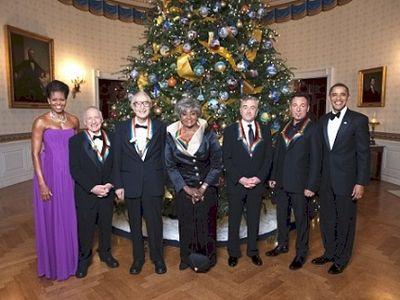
Kennedy Center Honorees Reception Speech
On December 6, 2009, President Obama hosted the annual holiday reception at the White House to honor that year's Kennedy Center Honorees: jazz pianist Dave Brubeck, comedy legend Mel Brooks, opera soprano Grace Bumbry, film star Robert De Niro, and rock icon Bruce Springsteen. In his address, Obama reflected on each artist's life and achievements, emphasizing that the arts are at the heart of American national life rather than peripheral to it. He reaffirmed his administration's commitment to reenergizing the National Endowment of the Arts, supporting arts education, and sustaining arts-related jobs. The ceremony fell on Dave Brubeck's 89th birthday, and Obama recalled attending a Brubeck concert in Honolulu as a 10-year-old boy.
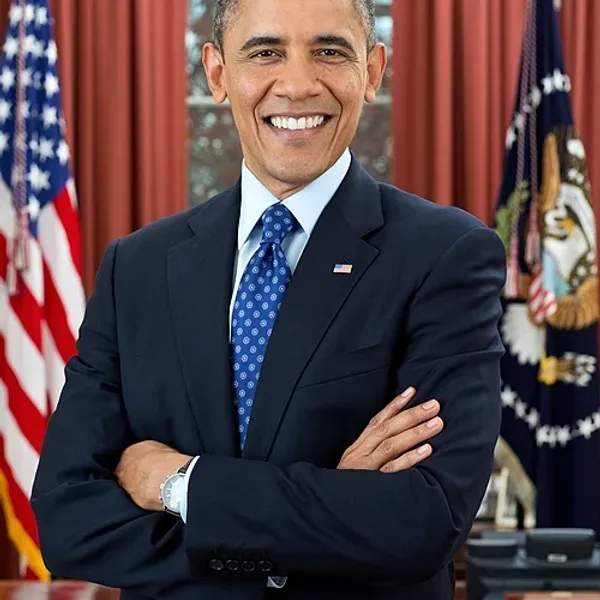
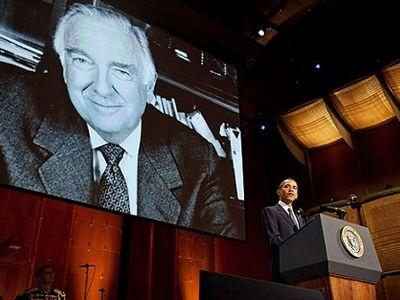
Eulogy for Walter Cronkite
On July 17, 2009, legendary American news anchor Walter Cronkite passed away at the age of 92. Cronkite anchored the CBS Evening News for 19 years, covering such historic events as the assassination of President Kennedy, the Vietnam War, and the Apollo moon landings, and was often called "the most trusted man in America." On September 9, 2009, President Barack Obama delivered this eulogy at a memorial service held at Lincoln Center in New York. Obama reflected on Cronkite's lifelong dedication to truth and objective reporting, emphasized the indispensable role of journalism in a democratic society, and called for the preservation of journalistic professionalism amid a transforming media landscape. The eulogy stands both as a tribute to a giant of journalism and as a profound reflection on the value of the press in our time.
Dana Gioia's 2007 Stanford Commencement Address: How Art Restores Our Humanity
On 2007-06-17, Dana Gioia delivered this address at Stanford University's Commencement. Organized around art, cultural choice, and a fully human life, it joins personal experience, professional judgment, and the public concerns of its moment. The address asks not only what graduates might do next, but also how educated people should understand their abilities, accept public responsibility, and help build a shared future. This edition is based on a complete authoritative transcript and preserves the sequence and character of the original address.
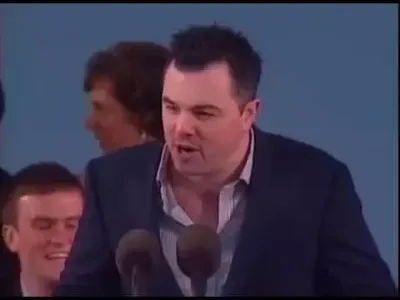
Seth MacFarlane's 2006 Harvard Class Day Address
On June 7, 2006, Family Guy creator Seth MacFarlane delivered a comic address to Harvard College's graduating class at Class Day; Harvard University released the video on January 30, 2015. He opened in his own voice with jokes about his art-school background, Harvard's prestige, and American politics, then performed as Peter Griffin, Stewie Griffin, and Glenn Quagmire. Through the characters' exaggerated and deliberately offensive perspectives, he satirized elite education, career choices, popular culture, religion, politics, and the graduates' idealism. Although the address was built around rapid jokes and character work, it also playfully affirmed the value of intelligence and invention and urged graduates to retain experimentation, adventure, openness, and curiosity as they entered adult life.

Will Ferrell's 2003 Harvard Class Day Address
On June 4, 2003, American actor and comedian Will Ferrell addressed Harvard's graduating class at Class Day. He built the speech around mock confusion, self-deprecation, an absurd portrait of the “real world,” and an extended impersonation of President George W. Bush. Ferrell satirized power, war, the economy, and commencement clichés before closing with a comic rewrite of “Dust in the Wind.” The address is primarily a comic performance, with a brief reminder not to be afraid to question one's leaders.
Amartya Sen's 2000 Harvard Commencement Address: Global Doubts
Nobel Prize-winning economist Amartya Sen delivered “Global Doubts” at Harvard on June 8, 2000. Beginning with the role of doubt and questioning in education, he argues that globalization should be neither blamed for every social problem nor defended by dismissing its critics. Trade, technology, and international exchange can create prosperity, but the distribution of their benefits depends on democracy, civil rights, a free press, education, health care, social protection, women's empowerment, and other institutions. Sen shifts the debate from market efficiency to inequalities of power and urges critical scrutiny of international institutions while taking seriously the concerns expressed through global protest.
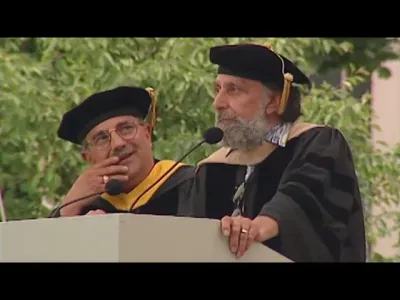
Ray and Tom Magliozzi's 1999 MIT Commencement Address
MIT alumni Ray and Tom Magliozzi delivered this joint address on June 4, 1999. Known nationally as the hosts of the public-radio program Car Talk, the brothers bring the show's improvised arguments, interruptions, and self-deprecating humor to the Commencement stage. Drawing on experiences with automobile repair, school, resigning from conventional jobs, and choosing unusual careers, they explore the relationships among work, money, time, family, and happiness. Unlike a conventional solemn address, the speech unfolds as comic dialogue with audience participation. Its central advice is nevertheless direct: do not measure a life only by prestige or income; pay attention to how you actually want to spend your days and preserve room for autonomy, relationships, enjoyment, and inner satisfaction.
Václav Havel's 1995 Harvard Commencement Address: The Radical Renewal of Human Responsibility
Czech president, playwright, and former dissident Václav Havel delivered this address at Harvard on June 8, 1995. Beginning with the growing resemblance between urban life in Singapore and Prague, he argues that humanity already inhabits a single global civilization, yet technological uniformity has not produced a shared moral foundation. Modern civilization spreads science, markets, communications, and weapons while failing to answer questions of identity, meaning, responsibility, and coexistence among cultures. Havel calls for conscience to catch up with reason, for people to recover a common spiritual experience beneath cultural difference, and for a radical renewal of human responsibility toward the world and the future.
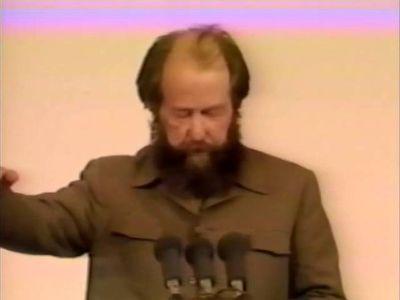
Aleksandr Solzhenitsyn's 1978 Harvard Address: A World Split Apart
On June 8, 1978, four years into his Western exile, Russian writer and Nobel laureate Aleksandr Solzhenitsyn delivered “A World Split Apart” at Harvard University’s commencement. In a Cold War setting, many listeners expected a denunciation of the Soviet system, but he directed his critique toward both East and West. He rejected communism while challenging Western faith in material well-being, legal rights, media power, and unrestricted freedom. Arguing that declining courage, weakened responsibility, and an impoverished spiritual life made the West an inadequate model for Russia, he traced the crisis to a modern humanism severed from religious accountability. The address provoked immediate controversy and became one of the most discussed public speeches of his exile, as well as a major text in Cold War intellectual history and modern critiques of civilization.
John Bagnell Bury's 1911 Oxford Romanes Lecture: Romances of Chivalry on Greek Soil
On 25 May 1911, Irish historian John Bagnell Bury delivered the Romanes Lecture, “Romances of Chivalry on Greek Soil,” at Oxford's Sheldonian Theatre. He examined Greek chivalric love romances of the thirteenth and fourteenth centuries, focusing on Belthandros and Chrysantza, Lybistros and Rhodamne, and Digenes Akrites, and analyzed their relations to Frankish chivalric culture, Byzantine court traditions, Hellenistic love fiction, and frontier epic. Bury argued that although contact with Western European settlers stimulated these works, they arose chiefly from indigenous Greek literary traditions rather than second-hand imitation. The lecture reflects the terminology and judgments of early twentieth-century Byzantine and comparative literary scholarship and should be read alongside later research. This edition follows the formal 1911 Clarendon Press scan and validated Wikisource transcription, preserving 37 body-text blocks while excluding title matter, five notes, and the closing printer's imprint; one transcription punctuation error was corrected from the scan.
Ralph Waldo Emerson's 1837 Address at Harvard University: The American Scholar
On August 31, 1837, Ralph Waldo Emerson delivered his famous address titled 'The American Scholar' before the Phi Beta Kappa Society at Harvard University. At a time when American intellectual life remained heavily indebted to European traditions, Emerson called upon scholars to draw nourishment from three great sources: nature, books, and action. He championed intellectual independence and self-reliance, urging Americans to cast off their cultural apprenticeship to Europe and forge their own intellectual tradition. Widely regarded as America's 'intellectual Declaration of Independence,' the address marked a pivotal moment in the awakening of American cultural consciousness.