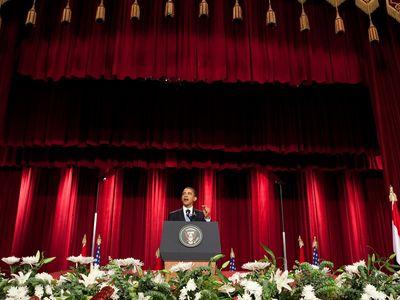
A New Beginning: Speech at Cairo University
President Obama's speech at Cairo University about U.S.-Muslim world relations, seeking a new beginning based on mutual respect and common interests. The speech addresses violent extremism, Israeli-Palestinian conflict, nuclear weapons, democracy, religious freedom, women's rights, and economic development.
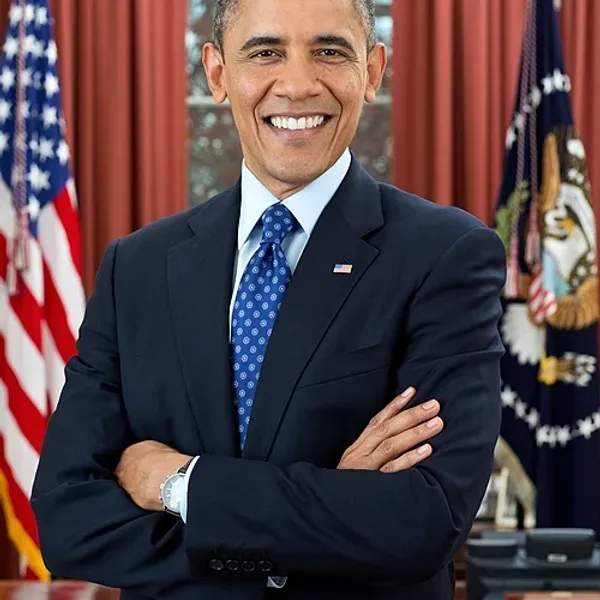
Speech to the Turkish Parliament
On April 6, 2009, U.S. President Barack Obama addressed the Turkish Grand National Assembly in Ankara, marking his first overseas trip since taking office. He had just attended the G20 summit in London, the NATO summit in Strasbourg, and the EU summit in Prague, before deliberately extending his journey to Ankara and Istanbul to signal the strength of the U.S.-Turkey alliance. In the speech, Obama praised the secular democracy founded by Ataturk, reaffirmed U.S. support for Turkey's EU accession, urged Turkey and Armenia to confront the events of 1915 through an honest and open process, and declared that the United States would never be at war with Islam. He also addressed the Iraq drawdown, the fight against the PKK, Iran's nuclear ambitions, and the Middle East peace process, in what is regarded as a landmark diplomatic overture to the Muslim world.
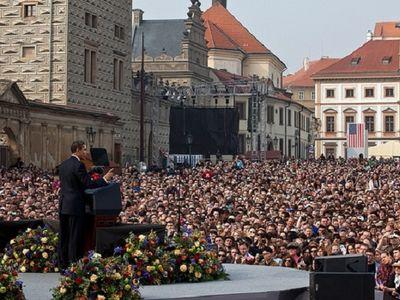
Speech at Hradcany Square in Prague
On April 5, 2009, just months into his presidency, Barack Obama delivered a landmark address at Hradcany Square in Prague during his first visit to the Czech Republic. The speech came as North Korea test-fired a rocket that very day, heightening global nuclear proliferation concerns. Obama articulated a historic vision of a world without nuclear weapons, committing the United States to reduce its arsenal, pursue ratification of the Comprehensive Test Ban Treaty, and secure all vulnerable nuclear material worldwide within four years. The address also covered the transatlantic alliance, climate change, and the global economic crisis, and is regarded as a defining declaration of his foreign policy agenda.
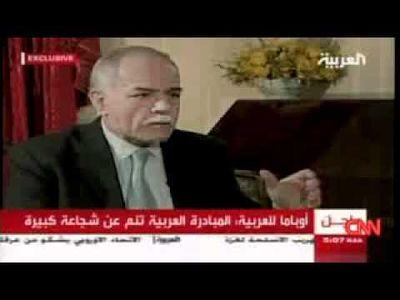
Al-Arabiya Television Interview With Hisham Melhem
On January 26, 2009, just six days into his presidency, Barack Obama sat down for an interview with Hisham Melhem of Al-Arabiya Television, his first interview with Arab media since taking office. In the conversation, Obama emphasized active U.S. engagement in Middle East peacemaking, dispatching Special Envoy George Mitchell to the region to listen to all parties. He advocated a new partnership with the Muslim world based on "mutual respect and mutual interest," drew a clear distinction between extremist organizations like al-Qaeda and the broader Muslim public, and pledged to close Guantanamo Bay and draw down troops in Iraq. Widely seen as a signal of reconciliation toward the Arab and Muslim world, the interview set the tone for his landmark "A New Beginning" speech at Cairo University later that year and shaped the reset of U.S.-Islamic relations.
Australia and the UK: Global Partners in Shaping the Future Global Order
Australian prime minister Kevin Rudd delivered this address at the London School of Economics on April 7, 2008. He argues that Australia and the United Kingdom should use their complementary standing in the Asia-Pacific and Europe to help shape the twenty-first-century global order. Moving across counterterrorism, Afghanistan, climate change, the Millennium Development Goals, reform of the United Nations and International Monetary Fund, trade liberalization, and global financial regulation, Rudd calls for a future-facing partnership grounded not only in history but in shared international responsibility. Delivered shortly before the global financial crisis intensified, the speech also presents the new Australian government's idea of creative middle-power diplomacy.
The Role of Inter-governmental, State and Non-governmental Players in Conflict Resolution
Former Finnish president and international mediator Martti Ahtisaari delivered this lecture at the London School of Economics on October 29, 2007. Using the Aceh peace process and the Kosovo status negotiations, he examines the distinct roles of governments, international organizations, and nongovernmental actors in conflict resolution. He emphasizes research, legitimate representation, women's participation, justice and reconciliation, willingness to compromise, international unity, and credible monitoring. A mediator can create a framework and build trust, Ahtisaari argues, but cannot substitute for political choices by the parties themselves. A peace agreement is not an end; it begins the harder work of implementation and democratic change.
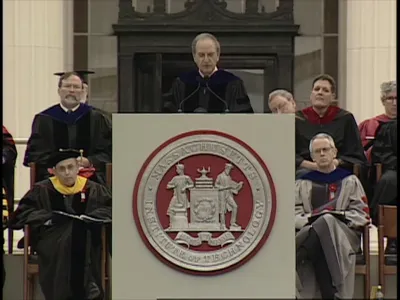
George J. Mitchell's 2003 MIT Commencement Address
Former United States senator and peace negotiator George J. Mitchell delivered this address at MIT's Commencement on June 9, 2003. Drawing on five years leading the Northern Ireland peace process and later work on the Israeli-Palestinian conflict, he states his conviction that no conflict is inherently incapable of ending. Mitchell describes the delay, deaths, and discouragement of prolonged negotiations, while explaining that durable agreements require parties to abandon impossible fantasies, recognize each other's fundamental needs, and continue negotiating. He presents conflict resolution as a practice of patience, principle, listening, and persistence rather than a single diplomatic breakthrough. He tells graduates not to surrender to despair when progress is slow: conflicts created and sustained by human beings can also be ended by human beings.
Kofi Annan's 2000 Stanford Commencement Address: Safeguarding the Global Environment
On 2000-06-11, Kofi Annan delivered this address at Stanford University's Commencement. Organized around the global environment, intergenerational responsibility, and global governance, it joins personal experience, professional judgment, and the public concerns of its moment. The address asks not only what graduates might do next, but also how educated people should understand their abilities, accept public responsibility, and help build a shared future. This edition is based on a complete authoritative transcript and preserves the sequence and character of the original address.
Dag Hammarskjöld's 1955 Stanford Commencement Address: The Nation and the World
On 1955-06-19, Dag Hammarskjöld delivered this address at Stanford University's Commencement. Organized around the nation, international responsibility, and the United Nations, it joins personal experience, professional judgment, and the public concerns of its moment. The address asks not only what graduates might do next, but also how educated people should understand their abilities, accept public responsibility, and help build a shared future. This edition is based on a complete authoritative transcript and preserves the sequence and character of the original address.
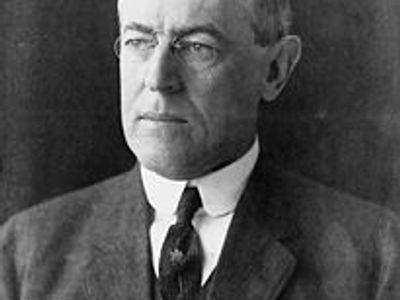
Final Address in Support of the League of Nations
On September 25, 1919, U.S. President Woodrow Wilson delivered this address at the City Hall Auditorium in Pueblo, Colorado. It was his final public speech during a nationwide tour promoting the Treaty of Versailles and the League of Nations. The Senate was bitterly divided over whether the United States should join the League, with opponents particularly questioning whether Article 10 would weaken Congress's authority over war and peace. Wilson explained the League's council, assembly, and cooling-off period for disputes, and defended collective security, self-determination, labor rights, and protections for China. Invoking American soldiers killed in World War I and their families, he urged the nation to fulfill its wartime promise of a durable peace. His tour soon ended because of worsening health; the Senate ultimately rejected the treaty, and the United States never joined the League.
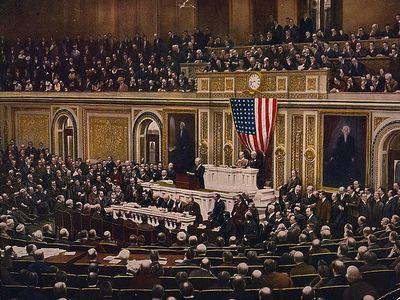
War Message to Congress
On April 2, 1917, U.S. President Woodrow Wilson delivered his famous 'This is War' speech to Congress. World War I had been raging for over two and a half years, and the United States had maintained neutrality. However, Germany announced unrestricted submarine warfare, sinking many neutral ships including American vessels. Additionally, the Zimmerman Telegram revealed Germany's plot to ally with Mexico against the United States. Wilson declared that America would enter the war to 'make the world safe for democracy.' This marked the official entry of the United States into World War I, which had a decisive impact on the outcome of the war.
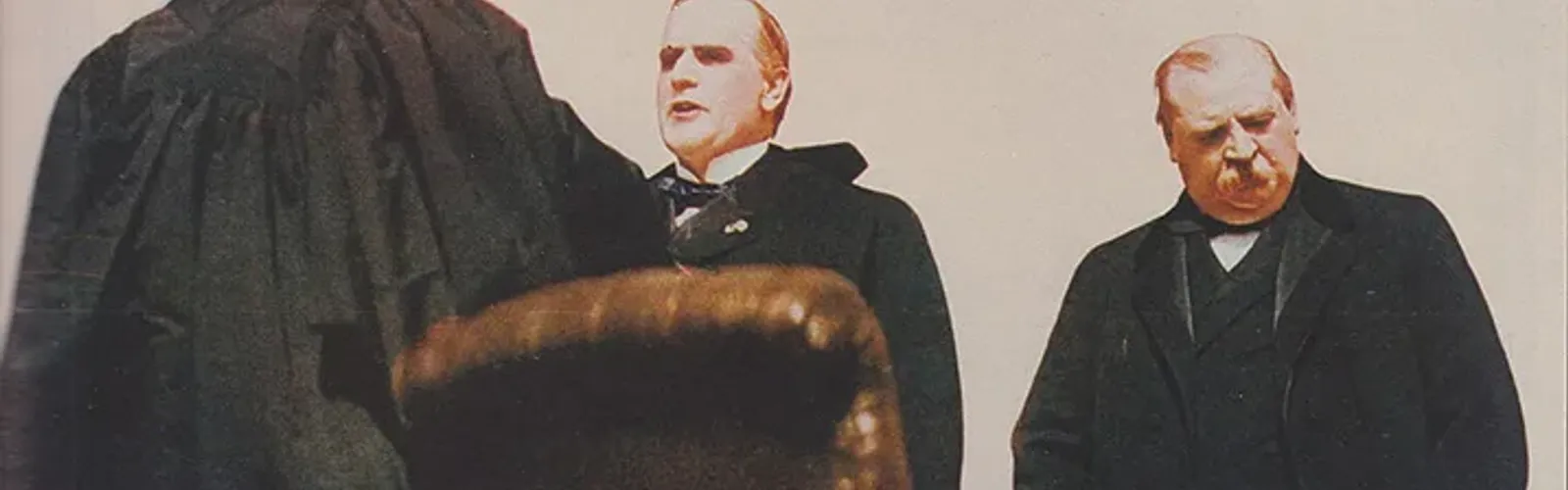
William McKinley's 1897 Inaugural Address
On March 4, 1897, William McKinley took the oath of office as the twenty-fifth President of the United States at the U.S. Capitol in Washington. The country was emerging from the prolonged depression that followed the Panic of 1893, while unemployment, federal deficits, the currency system, and tariff policy dominated public debate. McKinley called for fiscal and monetary reform, increased revenue, restored protective tariffs, and study of bimetallism and banking reform. He also addressed equal rights, opposition to lynching, enforcement of antitrust laws, civil-service and immigration reform, revival of the merchant marine, and peaceful arbitration of international disputes. Because of the urgent fiscal situation, he announced that he would summon a special session of Congress. He closed by urging Americans to rise above sectional and partisan divisions, uphold the Constitution, and strengthen national unity, presenting the central economic and governing priorities of his new administration.