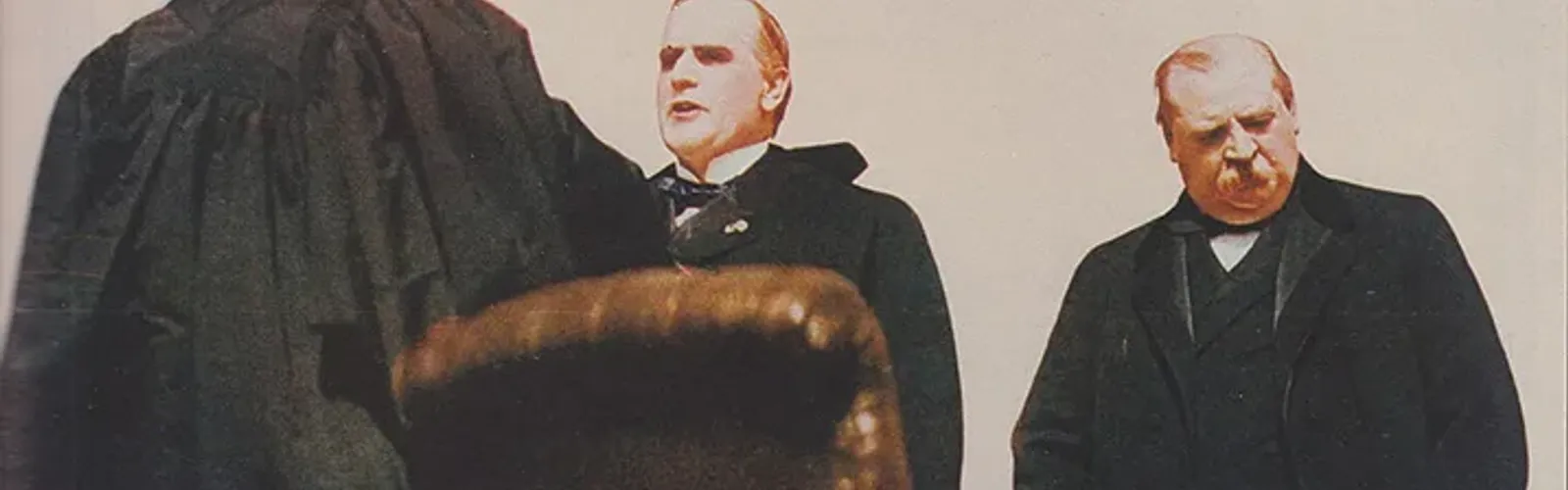
William McKinley's 1897 Inaugural Address
On March 4, 1897, William McKinley took the oath of office as the twenty-fifth President of the United States at the U.S. Capitol in Washington. The country was emerging from the prolonged depression that followed the Panic of 1893, while unemployment, federal deficits, the currency system, and tariff policy dominated public debate. McKinley called for fiscal and monetary reform, increased revenue, restored protective tariffs, and study of bimetallism and banking reform. He also addressed equal rights, opposition to lynching, enforcement of antitrust laws, civil-service and immigration reform, revival of the merchant marine, and peaceful arbitration of international disputes. Because of the urgent fiscal situation, he announced that he would summon a special session of Congress. He closed by urging Americans to rise above sectional and partisan divisions, uphold the Constitution, and strengthen national unity, presenting the central economic and governing priorities of his new administration.

Address Upon Assuming the Office of President of the United States
President James A. Garfield was shot on July 2, 1881, and died on September 19 after weeks of suffering. Vice President Chester A. Arthur immediately took the presidential oath for the first time at his private residence in New York. On September 22, he took the oath publicly a second time in the Vice President's Room at the U.S. Capitol in Washington and read this address to invited guests. Arthur first mourned Garfield, then emphasized that constitutional succession allowed the Government to continue peacefully and steadily after a President's murder. He pledged to carry forward his predecessor's goals of correcting abuses, enforcing economy, promoting prosperity, and maintaining honorable foreign relations. He also stated that fiscal policy was stable, no major foreign crisis existed, and no special session of Congress was necessary. He concluded by promising to discharge his constitutional duties with reliance on divine guidance and on the virtue, patriotism, and intelligence of the American people. Although commonly collected with inaugural materials, the authoritative source notes that it was not an official inaugural address.
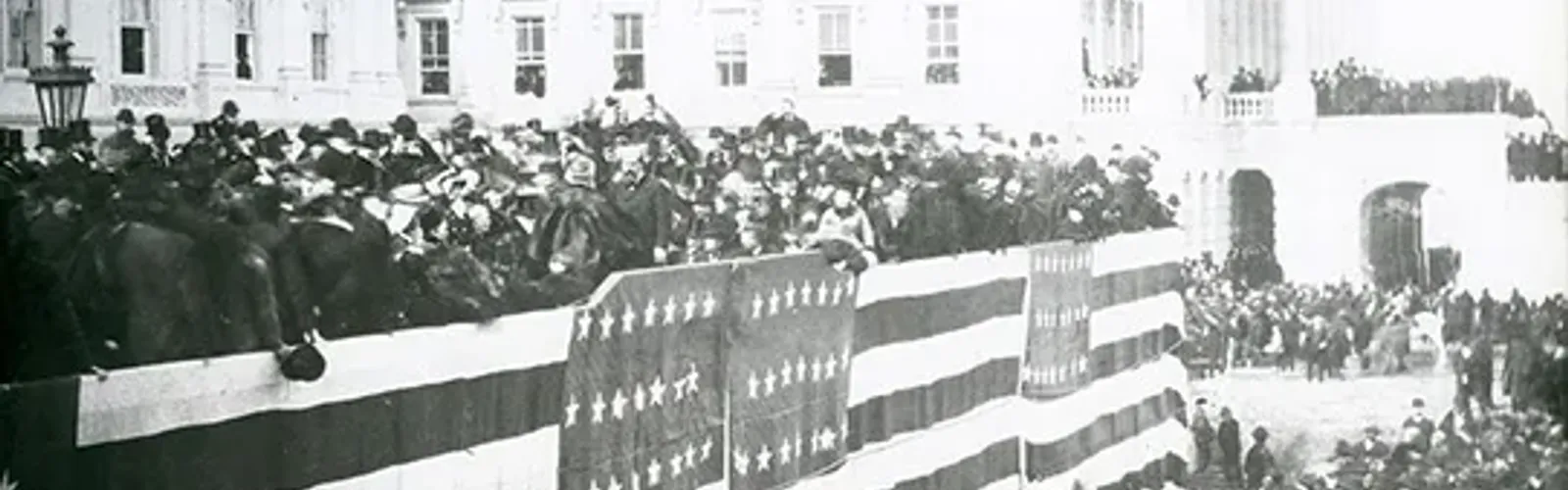
James A. Garfield's 1881 Inaugural Address
On March 4, 1881, James A. Garfield took the oath of office as the twentieth President of the United States at the U.S. Capitol in Washington. The country was moving beyond the formal Reconstruction era, but equal voting rights for Black citizens, sectional reconciliation, illiteracy, and federal authority remained central political issues. Garfield reviewed a century of constitutional government, affirmed the supremacy of federal law, called for legal protection of equal rights and a free ballot for formerly enslaved citizens, and presented universal education as the essential defense against ignorance and electoral corruption. He also discussed gold and silver currency, redemption of paper notes, agriculture and manufacturing, an interoceanic canal, religious liberty, and legislation for the civil service. He promised strict economy and faithful public service. About four months after taking office, Garfield was shot on July 2 and died on September 19 from his wounds and infection, leaving most of this agenda unrealized.
Rutherford B. Hayes's 1877 Inaugural Address
The result of the 1876 presidential election between Rutherford B. Hayes and Democratic candidate Samuel J. Tilden remained unresolved because electoral votes from four states were disputed. A special Electoral Commission ultimately awarded the contested votes to Hayes by an 8–7 decision, giving him a 185–184 victory. To prevent a gap in presidential authority, Hayes took the oath privately on March 3, 1877, and was inaugurated publicly on March 5. His address made permanent pacification of the South a central priority, promised equal constitutional protection for white and Black citizens, and supported honest local self-government, universal education, and the removal of sectional and racial divisions. He also called for thorough civil-service reform, resumption of specie payments, noninterference abroad, arbitration of disputes, and peaceful national acceptance of the legally determined election result. The address did not explicitly promise troop withdrawal, although Hayes's administration later removed the last federal troops from the South, an action commonly associated with the end of Reconstruction.
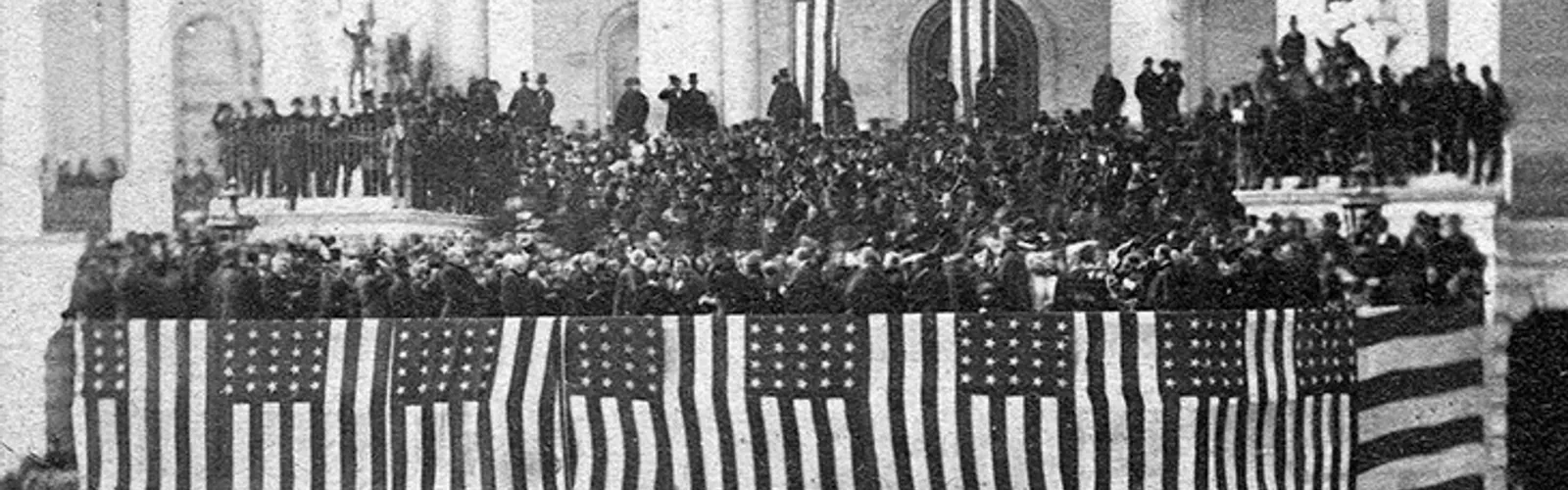
Ulysses S. Grant's 1873 Inaugural Address
On March 4, 1873, Ulysses S. Grant took the oath for a second term as the eighteenth President of the United States at the U.S. Capitol in Washington. He had defeated Horace Greeley, the candidate supported by both the Liberal Republicans and Democrats, in the 1872 election. Grant reviewed the progress of Reconstruction, stated that formerly enslaved Black citizens still lacked the civil rights that citizenship should carry, and pledged to use executive influence to correct the injustice. He also called for sectional reconciliation, restoration of the currency toward parity with gold, inexpensive transportation, renewed ocean commerce and manufacturing, friendly foreign relations, and an educational and humane approach toward Native Americans. He defended his first-term proposal to annex Santo Domingo but promised that future territorial acquisition would first require public support, and he pledged to continue civil-service reform. Soon after the address, the Panic of 1873 began a prolonged depression, while several corruption scandals troubled his second term.
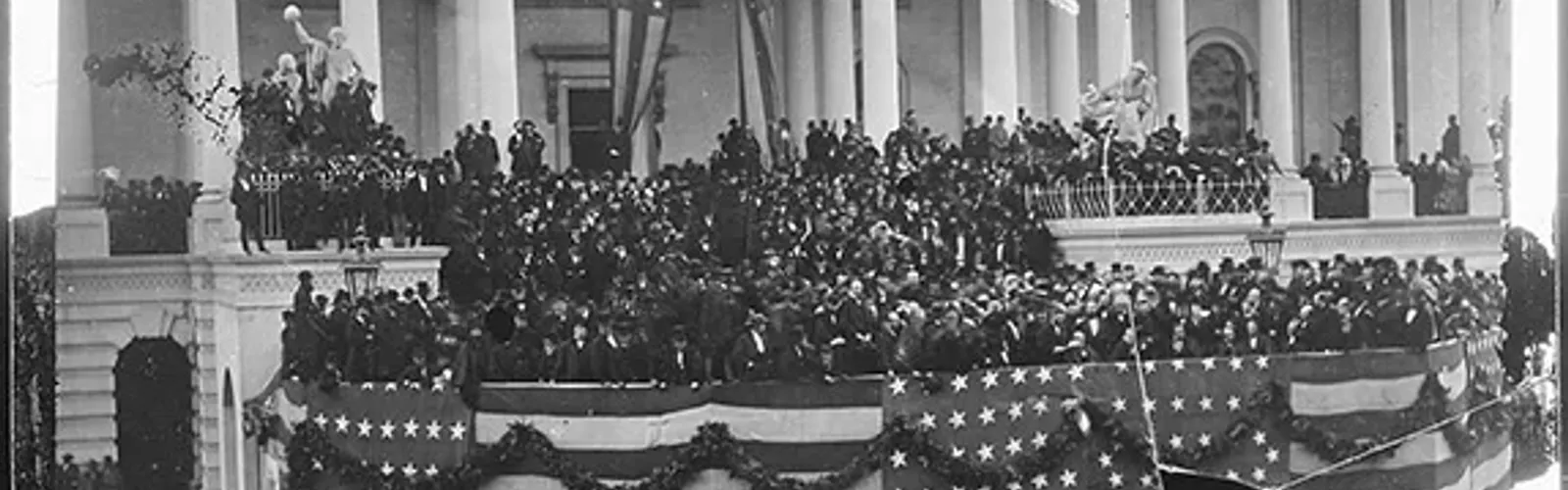
Ulysses S. Grant's 1869 Inaugural Address
On March 4, 1869, Ulysses S. Grant took the oath of office as the eighteenth President of the United States at the U.S. Capitol in Washington. He had defeated Democratic candidate Horatio Seymour in the 1868 election and entered the White House as the commanding general of the Union armies and a symbol of victory in the Civil War. The country remained in Reconstruction, three former Confederate states had not yet returned to formal federal relations, and war debt, monetary credit, and Black suffrage were urgent issues. In this concise address, Grant promised faithful execution of all laws and protection of personal security, property, and free religious and political opinion. He advocated repayment of the public debt, restoration of a specie basis, strict revenue collection, and economy in expenditure. He also called for renewed commerce, preservation of national credit, equitable foreign relations, better public appointments, and ratification of the Fifteenth Amendment to protect Black male suffrage. Toward Native Americans, he expressed the period's assimilationist goal of what was then called civilization and eventual citizenship.
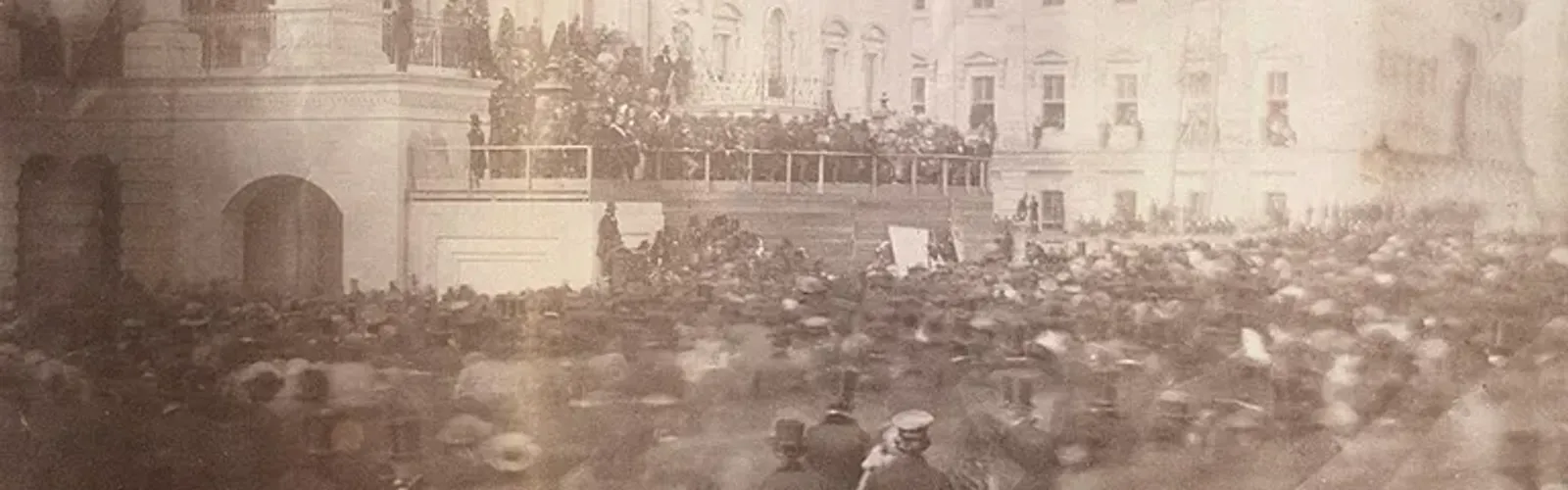
James Buchanan's 1857 Inaugural Address
On March 4, 1857, Democrat James Buchanan took office as the fifteenth president of the United States at the East Portico of the Capitol in Washington. The preceding campaign centered on the extension of slavery into the western territories; Buchanan defeated Republican John C. Frémont and American Party candidate Millard Fillmore. In this address, he treated territorial slavery as a matter for popular sovereignty and the Supreme Court, called for an end to sectional agitation and the preservation of the Union, and discussed public integrity, the Treasury surplus, public lands, strict constitutional construction, a military road to the Pacific, and peaceful foreign relations. Two days later, the Supreme Court announced its decision in Dred Scott v. Sandford. The Kansas controversy and sectional conflict continued to intensify; the Panic of 1857 began that August and caused an economic downturn. Seven Southern states declared secession before Buchanan's term ended.
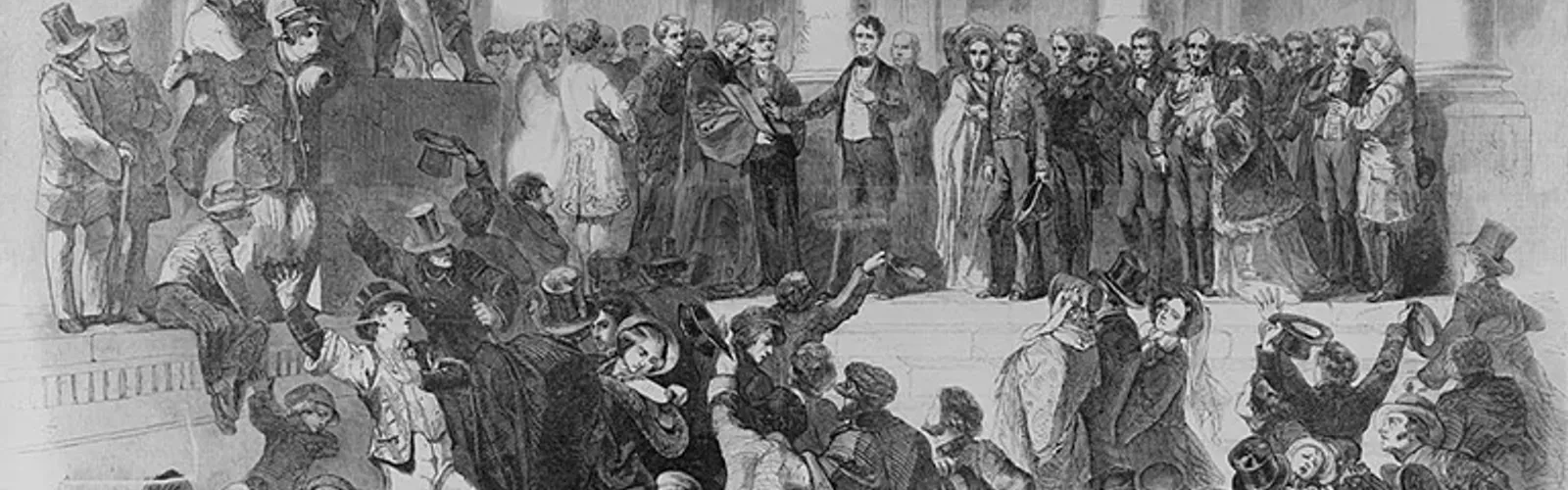
Franklin Pierce's 1853 Inaugural Address
On March 4, 1853, Democrat Franklin Pierce took office as the fourteenth president of the United States at the East Portico of the Capitol in Washington. In the 1852 election, he had campaigned on support for the Compromise of 1850 and preservation of the Union, defeating Whig candidate Winfield Scott. The address reviewed the republic's expansion, advocated peaceful protection of commercial and diplomatic interests, supported further territorial growth, opposed a large standing army, and emphasized integrity, economy, and the division of state and federal powers. On slavery, Pierce said that existing state institutions were protected by the Constitution and pledged to enforce the compromise measures of 1850. His administration later pursued the Gadsden Purchase and enacted the Kansas–Nebraska Act, which removed the Missouri Compromise restriction and helped provoke Bleeding Kansas, further worsening sectional conflict.
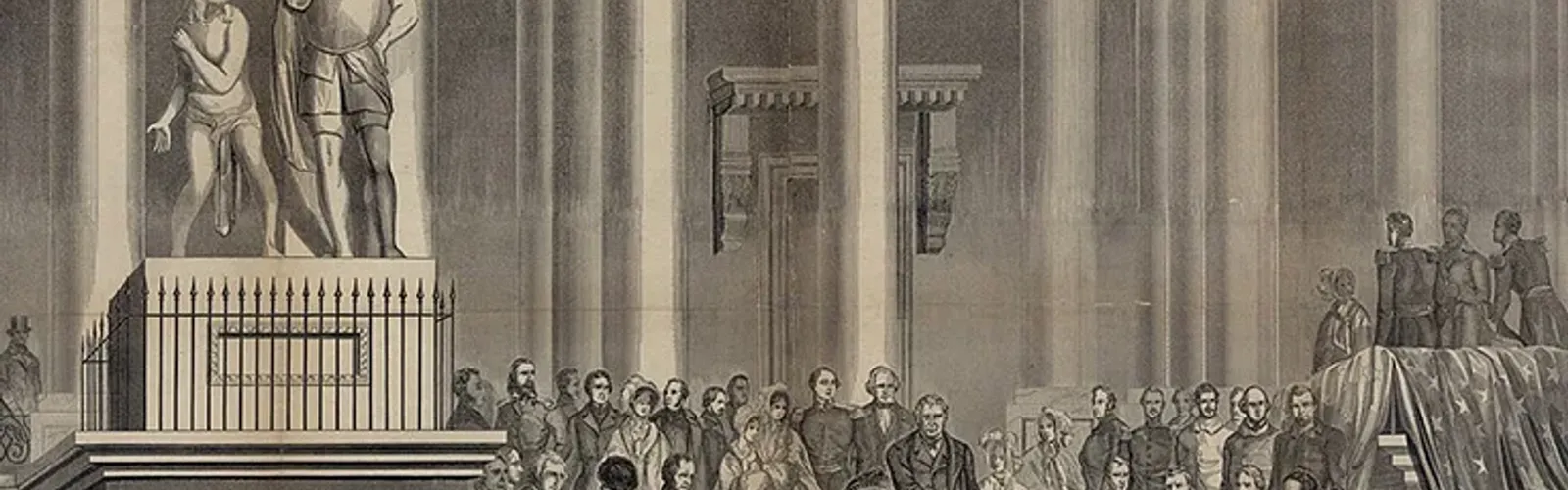
Zachary Taylor's 1849 Inaugural Address
On March 5, 1849, Whig Zachary Taylor took office as the twelfth president of the United States at the East Portico of the Capitol in Washington; because March 4 fell on a Sunday, the ceremony was held one day later. A career soldier with almost no political experience, Taylor won the 1848 election on the strength of his fame from the Mexican–American War victories at Monterrey and Buena Vista. The address presented the Constitution as his guide, emphasized honesty, capacity, and fidelity in appointments, advocated neutrality and exhaustive negotiation before force, and called for economy, debt reduction, conciliation of sectional interests, and preservation of the Union. It did not directly address the dispute over slavery in the new territories. As president, Taylor opposed extending slavery into California and New Mexico. He died in July 1850 after a sudden digestive illness, having served about sixteen months.
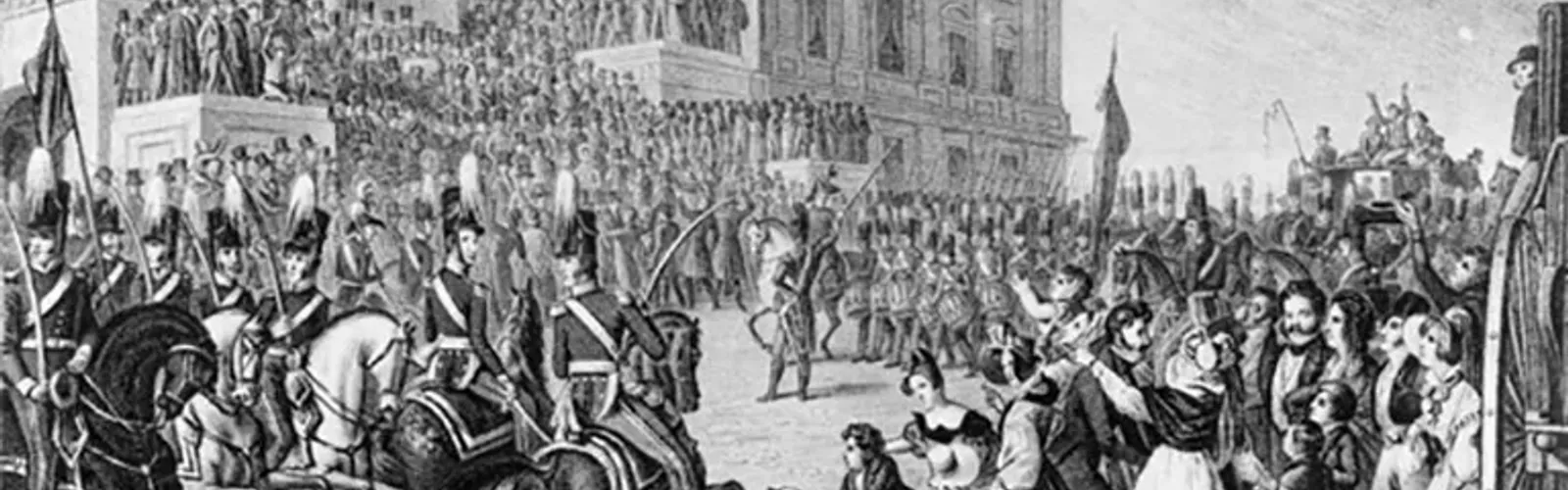
James K. Polk's 1845 Inaugural Address
On March 4, 1845, Democrat James Knox Polk took office as the eleventh president of the United States at the East Portico of the Capitol in Washington. In the 1844 election, he defeated Whig Henry Clay after campaigning prominently for the annexation of Texas and the American claim to Oregon. The address emphasized strict construction of federal power, protection of minority rights, preservation of the Union and constitutional compromises, opposition to a national bank and protective tariffs, economy, debt repayment, and a tariff designed primarily for revenue. It also explicitly supported annexing Texas and extending American jurisdiction in Oregon. His administration later settled the boundary with Britain through the Oregon Treaty, restored the independent treasury, lowered tariffs, and acquired vast western lands under the Treaty of Guadalupe Hidalgo after the Mexican–American War, further intensifying the dispute over the expansion of slavery.
Address Upon Assuming the Office of President of the United States
President William Henry Harrison died on April 4, 1841, only a month after taking office. Vice President John Tyler succeeded him under the Constitution and took the oath again in Washington on April 6. On April 9, Tyler issued this address to the people, explaining the principles that would guide him through the unprecedented transfer of power. He mourned Harrison and stressed fidelity to the Constitution, preservation of the Union, peaceful but honorable foreign relations, effective national defense, restraint in executive patronage, integrity in public service, fiscal prudence, and restoration of a sound circulating currency. The succession put the Constitution's presidential succession provision into practice for the first time. Tyler's insistence that he possessed the full powers of the presidency established an important precedent. The American Presidency Project classifies the document with inaugural materials but notes that it is not an official inaugural address.