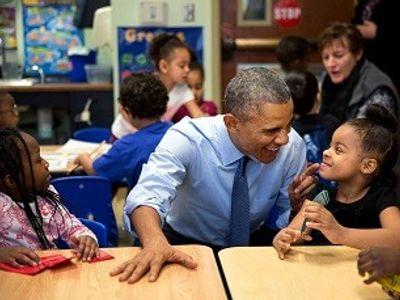
Barack Obama's 2017 Farewell Address
On January 10, 2017, President Barack Obama delivered his farewell address at McCormick Place in Chicago, ten days before the end of his eight-year presidency. He reflected on economic recovery, health care reform, marriage equality, and foreign policy, then focused on challenges facing American democracy: economic inequality, racial division, political polarization, and the tendency to accept only information that confirms existing views. He urged Americans to participate in civic life and work across differences. He thanked his family, Vice President Joe Biden, and his supporters, addressed the next generation, and closed with “Yes, we can.”
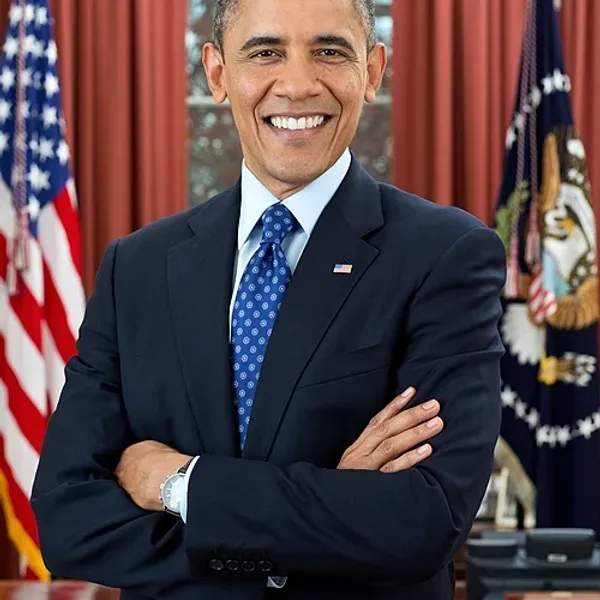
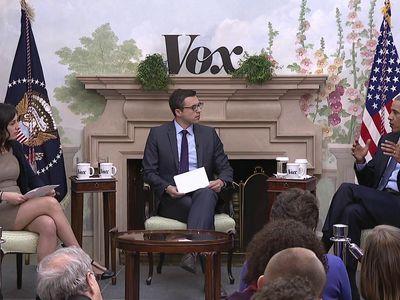
VOX Live Interview at the Blair House
On January 6, 2017, Barack Obama sat down for a live interview with Vox journalists Ezra Klein and Sarah Kliff at the Blair House. With only two weeks left in his presidency and the Affordable Care Act facing repeal, Obama offered a comprehensive defense and reflection on his signature healthcare legislation. He addressed why the ACA had not grown more popular, the dangers of the Republican 'repeal and delay' strategy, and the balance between cost control and affordability. Obama pointed to systemic complexity and persistent opposition as key factors, and reflected on both successful reforms and areas that fell short. The interview showcased his depth of thought and enduring commitment to healthcare reform.
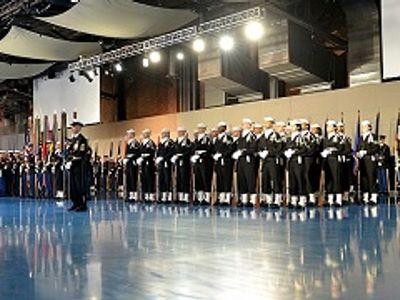
Farewell Address to the United States Armed Forces
On January 4, 2017, outgoing U.S. President Barack Obama delivered a farewell address to the United States Armed Forces at Joint Base Myer-Henderson, Fort Myer, Virginia. This was Obama's final formal address to the military as Commander-in-Chief during his eight-year presidency. In the speech, Obama thanked military leaders including Secretary of Defense Ash Carter and Joint Chiefs Chairman Joseph Dunford for their outstanding leadership, and reviewed the U.S. military's achievements over eight years in counterterrorism, alliance building, and humanitarian relief -- including the operation that killed Osama bin Laden, the campaign against ISIL, and the Ebola response. He also emphasized core principles such as maintaining civil-military trust, upholding values, and avoiding rushing into war, and pledged to continue supporting service members and their families after leaving office. The speech was heartfelt and filled with respect and gratitude for U.S. service members.
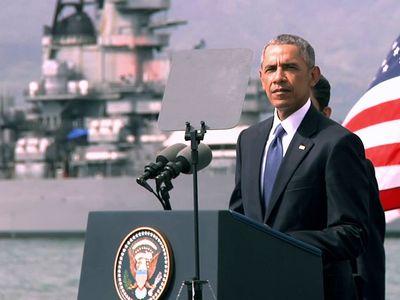
Reconciliation Address at Pearl Harbor
On December 27, 2016, U.S. President Barack Obama and Japanese Prime Minister Shinzo Abe visited Pearl Harbor, Hawaii, where Obama delivered this historic reconciliation address. Marking the 75th anniversary of the Pearl Harbor attack, Abe became the first sitting Japanese prime minister to visit Pearl Harbor after World War II. In his speech, Obama reflected on the devastating attack of December 7, 1941, which claimed the lives of more than 2,400 American service members and civilians. He emphasized that the transformation of the two nations from bitter adversaries into steadfast allies proves that reconciliation holds far greater power than retribution. Obama cited the valor of Japanese-American military units, Captain William Callaghan's honorable burial of a Japanese pilot, and the mutual aid between the two nations in times of disaster, conveying an enduring message of peace and friendship.
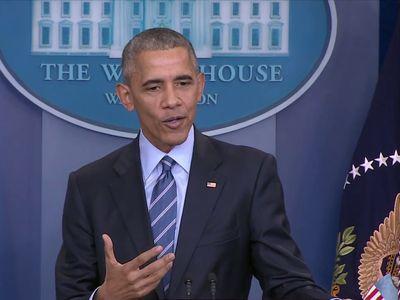
Final Presidential Press Conference of 2016
On December 16, 2016, U.S. President Barack Obama held his final year-end press conference at the White House. It took place just over a month after the 2016 presidential election, with President-elect Donald Trump preparing to take office. During this more than two-hour press conference, Obama answered a series of sharp questions on topics including Russian hacking of the U.S. election, the humanitarian crisis in Aleppo, China-U.S. relations and the Taiwan issue, the FBI's role in the election, the Electoral College system, and the future of the Democratic Party. He also reflected on the achievements of his eight-year presidency in economic recovery, healthcare reform, job growth, and climate agreements, emphasizing that America is stronger and more prosperous than it was eight years ago. This press conference is regarded as an important summary of Obama's presidential career and provides context for the many controversies of the transition period.
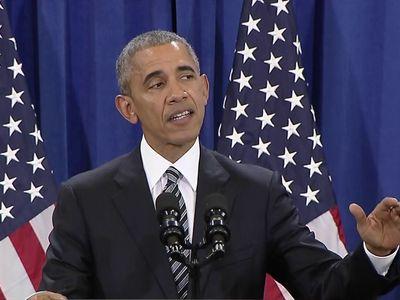
On the Administration's Approach to Counter-Terrorism
On December 6, 2016, President Barack Obama delivered a speech at MacDill Air Force Base in Tampa, Florida, systematically outlining his administration's counterterrorism strategy over eight years in office. Addressing service members from Central Command and Special Operations Command, Obama reviewed the counterterrorism journey from Iraq and Afghanistan to the fight against ISIL, emphasizing a sustainable counterterrorism model of "partnerships + special forces + airstrikes." He laid out six guiding principles: keeping the threat in perspective, avoiding overreach, upholding the rule of law and values, preventing the creation of more terrorists, maintaining transparency and accountability, and strengthening diplomacy and development aid. The speech also called on Congress to update the war authorization and close the Guantanamo Bay detention facility, while stressing the importance of preserving civil liberties and religious inclusion. This was one of Obama's final major speeches comprehensively outlining his counterterrorism strategy.
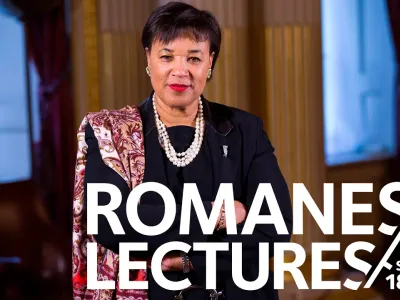
Patricia Scotland's 2016 Oxford Romanes Lecture: The Commonwealth of Nations
On 5 December 2016, Commonwealth Secretary-General Patricia Scotland delivered the annual Romanes Lecture, The Commonwealth of Nations, at the Sheldonian Theatre, University of Oxford. Beginning with the Commonwealth's gradual evolution, decolonisation, and multilayered networks, she explained how an association sustained by governments, professional bodies, civil society, and citizens brings 'soul' to international affairs. Organised around the five Ps of People, Planet, Prosperity, Peace, and Partnerships, the lecture addressed violence against women and girls, youth development, climate action, trade advantage, anti-corruption, and the prevention of violent extremism. Scotland argued that shared language, the Common Law tradition, institutional similarities, and goodwill could turn the Commonwealth's convening power into practical progress on sustainable development and global cooperation, closing with the conviction that 'Our Future is Greater than Our Past.'
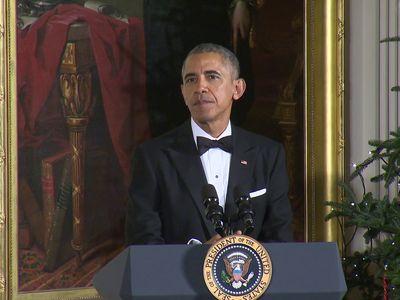
Address at the Kennedy Center Honors Reception
On December 4, 2016, President Barack Obama delivered an address at the Kennedy Center Honors Reception held at the White House. The Kennedy Center Honors are among the highest accolades in American performing arts, presented annually to artists for lifetime contributions to music, dance, theater, opera, film, and television. The 2016 honorees included soul singer Mavis Staples, actor Al Pacino, singer-songwriter James Taylor, pianist Martha Argerich, and the rock band the Eagles. In his speech, Obama reflected on eight years of promoting the arts at the White House, emphasized the vital role of the arts in democracy and national spirit, and profiled each of the five honorees' artistic achievements and life stories with humor and warmth.
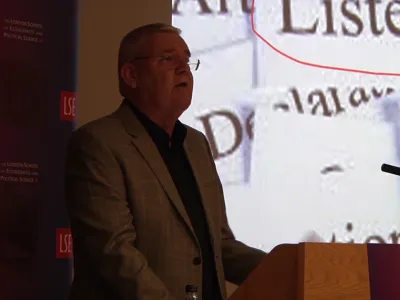
The Lost Art of Listening: The Missing Key to Democratic and Civil Society Participation
Communication scholar Jim Macnamara delivered this public lecture at the London School of Economics and Political Science on November 23, 2016, presenting findings from his Organisational Listening Project across Australia, the United Kingdom, and the United States. He argues that governments, corporations, and NGOs devote extensive resources to speaking while rarely listening well to stakeholders and publics; even when they listen, they often do so primarily to advance organisational objectives. He proposes an architecture of listening built from culture, policy, structures, technology, resources, skills, and links to decision-making. Examples from UK public consultation, correspondence, complaints, data management, and social media show how listening might improve. The lecture connects organisational listening to public trust, democratic participation, corporate reputation, and social equity.
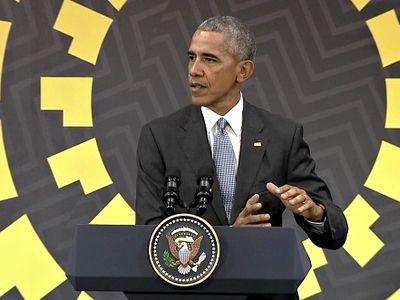
Press Conference in Peru
On November 20, 2016, President Barack Obama held a press conference during the APEC summit in Lima, Peru. This was Obama's first foreign trip after Donald Trump's election victory and his final international summit as president. At the press conference, Obama outlined America's Asia-Pacific trade strategy, defended the Trans-Pacific Partnership (TPP), and emphasized the importance of the Asia-Pacific region to U.S. prosperity. During the Q&A session, he responded to questions about Trump's governing prospects, his meeting with Putin, Russian election interference, conflict of interest and blind trusts, cybersecurity, the future of the Democratic Party, the situation in Syria, and late-term Obama administration regulations. The press conference was seen as an important occasion for Obama to clarify the continuity of U.S. foreign policy at home and abroad during the transition period.
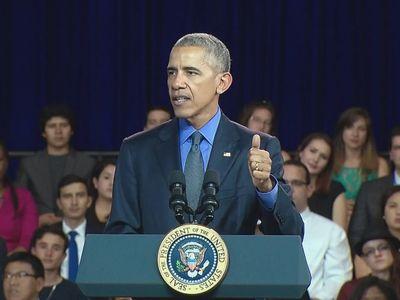
Young Leaders of the Americas Initiative Address
On November 20, 2016, U.S. President Barack Obama delivered the Young Leaders of the Americas Initiative (YLAI) address and participated in a Q&A session at the Pontifical Catholic University of Peru in Lima, during his final foreign trip as president. The event marked the last public appearance of Obama's final international tour, which coincided with the APEC summit. In his remarks, Obama emphasized that the youth generation would shape the future, reviewed progress in U.S.-Latin American relations, and announced a new $40 million investment in youth entrepreneurship across the Caribbean. The Q&A covered topics including democracy and development, U.S.-Latin American relations under the incoming Trump administration, immigration policy, women's empowerment, and youth entrepreneurship, with fellows from Venezuela, the Bahamas, Peru, and other countries posing questions.
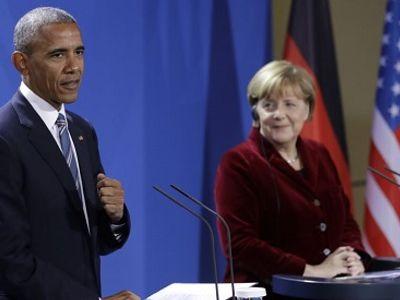
Joint Presser with Chancellor Angela Merkel
On November 17, 2016, U.S. President Barack Obama held a joint press conference with German Chancellor Angela Merkel in Berlin during his final official visit to Germany as president. Taking place just one week after Donald Trump's election victory, the press conference drew intense international attention. The two leaders summarized eight years of bilateral cooperation on trade, security, climate, and refugees, emphasizing the importance of the transatlantic alliance. The Q&A session covered the future of U.S.-European relations under Trump, Russian election interference, NATO commitments, the situation in Syria, the rise of populism, and whether Merkel would seek re-election, with both leaders responding to four rounds of questions from Reuters, CBS, and other outlets.