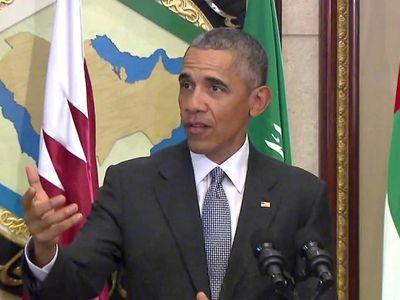
Press Conference in Saudi Arabia
On April 21, 2016, President Barack Obama held a press conference at Diriyah Palace in Riyadh during his official visit to Saudi Arabia. The visit coincided with the U.S.-GCC summit, where both sides discussed regional security, counterterrorism cooperation, and the Iran nuclear deal. Obama addressed questions on U.S.-Saudi tensions, the anti-ISIL campaign, the situations in Yemen and Syria, Iraqi politics, and U.S.-Iran relations, emphasizing that despite tactical differences, the U.S. and Gulf states share broad consensus on regional security and advocating a dual-track approach to Iran. The press conference featured three rounds of questions covering diplomacy, military affairs, and regional politics.
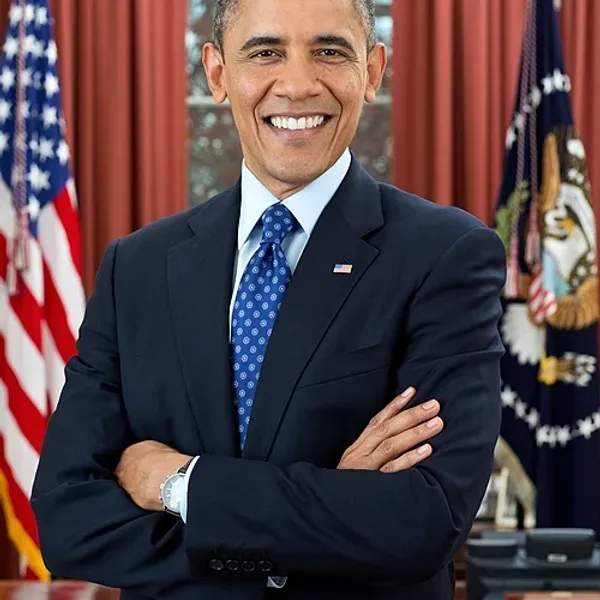
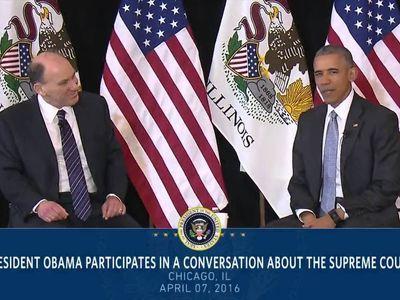
Conversation on the USSC Nomination Process
On April 7, 2016, President Barack Obama returned to his alma mater, the University of Chicago Law School, for a public conversation with constitutional law professor David Strauss on the U.S. Supreme Court nomination process. The event took place amid a constitutional controversy following the death of Justice Antonin Scalia, as Obama had nominated Merrick Garland to fill the vacancy but the Senate Republican majority refused to hold hearings or a vote. During the dialogue, Obama reviewed the historical evolution of the federal judicial appointment system, analyzed how partisan polarization was eroding the legitimacy of the nomination process, outlined his criteria for selecting justices—emphasizing both intellectual integrity and human empathy—and responded to student questions on criminal justice reform, the drone program, voting rights, and diversity. The conversation served as both a profound reflection on the crisis of the Supreme Court nomination system and a civic education for law students from the former constitutional law professor.
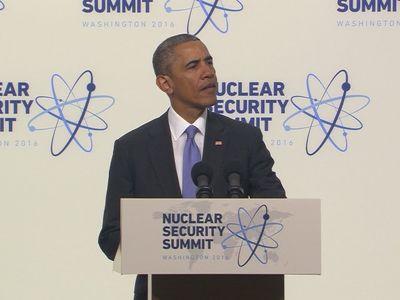
Nuclear Security Summit Press Conference
On April 1, 2016, President Barack Obama held a press conference following the fourth Nuclear Security Summit at the Walter E. Washington Convention Center in Washington, D.C. This was the final leader-level summit in the series initiated by the Obama administration in 2010, with leaders from more than 50 nations and international organizations in attendance. In his opening remarks, Obama summarized six years of significant progress in nuclear material security, countering nuclear smuggling, and strengthening international cooperation, announcing that over 3.8 tons of highly enriched uranium and plutonium had been removed or secured from more than 50 facilities in 30 countries. The press conference covered topics including the Iran nuclear deal implementation, drone strike policy, 2016 election Republican candidate remarks, Turkey's political trends, and nuclear arsenal modernization and arms control.
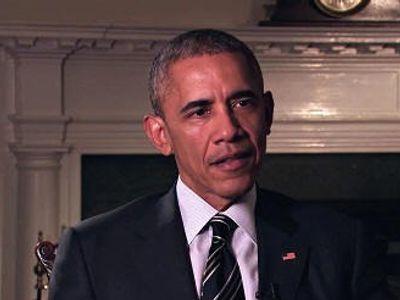
The President Discusses 'The Wire' with David Simon
On March 26, 2016, then-U.S. President Barack Obama sat down with David Simon, creator of the acclaimed television series The Wire, at the White House for a discussion on American drug policy and criminal justice reform. Set in Baltimore, The Wire is a landmark drama that exposes the drug war, urban poverty, failing schools, and systemic inequality. During the conversation, the two reflected on the lessons of America's war on drugs, the intergenerational impact of mass incarceration on minority communities, and the social costs of harsh sentencing for nonviolent drug offenses. Obama emphasized the need to refocus law enforcement on violent crime while creating pathways for former offenders to reenter society. The dialogue exemplifies the intersection of popular culture and public policy.
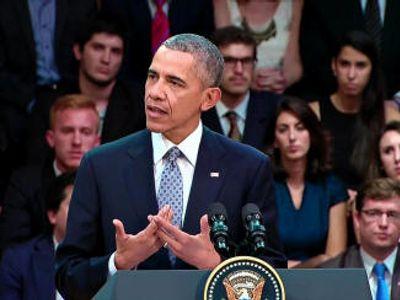
Young Leaders of the Americas Initiative Town Hall
On March 23, 2016, during his state visit to Argentina, President Barack Obama participated in the Young Leaders of the Americas Initiative (YLAI) Town Hall at Usina Del Arte in Buenos Aires. Launched by the U.S. Department of State, YLAI identifies the most innovative young entrepreneurs and civil society leaders across the Americas and provides them with training, connections, and capital. In his opening remarks, Obama emphasized the new chapter in U.S.-Argentina relations, the importance of the younger generation, and the vision for cross-American cooperation, followed by an hour-long Q&A session with young attendees covering cultural convergence, scientific collaboration, public health, social entrepreneurship, the Israeli-Palestinian conflict, the U.S. election, and civic responsibility.
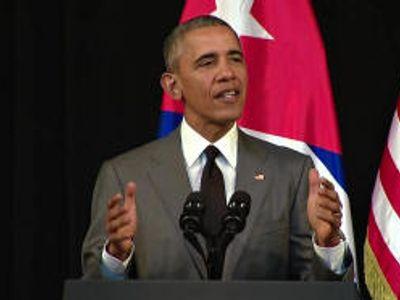
Address to the People of Cuba
On March 22, 2016, U.S. President Barack Obama delivered a historic address to the people of Cuba at the Gran Teatro de la Habana. Marking the first official visit to Cuba by a sitting U.S. president in nearly 90 years, the speech represented a landmark moment in the normalization of U.S.-Cuba relations. Obama opened with a verse from Cuban national hero José Martí, offering a greeting of peace and friendship. He reflected on more than half a century of estrangement and confrontation, declaring his intention to bury the last remnant of the Cold War in the Americas. He explained the rationale for normalization, called for lifting the U.S. embargo, and candidly shared his views on democracy and human rights while emphasizing that the United States would not impose its system on Cuba and that change must come from the Cuban people themselves.
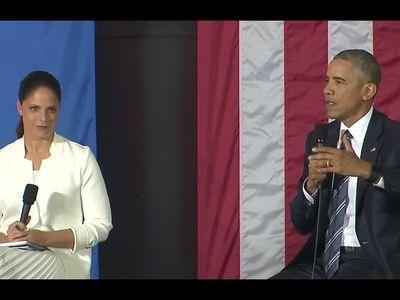
Address to Entrepreneurs of Cuba
On March 21, 2016, U.S. President Barack Obama spoke at a Cuba entrepreneurs event in Havana during his historic visit to Cuba—the first by a sitting U.S. president in nearly 90 years. Moderated by Cuban-American journalist Soledad O'Brien, the event featured a keynote address followed by a town hall-style Q&A with Cuban entrepreneurs and American business leaders. Obama emphasized U.S. support for Cuba's growing private sector, promoted bilateral economic cooperation, and called on Congress to lift the U.S. embargo. Participants discussed entrepreneurship, Internet access, agricultural cooperation, and medical research, among other topics. The event underscored the Obama administration's policy of normalizing U.S.-Cuba relations.
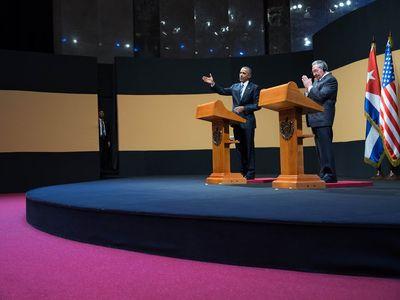
Joint Press Conference with Raul Castro
On March 21, 2016, during President Barack Obama's historic visit to Cuba, he and Cuban leader Raul Castro held a joint press conference at the Palace of the Revolution in Havana. This marked the first visit by a U.S. President to Cuba in 88 years, a significant moment in the normalization of U.S.-Cuban relations. Both leaders delivered opening statements: Castro emphasized that the blockade remained the main obstacle to normalizing bilateral relations and raised issues including the return of Guantanamo Bay; Obama outlined U.S. efforts to advance bilateral cooperation in travel, trade, Internet access, educational exchanges, health and medicine, and regional security. During the Q&A session, reporters asked about democracy and human rights, political prisoners, the prospects for lifting the embargo, and the future of U.S.-Cuban relations, with both sides engaging in frank exchanges on the definition of human rights and civilized coexistence.
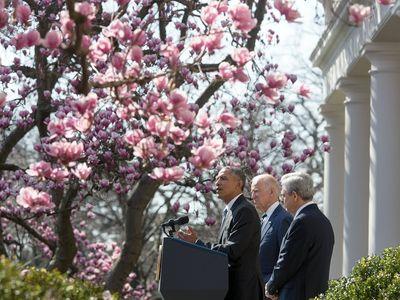
Merrick Garland USSC Nomination Address
On February 13, 2016, conservative US Supreme Court Justice Antonin Scalia passed away suddenly, leaving a vacancy on the Court. On March 16, President Barack Obama formally nominated Chief Judge Merrick Garland of the D.C. Circuit Court of Appeals to fill the seat, in a ceremony at the White House Rose Garden. Garland was widely regarded as a consensus nominee due to his outstanding legal credentials, moderate judicial philosophy, and history of bipartisan support. However, the Republican-controlled Senate refused to hold hearings or a vote, arguing that a president should not fill a Supreme Court vacancy in the final year of a term. The nomination was never confirmed during Obama's presidency, becoming one of the most contentious Supreme Court nomination standoffs in American constitutional history.
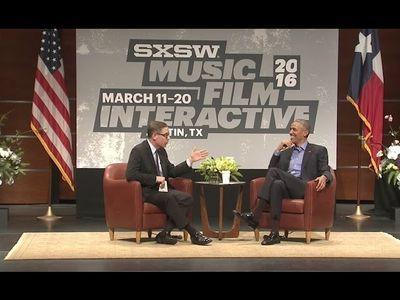
Remarks at South by Southwest Interactive
On March 11, 2016, President Barack Obama appeared at the South by Southwest (SXSW) Interactive festival in Austin, Texas, for a public conversation with Evan Smith, Editor-in-Chief of the Texas Tribune. This marked the first time a sitting U.S. president had spoken at SXSW. The conversation covered the intersection of technology and government, including the creation and work of the U.S. Digital Service (USDS), voting rights reform and online voter registration, the digital divide and educational equity, precision medicine and big data applications, and civic engagement. Obama also addressed the high-profile Apple vs. FBI encryption dispute, emphasizing the importance of finding a balance between privacy and security. The dialogue was delivered in a lighthearted and humorous style, showcasing Obama's thoughtful perspective on issues at the intersection of technology and society.
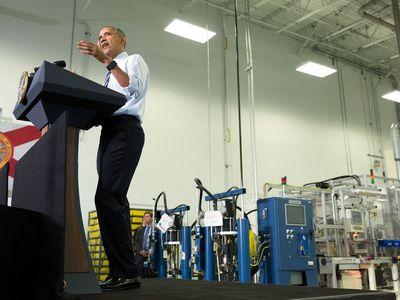
Address on the American Recovery and Reinvestment Act Seventh Anniversary
On February 26, 2016, President Barack Obama delivered a speech at the Saft battery factory in Jacksonville, Florida, marking the seventh anniversary of the American Recovery and Reinvestment Act. The Act was a massive economic stimulus package of nearly $800 billion introduced early in Obama's presidency to address the 2008 financial crisis and the Great Recession. In the speech, Obama reviewed seven years of U.S. economic recovery, highlighting the Act's achievements in tax cuts, infrastructure building, and clean energy investment. He particularly emphasized America's tremendous progress in solar energy, wind power, and advanced batteries, pushed back against negative narratives about the U.S. economy during the campaign season, and urged the public to recognize the progress that had been made.
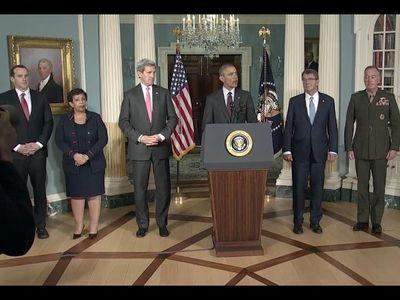
Update on Campaign to Degrade and Destroy ISIL
On February 25, 2016, U.S. President Barack Obama delivered remarks at the State Department providing an update on the campaign to degrade and destroy ISIL. As the Syrian civil war entered its fifth year with ISIL still controlling large swathes of territory in Iraq and Syria, Obama outlined progress on multiple fronts by the 66-nation international coalition, including airstrikes, territorial gains, and disruption of oil revenues. He announced that a cessation of hostilities in Syria would take effect the next day, framing it as a significant diplomatic effort to end the conflict. Obama reiterated that the United States would continue targeting ISIL globally and made clear there would be no ceasefire with the terrorist group.