
Jeff Bezos's 2010 Baccalaureate Address at Princeton University: We Are What We Choose
On May 30, 2010, Amazon founder and Princeton Class of 1986 alumnus Jeff Bezos delivered the University’s Baccalaureate address, “We Are What We Choose.” He began with a childhood story about calculating how smoking had shortened his grandmother’s life and his grandfather’s lesson that being kind is harder than being clever. Bezos distinguished inherited gifts from difficult personal choices and recalled leaving a secure finance job to start Amazon. Through a sequence of questions about passion, originality, service, conviction, apology, love, risk, persistence, building, and kindness, he asked graduates to consider the lives they would author. He concluded that the most meaningful account of a life is the series of choices a person makes. The text follows Princeton University’s complete official remarks published as delivered.
Securing U.S. Cyber Infrastructure
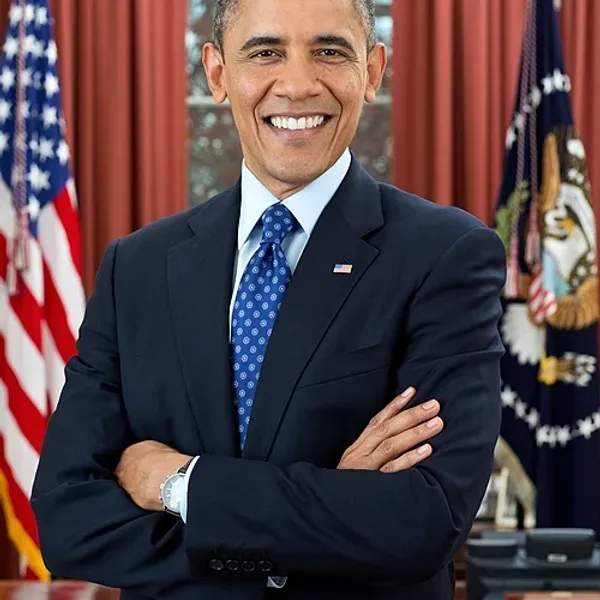
On May 29, 2009, President Obama delivered a landmark speech on cybersecurity from the East Room of the White House. This was the first time in American history that a president elevated cybersecurity to the level of a national security priority. In his address, Obama announced the creation of a White House Cybersecurity Coordinator office and committed to treating digital infrastructure as a strategic national asset. This speech marked a new era in American cybersecurity policy, emphasizing the importance of protecting personal privacy, economic competitiveness, and national security in the Information Age.
Charles M. Vest's 2007 MIT Commencement Address
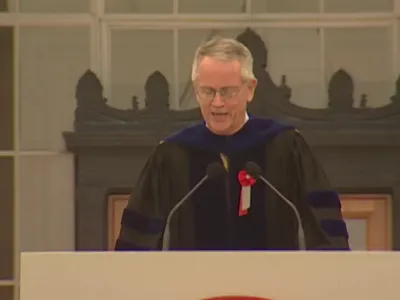
MIT president emeritus and incoming National Academy of Engineering president Charles M. Vest delivered this address at MIT's Commencement on June 8, 2007. Organized around opportunity and service, the speech argues that people cannot predict when opportunity will appear, but education opens doors to learning, work, and contribution. Vest recalls being rejected for an MIT faculty position before later becoming the Institute's president, then surveys the promise and ethical responsibilities of the internet, life sciences, synthetic biology, and engineering innovation. He asks graduates to bring knowledge, skill, rational inquiry, and moral judgment into public life and to find meaning by using their education in service of others.
Bill Gates' 2007 Harvard Commencement Address
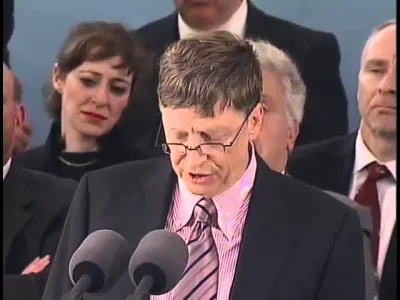
On June 7, 2007, Microsoft co-founder and philanthropist Bill Gates addressed Harvard University's 356th Commencement Afternoon Exercises and received an honorary Doctor of Laws degree. He opened with humor about leaving Harvard without graduating, then reflected on how little he had understood as a student about global inequalities in health, wealth, and opportunity. Drawing on the public-health work of the Bill & Melinda Gates Foundation, he argued that the main barrier to turning compassion into action is often complexity rather than indifference. He outlined a path of seeing problems, finding high-leverage solutions, applying technology, and measuring impact. Gates urged Harvard and its graduates to use their knowledge, technology, and privilege against deep inequities in poverty, disease, education, and access to clean water, and to judge achievement partly by how they improve the lives of distant strangers.
Ben S. Bernanke's 2006 MIT Commencement Address
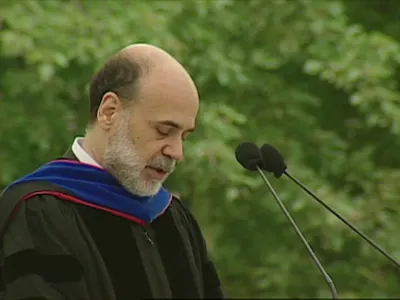
Ben S. Bernanke, then chairman of the Federal Reserve and an MIT economics PhD alumnus, delivered this address at the Institute's 140th Commencement on June 9, 2006. The speech is not about the later financial crisis. Instead, Bernanke reviews the history of economics at MIT and explains how technological innovation and economic institutions interact to raise productivity. Using computers, electric motors, and other general-purpose technologies, he argues that inventions often require organizational change, training, and investment in intangible capital before their full benefits appear. He urges graduates to seek intellectually exciting work, use their creativity, remain willing to follow unmarked paths, value family, read broadly, and stay engaged with society.
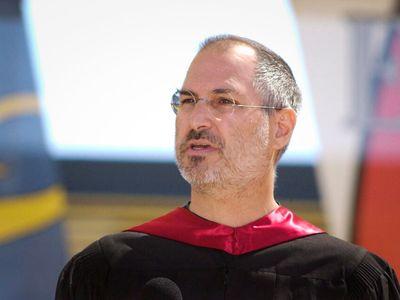
Steve Jobs' 2005 Stanford Commencement Address
This is the Commencement address delivered by Steve Jobs, CEO of Apple Computer and of Pixar Animation Studios, on June 12, 2005. In it, Jobs shares three personal stories from his life — about connecting the dots, love and loss, and death — offering wisdom and inspiration to the graduating class.
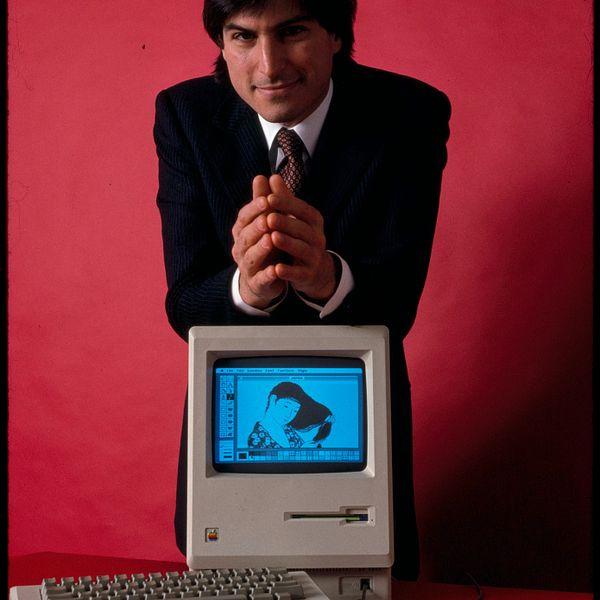
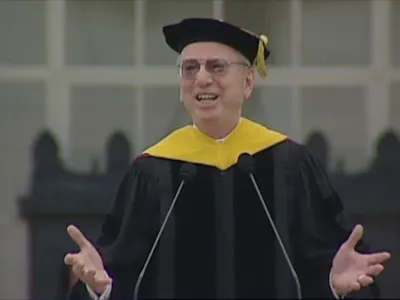
Irwin M. Jacobs' 2005 MIT Commencement Address
MIT alumnus and Qualcomm co-founder Irwin M. Jacobs delivered this address at the Institute's Commencement on June 3, 2005. Drawing on his unexpected path from hotel administration to electrical engineering, academic research, and entrepreneurship, he argues that life and technology are shaped by changes that cannot be fully predicted, while a rigorous education prepares people to turn change into opportunity. Jacobs recounts the creation of Linkabit and Qualcomm and the development of digital wireless communications. He also discusses pressures on American science and engineering education, research funding, and global competitiveness, urging graduates to remain innovative, participate in public life, and give back through education, culture, and philanthropy.
At a Slight Angle to the Universe: The University in a Digitized, Commercialized Age
On 17 October 2000, American economist and former Princeton University president William G. Bowen delivered the Romanes Lecture at the University of Oxford. As the Internet and digital publishing moved rapidly into higher education, universities faced pressure on public funding, growing commercial involvement and disputes over intellectual property. Drawing on JSTOR, online courses and for-profit educational ventures, Bowen examined the wider dissemination of knowledge, diversified revenues and economies of scale made possible by digitization and commercialization. He also warned about technological replacement costs, distorted faculty incentives and mission drift. Universities, he argued, should learn from market efficiency while defending academic autonomy, equal opportunity and long-term public purposes, retaining the independent perspective of a poet who stands at a slight angle to the universe.
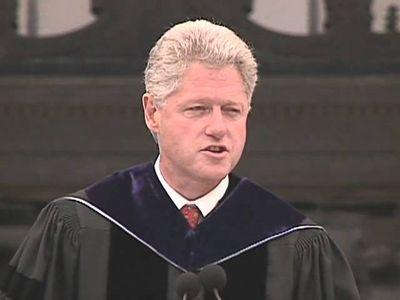
Bill Clinton's 1998 MIT Commencement Address
President Bill Clinton delivered this address at MIT's 132nd Commencement on June 8, 1998, when AIDS researcher David Ho also spoke. Clinton places MIT at the center of the information revolution and considers how computers, the internet, and communications technology are changing production, education, and social life. He warns that technological progress can deepen existing inequality, focusing especially on the digital divide among schools and households. Clinton calls for sustained basic research, better teacher preparation, and public investment so children of different races, regions, and incomes can enter the new world of knowledge. Opportunity in the information age, he argues, will not distribute itself; technological leadership must be joined to shared values, citizenship, and wider participation.
William J. Perry's 1995 Stanford Commencement Address: Choosing to Engage with the World
On 1995-06-18, William J. Perry delivered this address at Stanford University's Commencement. Organized around international engagement, security, and peace after the Cold War, it joins personal experience, professional judgment, and the public concerns of its moment. The address asks not only what graduates might do next, but also how educated people should understand their abilities, accept public responsibility, and help build a shared future. This edition is based on a complete authoritative transcript and preserves the sequence and character of the original address.
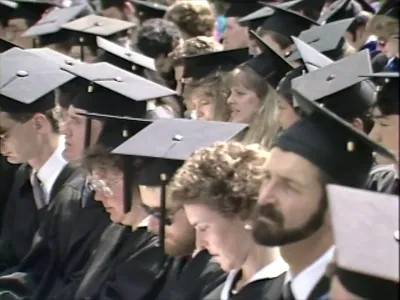
Kenneth H. Olsen's 1987 MIT Commencement Address
Digital Equipment Corporation founder and MIT alumnus Kenneth H. Olsen delivered this address on June 1, 1987. He recalls leaving an MIT research environment and building Digital Equipment with $70,000 in venture capital, using the story to explore entrepreneurship, satisfaction in work, and organizational responsibility. Olsen argues that entrepreneurial responsibility is not limited to people who start companies; it can flourish in product groups, schools, and public institutions when goals are clear and people have freedom to take risks and correct mistakes. He warns that success can weaken humility and the willingness to learn, while overcomplicated plans can separate leaders from their businesses. Work, in his account, is a commitment to improve things, influence the world, and help others grow.
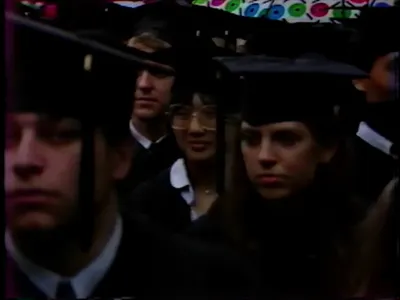
William R. Hewlett's 1986 MIT Commencement Address
Hewlett-Packard co-founder and MIT alumnus William R. Hewlett delivered this address on June 2, 1986, fifty years after receiving his master's degree from the Institute. Drawing on decades in high-technology research and management, Hewlett examines how creativity arises, how it can be recognized, and how organizations can make room for curiosity and experimentation. He distinguishes spontaneous insight from creativity directed toward a defined objective, emphasizing attention to anomalies, patient thought, tolerance of failure, and exchange between generations. Innovation, he argues, must ultimately connect with product quality, manufacturing efficiency, and human needs. He asks graduates to treat industrial change as an opportunity and to advance technology through curiosity, responsibility, and practical work.