Industrial Strategy
On 11 September 2012, UK Secretary of State for Business, Innovation and Skills Vince Cable delivered this industrial strategy speech at Imperial College London. Speaking just after the London Olympics, he used the relationship between athletic achievement and years of planning to challenge the claim that government should simply leave markets alone. Cable argued that decisions on research, education, regulation, taxation, and procurement already shape the economy, so industrial strategy should be designed consciously while allowing failure and adaptation. He then set out five areas for action: a business bank, partnerships with strategic sectors, emerging technologies, skills, and public procurement. The address marked an important moment in the British government's renewed assertion of an active role in industrial policy.

Michael Lewis's 2012 Baccalaureate Address at Princeton University: Don't Eat Fortune's Cookie
On June 3, 2012, writer Michael Lewis delivered Princeton University’s Baccalaureate address, “Don’t Eat Fortune’s Cookie.” He traced his path from an art history degree through an accidental job at Salomon Brothers, a decision to leave a lucrative career for writing, and the success of Liar’s Poker. Lewis argued that successful people often rationalize accidents as inevitabilities. Drawing on the mispriced baseball players in Moneyball and a Berkeley experiment involving an extra cookie, he showed how luck shapes status and outcomes. He urged graduates to recognize that success brings an obligation to the unlucky and to resist treating life’s extra cookies as deserved. The text follows Princeton University’s complete official prepared remarks.
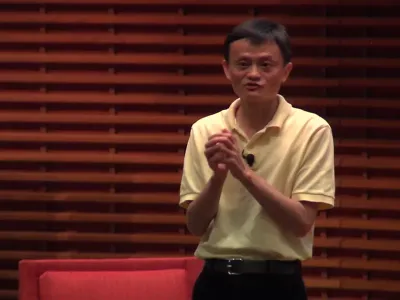
Alibaba's Ma Reflects On 12-Year Journey at China 2.0 Conference
Jack Ma delivered the closing keynote at Stanford's China 2.0 conference on September 30, 2011, and Stanford Graduate School of Business published the full recording on October 6. He reviewed Alibaba's twelve-year journey and discussed B2B, Taobao, Alipay, AliCloud, small businesses, credit systems, and corporate responsibility. Roughly thirty-five minutes of questions followed, covering a possible Yahoo acquisition, VIE regulation, lessons from Yahoo China, Taobao's structure and logistics, the Alipay dispute, international access, foreign companies in China, U.S.-China misunderstandings, and globalization. This edited transcript follows the publisher-provided English captions, preserves all speakers and question order, removes nonverbal markers and empty disfluencies, and corrects clear contextual errors in names, figures, and technical terms.

The Road to Recovery: What Can Government Do in the Current Economic Crisis?
Deputy Prime Minister Nick Clegg delivered this British Government at LSE public lecture on September 14, 2011, as the euro-area crisis intensified, global markets slowed, and Britain faced high inflation and rising unemployment. The coalition government was under pressure both to maintain its deficit-reduction programme and to support economic growth. Clegg defends fiscal consolidation while stressing international coordination, euro-area stability, open trade, and stronger bank capital. At home, he argues that government should neither attempt to run the economy nor withdraw from it, but should improve taxation, skills, competition, and credit conditions. He places transport, energy, and digital infrastructure at the centre of short-term demand support and long-term productivity and announces special priority for up to forty major infrastructure projects.
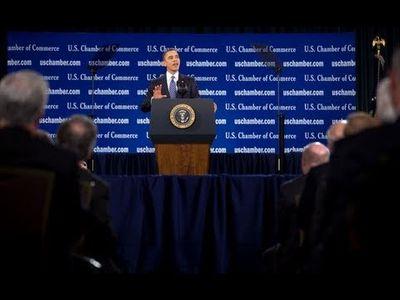
Address to the U.S. Chamber of Congress
On February 7, 2011, President Barack Obama delivered remarks at the U.S. Chamber of Commerce headquarters in Washington, D.C. The Chamber is the largest business lobbying organization in the United States, representing millions of businesses. In his speech, Obama called for stronger cooperation between government and business to promote American economic recovery and growth. He proposed that the government increase investment in innovation, education, and infrastructure, while urging businesses to take on more social responsibility, including creating jobs in America and investing in the domestic market. The speech addressed corporate tax reform, health care reform, and export promotion, and cited the historical precedent of government-business cooperation during President Roosevelt's era, emphasizing that both sides should work together to meet global economic competition.
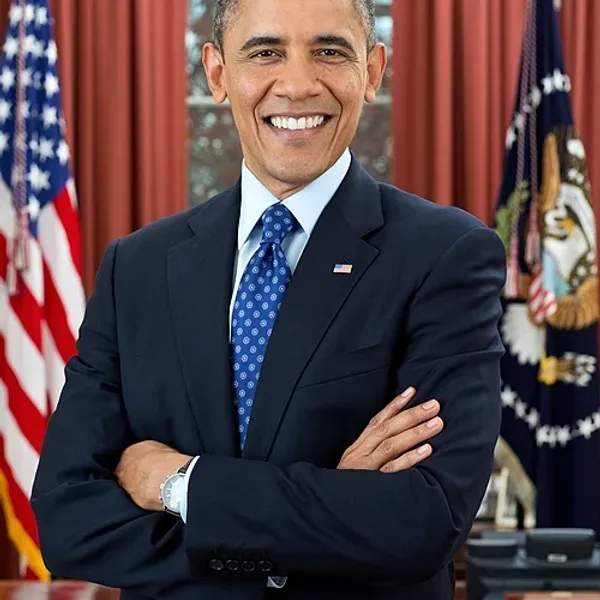
U.S.-India Business Council Summit Address
On November 6, 2010, U.S. President Barack Obama delivered an address at the U.S.-India Business Council Summit in Mumbai, India. This was his first visit to India as president and the longest single-country visit of his presidency. Obama emphasized the U.S.-India relationship as one of the defining partnerships of the 21st century, announcing nearly $10 billion in export deals to India expected to support over 50,000 American jobs. The speech covered cooperation in trade, investment, technological innovation, and infrastructure, as well as the vision for reducing trade barriers and deepening economic ties. The visit underscored the high importance the United States placed on the U.S.-India strategic partnership.
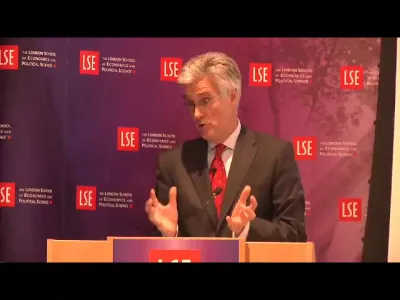
Economic Growth, Human Welfare and Inequality
Adair Turner delivered the first of the 2010 Lionel Robbins Memorial Lectures at the London School of Economics and Political Science on October 11, 2010. Given about two years after the most acute phase of the global financial crisis, the lecture formed part of a series on economics after the crisis. Turner challenges the instrumental conventional wisdom that treats maximising GDP per capita as the overriding policy objective and market liberalisation and inequality as necessary means to growth. Drawing on research into happiness, relative income, environmental externalities, distributive activity in finance and law, and rising inequality at the top, he argues that growth and human welfare have a complex relationship in rich countries and that economics must again engage with ethical, behavioural, historical, and political-economic questions.

Jeff Bezos's 2010 Baccalaureate Address at Princeton University: We Are What We Choose
On May 30, 2010, Amazon founder and Princeton Class of 1986 alumnus Jeff Bezos delivered the University’s Baccalaureate address, “We Are What We Choose.” He began with a childhood story about calculating how smoking had shortened his grandmother’s life and his grandfather’s lesson that being kind is harder than being clever. Bezos distinguished inherited gifts from difficult personal choices and recalled leaving a secure finance job to start Amazon. Through a sequence of questions about passion, originality, service, conviction, apology, love, risk, persistence, building, and kindness, he asked graduates to consider the lives they would author. He concluded that the most meaningful account of a life is the series of choices a person makes. The text follows Princeton University’s complete official remarks published as delivered.
The Crisis and the Policy Response
Federal Reserve chairman Ben S. Bernanke delivered the Stamp Lecture at the London School of Economics on January 13, 2009, as the global financial crisis was spreading from credit markets into the real economy. He explains the Fed's framework at the effective lower bound, including liquidity facilities, support for commercial paper and asset-backed securities, purchases of longer-term securities, and the distinction between what he calls credit easing and quantitative easing. Bernanke also discusses exit strategy, troubled assets, regulatory reform, and the problem of institutions deemed too big to fail. He argues that fiscal stimulus cannot produce a durable recovery without measures to stabilize finance and that international coordination is essential in an interconnected economy.
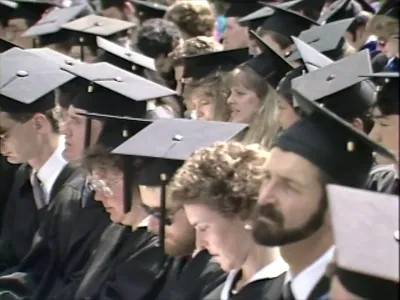
Kenneth H. Olsen's 1987 MIT Commencement Address
Digital Equipment Corporation founder and MIT alumnus Kenneth H. Olsen delivered this address on June 1, 1987. He recalls leaving an MIT research environment and building Digital Equipment with $70,000 in venture capital, using the story to explore entrepreneurship, satisfaction in work, and organizational responsibility. Olsen argues that entrepreneurial responsibility is not limited to people who start companies; it can flourish in product groups, schools, and public institutions when goals are clear and people have freedom to take risks and correct mistakes. He warns that success can weaken humility and the willingness to learn, while overcomplicated plans can separate leaders from their businesses. Work, in his account, is a commitment to improve things, influence the world, and help others grow.

William R. Hewlett's 1986 MIT Commencement Address
Hewlett-Packard co-founder and MIT alumnus William R. Hewlett delivered this address on June 2, 1986, fifty years after receiving his master's degree from the Institute. Drawing on decades in high-technology research and management, Hewlett examines how creativity arises, how it can be recognized, and how organizations can make room for curiosity and experimentation. He distinguishes spontaneous insight from creativity directed toward a defined objective, emphasizing attention to anomalies, patient thought, tolerance of failure, and exchange between generations. Innovation, he argues, must ultimately connect with product quality, manufacturing efficiency, and human needs. He asks graduates to treat industrial change as an opportunity and to advance technology through curiosity, responsibility, and practical work.