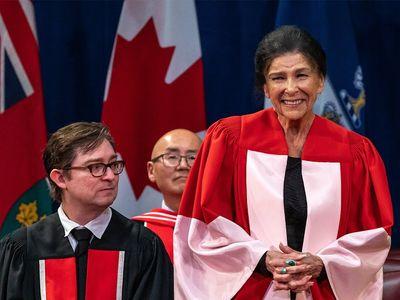
Alanis Obomsawin's 2023 Honorary Degree Address at University of Toronto: Look into Your Heart
On June 19, 2023, Abenaki Canadian documentary filmmaker, singer, and educator Alanis Obomsawin received an honorary degree from the University of Toronto. Beginning with Wabanaki as “people from where the sun rises,” she recalled how her ancestors were dispersed through centuries of conflict and colonial change, carrying a responsibility for each person to preserve part of the nation and its language until later generations could gather in a circle again. At ninety, she described herself as a witness to that renewed gathering and expressed gratitude that Canadians increasingly seek justice for First Nations, Inuit, and Métis peoples. Drawing on decades of mentoring and master classes, she urged graduates to look into their hearts for their gifts. Whatever they hope to become or do is possible, she said; their achievement belongs not only to their families but to Canada, whose future may lead somewhere unprecedented and beautiful.
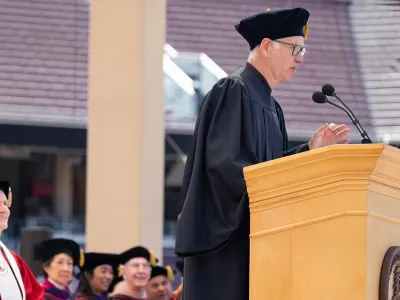
John McEnroe's 2023 Stanford Commencement Address: Life Is a Long Game
On 2023-06-18, John McEnroe delivered this address at Stanford University's Commencement. Organized around competition, failure, and life's long game, it joins personal experience, professional judgment, and the public concerns of its moment. The address asks not only what graduates might do next, but also how educated people should understand their abilities, accept public responsibility, and help build a shared future. This edition is based on a complete authoritative transcript and preserves the sequence and character of the original address.
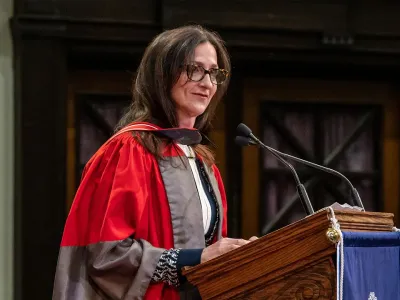
Sara Seager's 2023 Honorary Degree Address at University of Toronto: Trust Your Inner Voice
On June 16, 2023, Canadian-born astrophysicist Sara Seager received an honorary degree from her alma mater, the University of Toronto. Looking back across thirty years of smartphones, artificial intelligence, and exoplanet discoveries, she invited graduates to look at the stars, consider the galaxy's trillions of possible worlds, and revisit the ancient question of whether humanity is alone. She recalled discovering at a U of T astronomy open house that astronomy could be a profession, then trusting her inner voice despite her father's preference that she study medicine. At Harvard, early exoplanet detections faced deep skepticism, but she committed herself to the field and helped establish exoplanet science and the search for life beyond Earth. She encouraged graduates to find work they both love and do well, challenge the status quo, think beyond conventional boundaries, and see every star's potential planets as a symbol of their own unreleased possibilities.
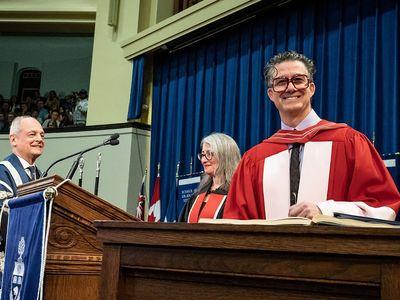
Derrick Rossi's 2023 Honorary Degree Address at University of Toronto: Choose the Road Less Travelled and Make an Impact
On June 9, 2023, stem-cell biologist and Moderna co-founder Derrick Rossi addressed an honorary-degree convocation for University of Toronto public-health and social-work graduates. Drawing on a path from Scarborough through solo travel in Africa, hitchhiking across Europe, and repeated changes of country and doctoral program, he urged graduates to choose the road less travelled—or forge a path where none exists—to enrich life and build resilience for the unknown. His second theme was impact. At Stanford he saw how laboratory discoveries could become companies and therapies, then at Harvard used messenger RNA to alter cell fate and developed technology that helped launch Moderna. The pandemic allowed that platform to help patients on a scale he had never expected and led him to abandon the idea of retiring after one successful contribution. He now regards making a positive impact throughout life as a continuing duty.
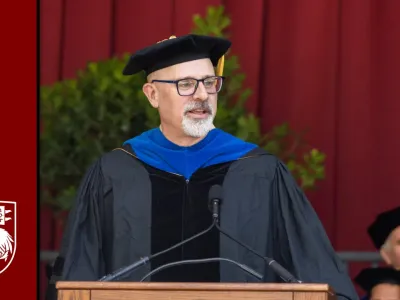
Tom Ginsburg's 2023 Convocation Address at the University of Chicago: Conversation and Democracy
On June 3, 2023, comparative constitutional scholar Tom Ginsburg delivered "Conversation and Democracy" at the University of Chicago's Convocation. Beginning with Francis Fukuyama's "end of history" thesis, he argued that democracy now faces pressure from authoritarianism, partisan polarization, and public disappointment, yet remains animated by hope rather than fear. Drawing on John Dewey, he stressed that legal rights cannot sustain democracy without free communication in daily life. Examples from South Africa's constitution-making, Shirley Chisholm's visit to George Wallace, and a Northern Ireland citizens' assembly showed how listening can bridge profound divisions. Universities, he said, should create better environments for dialogue and debate. Machines may imitate conversation, but they have no mind to change and no vote to cast; democratic progress requires people to keep talking, keep listening, and implement ideas formed with others.
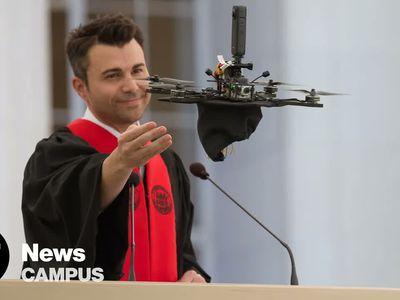
Mark Rober Address to MIT Class of 2023
On June 1, 2023, engineer and science video creator Mark Rober addressed MIT’s graduating class. He jokingly proposed making a video in thirty years about the graduates’ accomplishments, then offered advice for making a positive impact: embrace naive optimism when the future is uncertain, frame failures like setbacks in a video game, and actively foster relationships. He described his mother’s influence on his life and closed with a fourth suggestion, occasional playful anarchy, by sending his mortarboard aloft on a drone.
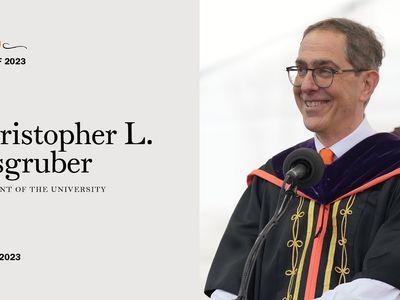
Christopher L. Eisgruber's 2023 Commencement Address at Princeton University: Let Your Voices Rise
On May 30, 2023, Christopher L. Eisgruber, president of Princeton University and a constitutional scholar, delivered the Class of 2023 Commencement address under the theme 'Let Your Voices Rise.' He opened with the story of civil rights leader Harry Belafonte, who had died a little over a month earlier: in 1960, Belafonte helped raise funds and place a full-page advertisement in The New York Times headlined 'Heed Their Rising Voices.' Though the advertisement contained factual errors, it led to the landmark Supreme Court case New York Times v. Sullivan, which established protections for criticizing public officials. Eisgruber argued that the free speech rights Americans cherish today were forged in the 1960s struggle for racial justice in the South, and that a movement now seeks to drive a wedge between equality and free speech. He urged graduates to defend free expression and full inclusivity, and to let their voices rise for equality, diversity, freedom, justice, and love.
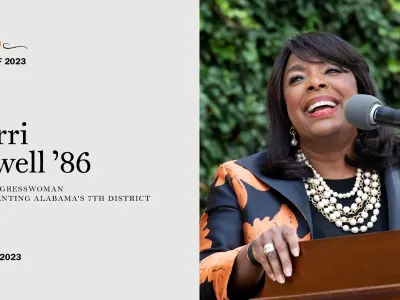
Terri Sewell's 2023 Class Day Address at Princeton University: Seeds of Service
On May 29, 2023, U.S. Representative Terri Sewell, a member of Princeton University's Class of 1986, returned to address the Class of 2023 on Class Day. She began with family stories about graduation and traced her journey from Selma, Alabama, to Princeton, the support she received from mentors, her legal career, and her return home to serve. She organized her remarks around three wishes: to bloom where planted, flourish where found, and spread seeds of service wherever graduates go. She argued that educational opportunity carries responsibility and encouraged a period of service through volunteering, community organizing, voting, or seeking local office. A closing story about a civil rights pioneer urged graduates to turn gratitude for earlier generations into action of their own.
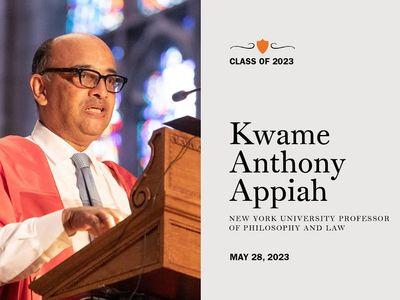
Kwame Anthony Appiah's 2023 Baccalaureate Address at Princeton University: The Power of Attention
On May 28, 2023, philosopher Kwame Anthony Appiah addressed Princeton’s Class of 2023 at Baccalaureate. Comparing life to joining an ongoing conversation, he discussed how education and companionship cultivate attention. Drawing on Iris Murdoch’s ideas about unselfing and recognizing others, he connected attention with ethical responsibility, while his own change of academic direction illustrated the importance of recognizing one’s interests. He then considered social media, artificial intelligence, and the natural environment, encouraging graduates to choose what deserves attention, notice overlooked people, and protect the worlds that sustain human life. The text follows Princeton’s official prepared remarks published that day and preserves his contemporary descriptions of technology and ecology.
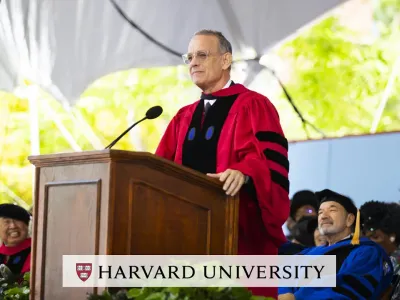
Tom Hanks' 2023 Harvard Commencement Address
On May 25, 2023, actor Tom Hanks addressed Harvard’s Class of 2023. He began with humor before reflecting on the obligations that accompany a Harvard education: graduates possess knowledge and privilege, but must also confront inequality, public crises, and the needs of others. Drawing on American history, literature, and personal experience, he urged empathy, a commitment to freedom, attention to truth, and action in service of the common good.
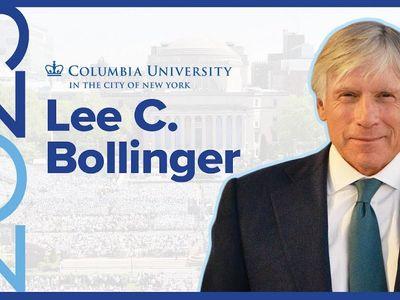
Lee C. Bollinger's 2023 Commencement Address at Columbia University: How to Be an Open Person
On May 17, 2023, Columbia University President Lee C. Bollinger delivered his final Commencement address after more than two decades leading the University. Preparing to return to the law faculty, he begins with the affectionate thought that he and the graduates are graduating together. Rather than center the speech on large-scale threats to democracy, he asks how a person can cultivate an open disposition in the world. Using the First Amendment and the academy's Scholarly Temperament as reference points, he explains that social rules and academic norms may both seek truth but cannot simply govern ordinary personal life. Bollinger offers ten practices: recognize closed-minded impulses, face shared ignorance, appreciate complexity, make openness a habit, ask more questions, inhabit an opponent's reasoning, bring empathy to relationships, keep notes, and let age deepen patience and curiosity.
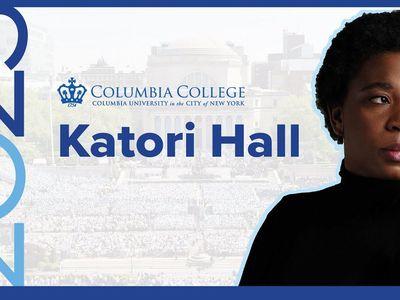
Katori Hall's 2023 Class Day Address at Columbia College: Stay True to Yourself
On May 16, 2023, Pulitzer Prize-winning playwright and television producer Katori Hall returned to Columbia University to address the Columbia College Class of 2023. Organizing the speech around “Auntie Tori's rules” voiced in the Black vernacular of her Memphis upbringing, she recalls arriving at Columbia ashamed of her Southern accent, recovering her own voice in a creative-writing class, and enduring years of rejection before her plays and television work succeeded. Hall speaks candidly about failure, identity anxiety, and industry prejudice, arguing that an authentic voice is a creator's most distinctive asset. She urges graduates not to disappear from their own mirrors, not to erase themselves by imitating others, and not to treat one rejection as a final verdict. They need only one decisive “yes,” and persistence, authenticity, and continued creation can help them reach it.