Universities at a Crossroads
On 2 June 2021, Imperial College London President Alice Gast delivered her annual address, Universities at a Crossroads, online. Against the backdrop of COVID-19 reshaping teaching, research, and daily work, she began with society's growing dependence on technology and reviewed the scientific community's innovation and collaboration during the crisis. Gast argued that universities must confront four realities: insufficient diversity, technology's transformation of education, the need to rethink physical space, and weaker collaboration in teaching than in research. She also announced a scholarship challenge fund and advocated lifelong learning, a flipped workplace, and more open international educational partnerships, urging universities to turn pandemic-driven disruption into lasting reform.
Robert Lopez's 2021 Class Day Address at Yale University: Collaboration
On May 23, 2021, American songwriter and Yale College alumnus Robert Lopez '97 delivered the featured address at a virtual Class Day shaped by the COVID-19 pandemic. Beginning with a squirrel that once entered his dorm room, Lopez presented accepting help and collaboration as essential skills for life after college. He recalled working with Yale friends, Jeff Marx, and his wife Kristen Anderson-Lopez, and used songs from Avenue Q, Coco, and Frozen to explain that talent should serve a community, creative work should improve other people's lives, and collaborators matter more than the work itself. He encouraged graduates to acknowledge their weaknesses, seek partners whose strengths complement their own, and become a helpful “squirrel friend” to others. The text follows publisher-provided manual English captions on Yale University's official video.
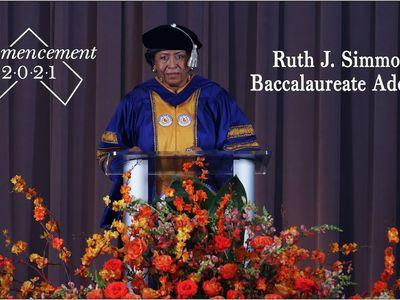
Ruth J. Simmons's 2021 Baccalaureate Address at Princeton University: Let Diversity Inform and Shape Your Life and Work
On May 15, 2021, at Princeton University's 274th Baccalaureate, Ruth J. Simmons delivered the address. The first African American to lead an Ivy League university (as Brown University's eighteenth president), she traced her path from sharecropper's daughter on a Texas plantation to university president, illustrating how education transformed her life and the gift that diversity brings. She recalled her years helping build Princeton's residential college system, observed that engaging with difference is an unparalleled opportunity for growth, and warned graduates against the resurgence of racial-superiority thinking. She urged them, wherever they go, to let diversity inform and shape their life and work, and to be warriors for justice and equal treatment. The text follows Princeton University's complete official remarks published as prepared.
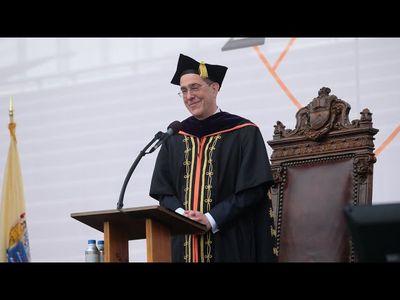
Christopher L. Eisgruber's 2021 Commencement Address at Princeton University: Together, Six Feet Apart
On May 16, 2021, Princeton University President Christopher L. Eisgruber delivered the Commencement address 'Together, Six Feet Apart.' Addressing graduates who had persevered through quarantine and remote learning, he used the metaphor of being together yet apart to capture the past year: people connected in a virtual world through technology yet lost their real, three-dimensional togetherness. Invoking Aristotle's insight that people must break bread together to forge a common good, he observed that while technology has transformed human connection, the pandemic made clear that to forge a common good we must genuinely be present to one another. He urged graduates, as they venture forth, to restore and rebuild the real human connection and community so urgently needed. The text follows Princeton University's complete official remarks published as prepared.
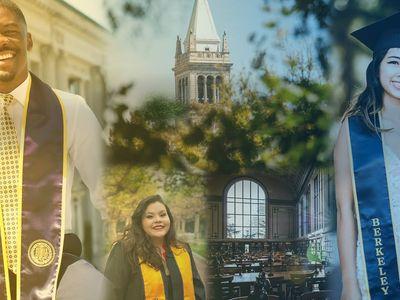
Wally Adeyemo's 2021 Commencement Address at UC Berkeley: The Success of Our Country Is in Your Hands
On May 15, 2021, U.S. Deputy Treasury Secretary and Berkeley alumnus Adewale “Wally” Adeyemo addressed UC Berkeley's virtual commencement. He reflected on the central lesson he learned from the University's diverse community: individual success is inseparable from the strength of one's community. Confronting post-pandemic uncertainty, social division, housing burdens, and unequal opportunity, he urged graduates not to be governed by fear of other people or change, but to carry Berkeley's traditions of embracing difference, civic participation, and the pursuit of justice into the future. Government cannot unlock the country's potential alone, he argued; national success rests in citizens' hands, and graduates should use their education, skills, and public spirit to build communities that are more inclusive, just, and free.
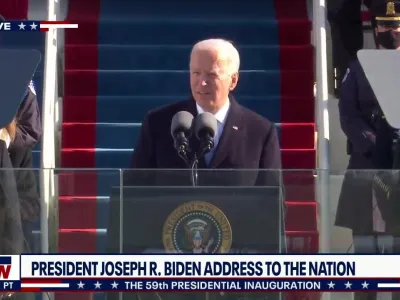
Joseph R. Biden Jr.'s 2021 Inaugural Address
On January 20, 2021, Joseph R. Biden was sworn in as the forty-sixth President of the United States at the Capitol building in Washington D.C. He had served as vice president under Barack Obama and is the oldest elected president in U.S. history (78 years old). This inauguration was one of the most unusual in American history: due to the COVID-19 pandemic, the number of attendees was significantly reduced, and it followed the January 6, 2021, Capitol riot. Biden's inaugural address centered on the theme of 'unity,' emphasizing healing national divisions, restoring democratic values, addressing the pandemic and climate change. He called on Americans to transcend differences and face challenges together. This inauguration also made history: Kamala Harris became the first woman vice president, and the first Black and Asian-American vice president in U.S. history.

Donald J. Trump's 2021 Farewell Address
On January 19, 2021, Donald J. Trump delivered his farewell address from the White House, marking his final public speech as the 45th President of the United States. This speech came after the January 6, 2021, Capitol riot. Trump reviewed the major achievements of his four-year term, including tax cuts, regulatory reform, energy independence, manufacturing reshoring, military rebuilding, and Middle East peace agreements. He emphasized the 'America First' policy philosophy and called for national unity. This was Trump's first acknowledgment of a peaceful transfer of power, though he still did not explicitly concede the 2020 election results. The farewell address was broadcast nationwide on television and online.
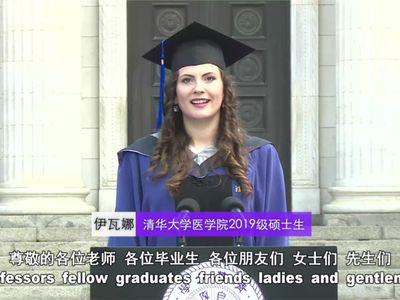
Actions Speak Louder Than Words — Ivana Todorovic's Speech at Tsinghua University (2020)
On June 22, 2020, Ivana Todorovic, a master's graduate of Tsinghua University's School of Medicine, spoke on behalf of the graduating class at an exceptional commencement shaped by the COVID-19 pandemic. She recalled being born during wartime, living as a refugee in Serbia, and being raised by a single mother whose lesson—complain less and find a solution at any cost—became a guiding principle. Drawing on her experience of remaining on campus, following public-health measures, continuing her studies online, and organizing donations of protective equipment to Bosnia, Todorovic emphasized personal action, collective cooperation, and international solidarity. She urged fellow graduates to meet new challenges in the spirit of Tsinghua's maxim that actions speak louder than words, and to work together for a better and more prosperous world.
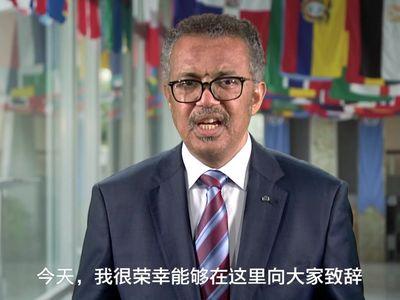
Address to the 2020 Graduates of Tsinghua University School of Economics and Management
On June 22, 2020, World Health Organization Director-General Tedros Adhanom Ghebreyesus addressed the graduating class of Tsinghua University's School of Economics and Management online. As COVID-19 caused global loss of life, employment, and economic activity, he argued that the crisis exposed political division, social inequality, and inadequate public-health preparedness. Starting from WHO's principle that health is a human right, Tedros advocated universal health coverage and primary care rather than excessive dependence on hospital treatment, and called for air, food, housing, education, income, climate, and other social determinants to be included in health governance. He reminded graduates that work in economics and management also shapes public health and asked them to become ambassadors for solidarity, equity, and shared humanity.

Maria Ressa's 2020 Commencement Address at Princeton University: Courage and Community
On May 31, 2020, journalist and Princeton Class of 1986 alumna Maria Ressa addressed graduates at the University's virtual Commencement. Beginning with her hope of returning to campus, she considered the possibility of rebuilding the world during the pandemic and discussed founding a news organization and responding to pressure. She offered three suggestions: choose to learn, face fear, and build supportive communities while avoiding mob hatred. She urged listeners to slow their judgments on social media, value mutual support, and work to realize the world they imagine. The text follows Princeton's official remarks published that day and preserves her contemporary account. Later Nobel Prize news links below the article are navigation and are excluded.
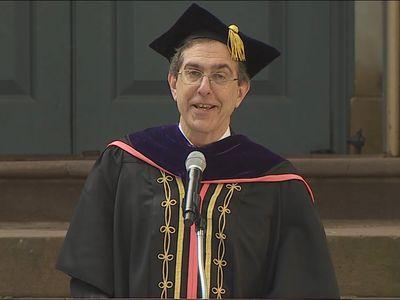
Christopher L. Eisgruber's 2020 Commencement Address at Princeton University: Touched by Tragedy
On May 31, 2020, Princeton President Christopher L. Eisgruber delivered Touched by Tragedy for the University's virtual Commencement. He recalled quoting Holmes's account of wartime experience at his own graduation without fully understanding its hardship, then turned to the losses confronting graduates during the pandemic and the fragility of the world. Acknowledging that those losses were real and painful, he encouraged students to develop insight, courage, and compassion and cooperate for the common good. This text includes only the named commencement address published by Princeton that day. The page also carries a separate statement on George Floyd's death and racism; the two works have not been combined.
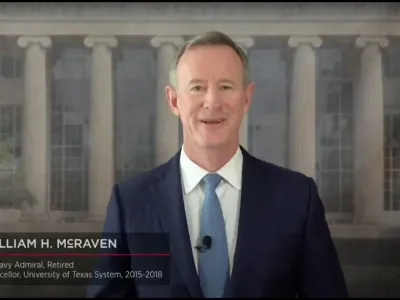
Admiral William H. McRaven at MIT Commencement 2020
On May 29, 2020, MIT held its Commencement online. Retired U.S. Navy four-star admiral and former University of Texas System chancellor William H. McRaven addressed the Class of 2020. Because the pandemic kept graduates from gathering on campus, he rewrote his planned speech to discuss the heroes the world actually needs. He told graduates that the challenges of pandemics, war, climate change, poverty, racism, and extremism call on people with knowledge and technology to act, but intellect and talent alone are insufficient. Drawing on military experience and the history of science, he said heroes also need courage, humility, perseverance, sacrifice, integrity, and compassion, citing figures such as Copernicus, Marie Curie, and Jim Allison. He closed by hoping that the Class of 2020 would be the last to miss an in-person Commencement because of a crisis and urging them to become the heroes the world needs.