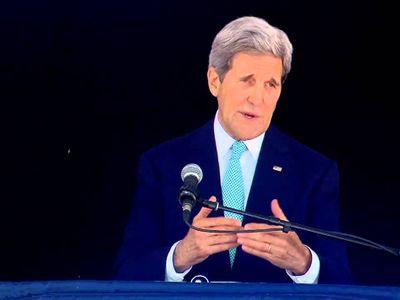
John Kerry's 2014 Class Day Address at Yale University: The Power of Participation
On May 18, 2014, U.S. Secretary of State and Yale College alumnus John Kerry '66 addressed graduates at Yale's Class Day ceremony. Returning to Old Campus, he used campus stories and self-deprecating humor before reflecting on his mother's counsel about integrity, his father's understanding of diplomacy and empathy, and historian John Morton Blum's idea that politics responds to felt needs. Kerry recalled how civil-rights, environmental, women's-rights, and antiwar movements pressed institutions to act. Confronting climate change, poverty, immigration, and international instability, he urged graduates to reject indifference, hopelessness, and cynicism, challenge conventional wisdom, and accept the responsibilities that accompany a Yale education. This edition follows Yale University's complete official transcript and was checked against the publisher-provided manual English captions on the U.S. Department of State's official video.
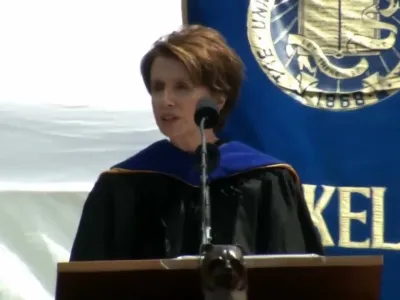
Nancy Pelosi's 2014 Commencement Address at UC Berkeley: Have the Courage to Be Disruptors
On May 17, 2014, U.S. House Democratic Leader Nancy Pelosi delivered the keynote address at UC Berkeley's campuswide commencement. Marking the 50th anniversary of Berkeley's Free Speech Movement, she treated “disruptor” as a high compliment and urged graduates to use new tools of social media and real-time communication to turn speech into organization and action. Pelosi named income inequality, educational opportunity, women's economic participation, immigration reform, money in politics, voting rights, climate change, war, and gun violence among the challenges facing their generation. She called on young people to build ladders of opportunity, restore power to citizens' voices, and embrace science to protect the planet. Quoting President John F. Kennedy on public purpose, innovation, and daring, she asked graduates to be both idealistic and pragmatic, ready when opportunity appears, and courageous enough to shape the future.
Vince Cable's 2014 Cambridge Speech: Where Next for Further and Higher Education?
On 23 April 2014, UK Secretary of State for Business, Innovation and Skills Vince Cable delivered a Cambridge Public Policy Lecture at the University of Cambridge. The government page identifies the text as the original script and notes that it may differ from the delivered version. Starting from Tony Crosland's 1965 education speech, Cable argued that while British higher education had expanded, advanced vocational provision below bachelor's-degree level remained comparatively weak. He praised university research and further education while examining technical-skills shortages, reduced college funding, unequal student support, and the low status of vocational routes. He proposed National Colleges, expanded higher apprenticeships, greater college control over curricula and qualifications, stronger quality oversight and maintenance support, closer university-college partnerships, and inclusion of vocational programmes in application and careers systems. His central case was for academic and vocational routes to receive more equal resources, choice, and public esteem.
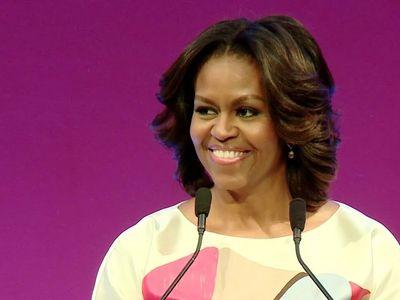
Michelle Obama's Speech at Peking University (2014)
On March 22, 2014, U.S. First Lady Michelle Obama addressed American and Chinese students at the Stanford Center at Peking University. Beginning with a bilingual introduction and youth exchange, she argued that relations between nations ultimately rest on connections among people, especially young people. She presented study abroad as both an educational opportunity and a form of citizen diplomacy that helps individuals understand different languages, cultures, and societies while building habits of cooperation for shared climate, economic, and security challenges. Drawing on her own working-class background, she stressed that overseas study should not be limited to affluent students and described programs expanding U.S.-China educational exchange. In the latter part of the speech, she also argued that the free flow of information and ideas, open debate, and universal rights are essential for discovering truth, realizing human potential, and building stronger societies.
Oh Yeon Cheon's 2014 Commencement Address at Seoul National University
On February 26, 2014, Oh Yeon Cheon, the 25th President of Seoul National University, addressed the graduating class. He congratulated the students and thanked their parents and teachers, while cautioning that the future would not always be bright. Creative risks may fail, he said, but failure can yield lessons, inspiration, and a new road to success. Calling the university a foundation for opening a new era, Oh urged graduates to stand at the 'heart of hope' and move beyond narrow self-interest through introspection, self-development, and communal spirit. He then set out three responsibilities: form views of humanity and nation that serve the greater good, replacing polarized thinking with communication and understanding; value diversity, flexibility, and creativity in order to build new paradigms; and become educated global citizens capable of confronting shared problems such as economic polarization. He closed by asking graduates to carry forward SNU's spirit and tradition and to regard the university as their lasting spiritual foundation.
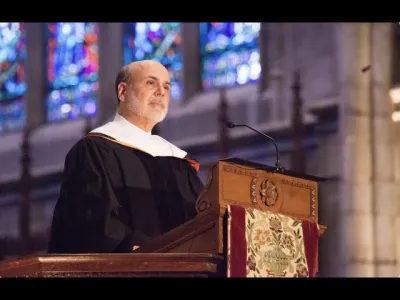
The Ten Suggestions
On June 2, 2013, Federal Reserve Chairman Ben S. Bernanke delivered The Ten Suggestions at Princeton University’s Baccalaureate ceremony. Having taught at Princeton for many years, he used humor to discuss life after graduation rather than monetary policy. Starting with life’s unpredictability, he emphasized continued learning, character development, and self-improvement. He then examined success, luck, and meritocracy, arguing that people with advantages carry greater responsibilities to society. He also discussed public service, the value of economic analysis, money and career choices, failure, and the importance of partners and family. He concluded by asking graduates to call their parents and encouraging them to embrace the future. The text follows the complete speech published by the Federal Reserve.
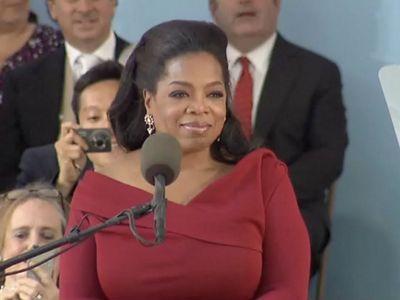
Oprah Winfrey's 2013 Harvard Commencement Address: The Moral and Emotional GPS Within
On May 30, 2013, media leader, producer, and philanthropist Oprah Winfrey addressed Harvard University’s 362nd Commencement and received an honorary degree. Drawing on the difficult launch of the Oprah Winfrey Network, she argued that failure is not an endpoint but life redirecting us. She urged graduates to develop an internal moral and emotional GPS, discover purpose through setbacks, and measure success through authenticity, empathy, and service. Through stories about the Angel Network, the parents of a Sandy Hook victim, young amputees after the Boston Marathon bombing, and a graduating Harvard student, she called on her audience to bridge political divisions, listen to others, and use education and influence to improve society.
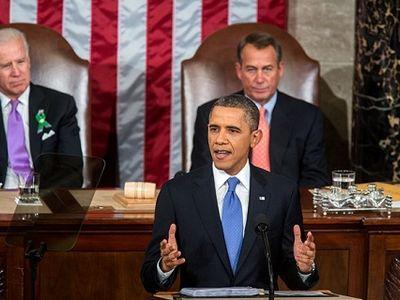
Fourth Presidential State of the Union Speech
On February 12, 2013, Obama delivered his fourth State of the Union Address before a joint session of Congress in Washington, D.C. With recovery still uneven, wages stagnant, and fiscal negotiations tense, he centered the speech on strengthening the middle class. He called for balanced deficit reduction and warned against automatic cuts that could weaken the economy. He advocated investment in manufacturing, infrastructure, research, clean energy, and education, alongside reforms on the minimum wage, taxes, and immigration. He also addressed gun violence, health care, cybersecurity, Afghanistan, counterterrorism, Iran and North Korea, and Middle East peace, urging Congress to act beyond partisan divisions.
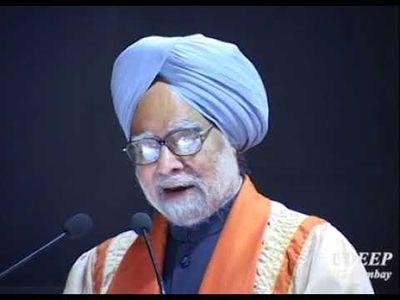
Manmohan Singh's 2012 Golden Jubilee Convocation Address at IIT Bombay
On August 18, 2012, Indian Prime Minister Manmohan Singh addressed IIT Bombay's 50th, or Golden Jubilee, Convocation. He recalled the post-independence vision of nation-building through great educational institutions and praised the IITs' role in creating Brand India. At the same time, he warned that too few excellent institutions, weakness in research and development, and curricula insufficiently connected to national needs continued to limit opportunity. Singh described public investment in expanding higher and technical education but argued that quantitative growth must produce qualitative improvement. Engineers and scientists, he said, should again become national leaders. Drawing on his own childhood study by kerosene lamp in a village without electricity or schools, he illustrated India's progress while acknowledging the distance still separating achievement from young people's expectations. Despite economic slowdown and pessimism, he expressed confidence that science, technology, education, and the rising generation could lead social and economic transformation, and urged graduates to remember the families, teachers, and society that made their education possible.
Salman Khan's 2012 MIT Commencement Address
MIT alumnus Salman Khan, founder of Khan Academy, delivered this address at the Institute's 146th Commencement on June 8, 2012. Beginning with MIT OpenCourseWare, he recounts how tutoring a cousin from a distance grew into a free educational platform serving learners around the world. Rather than offering a fixed formula for success, Khan asks graduates to value their limited time, pursue work that genuinely engages them, and avoid mistaking security for fulfillment. He encourages experimentation and the willingness to change course when an idea does not work, while protecting the roles of family, friendship, health, and continued learning in a meaningful life.
Follow Your Bliss
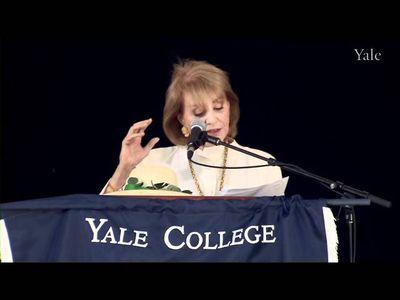
On May 20, 2012, Barbara Walters, the celebrated American broadcast journalist and television host, delivered the Class Day address at Yale University. Opening with a joke from her memoir Audition about her grandmother Lily, she urged graduates not to rush to find their bliss but to participate fully in life. Drawing on her interviews with Barack Obama, Hillary Clinton, the Dalai Lama, Katharine Hepburn, Margaret Thatcher, and Christopher Reeve, she shared wisdom about choices, failure, compassion, and friendship. The text is based on YouTube auto-generated captions (ASR).
Commencement Address at Barnard College
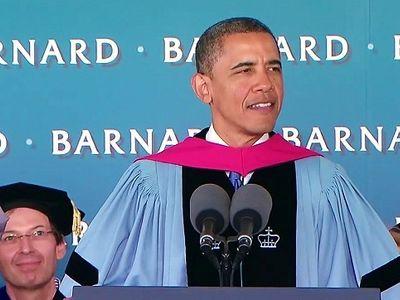
On May 14, 2012, President Barack Obama delivered the commencement address to Barnard College's Class of 2012 in New York City. He recalled the economic and social climate surrounding his own 1983 graduation from Columbia College and connected it with the recession experienced by the new graduates. Emphasizing women's importance in education, the workplace, public policy, and the nation's future, Obama offered three pieces of advice: participate fully in public life, recognize the power of example, and persevere. He urged the graduates to seek positions of real influence and advocate for people who still lacked equal opportunity. Drawing on setbacks from his community-organizing work and the resilience of his mother, grandmother, Michelle, and her family, he argued that sustained individual action can advance social progress.