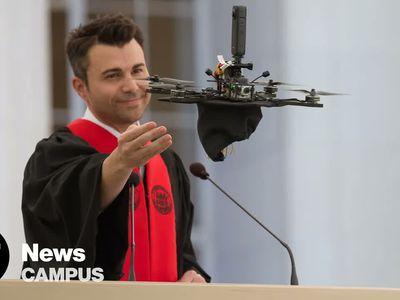
Mark Rober Address to MIT Class of 2023
On June 1, 2023, engineer and science video creator Mark Rober addressed MIT’s graduating class. He jokingly proposed making a video in thirty years about the graduates’ accomplishments, then offered advice for making a positive impact: embrace naive optimism when the future is uncertain, frame failures like setbacks in a video game, and actively foster relationships. He described his mother’s influence on his life and closed with a fourth suggestion, occasional playful anarchy, by sending his mortarboard aloft on a drone.
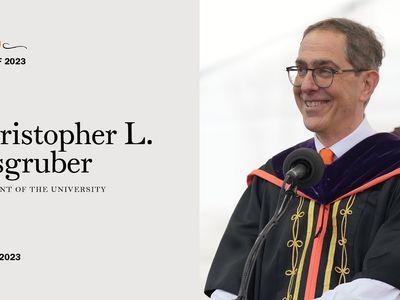
Christopher L. Eisgruber's 2023 Commencement Address at Princeton University: Let Your Voices Rise
On May 30, 2023, Christopher L. Eisgruber, president of Princeton University and a constitutional scholar, delivered the Class of 2023 Commencement address under the theme 'Let Your Voices Rise.' He opened with the story of civil rights leader Harry Belafonte, who had died a little over a month earlier: in 1960, Belafonte helped raise funds and place a full-page advertisement in The New York Times headlined 'Heed Their Rising Voices.' Though the advertisement contained factual errors, it led to the landmark Supreme Court case New York Times v. Sullivan, which established protections for criticizing public officials. Eisgruber argued that the free speech rights Americans cherish today were forged in the 1960s struggle for racial justice in the South, and that a movement now seeks to drive a wedge between equality and free speech. He urged graduates to defend free expression and full inclusivity, and to let their voices rise for equality, diversity, freedom, justice, and love.
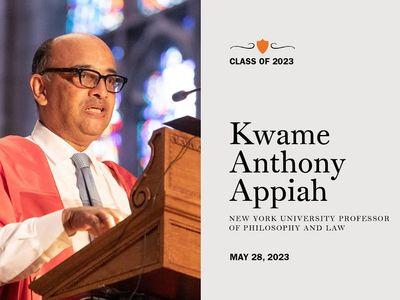
Kwame Anthony Appiah's 2023 Baccalaureate Address at Princeton University: The Power of Attention
On May 28, 2023, philosopher Kwame Anthony Appiah addressed Princeton’s Class of 2023 at Baccalaureate. Comparing life to joining an ongoing conversation, he discussed how education and companionship cultivate attention. Drawing on Iris Murdoch’s ideas about unselfing and recognizing others, he connected attention with ethical responsibility, while his own change of academic direction illustrated the importance of recognizing one’s interests. He then considered social media, artificial intelligence, and the natural environment, encouraging graduates to choose what deserves attention, notice overlooked people, and protect the worlds that sustain human life. The text follows Princeton’s official prepared remarks published that day and preserves his contemporary descriptions of technology and ecology.
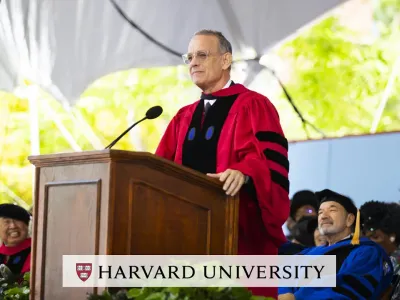
Tom Hanks' 2023 Harvard Commencement Address
On May 25, 2023, actor Tom Hanks addressed Harvard’s Class of 2023. He began with humor before reflecting on the obligations that accompany a Harvard education: graduates possess knowledge and privilege, but must also confront inequality, public crises, and the needs of others. Drawing on American history, literature, and personal experience, he urged empathy, a commitment to freedom, attention to truth, and action in service of the common good.
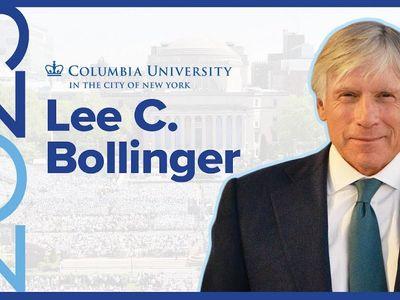
Lee C. Bollinger's 2023 Commencement Address at Columbia University: How to Be an Open Person
On May 17, 2023, Columbia University President Lee C. Bollinger delivered his final Commencement address after more than two decades leading the University. Preparing to return to the law faculty, he begins with the affectionate thought that he and the graduates are graduating together. Rather than center the speech on large-scale threats to democracy, he asks how a person can cultivate an open disposition in the world. Using the First Amendment and the academy's Scholarly Temperament as reference points, he explains that social rules and academic norms may both seek truth but cannot simply govern ordinary personal life. Bollinger offers ten practices: recognize closed-minded impulses, face shared ignorance, appreciate complexity, make openness a habit, ask more questions, inhabit an opponent's reasoning, bring empathy to relationships, keep notes, and let age deepen patience and curiosity.
Hugh Brady's 2022 Inaugural President's Address at Imperial College London
On 11 October 2022, Hugh Brady delivered his inaugural annual address as President of Imperial College London. He thanked the community for its research, teaching, and mutual support during COVID-19, then traced his path from clinical medicine and kidney research to university leadership. Brady described Imperial's distinctive combination of science, engineering, medicine, business, entrepreneurship, and its London location, and announced a College-wide refresh of its vision and strategy. Alongside immediate concerns such as mental health, culture, workload, and student hardship, he set out longer-term questions about scaling research and innovation, advancing diversity, developing the White City Campus, achieving net zero, and strengthening Imperial's international presence.
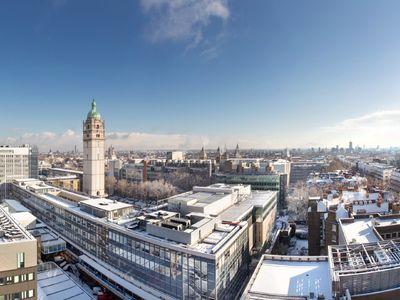
Acting Courageously
On 20 July 2022, Alice Gast delivered her eighth and final annual President's Address at Imperial College London's South Kensington Campus. Beginning with her 1980 valedictory speech at the University of Southern California, she connected youthful fears of war, economic crisis, and energy shortages with contemporary uncertainty. The address reviewed the Imperial community's courage during COVID-19 and reflected on caring for local communities, advancing diversity and belonging, supporting discovery and women entrepreneurs, defending international collaboration, and widening public engagement. Gast presented education as a force that gives people confidence and courage, then used the idea of camouflaged moments to look back on her tenure and urged staff and students to remain strong and keep acting courageously.
Tan Eng Chye's 2022 Commencement Address at NUS
On July 6, 2022, National University of Singapore President Tan Eng Chye addressed the first commencement gathering after two years of pandemic disruption. He urged graduates to cultivate resilience and adaptability while treating problems as opportunities for creative action. Social work graduate Abu Ubaidah, who completed his degree with highest distinction despite kidney failure, COVID-19, and nightly dialysis, illustrated fortitude and empathy. A multidisciplinary student start-up that converted surplus rice into alcohol and granola showed how innovation can combine commercial and environmental benefit. Tan then honoured diplomat Tommy Koh and historian Wang Gungwu, highlighting common ground, historical understanding, diversity, and public service. He also announced an endowed professorship supporting cross-disciplinary learning in humanities and sciences. He closed by asking graduates to carry NUS's tradition of excellence and service into a world of possibility and uncertainty.
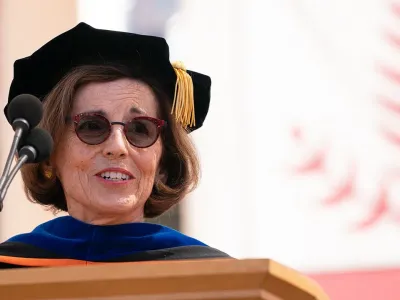
France A. Córdova's 2022 Stanford Commencement Address: Real Life Is Right in Front of You
On 2022-06-11, France A. Córdova delivered this address at Stanford University's Commencement. Organized around curiosity, interdisciplinarity, and entering the unknown, it joins personal experience, professional judgment, and the public concerns of its moment. The address asks not only what graduates might do next, but also how educated people should understand their abilities, accept public responsibility, and help build a shared future. This edition is based on a complete authoritative transcript and preserves the sequence and character of the original address.
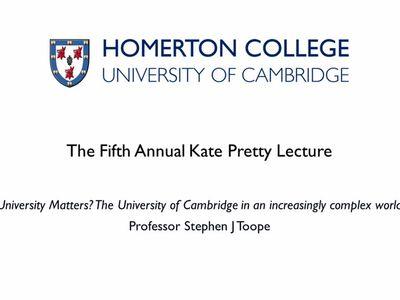
University Matters? The University of Cambridge in an Increasingly Complex World
On 8 June 2022, outgoing University of Cambridge Vice-Chancellor Stephen J. Toope delivered the fifth Kate Pretty Lecture at Homerton College. He examined three areas of accelerated change affecting the public value of universities: expanding regulation and the language of value for money, barriers to international research cooperation after Brexit, and the corrosive effects of identity politics and online hostility on community life. Toope argued that university education is not a commercial transaction and that universities must protect autonomy, international openness, and academic freedom while approaching disagreement with civility, humility, and a willingness to listen. He acknowledged persistent tensions in Cambridge's complex collegiate governance and reviewed progress on climate action, artificial intelligence and the humanities, widening participation, and student support. Cambridge, he concluded, is an unfinished collective enterprise that must keep changing with the world and continue turning wonder into knowledge and knowledge into wonder.
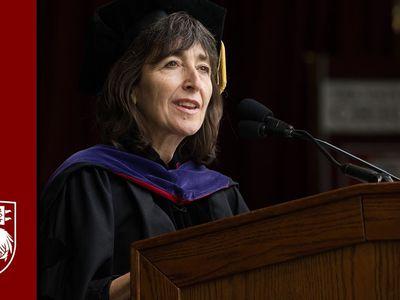
Wendy Freedman's 2022 Convocation Address at the University of Chicago: Our Evolving Universe
On June 4, 2022, astronomer Wendy Freedman delivered a University of Chicago convocation address titled "Our Evolving Universe." Beginning with the birth of the universe and the stars that forged the elements of life, she placed humanity within a visible cosmos 93 billion light-years across before returning to an Earth marked by pandemic, war, violence, and climate crisis. She used COVID-19 vaccines, the James Webb Space Telescope, and the Giant Magellan Telescope to show how global, cross-institutional cooperation can produce extraordinary progress in dark times. Drawing on Copernicus, Galileo, and her own experience challenging an astronomical authority, Freedman urged graduates to resist static worldviews, keep testing their assumptions, meet change with openness and courage, and build a lifelong "personal graduate school" of their own.
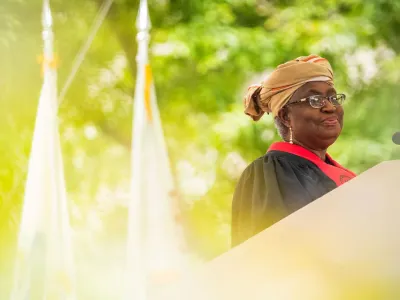
Ngozi Okonjo-Iweala Address to MIT Class of 2022
On May 27, 2022, WTO Director-General and MIT alumna Ngozi Okonjo-Iweala addressed MIT's Class of 2022 in Killian Court. She recalled the help she received from the international students' office when she first arrived at MIT and described how the Nigerian civil war had interrupted her education. Amid overlapping challenges including the pandemic, climate change, and food insecurity, she argued that scientific innovation can benefit the world only when it crosses income and geographic divides through equitable access and diffusion. Drawing on vaccines, clean energy, and her international development work, she explained why public policy, trade, and international cooperation must accompany scientific progress, and urged graduates to use their education to serve others.