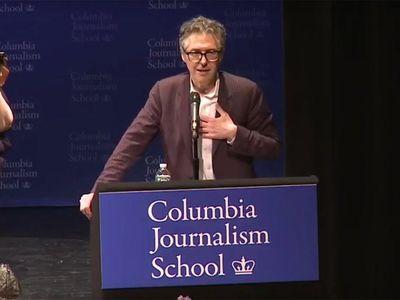
Ira Glass's 2018 Graduation Address at Columbia Journalism School: Stand for the Truth
On May 17, 2018, This American Life creator and host Ira Glass received Columbia Journalism School's award for singular journalistic performance and addressed its graduating class. Beginning with his unconventional career path and collaborative editing practice, he encourages young journalists to accept periods of uncertainty, value good editors, and let curiosity and pleasure guide their work. He then draws on reporting about political division, refugees, and misinformation to examine the responsibilities of fact-based journalism in a fractured trust environment. Glass calls for more cunning storytelling, excellent reporting, and new strategies to contest the public information space. He closes by urging graduates to be present in their recordings, remain themselves, stop waiting for permission, and battle untruth with truth. This edition follows the complete transcript published by This American Life and uses the ceremony video's captions to check the live delivery.
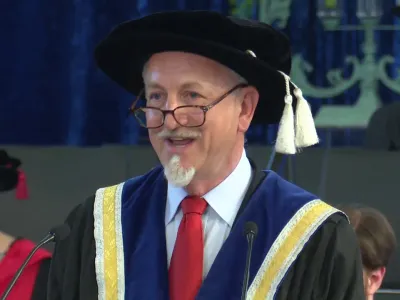
Jack Heath's 2018 Graduation Address at the University of Melbourne
On April 11, 2018, University of Melbourne law and arts alumnus Jack Heath, then CEO of SANE Australia, delivered an occasional graduation address at Melbourne's Royal Exhibition Building. He spoke candidly about mental-health challenges during his own studies and about several generations of family sacrifice, education, and care. Drawing on memories of his father, grandmother, and mother, as well as the Australian cricket ball-tampering scandal, caring for a parent with dementia, and his own meditation practice, Heath offered graduates four invitations: be good, be grateful, be kind, and be still. His message connected ethical choices with consequences, gratitude with recognition of others' sacrifices, kindness with reciprocal care, and stillness with the perspective needed for sound judgment.
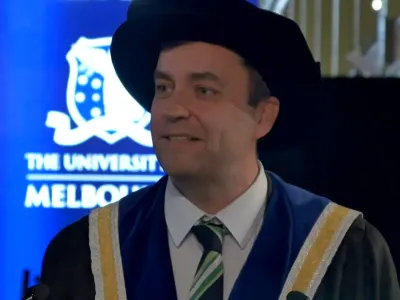
David Bowser's 2018 Graduation Address at the University of Melbourne
On April 10, 2018, University of Melbourne alumnus and Curio Group founder Dr David Bowser delivered an occasional address at a graduation ceremony in Melbourne's Royal Exhibition Building. Speaking to new doctoral graduates, he traced his own nonlinear path from medical research, a Cambridge fellowship, and an academic laboratory at Melbourne into management consulting and education entrepreneurship. Bowser argued that doctoral training develops valuable capabilities far beyond academia, including research and analysis, project management, communication, presentation, and group facilitation. His central advice was to understand one's strengths and interests, combine reflection with action, find a sense of purpose, and remember that graduates carry—and should give back to—their university's public mission.
Alice Gast's 2018 Graduation Address at Imperial College London: Judgement and Empathy
On March 14, 2018, Imperial College London President Alice Gast delivered her annual address on judgement and empathy. Beginning with the phrase “to be honest,” she considered the erosion of public discourse and the limits of artificial intelligence, which can display competence without comprehension. Universities, she argued, must teach not only data science but also the capacity to combine knowledge, context, and empathy in considered decisions. Examples from Uzbekistan, Saudi Arabia, Chinese collaborators, and Imperial's White City engagement illustrated how listening to people in different circumstances broadens understanding. Gast also addressed the USS pension dispute, Brexit, poverty, and health inequality, stressing that negotiation requires honesty, listening, and compromise. As machine intelligence advances and human bias persists, she urged the community to protect university values, support international diversity, understand others, and ensure that humanity guides technological and social change.
Song Ho Keun's 2017 Commencement Address at Seoul National University
On August 29, 2017, Seoul National University sociologist Song Ho Keun addressed the university's 71st graduation ceremony. Looking back on forty-two years since entering the Gwanak campus in 1975, he connected classroom reflection, debates with friends, conversations with professors, and questions about God, poverty, authority, and how to live to what he called conscientiousness of the heart—the source of a person's logic and ethics. In an unpredictable future shaped by artificial intelligence, big data, biotechnology, the Internet of Things, and virtual reality, he argued that inherited grand theories may no longer supply sufficient answers. Yet the conscience, reason, and sensibility cultivated at university can remain a compass. Song closed with a scene from Lee Mi-reuk's *Der Yalu Fließt*, in which a mother sends her son across the border with trust. Professors and parents, he said, likewise release graduates to create their own paths and enter the twenty-first century's sea of intellectual adventure.

Manohar Parrikar's 2017 Convocation Address at IIT Bombay
On August 12, 2017, Goa Chief Minister and 1978 IIT Bombay alumnus Manohar Parrikar addressed his alma mater's 55th Convocation. Beginning with memories of Hostel Four, he described how technological progress was rapidly reshaping work and daily life while poor educational outcomes, health and nutrition, environmental damage, rural-urban inequality, agricultural employment, population growth, and skills shortages continued to weaken India's foundations. Democracy, Parrikar argued, is not merely politics and power but people, participation, and purpose; citizens should demand accountability while giving reform patience and room to succeed. He urged graduates not to pursue only lucrative or glamorous careers but to enter teaching, public service, the armed forces, politics, and socially minded entrepreneurship, using technology and policy to solve concrete problems. Graduates should take risks, respect failure, resist the arrogance of elite education, treat their education as a national investment carrying responsibility, and turn individual action into social movements bound by patriotism.
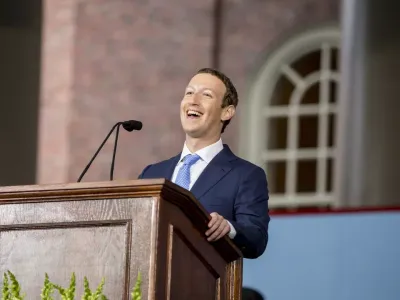
Mark Zuckerberg's 2017 Harvard Commencement Address
On May 25, 2017, Facebook founder Mark Zuckerberg addressed Harvard’s 366th Commencement. He reflected on leaving Harvard to build a social platform and placed his personal story in the context of technological change, economic inequality, and social division. He urged graduates to find purpose, help others gain opportunity, and accept responsibility for building community and improving the world, while emphasizing innovation, inclusion, and ideas such as universal basic income.
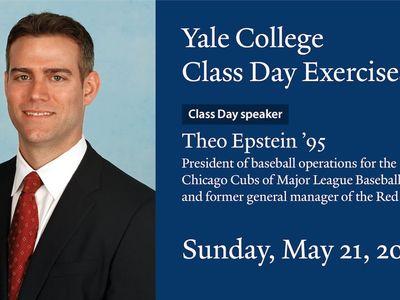
Theo Epstein's 2017 Class Day Address at Yale University: The Power of Choice
On May 21, 2017, Yale College alumnus Theo Epstein '95, then president of baseball operations for the Chicago Cubs, delivered the Senior Class Day address. The Cubs had just ended a 108-year World Series championship drought in 2016. Using the decisive Game Seven as his central story, Epstein described how the team responded after surrendering its lead and entering a rain delay: rather than retreating to separate lockers to complain or assign blame, the players chose to gather, support one another, and reconnect. He urged graduates to recognize their own future rain-delay moments and choose whether to keep their heads down protecting individual interests or lift their heads, connect with others, and put a team first. Epstein also reconsidered his early habit of treating players mainly as data and assets, arguing that character, empathy, trust, and human connection cannot be fully quantified. This edition follows the complete official transcript published by Yale University.

Sheena Wright's 2017 Class Day Keynote Address at Columbia College: Know Your Power
On May 16, 2017, Columbia College held Class Day for the Class of 2017 in New York. The keynote speaker was Sheena Wright, a 1990 alumna and then president and CEO of United Way of New York City. Drawing on entering Columbia at sixteen, growing up in the South Bronx, and seeing her own plans redirected after graduation, Wright tells the graduates to expect dramatic change, substantial responsibility, and unforeseen challenges and triumphs. She distills her advice into three needs: openness to people outside one's own tribe, curiosity that searches every experience for a lesson, and a clear understanding of one's power together with respect for the power of others. Using David Dinkins's butter story and the refrain that history has its eyes on them, she urges the graduates to use their education and influence to drive social change with commitment and passion.
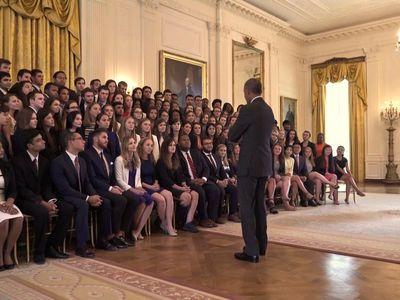
Penultimate Q&A With White House Interns
In August 2016, U.S. President Barack Obama held his penultimate Q&A session with White House interns during his presidency. The event was lively and informal, as interns asked the President questions on topics ranging from relentless optimism, his legacy in the African-American community, to the art of compromise versus sticking to one's principles. Obama shared his life insights and career advice with humor and candor, including how the long view eases stress, why patience matters in social progress, and how to balance idealism with compromise. He urged young people not to get bored or cynical, but to orient themselves toward being useful and making a difference. This exchange showcases Obama's approachability and his earnest hopes for the younger generation.
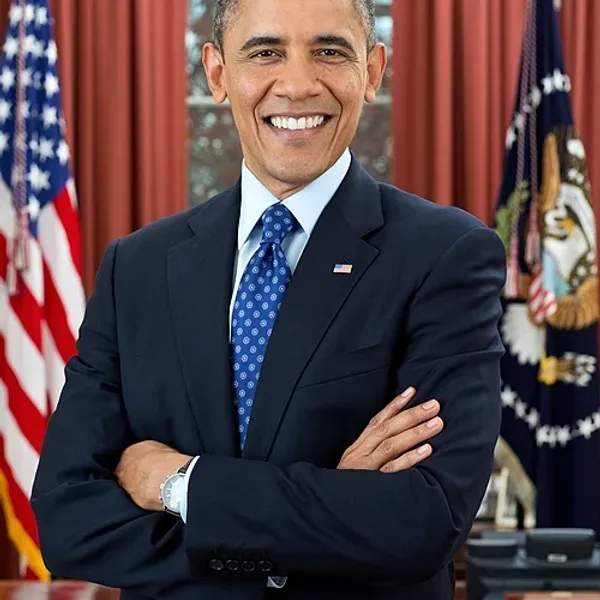

Jodi Picoult's 2016 Class Day Address at Princeton University: Beyond Comfort
On May 30, 2016, novelist and Princeton Class of 1987 alumna Jodi Picoult delivered the University's Class Day address. Beginning with negative comments on the student newspaper's website, she recalled her writing education, her participation in men's rowing, and her challenges to gender bias in publishing. She connected these experiences to campus debates about race, privilege, and inclusion, encouraging graduates to keep asking questions after rejection, listen carefully across disagreements, and make room for less powerful voices. She concluded by urging students to preserve their moral judgment and help others as they achieve success. The text follows the complete transcript published that day by the University and identified as delivered; the audio comes from the University's video of the same speech.

Steven Spielberg's 2016 Harvard Commencement Address: Courage, Empathy, and Purpose
On May 26, 2016, director, producer, and screenwriter Steven Spielberg addressed Harvard University’s 365th Commencement and received an honorary degree. Beginning with the 37 years it took him to complete college, he described life as a continuing series of character-defining moments and urged graduates to distinguish conscience from intuition and hear the inner whisper of what they could do. He explained how films including The Color Purple and Schindler’s List helped him discover a sense of mission. Spielberg called on graduates to study history, preserve moral courage, confront hatred and discrimination, and turn empathy into concrete action through voting, peaceful protest, and speaking for others, thereby shaping a future grounded in justice and peace.