Nobel Prize for Peace Acceptance Speech and Lecture
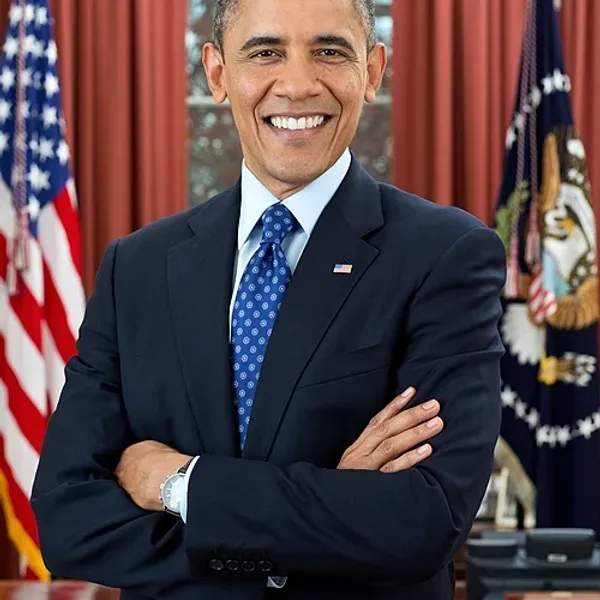
On December 10, 2009, U.S. President Barack Obama received the Nobel Peace Prize at Oslo City Hall, Norway. Less than a year into his presidency, with the United States engaged in two wars in Iraq and Afghanistan, the award sparked considerable controversy. In his lecture, Obama confronted this paradox directly, exploring the relationship between "just war" and "just peace." He articulated the moral boundaries of force, the importance of international institutions and human rights, and the link between economic development and human dignity. He called for expanding moral imagination, acknowledging human imperfection while striving for a better world.
Speech at West Point on Troop Increase in Afghanistan
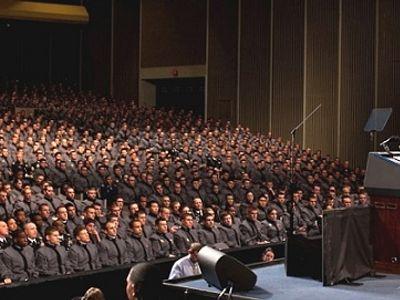
On December 1, 2009, President Barack Obama delivered a nationally televised address at Eisenhower Hall, West Point Military Academy, announcing the deployment of an additional 30,000 U.S. troops to Afghanistan. Less than a year into his presidency, the situation in Afghanistan had been deteriorating, with the Taliban resurgent and al Qaeda entrenched along the Afghanistan-Pakistan border. Obama reviewed the reasons for the U.S. invasion following 9/11 and acknowledged that the Iraq War had diverted resources and attention. He outlined three pillars of a new strategy: a military surge to reverse the Taliban's momentum, a civilian capacity-building effort in Afghanistan, and a deepened partnership with Pakistan. He set July 2011 as the start of a transition, stressing America would not fight an open-ended war.
Speech at the Memorial Service for Fort Hood Servicemen and Servicewomen
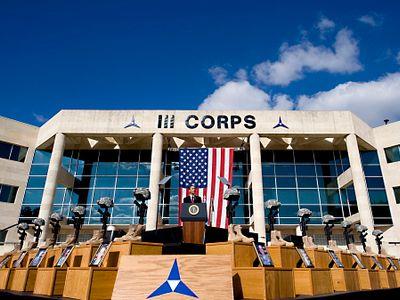
On November 5, 2009, U.S. Army Major Nidal Hasan opened fire at a soldier readiness processing center at Fort Hood, Texas, where troops were preparing to deploy overseas, killing 13 people and wounding more than 30 others. It was one of the worst terrorist attacks ever to occur on a U.S. military installation. On November 10, President Obama delivered remarks at a memorial service at Fort Hood, paying tribute to each of the 13 fallen by name and celebrating their dedication and sense of duty. He reaffirmed the core values America defends -- freedom, equality, the rule of law, and the freedom of worship -- and called on the nation to unite in support of the men and women serving in Iraq and Afghanistan, declaring that this generation of service members had proven itself the equal of any in American history.
9/11 Pentagon Memorial Speech
On September 11, 2009, President Barack Obama delivered a speech at the Pentagon Memorial in Arlington, Virginia, marking the eighth anniversary of the 9/11 terrorist attacks. On September 11, 2001, terrorists hijacked commercial airliners and attacked the United States, with one plane striking the Pentagon and killing 184 people. Obama honored the nearly 3,000 victims lost at the Pentagon, the World Trade Center in New York, and Shanksville, Pennsylvania. He paid tribute to service members and first responders, and proclaimed this day the first National Day of Service and Remembrance. He called on Americans to move beyond grief by serving their communities and defending their nation, while reaffirming the resolve to pursue al Qaeda.
Address Marking the 65th Anniversary of D-Day
On June 5, 2009, President Barack Obama delivered a speech marking the 65th anniversary of D-Day at the Normandy American Cemetery in Normandy, France. The speech was delivered during a commemorative ceremony near Omaha Beach, attended by French President Sarkozy, British Prime Minister Brown, Canadian Prime Minister Harper, and Prince Charles of the United Kingdom. Obama reflected on the historical significance of the D-Day landings, honored the courage and sacrifice of the Allied soldiers who participated in the invasion, and emphasized the profound impact of this event on the course of 20th-century history. The speech particularly highlighted the personal stories of several veterans, including Obama's grandfather and great-uncle's experiences in World War II, demonstrating the war's impact on individuals and families.
David Petraeus's 2009 Baccalaureate Address at Princeton University: In the Nation's Service
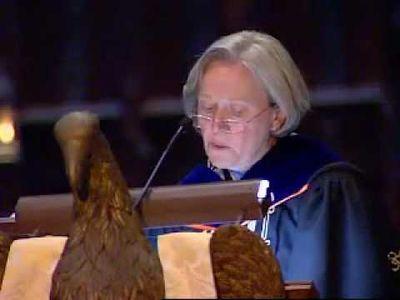
On May 31, 2009, U.S. Army General David Petraeus delivered the Baccalaureate address at Princeton University. As a Princeton graduate alumnus, he opened with humor to connect with the graduates, thanked the university and parents, and then formally challenged the Class of 2009 to pursue public service. He described four rewards of public service: the gratification of worthwhile work, the chance to work hard at work worth doing, the camaraderie of shared purpose, and the opportunity to develop leadership. He also told stories of leadership from his military career and invoked Princeton's tradition of service, urging graduates to serve boldly. The text is based on the auto-generated captions of the university's recording and retains only the speaker's own remarks.
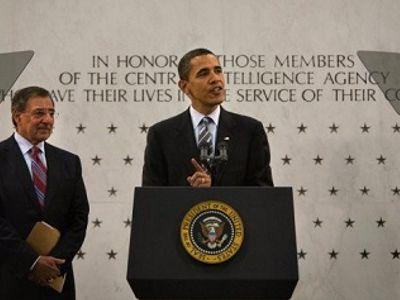
First Address at the Central Intelligence Agency
On April 20, 2009, just three months into his presidency, Barack Obama made his first visit to Central Intelligence Agency headquarters to deliver an address. The moment was marked by a major controversy: Obama had just ordered the release of Bush-era Office of Legal Counsel memos on interrogation techniques, stirring anxiety among CIA officers over their legal liability and the safety of their identities. In his remarks, Obama thanked intelligence personnel for their sacrifice and dedication, emphasized the CIA's indispensable role in confronting unconventional challenges such as al-Qaeda, the spread of catastrophic weapons, and cyberthreats, pledged to protect officers' identities, and argued that America would prevail in the long run by upholding its values and the rule of law. The speech sought to reassure the intelligence community while reaffirming his counterterrorism and national security agenda.
Address to Multi-National Forces Serving in Iraq
On April 7, 2009, U.S. President Barack Obama made his first visit to Iraq since taking office, addressing Multinational Force troops at Al Faw Palace in Baghdad. At the time, the U.S. government was planning to withdraw most combat forces from Iraq over the following 18 months and gradually transfer security responsibilities to the Iraqis. In his remarks, Obama thanked the troops for their outstanding contributions in overthrowing Saddam Hussein's regime, reducing violence, stabilizing the country, and facilitating elections. He stressed that the upcoming transition period would be critical and that Iraq must take on its own sovereignty and national responsibilities. He also pledged increased support for military families and veterans.
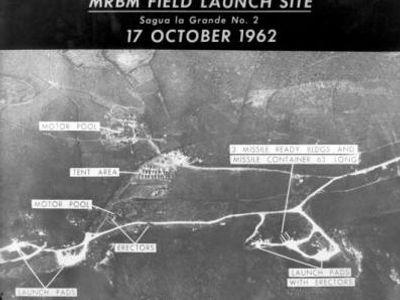
Cuban Missile Crisis Address to the Nation
In October 1962, U-2 spy planes discovered Soviet nuclear missile bases being deployed in Cuba. On October 22, President Kennedy delivered a nationwide televised speech exposing the offensive missile sites and announcing a naval quarantine of Cuba. He outlined seven initial steps including a strict blockade, increased surveillance, and a policy of full retaliatory response to any nuclear missile launch from Cuba. This was the most dangerous moment of the Cold War, bringing the world to the brink of nuclear war. After 13 days of tense confrontation, Khrushchev agreed to withdraw the missiles and Kennedy pledged not to invade Cuba. The crisis became a turning point in the Cold War and led both superpowers to explore arms control measures.
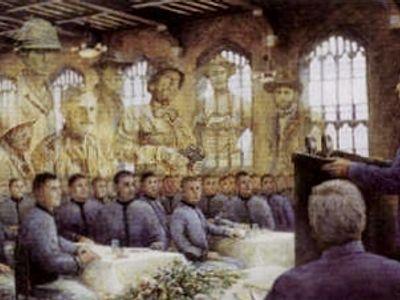
Duty, Honor, Country
On May 12, 1962, General Douglas MacArthur delivered his famous 'Duty, Honor, Country' speech at West Point Military Academy upon receiving the Sylvanus Thayer Award. This is one of his most renowned speeches and one of the most influential in American military history. General MacArthur reflected on his long military career and emphasized the values represented by West Point's motto 'Duty, Honor, Country'. The speech is filled with praise for American soldiers and expectations for young cadets, and is regarded as a spiritual manifesto for modern soldiers.
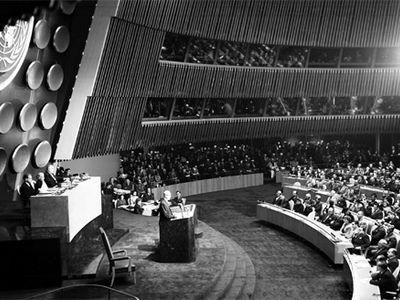
Atoms for Peace
On December 8, 1953, U.S. President Dwight D. Eisenhower delivered the landmark 'Atoms for Peace' speech to the United Nations General Assembly during the early Cold War era. After World War II, both the United States and the Soviet Union had developed nuclear weapons, casting a shadow of nuclear war over the world and causing widespread atomic anxiety. In this speech, Eisenhower first proposed the concept of peaceful uses of atomic energy, calling for the establishment of an International Atomic Energy Agency to regulate nuclear materials internationally and redirect atomic energy from military purposes to peaceful fields such as agriculture, medicine, and energy. This speech not only eased international tensions at the time but also directly led to the founding of the International Atomic Energy Agency (IAEA) in 1957.
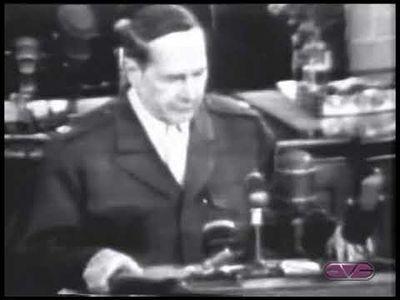
Farewell Address to Congress
On April 19, 1951, eight days after President Harry S. Truman relieved him of his commands, General Douglas MacArthur addressed a joint meeting of the U.S. Congress. Their dispute centered on the Korean War: MacArthur advocated stronger economic and military pressure against China, while the administration sought to limit the conflict and prevent escalation. In the speech, MacArthur reviewed postwar Asia, set out his views on Pacific defense, Taiwan, Japan, and the Korean battlefield, and defended the strategy he had proposed. He also argued that a war, once forced upon a nation, must be fought for victory and brought to a swift end. He closed his fifty-two-year military career with the barracks refrain, “Old soldiers never die; they just fade away.”