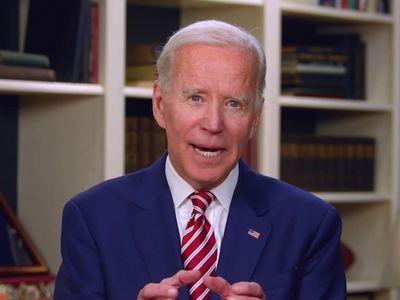
Joe Biden's 2020 Commencement Address at Columbia Law School: Healing and Hope
On May 20, 2020, former U.S. vice president and presumptive Democratic presidential nominee Joseph R. Biden Jr. delivered the keynote address at Columbia Law School's virtual graduation; his granddaughter Naomi was also a member of the class. Facing deaths, unemployment, and shutdowns caused by the COVID-19 pandemic, Biden recalls graduating from law school in 1968 amid war, assassinations, and social division. Difficult eras, he argues, accelerate change and place responsibility on a new generation. He calls overcoming the immediate crisis “job one” and remaking a fairer, more resilient world “job two.” Quoting Franklin Roosevelt, he urges graduates not merely to make their way in the world but to remake the world before them, transforming trauma and chaos into healing, progress, and hope.
Jean Bennett's 2020 Class Day Address at Yale University: Making the Impossible Possible
On May 17, 2020, Yale College alumna and ocular gene therapy pioneer Jean Bennett '76 addressed a virtual Class Day held during the COVID-19 pandemic. Using 20/20 as both the graduating year and a symbol of clear vision, she recalled growing up in New Haven, entering Yale among its early women undergraduates, and moving from molecular biology into medicine and retinal gene therapy. Bennett described how her team restored sight in animals born blind and then persisted through a field-wide shutdown after a gene therapy patient died, overcoming funding, regulatory, and clinical-trial barriers until Luxturna received approval. When the pandemic closed her laboratory, she pivoted toward vaccine research and urged graduates to treat disruption as an opportunity to redesign the world through science, public service, art, and care for one another. The text follows publisher-provided manual English captions on Yale University's official video.
The Right Note
On 11 March 2020, Imperial College London President Alice Gast delivered her annual address, The Right Note, as COVID-19 was spreading rapidly. Using the jazz improvisation of Miles Davis and Wynton Marsalis as a sustained metaphor, she argued that excellence grows from strong foundations, trusted collaboration, and risk-taking. The speech stressed facts, knowledge, and rational judgment against pandemic misinformation, while also addressing community engagement, UK research investment, regional and international partnership, Horizon Europe, and bold innovation. Gast closed by comparing the university to a jazz ensemble and urging Imperial to rely on shared values, collaboration, and courage to find the right note in uncertain times.
Facing the Future: How Universities Respond to the Climate and Democratic Crises
On 1 October 2019, University of Cambridge Vice-Chancellor Stephen J. Toope delivered his annual address in Senate House. This edition uses the complete official text published in the Cambridge University Reporter. Toope reviewed achievements in research, campus development, digital education, sport, and European collaboration, then discussed Brexit uncertainty, higher-education regulation, fair access, student support, staff progression, pay and pensions, and disciplinary reform. He defended lawful free expression while rejecting its use as cover for hatred or unlawful conduct. Looking ahead, he proposed an interdisciplinary Programme of Action addressing mental health, democracy, and social inequality, and announced Cambridge Zero, intended to mobilize research, education, and University operations for a zero-carbon transition. Describing Cambridge as a global village connecting human-scale communities with worldwide purpose, he argued that a public university must step forward in uncertain times and pursue excellence through openness, diversity, and public spirit.
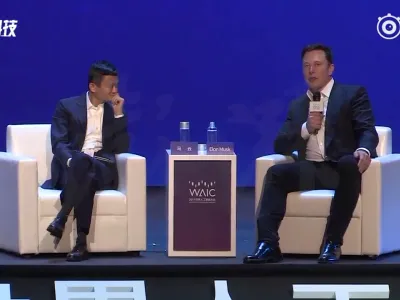
Jack Ma and Elon Musk Hold Debate in Shanghai
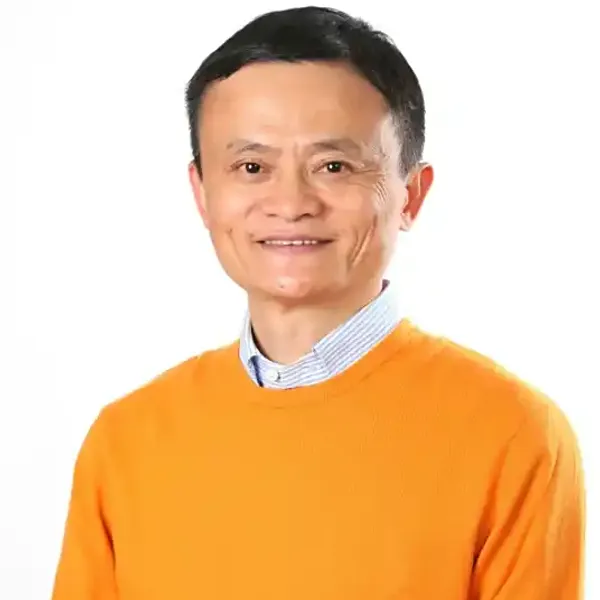
On August 29, 2019, Jack Ma, co-chair of the UN High-level Panel on Digital Cooperation, and Tesla and SpaceX chief executive Elon Musk held an approximately 48-minute English-language conversation at the opening of the World Artificial Intelligence Conference in Shanghai. They discussed AI capability and risk, brain-computer interfaces, Mars and multi-planetary life, jobs, education, whether machines can surpass humans, population decline, love quotient, longevity, and environmental sustainability. Ma emphasized using AI to understand humanity, improve Earth, and free time for life; Musk warned that AI progress could outpace human understanding and argued for multi-planetary exploration to preserve consciousness. This edited text follows the timed transcript preserved by the Elon Musk Archive and was checked against full videos published by CGTN and New China TV; it is not an official WAIC-approved verbatim transcript.
Mark Tewksbury's 2019 Honorary Degree Address at University of Toronto: Embrace Contradictions, Show Conviction, Embody Values
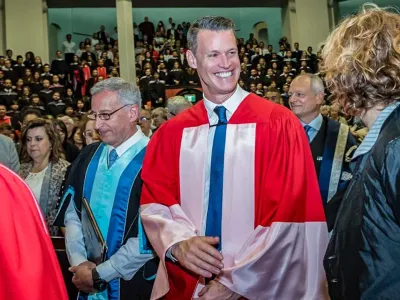
On June 25, 2019, Canadian Olympic swimming champion and LGBTQ equality advocate Mark Tewksbury delivered a University of Toronto honorary-degree address. He offered three principles: embrace contradiction, adapting between speaking and listening without abandoning values; show conviction, allowing passion to drive innovation after career setbacks; and embody values by knowing what one stands for and acting accordingly. He described discarding a rallying speech after a Georgian luger died before the Vancouver Winter Olympics and using honest humour to comfort Team Canada, illustrating why one should never say never. He also traced his journey from losing a world title by six hundredths of a second to changing his training and winning Olympic gold in Barcelona by the same margin. Finally, he recalled how coming out enabled him to advocate at the United Nations and support young athletes, arguing that Pride is fundamentally about belonging for everyone.
Tim Cook's 2019 Stanford Commencement Address: Finding Courage in the Dark
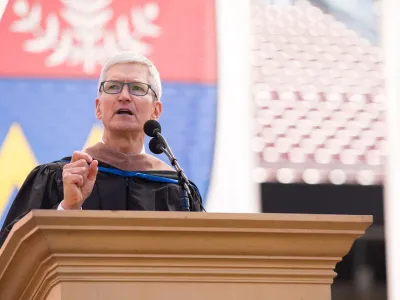
On June 16, 2019, Apple CEO Tim Cook addressed Stanford University’s 128th Commencement. Speaking amid a crisis of trust caused by data breaches, privacy violations, hate speech, and misinformation in the technology industry, he argued that technology does not change human nature but magnifies both its good and bad sides. Anyone who wants credit for what they create, he said, must also accept responsibility for its consequences. Drawing on the courage of the Stonewall protesters and on his experience of losing Steve Jobs, Cook urged graduates to become builders with humility of purpose, to accept that they will never feel fully ready for life’s defining moments, to find hope in the unexpected and courage in challenge, and to leave worthy work for others to carry forward.
Luigi Zingales's 2019 Convocation Address at the University of Chicago: With Great Power Comes Great Responsibility
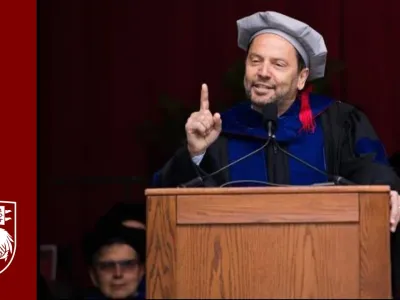
On June 15, 2019, economist Luigi Zingales addressed the University of Chicago's 532nd Convocation. Beginning with graduates' imminent roles as workers, consumers, and investors, he argued that individuals can shape corporate behavior through career choices, consumer action, share ownership, and engagement in governance. He reconsidered Milton Friedman's profit-maximization doctrine and maintained that boards should maximize shareholders' overall welfare rather than monetary returns alone; socially concerned investors should invest and engage instead of merely divesting. For monopolies that face no meaningful competition, he and Oliver Hart proposed an additional fiduciary duty to society and called for graduates' political participation in the American antitrust tradition. He closed by describing the Chicago tradition primarily as a method of logical, evidence-based inquiry rather than a fixed ideology.
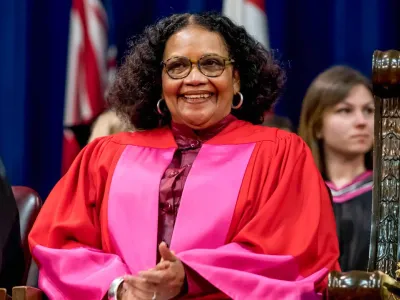
Lorna Goodison's 2019 Honorary Degree Address at University of Toronto: You Are the Treasure
On June 14, 2019, Jamaican poet Lorna Goodison addressed a University of Toronto honorary-degree convocation in a speech interwoven with original poetry. Beginning with a sari on Spadina, daffodils, and an evergreen that endured winter, she cast graduation as the arrival of spring and urged listeners to send flowers to those who supported them—or to themselves if they paid their own way. Completing a difficult task, she suggested, can itself be a form of prayer. The minds, books, laboratories, and international community graduates encountered now live within them, so “you are the treasure.” Yet a degree does not make them better than others; it appoints them as minders, menders, and repairers of the world's breaches. Invoking red dresses for missing Indigenous women and closing with a poem about an ice garden returning to colour, she invited graduates to travel lightly, preserve hope, and go forth to flower.
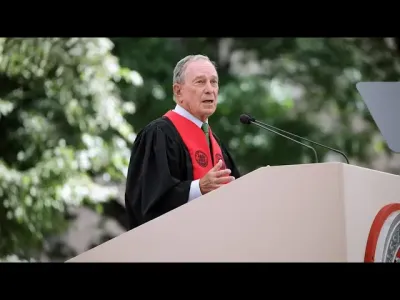
Michael Bloomberg MIT Commencement Address 2019
On June 7, 2019, entrepreneur, philanthropist, and former New York City mayor Michael Bloomberg addressed the MIT Class of 2019 in Killian Court. Beginning with Apollo 11 and the navigation system designed at MIT, he compared confronting climate change to a moonshot for the graduating generation. He argued that many necessary clean energy technologies already existed and that inadequate political action was the most urgent obstacle. In the speech he announced a $500 million commitment through Bloomberg Philanthropies to launch Beyond Carbon, an initiative to retire coal plants, halt new gas plants, support state and local policies, and engage in elections. He urged graduates to use their ingenuity, voices, and votes to move the United States toward a clean energy future.
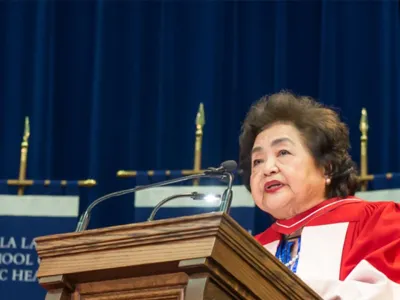
Setsuko Thurlow's 2019 Honorary Degree Address at University of Toronto: Unshakable Visionary Love
On June 5, 2019, Hiroshima atomic-bomb survivor, social worker, and nuclear-disarmament activist Setsuko Thurlow received an honorary degree from her alma mater, the University of Toronto. She recalled surviving the bombing as a teenager, choosing social work after witnessing mutual aid amid devastation, and how the hibakusha turned personal trauma into a responsibility to warn the world about nuclear weapons' inhumanity and immorality. She described U of T's teaching on the right to life, individual dignity, and practical fieldwork as the foundation of her activism. The address also traced the adoption of the Treaty on the Prohibition of Nuclear Weapons by 122 nations and the Nobel Peace Prize awarded to the International Campaign to Abolish Nuclear Weapons. She offered graduates four lessons: think beyond themselves, take action, persist and persevere, and trust unshakable visionary love as the power capable of overcoming the world's problems.
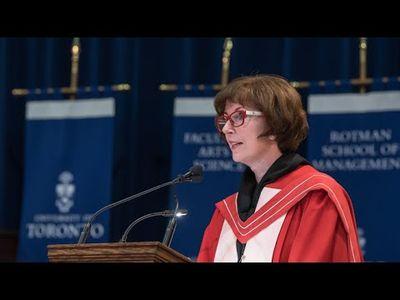
Kathleen Taylor's 2019 Honorary Degree Address at University of Toronto: Lead Through the Power of Example
On June 4, 2019, former Four Seasons CEO and Royal Bank of Canada board chair Kathleen Taylor delivered an honorary-degree address to University of Toronto Rotman Commerce graduates. Beginning with education's power to transform opportunity, she argued that graduates facing technological disruption, population aging, low-carbon transition, and uncertain innovation cannot wait for the future but must help create it. She offered three leadership lessons: surround yourself with people who believe you can improve and treat success as a team sport; lead through example rather than positional power, making respect and the Golden Rule real in difficult decisions; and remember that character counts, approaching business relationships with fairness, listening, and authenticity. She closed by describing the world beyond campus as a larger classroom: growth ends only when learning stops, and leaders must keep questioning, reflecting, accepting challenge, and engaging disagreement without demonizing others.