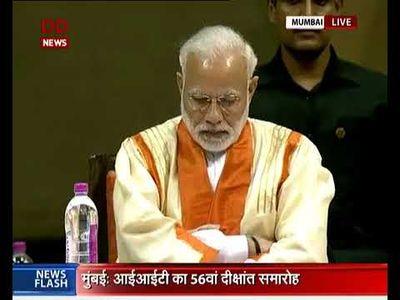
Narendra Modi's 2018 Convocation Address at IIT Bombay
On August 11, 2018, Indian Prime Minister Narendra Modi delivered the convocation address at IIT Bombay's 56th annual graduation ceremony during the Institute's diamond-jubilee year. Beginning with revolutionary Khudiram Bose's sacrifice, Modi framed service to a free India and nation-building as the responsibility of the present generation. He reviewed the IITs' role in expanding engineering education, creating India's information-technology sector, and building Brand India globally. Looking toward 5G, artificial intelligence, blockchain, big data, machine learning, clean energy, and environmental challenges, he recast IIT as an 'Instrument of Transformation' and urged graduates to 'Innovate in India, Innovate for humanity.' Modi described public programs supporting start-ups, research fellowships, and educational infrastructure while arguing that engineering education must improve quality and skills as well as quantity. He also proposed city-based science clusters, stronger alumni participation, mentoring for students who lack opportunity, and school outreach. A degree, he concluded, is only a milestone; the real challenge lies beyond campus, where graduates' work carries the hopes of their families, the country, and future generations.
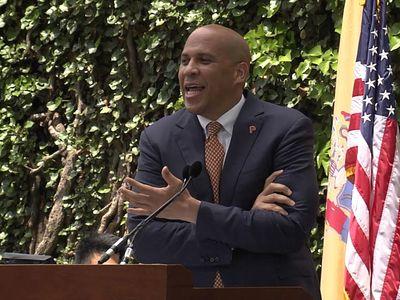
Cory Booker's 2018 Class Day Address at Princeton University: Power
On June 4, 2018, U.S. Senator Cory Booker of New Jersey addressed Princeton University's Class Day. Beginning with humorous expressions of state pride, he used his parents' struggle for fair housing to explore how ordinary people can change others' lives through small actions. He described a volunteer lawyer inspired by the civil rights march in Selma who helped his family purchase a home, and recalled John Lewis's humility and kindness. Booker argued that power rests less in degrees, positions, or titles than in moral consistency, gratitude, and everyday care. He urged graduates to reject apathy and accept responsibility for actions whose effects can reach future generations. The text follows the university's manual English captions and includes only Booker's remarks, excluding the host's introduction and subsequent honorary class induction.
Eduardo Bhatia's 2018 Baccalaureate Address at Princeton University: Hope in Democracy
On June 3, 2018, Princeton Class of 1986 alumnus and former Puerto Rico Senate president Eduardo Bhatia delivered the University's Baccalaureate address. Starting with the student-created Honor Code, he drew on his family background, his experience in Chile, and Puerto Rico's fiscal and post-hurricane crises to discuss integrity and responsibility in public life. He connected verifying information, holding others accountable, and acting courageously, urging graduates to confront lies and use their education and access to technology in service to society. He proposed a national honor code. The text follows the complete prepared remarks published that day by Princeton, preserving the speaker's contemporary figures and views; it is a prepared version and should not be assumed to match the recording word for word.
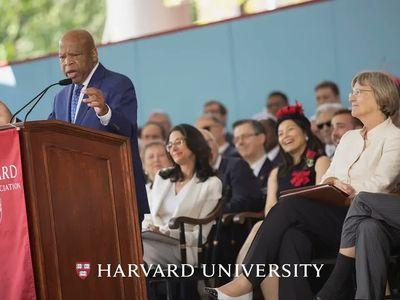
Address at Harvard's 367th Commencement
On May 24, 2018, civil rights icon and U.S. Representative John Lewis delivered the address at Harvard University's 367th Commencement. In May 1961, at the age of 21, Lewis was beaten as a Freedom Rider; in March 1965, his skull was fractured on 'Bloody Sunday' in Selma. In this address, Lewis recounted his experiences in the Freedom Rides and his years working alongside Dr. Martin Luther King, Jr., told the story of a former Klansman who sought his forgiveness decades later, and drew on the memory of his aunt holding down the family house with her children 'walking with the wind' during a storm. He urged the graduates to stand up for justice, to lead, to defend the right to vote, and to get into 'good trouble, necessary trouble.' With the 2018 midterm elections approaching, he called on young people to use their votes to save the country and American democracy.
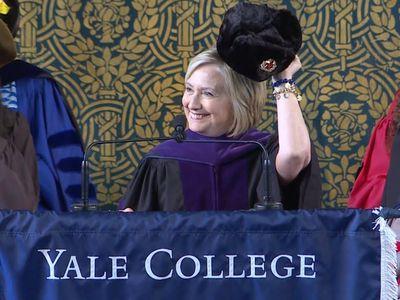
Hillary Clinton's 2018 Class Day Address at Yale University: Resilience, Empathy, and Democracy
On May 20, 2018, Hillary Rodham Clinton, a 1973 graduate of Yale Law School and former U.S. Secretary of State, delivered the Class Day address at Yale University. A member of the first class of women admitted to Yale College, she recalled arriving on campus in 1969 in bell-bottoms, meeting Bill Clinton in the law library, and finding her calling through civil rights pioneer Marian Wright Edelman. Framing her remarks around resilience, she distinguished personal, communal, and democratic resilience, warned against polarization and the assault on facts and reason, and urged graduates to practice radical empathy, vote in every election, and stand up for democracy. The text is reconstructed from YouTube auto-generated captions.
No More Cake and Eat It: Making a Brexit Deal for Workers
Trades Union Congress General Secretary Frances O'Grady delivered No More Cake and Eat It at the London School of Economics and Political Science on October 31, 2017. Speaking for a trade union movement representing nearly six million workers, she argued that the British government had to be honest about the trade-offs involved in Brexit and that any agreement must protect jobs, investment, living standards, rights, and public services. O'Grady traced organised labour's relationship with the European social model and addressed the single market, customs arrangements, migration, industrial policy, and the continuing alignment of workers' rights. Her central test was that working people must not be made to pay the price of Brexit.
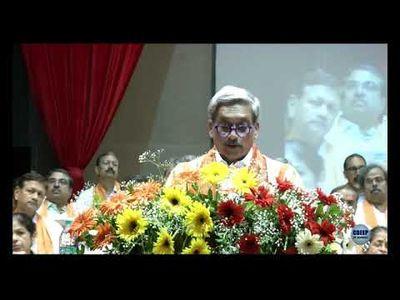
Manohar Parrikar's 2017 Convocation Address at IIT Bombay
On August 12, 2017, Goa Chief Minister and 1978 IIT Bombay alumnus Manohar Parrikar addressed his alma mater's 55th Convocation. Beginning with memories of Hostel Four, he described how technological progress was rapidly reshaping work and daily life while poor educational outcomes, health and nutrition, environmental damage, rural-urban inequality, agricultural employment, population growth, and skills shortages continued to weaken India's foundations. Democracy, Parrikar argued, is not merely politics and power but people, participation, and purpose; citizens should demand accountability while giving reform patience and room to succeed. He urged graduates not to pursue only lucrative or glamorous careers but to enter teaching, public service, the armed forces, politics, and socially minded entrepreneurship, using technology and policy to solve concrete problems. Graduates should take risks, respect failure, resist the arrogance of elite education, treat their education as a national investment carrying responsibility, and turn individual action into social movements bound by patriotism.
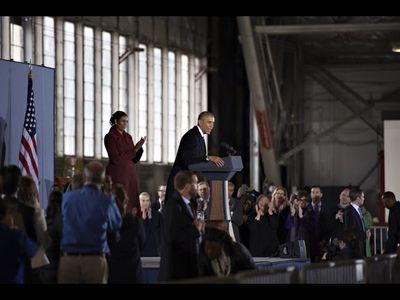
Farewell Remarks at Joint Base Andrews
On January 20, 2017, Barack Obama delivered farewell remarks to his staff and supporters at Joint Base Andrews in Prince George County, Maryland. This was the same day he left office and Donald Trump was sworn in as President. In his brief yet heartfelt speech, Obama reflected on the journey since the 2008 campaign, emphasizing that change happens not from the top down, but from the bottom up. He thanked all staff members who had poured their hearts into the campaign and public service, praising their dedication and noting that he and Michelle had merely been the public face of these unsung heroes. Obama characterized the farewell as 'not a period, but a comma' in the ongoing story of building America, encouraging everyone to continue the work. He closed with his iconic slogan, 'Yes we did. Yes we can,' bringing a warm conclusion to his eight-year presidency.
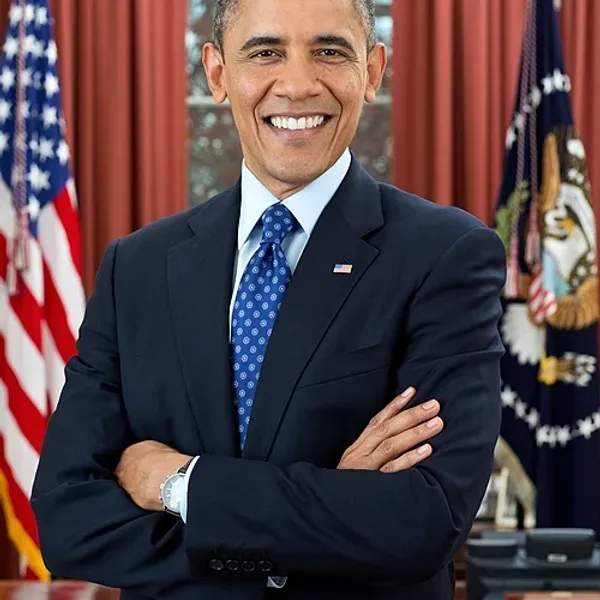
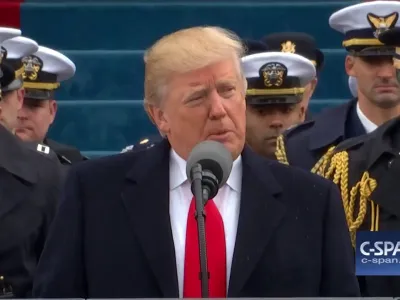
Donald J. Trump's 2017 Inaugural Address
On January 20, 2017, Donald J. Trump was sworn in as the forty-fifth President of the United States at the Capitol building in Washington D.C. The first president in U.S. history without political or military experience, his inaugural address emphasized 'America First' policies, promising to create jobs, reform trade, and strengthen border security. His election marked a significant shift in American politics.
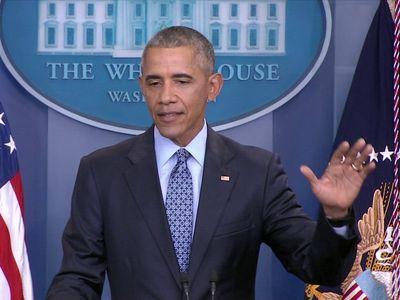
Final Presidential Press Conference
On January 18, 2017, Barack Obama held his final presidential press conference at the White House, just two days before leaving office. In his opening remarks, Obama began with his signature humor, mentioning that he had been tempted to wear a tan suit but was dissuaded by Michelle. He expressed concern over the hospitalization of the elder Bushes and thanked the White House press corps for eight years of work, emphasizing the importance of a free press to democracy. During the subsequent Q&A session, Obama addressed a range of hot-button issues including the commutation of Chelsea Manning's sentence, U.S.-Russia relations and sanctions, the peaceful transfer of power, DACA and the DREAMers, the end of Cuba's 'wet foot, dry foot' policy, the Israeli-Palestinian conflict and the UN resolution, LGBT rights, and race and voting rights. The press conference showcased Obama's characteristic poise, wisdom, and reflective spirit, serving as both a summative response to his eight-year presidency and a message of hope and caution for the future.
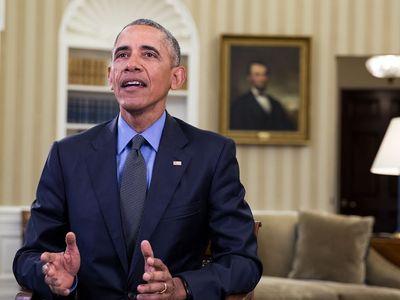
Final Weekly Address
On January 14, 2017, Barack Obama delivered his final weekly address as President from the White House. Recorded just days after his formal farewell address in Chicago, this speech marked the closing chapter of his eight-year presidency. In his remarks, Obama reflected on his time in office—from economic recovery to healthcare reform, from scientific innovation to community rebuilding—expressing his deep impression of the goodness, resilience, and hope of the American people. He called on all citizens to actively participate in the democratic process and not take democracy for granted, emphasizing that civic responsibility spans a lifetime, not just election seasons. This brief yet heartfelt address serves as both a warm summary of his eight years in office and an earnest exhortation to the American people.
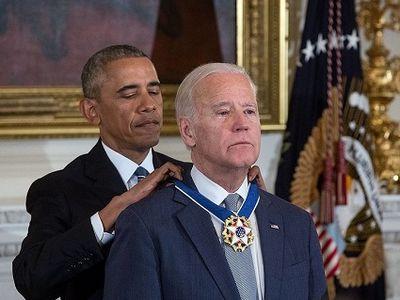
Joe Biden Medal of Freedom Presentation Address
On January 12, 2017, as Obama's term was drawing to a close, a special ceremony was held at the White House where Obama presented the Presidential Medal of Freedom—the nation's highest civilian honor—to Vice President Joe Biden. What made it extraordinary was that Obama awarded the medal 'With Distinction,' the highest level reserved for only a select few like Pope John Paul II and President Reagan. Obama warmly reflected on eight years of working alongside Biden, calling him 'the best Vice President America has ever had.' The address was filled with warmth and humor, a high tribute to Biden's half-century of public service and a moving testament to their profound friendship.