
Jean Bennett's 2020 Class Day Address at Yale University: Making the Impossible Possible
On May 17, 2020, Yale College alumna and ocular gene therapy pioneer Jean Bennett '76 addressed a virtual Class Day held during the COVID-19 pandemic. Using 20/20 as both the graduating year and a symbol of clear vision, she recalled growing up in New Haven, entering Yale among its early women undergraduates, and moving from molecular biology into medicine and retinal gene therapy. Bennett described how her team restored sight in animals born blind and then persisted through a field-wide shutdown after a gene therapy patient died, overcoming funding, regulatory, and clinical-trial barriers until Luxturna received approval. When the pandemic closed her laboratory, she pivoted toward vaccine research and urged graduates to treat disruption as an opportunity to redesign the world through science, public service, art, and care for one another. The text follows publisher-provided manual English captions on Yale University's official video.
The Right Note
On 11 March 2020, Imperial College London President Alice Gast delivered her annual address, The Right Note, as COVID-19 was spreading rapidly. Using the jazz improvisation of Miles Davis and Wynton Marsalis as a sustained metaphor, she argued that excellence grows from strong foundations, trusted collaboration, and risk-taking. The speech stressed facts, knowledge, and rational judgment against pandemic misinformation, while also addressing community engagement, UK research investment, regional and international partnership, Horizon Europe, and bold innovation. Gast closed by comparing the university to a jazz ensemble and urging Imperial to rely on shared values, collaboration, and courage to find the right note in uncertain times.
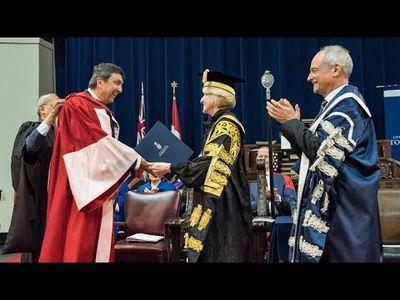
David Naylor's 2019 Honorary Degree Address at University of Toronto: The Future of Health Care
On June 4, 2019, physician, health researcher, and former University of Toronto president David Naylor addressed the Faculty of Medicine's honorary-degree convocation. Comparing health care at his 1978 graduation with medicine transformed by genomics, stem cells, gene editing, and artificial intelligence, he argued that the field was moving from poking, prodding, plumbing, and palliation toward predictive, pre-emptive, personalized, and participatory care. He warned that the digital deluge also carries anti-vaccine misinformation and that new technologies will raise ethical, legal, access, and affordability problems without replacing public health or the social determinants of illness. He closed with five recommendations: champion health research, advocate fair and safe system reform, keep learning, treat patients with empathy rather than as digital cases, and recognize health care as a team sport. Graduates' most precious asset, he said, is time and its boundless possibility for positive change.
We Are International
On 13 March 2019, Imperial College London President Alice Gast delivered her annual address, We Are International, amid political turmoil over Brexit. Beginning with her own formative travels in Europe, she used the idea of hybrid vigour to explain how cultural differences strengthen research and described international teams in public health, bionic prosthetics, regenerative medicine, and green technology. The speech then traced immigration's contribution to British history, entrepreneurship, and innovation, and presented academics as diplomats capable of crossing political divides. Gast proposed visa reform, wider post-study work rights, and stronger support for international research collaboration, reaffirming Imperial's commitment to global talent and internationalist values.
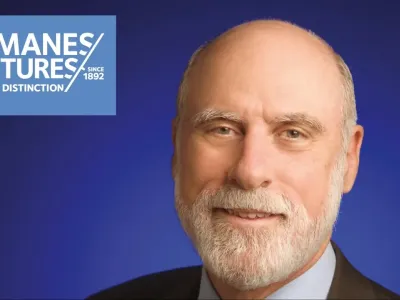
Vint Cerf's 2018 Oxford Romanes Lecture: The Pacification of Cyberspace
On 6 November 2018, Internet pioneer Vinton Cerf delivered the Romanes Lecture, The Pacification of Cyberspace, at the Sheldonian Theatre, University of Oxford. Beginning with the development of computer networks, the World Wide Web, mobile devices, and cloud services, he explained how the open Internet released innovation and freedom of expression while also enabling malware, ransomware, botnets, intellectual-property theft, election interference, and deepfakes. Cerf traced the origins of technical vulnerability and argued that the Internet's border-insensitive design makes cross-jurisdictional cooperation essential. He examined norms for digital cooperation, protection of the Internet's public core, anonymity and pseudonymity, privacy regulation, and differential traceability. Cerf advocated multistakeholder collaboration, two-factor authentication, critical-thinking education, and possible emergency support for small businesses, while warning against the militarization of cyberspace and urging that the principles of the Universal Declaration of Human Rights be translated into good practice online.
Alice Gast's 2018 Graduation Address at Imperial College London: Judgement and Empathy
On March 14, 2018, Imperial College London President Alice Gast delivered her annual address on judgement and empathy. Beginning with the phrase “to be honest,” she considered the erosion of public discourse and the limits of artificial intelligence, which can display competence without comprehension. Universities, she argued, must teach not only data science but also the capacity to combine knowledge, context, and empathy in considered decisions. Examples from Uzbekistan, Saudi Arabia, Chinese collaborators, and Imperial's White City engagement illustrated how listening to people in different circumstances broadens understanding. Gast also addressed the USS pension dispute, Brexit, poverty, and health inequality, stressing that negotiation requires honesty, listening, and compromise. As machine intelligence advances and human bias persists, she urged the community to protect university values, support international diversity, understand others, and ensure that humanity guides technological and social change.

Kai-Fu Lee's 2017 Class Day Address at Columbia Engineering: An Engineer's Guide to the Artificial Intelligence Galaxy
On May 15, 2017, Columbia alumnus and Sinovation Ventures founder and CEO Kai-Fu Lee delivered the keynote address at the Engineering and Applied Science Class Day. Calling the coming decade the age of artificial intelligence, he explains how deep learning advances perception, prediction, decision-making, and automation, and predicts that finance, manufacturing, transportation, and other industries will be transformed while many repetitive jobs disappear. In response to the resulting growth in wealth, disruption of employment, and crisis of meaning, Lee offers graduates three pieces of advice: embrace the opportunities created by AI, accept engineers' responsibility for social consequences, and remain connected to the heart and to love. Drawing on his experience with stage IV lymphoma, he argues that brains and efficiency are not the whole of humanity; love, compassion, and care distinguish people from machines.

NIH Address on Ebola Vaccine Research Potential
On December 2, 2014, President Barack Obama spoke at the National Institutes of Health about the response to the Ebola outbreak in West Africa. He thanked researchers, health-care workers, and international partners, described progress in vaccine research, testing capacity, a medical unit in Liberia, and public-health investments, and stressed that the crisis was not over and required sustained funding, science, and international cooperation. He closed by highlighting the humanitarian character of health workers.


R. A. Mashelkar's 2014 Convocation Address at IIT Bombay: Affordable Excellence, a Global Game Changer
On August 9, 2014, Indian scientist R. A. Mashelkar addressed IIT Bombay's 52nd Convocation on the idea of affordable excellence. Making high technology for the rich or low technology for the poor is easy, he argued; the harder challenge is to make advanced technology serve ordinary people at prices they can afford. Through non-invasive hemoglobin testing, Aravind Eye Care, low-cost heart surgery, portable ultrasound, and electrocardiogram devices, Mashelkar described an Indian innovation model born from scarcity and aspiration: getting more from less for more people. He rejected low-price improvisation that neglects safety or quality and insisted that affordability brings equity while excellence brings competitiveness. Calling on graduates to apply IIT Bombay's mission of excellence and relevance to India's own problems, he urged them to create not merely value for money but value for many and to build a genuinely inclusive society.
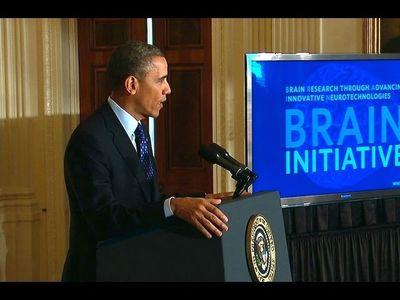
BRAIN Initiative Announcement
On April 2, 2013, U.S. President Barack Obama announced the Brain Research through Advancing Innovative Neurotechnologies, or BRAIN, Initiative at the White House. He placed the effort within America's tradition of supporting basic research and high-risk innovation, recalling how public investment helped advance computer chips, the Internet, GPS, and the Human Genome Project. Obama noted that humanity can observe distant galaxies and subatomic particles while still understanding relatively little about how the brain produces thought, memory, and action. The initiative would coordinate work by the National Institutes of Health, DARPA, the National Science Foundation, and private organizations to develop new tools for mapping and studying brain activity. Its goals included improving treatment for Alzheimer's disease, epilepsy, traumatic brain injury, and other conditions while fostering new industries, jobs, and economic growth.
Speech at the Opening of the Imperial Centre for Translational and Experimental Medicine
On 28 May 2012, UK Chancellor of the Exchequer George Osborne opened Imperial College London's Centre for Translational and Experimental Medicine. Organised around the ideas of translation and experimentation, the speech addressed how to bring basic research, clinical practice, and industrial application closer together, encourage earlier adoption of innovation by the NHS, and use patient data and stratified medicine to improve care. Osborne also discussed the roles of the Medical Research Council, medical charities, the Biomedical Catalyst, and synthetic-biology policy. He concluded that universities are not simply businesses and that fundamental inquiry deserves support, while arguing that universities should also help discoveries with practical potential reach society and the market.
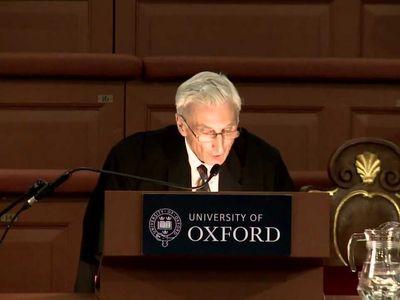
Martin Rees' 2011 Oxford Romanes Lecture: The Limits of Science
On 2 November 2011, British astrophysicist Martin Rees delivered the annual Romanes Lecture, The Limits of Science, at the Sheldonian Theatre, University of Oxford. Beginning with astronomy, he surveyed exoplanets, extraterrestrial life, the early universe, superstring theory, and the multiverse, then explained why complex systems cannot be usefully understood from fundamental physics alone and asked whether some aspects of reality may lie beyond human conceptual reach. The second half turned to nuclear weapons, population growth, pressure on resources, climate change, synthetic biology, artificial intelligence, and human enhancement. Rees argued that the gulf is widening between what science enables and what prudence, ethics, or economics should permit. Scientists, he concluded, must bring evidence into public debate, accept responsibility for the social consequences of their work, and help safeguard the Earth and future generations through values that lie beyond science itself.