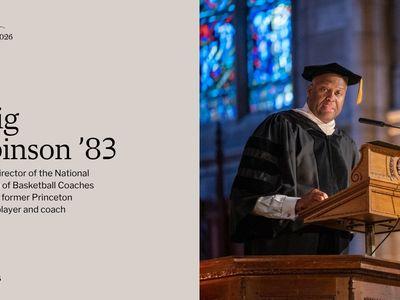
Craig Robinson's 2026 Baccalaureate Address at Princeton University: The Swerve
On May 24, 2026, Craig Robinson addressed Princeton’s graduating class at Baccalaureate. A 1983 alumnus, executive director of the National Association of Basketball Coaches, former University trustee, and Michelle Obama’s brother, he recalled his freshman doubts and a phone call in which his father urged him to relax and do his best. Borrowing his sister’s idea of the swerve, he described his career changes from basketball player and investment banker to coach and sports administrator. He encouraged graduates to rethink success and avoid measuring themselves against others’ timelines. He also quoted Pete Carril’s advice about helping others to emphasize service. The text follows prepared remarks published by the University that day and is not presented as a verbatim record of the live address.
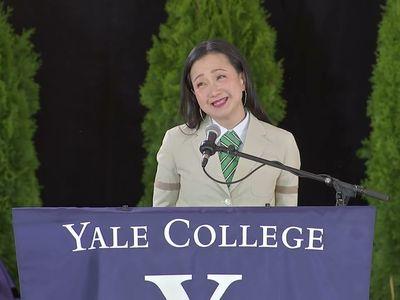
Min Jin Lee's 2026 Class Day Address at Yale University: Choose the Important Over the Urgent
On May 17, 2026, Korean American novelist Min Jin Lee delivered the Class Day address at Yale University. Beginning with her own uncertain graduation in 1990, she candidly recalled her middling grades, her difficulty finding mentors, and her later turn to fiction. Borrowing the ancient Greek words chronos and kairos, she urged graduates to choose the important over the urgent and to view their lives through a double lens of time. She told of founding the Korean Studies Task Force, campaigning for Korean language and history courses, and winning English department prizes for fiction and nonfiction on blind submission, showing that discouragement in one place can coexist with recognition in another. She closed with her own illness and recovery, arguing that time is a friend, not an enemy. The text is based on the publisher-provided manual captions, which omit the closing section.
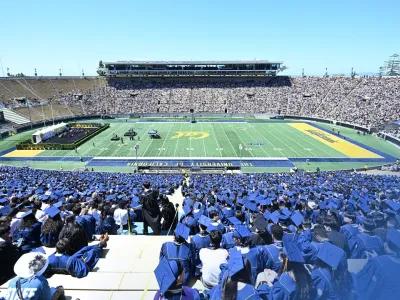
Robert B. Reich's 2026 Commencement Address at UC Berkeley: Speak Truth to Power
On May 16, 2026, former U.S. Secretary of Labor and UC Berkeley public policy professor Robert B. Reich delivered the keynote address at Berkeley's campuswide commencement. Reflecting on 17 years of teaching at Berkeley, he said he had never truly retired but had simply moved into the next stage of life. Reich described teaching and learning as reciprocal acts and lifelong learning as an embrace of life itself. Genuine leadership, he argued, does not depend on a title; it requires understanding direction, bringing people together, and treating leadership as a moral vocation. Confronting concentrated power, authoritarianism, and deep inequality, he insisted that “unfettered might does not make right” and urged graduates to defend democracy, respect facts, speak truth to power, and resist cynicism and fear. He closed by telling them they already possessed the capacity to become the teachers and leaders the world needs.

More Science, More Interchange and More Co-ordination
On 12 March 2026, Imperial College London President Hugh Brady titled his annual address after alumnus H. G. Wells's call for more science, more interchange and more co-ordination. Against war, energy crisis, geopolitical tension, and isolationism, he argued that climate, pandemics, food security, and antimicrobial resistance demand international scientific collaboration. The speech reviewed scholarships, overseas student opportunities, bilateral research partnerships, and Imperial's hubs in Singapore, San Francisco, Accra, and Bengaluru. Brady also addressed universities' responsibilities in security, defence, and dual-use technology, arguing that Imperial must defend internationalism and trusted partnerships while serving British resilience and the global public good.
Ryu Honglim's 2026 Congratulatory Address at SNU's 80th Winter Graduation Ceremony
On February 25, 2026, Seoul National University President Ryu Honglim addressed doctoral, master's, and bachelor's graduates at the university's 80th Winter Graduation Ceremony. Marking SNU's eightieth anniversary, he recalled the predecessors who pursued national reconstruction through education and invited graduates to carry forward a tradition of boundless imagination and bold innovation. Against a future shaped by artificial intelligence, repeated career changes, inequality, and labor-market restructuring, Ryu argued that learning is not a task completed with a degree but a lifelong practice tied to happiness. Drawing on Aristotle, he distinguished intellectual capacity from the moral capacity formed through habit and action. Courage, temperance, generosity, justice, gratitude, and empathy, he said, give knowledge direction. He also reminded graduates that educational opportunity rests on collective sacrifice and urged them to use their talents for the common good and service to others.
Aravind Srinivas's 2025 Winter Commencement Address at UC Berkeley: Relentless Curiosity
On December 20, 2025, Perplexity co-founder and CEO and UC Berkeley alumnus Aravind Srinivas addressed Berkeley's winter commencement. Rather than predict how artificial intelligence would reshape society and work, he organized his advice around three questions: “Who cares what you do next?”, “What are you waiting for?”, and “What's with all these questions?” He used velocity, compounding, and pain tolerance to explain growth, urging graduates to act quickly, keep learning, wait patiently for long-term results, and remain consistent through setbacks. The address culminated in a call for relentless curiosity. Education, he argued, is not chiefly about accumulating correct answers but about developing the spirit of inquiry. The defining ability for the future will be asking better questions, seeking truth, and using curiosity to create a world that does not yet exist.

Iman Chaudhry's 2025 Graduation Address at UCL
Published by University College London's media platform on September 23, 2025, this student address was delivered by Global Humanitarian Studies graduate Iman Chaudhry at the Faculty of Mathematical and Physical Sciences summer graduation ceremony. Chaudhry invited graduates to pause amid the celebration and honour the past selves whose work, sleepless nights, deadlines, personal challenges, and quiet courage had brought them to the day. She argued that resilience may never appear on an academic transcript, yet can be among the most valuable things students carry forward. Looking toward a future that may feel clear to some and uncertain to others, she encouraged her classmates to transform fear into excitement one day at a time, meet challenges with courage, and let knowledge guide them while humanity anchors them. The world, she concluded, needs both scientific solutions and compassionate care.
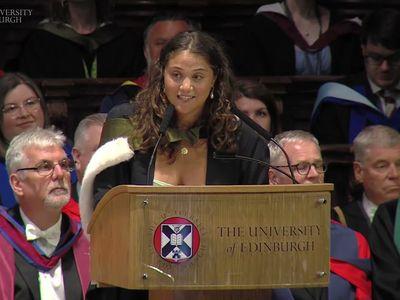
Abigail Morton's 2025 Graduation Address at the University of Edinburgh: A Message to My Fellow Graduates
Published by the University of Edinburgh on July 15, 2025, this student oration was delivered by Biomedical Sciences graduate Abigail Morton at the summer graduation ceremony in McEwan Hall. Morton used shared memories of Edinburgh's wind, fog, freezing morning classes, online examinations, laboratories, flashcards, and statistical code to reflect on four years of growth from strangers into a mutually supportive community. She thanked families, friends, and mentors who continued to believe in students during moments of self-doubt and argued that university had developed not only knowledge but critical thinking, research skills, resilience, empathy, and purpose. Whether graduates moved into research, medicine, technology, education, policy, or a well-earned pause, she encouraged them to proceed with courage, curiosity, confidence, and open minds—asking large questions while being willing not always to have the answers.
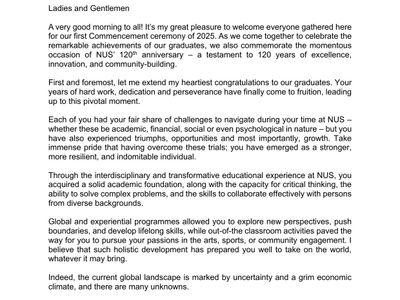
Tan Eng Chye's 2025 Commencement Address at NUS
On July 10, 2025, National University of Singapore President Tan Eng Chye addressed graduates as NUS marked its 120th anniversary. He reflected on the academic, financial, social, and psychological challenges students had navigated and the growth they achieved. Interdisciplinary education, critical thinking, complex problem-solving, collaboration across backgrounds, global experience, and extracurricular pursuits had prepared them for change. Facing an uncertain world and a grim economic climate, Tan argued that life does not require a perfect plan, but a strong sense of purpose can provide clarity and fortitude through unexpected turns. Quoting Chadwick Boseman on purpose, he encouraged graduates to preserve hope, adopt a growth mindset, and commit to continuous learning. Recalling that NUS was founded by and for the community in 1905, he invited graduates to join a legacy of dreamers, changemakers, and trailblazers serving country and society.
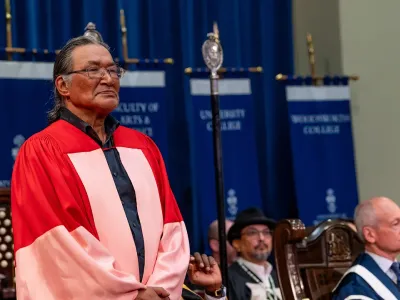
Zacharias Kunuk's 2025 Honorary Degree Address at University of Toronto: Learn from Your Mistakes
On June 19, 2025, Inuit filmmaker Zacharias Kunuk received an honorary degree from the University of Toronto. Arriving from the Arctic, he recalled growing up on the land, being sent to school at nine to learn English, and sneaking glimpses of community movie screenings as a child. After moving from watching films to making them, he sought out elders, learned about Inuit culture, and used a camera to record it from within the community. As elders pass away and traditional materials and practices change, he said, films must remain as authentic as possible and preserve memory for viewers a century from now. Kunuk also admitted that he once thought filmmaking meant simply pointing a camera and showing the result; experience taught him the complexity of collaboration and production. He concluded that a career is built through trial and error, urging graduates to learn from their mistakes.
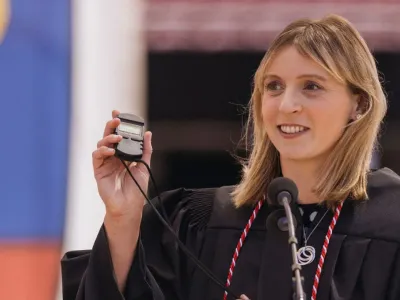
Katie Ledecky's 2025 Stanford Commencement Address: Set Your Pace and Finish the Race
On 2025-06-15, Katie Ledecky delivered this address at Stanford University's Commencement. Organized around pacing, process, time, and taking the lead, it joins personal experience, professional judgment, and the public concerns of its moment. The address asks not only what graduates might do next, but also how educated people should understand their abilities, accept public responsibility, and help build a shared future. This edition is based on a complete authoritative transcript and preserves the sequence and character of the original address.
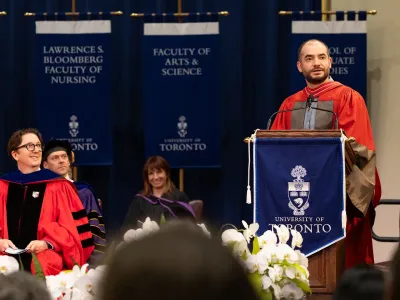
Ilya Sutskever's 2025 Honorary Degree Address at University of Toronto: Pay Attention to AI
On June 8, 2025, AI researcher Ilya Sutskever received an honorary degree from the University of Toronto and addressed graduates in the same hall where he had earned his bachelor's degree twenty years earlier. Recalling a decade at U of T, his studies with Geoff Hinton, and his participation in pioneering AI research, he first offered one conventional piece of advice: accept reality, do not dwell on regret, and keep asking for the best next step. He then turned to AI, arguing that digital intelligence will continue to improve until it may perform every task humans can do, greatly accelerating research, economic activity, and technological progress. Because that radical future is difficult to internalize emotionally, he urged graduates to use the best available AI, build intuition from its actual capabilities, and refuse to ignore it. He stressed that the truthfulness and safety of future superintelligence will raise profound questions; AI may be humanity's greatest challenge, while overcoming it may also bring its greatest reward.